Épisodes

  • Episode 32. Secrets Clients Never Tell
    Aug 19 2026

    Episode SummaryMost people never say the true reason they hesitate to open up to a therapist or a counselor: fear of being judged. This episode looks at what the research actually shows about client secrecy in counseling and therapy. Studies find that the large majority of clients admit to withholding something from theirprovider at some point, most often around sex, suicidal thoughts, self harm, trauma, substance use, and financial shame. The episode traces why concealment happens, why suicidal ideation specifically tends to be underreported for practical rather than purely emotional reasons, and what the research says actually helps clients open up, including therapeutic alliance and appropriate counselor self disclosure. The episode closes with a note on the ongoing debate around self disclosure as a clinical technique, and an invitation for listeners carrying a secret of their own.

    Content NoteThis episode includes research on clients withholding suicidal thoughts from their therapist. It does not go into detail, but if that topic is difficult for you right now, feel free to skip this episode or stop at any point. Nothing in this episode is a substitute for counseling or therapy. It is general research andreflection, not clinical advice, and it is not a replacement for working with a licensed professional.

    Help and Crisis Resources● United States: Call or text 988 to reach the Suicide andCrisis Lifeline, available any time, free and confidential.

    ● United States: Text HOME to 741741 to reach the CrisisText Line if talking on the phone feels like too much.

    ● Outside the United States: The International Associationfor Suicide Prevention keeps a directory of crisis lines by country at iasp.info/resources/Crisis_Centres.

    If you need support, please reach out to one of these resources or to a trusted provider.

    References

    Baumann, E. C., & Hill, C. E. (2016). Client concealment anddisclosure of secrets in outpatient psychotherapy. Counselling Psychology Quarterly, 29(1), 53–75. https://doi.org/10.1080/09515070.2015.1023698

    Blanchard, M., & Farber, B. A. (2016). Lying in psychotherapy: Why and what clients don't tell their therapist about therapyand their relationship. Counselling Psychology Quarterly, 29(1), 90–112. https://doi.org/10.1080/09515070.2015.1085365

    Blanchard, M., & Farber, B. A. (2020). “It is never okay totalk about suicide”: Patients' reasons for concealing suicidal ideation in psychotherapy. Psychotherapy Research, 30(1), 124–136. https://doi.org/10.1080/10503307.2018.1543977

    Farber, B. A. (2006). Self disclosure in psychotherapy. GuilfordPress.

    Farber, B. A., Berano, K. C., & Capobianco, J. A. (2004).Clients' perceptions of the process and consequences of self disclosure in psychotherapy. Journal of Counseling Psychology, 51(3), 340–346. https://doi.org/10.1037/0022-0167.51.3.340

    Farber, B. A., Blanchard, M., & Love, M. (2019). Secrets andlies in psychotherapy. American Psychological Association.https://doi.org/10.1037/0000128-000

    Hall, D. A., & Farber, B. A. (2001). Patterns of patient disclosure in psychotherapy. Journal of the American Academy of Psychoanalysis, 29(2), 213–230. https://doi.org/10.1521/jaap.29.2.213.17262

    Henretty, J. R., Currier, J. M., Berman, J. S., & Levitt, H.M. (2014). The impact of counselor self disclosure on clients: A meta analytic review of experimental and quasi experimental research. Journal of Counseling Psychology, 61(2), 191–207. https://doi.org/10.1037/a0036189

    Jeffery, D. (2026). Therapist self disclosure: A systematicreview and brief person centered framework for clinical practice and training. Frontiers in Psychology, 17, Article 1869955.https://doi.org/10.3389/fpsyg.2026.1869955

    Kelly, A. E. (1998). Client secret keeping in outpatient therapy. Journal of Counseling Psychology, 45(1), 50–57. https://doi.org/10.1037/0022-0167.45.1.50

    Afficher plus Afficher moins
    15 min
  • Episode 31. Stop Calling it Gaslighting (Here's What It Actually Is)
    Aug 5 2026

    "Financial gaslighting" is everywhere online right now, but the term is used so loosely it's starting to lose its meaning. In this episode, I unpack where the phrase actually comes from, what genuine economic abuse looks like according to decades of validated research, and how to tell the difference between an honest money disagreement and something more serious.


    This episode includes a brief disclaimer at the start: it's for general education, not a clinical diagnosis. If any of it feels personally activating, please reach out to a licensed therapist, counselor, or the National Domestic Violence Hotline at 1-800-799-7233.


    Full list of references available in the companion newsletter issue on LinkedIn.

    Interested in a free life coaching or financial therapy consultation? Book it at www.equilibriaevolution.com

    Afficher plus Afficher moins
    17 min
  • Episode 30. Manifestation, Minus the Magic!
    Jul 22 2026

    Manifestation is everywhere right now, vision boards, raise your vibration, lucky girl syndrome. But does any of it actually work?

    In this episode, I dig into the research behind manifestation, including a 2023 study linking manifestation belief to real financial harm, and Stanford neuroscience on why specific goals change what your brain actually notices and acts on. Then I walk through WOOP, a five-minute practical tool you can use on any goal, financial or otherwise.

    Less magic. More mechanism.

    Full list of references available in the companion newsletter issue on LinkedIn.

    Afficher plus Afficher moins
    15 min
  • Episode 29. Freedom in the Body
    Jul 10 2026

    This Fourth of July, I talk about the freedom living inside our body versus the external freedom we usually talk about. We typically talk about freedom as something external: no boss, no rules, nobody watching. But there's another kind of freedom that lives in your nervous system, and you can have all the external freedom in the world and still not feel it.

    This week I'm pulling in a definition from psychologist Irvin Yalom that reframes freedom as responsibility rather than escape, plus a look at why a regulated body isn't a luxury but the actual mechanism that lets you hold your own choices without flinching. Then we walk through a three minute somatic practice together, live, so you can actually feel the difference by the end of the episode instead of just hearing about it.

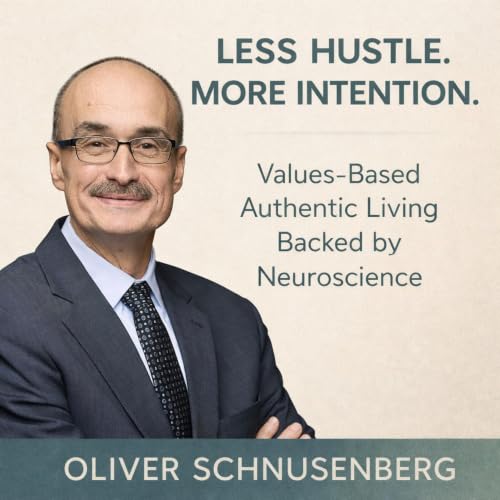
    Less hustle. More intention.

    Check out my newsletter with all the references here.

    If you would like to learn more about me and book your free consultation, please visit me at www.equilibriaevolution.com.

    Afficher plus Afficher moins
    15 min
  • Episode 28. What Therapy Actually Is (And Isn't)
    Jul 8 2026

    EPISODE DESCRIPTION

    Therapy gets misunderstood constantly. This episode draws the real line between coaching, counseling, and therapy (including how an LMHC differs from an LCSW), then busts five myths: that therapy is unstructured venting (it follows a theoretical orientation and often a DSM Five diagnosis and treatment plan),that it's only for crisis, that it always takes years, that seeking it means something is wrong with you, and that it only covers feelings, not money. Along the way: why stigma is one of the biggest documented barriers to care, how it lands unevenly across different groups, and why financial therapy treats money as the emotional territory it actually is.

    Learn more about what I do!

    REFERENCES

    American Psychiatric Association. (2022).Diagnostic and statistical manual of mental disorders (5th ed., text rev.).https://doi.org/10.1176/appi.books.9780890425787

    Bennett, L. (2026, May 20). LCSW vs. LMHC: Key differences explained. Public Health Online. https://www.publichealthonline.org/lcsw-vs-lmhc/

    Clement, S., Schauman, O., Graham, T., Maggioni, F., Evans-Lacko, S., Bezborodovs, N., Morgan, C., Rüsch, N., Brown,J. S. L., & Thornicroft, G. (2015). What is the impact of mentalhealth-related stigma on help-seeking? A systematic review of quantitative and qualitative studies. Psychological Medicine, 45(1), 11–27. https://doi.org/10.1017/S0033291714000129

    Corrigan, P. W., Druss, B. G., & Perlick, D. A. (2014). The impact of mental illness stigma on seeking and participating in mental health care. Psychological Science in the Public Interest, 15(2), 37–70. https://doi.org/10.1177/1529100614531398

    Financial Therapy Association. (n.d.).Home. https://www.financialtherapyassociation.org

    Harrer, M., Miguel, C., van Ballegooijen, W., Ciharova, M., Plessen, C. Y., Kuper, P., Sprenger, A. A., Buntrock, C., Papola, D., Cristea, I. A., & Cuijpers, P. (2025). Effectiveness of psychotherapy: Synthesis of a "meta-analytic research domain" acrossworld regions and 12 mental health problems. Psychological Bulletin, 151(5), 600–667. https://doi.org/10.1037/bul0000465

    Jordan, M., & Livingstone, J. B. (2013). Coaching vs psychotherapy in health and wellness: Overlap, dissimilarities, and the potential for collaboration. Global Advances in Healthand Medicine, 2(4), 20–27. https://doi.org/10.7453/gahmj.2013.036

    Levy, K. (2025, April 4). 5 common therapy myths—and the research that disproves them. Charlie Health. https://www.charliehealth.com/research/therapy-myths

    Psychotherapy Notes. (2024, May 15). Therapy and coaching: Understanding the differences. https://www.psychotherapynotes.com/therapy-and-coaching-differences/

    Quintero Johnson, J. M., & Riles, J. (2018). "He acted like a crazy person": Exploring the influence of college students' recall of stereotypic media representations of mental illness. Psychology of Popular Media Culture, 7(2), 146–163. https://doi.org/10.1037/ppm0000121

    Seidler, Z. E., Dawes, A. J., Rice, S. M., Oliffe, J. L., & Dhillon, H. M. (2016). The role of masculinity in men's help-seeking for depression: A systematic review. Clinical Psychology Review,49, 106–118. https://doi.org/10.1016/j.cpr.2016.09.002

    Üzümçeker, E. (2025). Traditional masculinity and men's psychological help-seeking: A meta-analysis. International Journal of Psychology, 60(2), Article e70031. https://doi.org/10.1002/ijop.70031

    Weir, K. (2016, December 1). Therapy on camera. Monitor on Psychology, 47(11). American Psychological Association.https://www.apa.org/monitor/2016/12/therapy-camera

    Wong, Y. J., Ho, M. H. R., Wang, S. Y., & Miller, I. S. (2017). Meta-analyses of the relationship between conformity to masculine norms and mental health-related outcomes. Journal ofCounseling Psychology, 64(1), 80–93. https://doi.org/10.1037/cou0000176

    Afficher plus Afficher moins
    27 min
  • Episode 27. Stop Calling Yourself Anxiously Attached!
    Jun 24 2026

    You've probably seen the terms everywhere: anxious attachment, avoidant attachment, secure. Maybe you've even looked yourself up and thought: yep, that's me.

    But attachment theory was never designed to be a personality typology. It's a developmental framework. And the research on whether childhood attachment styles actually carry into adulthood? Much messier, and much more hopeful, than the popular version suggests.

    In this episode, I unpack what the science actually says, why the label trap is so easy to fall into, and what becomes possible when you move from "I am anxiously attached" to "I developed this pattern, and I can work with it."

    Read the full newsletter with references at www.linkedin.com/in/oschnuse

    If you're ready to explore values-based, intentional living, book a free consultation at equilibriaevolution.com.


    Afficher plus Afficher moins
    15 min
  • Episode 26. The Color You've Never Seen
    Jun 8 2026

    Sometimes the most important question is not "how do I get what I want?" It is "do I even know what I want?" In this episode I explore one of the subtler struggles I see most often: the difficulty people have connecting to their own authentic desires, dreams, and vision. We cover the neuroscience of why this happens, why borrowed goals feel hollow at the finish line, and three gentle conditions that tend to help the real signal surface. Less analysis. More listening inward.

    Find out more about me and schedule your private consultation!


    Afficher plus Afficher moins
    15 min
  • Episode 25. The Memory Before Memory
    May 25 2026

    Your earliest experiences with stress, safety, and scarcity didn't get stored as memories. They got stored as body states. And decades later, those states are still shaping how you earn, spend, avoid, and relate to money.

    In this episode, we explore what happens when stress and trauma are encoded before the first conscious memory forms. Drawing on the work of Stephen Porges and polyvagal theory, Peter Levine's research on how trauma lives in the body as incomplete biological responses, Bruce Perry's neurosequential model of early brain development, and Daniel Siegel's interpersonal neurobiology, we trace how the nervous system builds its baseline in the earliest years of life and carries that baseline forward into adulthood.

    We then follow that thread into financial behavior, looking at why some people freeze when opening bills, feel panic at a low bank balance even when they are objectively stable, spend impulsively as a form of self-soothing, or consistently earn below their actual capacity. These are not character flaws or failures of discipline. They are body memories, firing in financial contexts.

    The episode closes with four practical takeaways for anyone who recognizes these patterns in themselves, including why somatic awareness reaches places that mindset work alone cannot.

    The body is not broken. It learned exactly what it needed to learn. This episode is about what it takes to teach it something new.

    Afficher plus Afficher moins
    20 min