Épisodes

  • The Eight Limbs of Yoga as a Nervous System Regulatory Framework
    Feb 27 2026
    In this inaugural episode of Season 10, Amy Wheeler introduces the guiding framework for the year ahead: exploring the Eight Limbs of Yoga as a practical, integrated regulatory framework for the autonomic nervous system. Rather than offering “tools and tricks” for stress, this season centers a wider view—how yoga shapes the conditions for safety, stability, adaptability, and coherence across daily life. Amy explains why nervous system regulation matters across integrative health contexts. When we support autonomic balance, we support the whole person—how we sleep, digest, think, relate, decide, and recover from chronic stress and burnout. This season also bridges personal practice and professional application, supporting listeners who want yoga to be a private anchor, and those discerning how yoga therapy can responsibly integrate into healthcare, education, and community settings. A key reframe anchors the episode: the Eight Limbs are not a ladder to climb, but a circle with eight doors. Each limb is an entry point, and once you enter, every practice influences the whole system—physiology, perception, behavior, relationships, and purpose. Season 10 also aligns with Amy’s forthcoming book (with Marlisa Sullivan), Applications of Therapeutic Yoga in Integrative Health(anticipated late spring/early summer 2026), designed as a companion guide to help practitioners translate yogic principles into accessible language for real-world settings. In This Episode, Amy ExploresWhy the autonomic nervous system is a shared meeting point between yoga and integrative healthcareThe Eight Limbs as a regulatory framework, not simply a set of techniquesHow regulation affects perception (viveka), behavior, communication, and ethical decision-makingWhy “coherence” matters: aligning life demands with inner and outer resourcesThe Eight Limbs as a circle with eight doors—interrelated, non-hierarchical entry pointsThe yamas and niyamas as the ethics of regulation, not moral perfectionHow yoga therapy differs from fitness-based yoga: assessment, client-centered care, scope, and responsibilityWhy this season includes more solo teaching episodes, with select guests across disciplinesHow listeners can develop simple language and metaphors (like the stoplight model) to explain regulation Invitation for the SeasonAs you listen this year, consider tracking phrases, metaphors, and explanations that help make complex ideas accessible. This season is designed as a shared learning laboratory—supporting personal regulation, while also strengthening the collective capacity to communicate clearly about yoga therapy in integrative health spaces. Host: Amy Wheeler at www.TheOptimalState.comAbout: Chair, Yoga Therapy & Ayurveda Department, Notre Dame of Maryland UniversityAlso Featured: insights informed by Amy’s work with the Polyvagal Institute Subscribe, Share, and Stay ConnectedIf this season supports your personal practice or your professional path, consider subscribing, sharing an episode with a colleague, and following along as the series unfolds across 2026. School of Integrative Health at NDMU: https://www.ndm.edu/academics/integrative-healthMaster of Science in Yoga Therapy at NDMU https://www.ndm.edu/academics/integrative-health/yoga-therapy Explore NDMU’s Post-Master’s Certificate in Therapeutic Yoga Practices https://www.ndm.edu/academics/integrative-health/yoga-therapy/post-masters-certificate-in-therapeutic-yoga-practices Try our Post-Bac Ayurveda Certification Program at NDMU: https://www.ndm.edu/academics/integrative-health/ayurveda/post-baccalaureate-ayurveda-certification#IntegrativeHealth #HealthcareEducation #InterprofessionalEducation #GraduateSchool #NDMUproud #SOIHproud #SOIHYoga #SOIHAyurveda #NDMUYoga #NDMUAyurveda #SOIHGraduateSchool Yoga Therapy Hour Podcasthttps://podcasts.apple.com/us/podcast/yoga-therapy-hour-with-amy-wheeler/id1564687158 The Optimal State Mobile Apphttps://optimalstateapp.com
    Afficher plus Afficher moins
    43 min
  • Regulate First: The Missing Link in Health Behavior Change
    Feb 20 2026

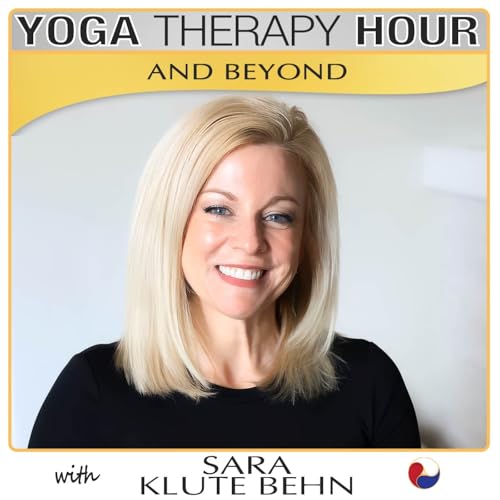
    In this episode of The Yoga Therapy Hour, Amy Wheeler is joined by Sara Klute Behn, a yoga therapist and health coach based in Iowa, for a thoughtful conversation about nervous system regulation, sustainable health behavior change, and the deep overlap between yoga therapy and health coaching.

    Together, they explore why willpower alone rarely leads to lasting change—and why regulation, safety, and support matter far more. Sara shares her personal journey through anxiety, life transitions, and healing, and how those lived experiences shaped her work supporting women who feel overwhelmed, overextended, and stuck in cycles that no longer serve them.

    This conversation invites listeners to slow down, reconsider how change actually happens, and reflect on what it means to create a regulated life—one small, compassionate step at a time.


    In This Episode, We Explore

    • Why health behavior change is not a motivation problem, but a nervous system issue
    • How yoga therapy and health coaching naturally complement one another
    • The role of self-regulation in eating, movement, sleep, and emotional resilience
    • Why consistency grows from safety, not force
    • Reframing identity as a pathway to sustainable change
    • Letting go of all-or-nothing thinking around movement and wellness
    • How slowing down can actually increase effectiveness and clarity
    • The importance of creativity, joy, and ritual in healing
    • Supporting women through burnout, anxiety, and overachievement without self-judgment


    About Sara

    Sara Klute Behn is a yoga therapist and health coach who supports women in reconnecting with their bodies, values, and inner wisdom. Her work integrates yoga therapy, nervous system regulation, and holistic coaching to help clients move out of overwhelm and into steadier, more nourishing patterns of living.

    She offers individual coaching, group programs, corporate wellness, and seasonal offerings designed to support long-term change with compassion and clarity.

    Website: https://www.yourwiseselfwithsara.com


    Closing Reflection

    If you’ve ever felt frustrated by your inability to “stick with” healthy habits—despite knowing what to do—this episode offers a reframing worth sitting with. Regulation precedes change. Support matters. And slowing down may be the most strategic step forward.


    Contact Amy Wheeler:

    www.TheOptimalState.com

    School of Integrative Health at NDMU:

    https://www.ndm.edu/academics/integrative-health

    Master of Science in Yoga Therapy at NDMU:

    https://www.ndm.edu/academics/integrative-health/yoga-therapy

    Explore NDMU’s Post-Master’s Certificate in Therapeutic Yoga Practices, designed specifically for licensed healthcare professionals:

    https://www.ndm.edu/academics/integrative-health/yoga-therapy/post-masters-certificate-in-therapeutic-yoga-practices

    Try our Post-Bac Ayurveda Certification Program at NDMU:

    https://www.ndm.edu/academics/integrative-health/ayurveda/post-baccalaureate-ayurveda-certification

    #IntegrativeHealth #HealthcareEducation #InterprofessionalEducation #GraduateSchool #NDMUproud #SOIHproud #SOIHYoga #SOIHAyurveda #NDMUYoga #NDMUAyurveda #SOIHGraduateSchool

    Optimal State App for iPhone:

    https://apps.apple.com/us/app/optimal-state/id1604424804


    Afficher plus Afficher moins
    53 min
  • Yoga, the Vagus Nerve & the Future of Our Field with Kristine Weber, MA, C-IAYT, E-RYT 500
    Feb 13 2026
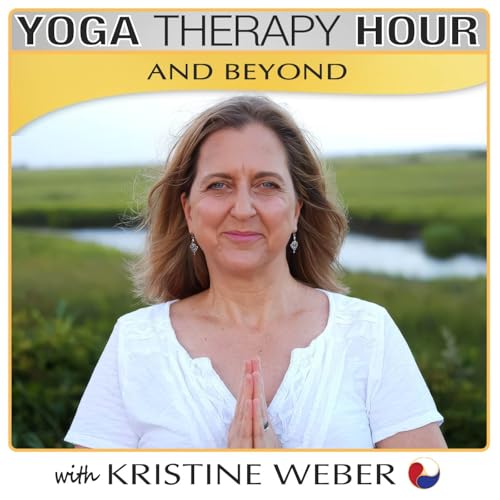
    In this episode of The Yoga Therapy Hour, Amy welcomes back Kristine Weber for her third conversation on the podcast. Kristine is known for weaving together yoga philosophy, neuroscience, social justice, and policy in a way that is both grounded and deeply practical. This conversation ranges from marketing and entrepreneurship to self-regulation, somatics, and the future of yoga therapy as a profession.The episode opens with a candid discussion about what it really takes to build a sustainable yoga business in the current landscape. Kristine shares the story of how one comment in a Facebook yoga research group changed her entire approach, leading her to study marketing, hire a digital strategist, and invest consistently in paid advertising—while staying aligned with her values and with authentic, evidence-informed yoga.From there, Amy and Kristine move into the heart of the conversation: yoga as self-regulation and why the vagus nerve is only one piece of a much larger picture. Kristine contrasts Western models of self-regulation and the autonomic nervous system with yogic models that include doṣas, guṇas, the kośas, and ethical frameworks like the yamas and niyamas. Together, they explore how yoga invites us to move beyond mechanistic “fix the machine” thinking toward a biopsychosocial–spiritual, socio-ecological understanding of who we are.They also discuss:How to define self-regulation from both neuroscience and yoga perspectivesThe limits of a purely “vagus nerve–centric” approach and why it’s important to situate the vagus nerve inside broader models of health and meaningThe role of interoception, perception, ethics, and self-study (svādhyāya) in genuine regulation and resilienceWhen devices and vagal stimulators can be helpful, and how worldview shapes whether they support or undermine long-term healingThe emerging tension around somatic therapies in systems like the VA and APA, and why training and scope of practice matterISMETA and other advocacy efforts working on regulation and recognition for somatic modalitiesGrassroots versus federal-level advocacy, and why yoga therapists need to think locally and globallyLicensure, silos, and why it’s both necessary and problematic for yoga therapyKristine’s concept of “yoga in all policy” and the importance of bringing yoga into schools, treatment centers, public health, and beyondAmy also shares about her forthcoming co-authored book with Marlysa Sullivan, Applications of Therapeutic Yoga in Integrative Health: Reimagining Well-Being (Routledge Press Spring 26), which places the vagus nerve and neuroscience inside the larger arc of the eight limbs of yoga—rather than asking yoga to fit into a narrow biomedical frame. Kristine responds with enthusiasm for this more holistic paradigm and calls on yoga professionals to reclaim yoga as a complete system for human transformation and flourishing, not “just stretching” or a series of isolated techniques.Toward the end of the episode, Kristine describes ways to study with her, including:The Science of Slow – an on-demand course on fatigue, depression, anxiety, chronic pain, and body imageNeuroscience of Yogic Meditation – exploring the distinctiveness of yogic meditation practicesHer Subtle Yoga breathwork certification and other nervous-system-focused trainingsWeekly classes through the Subtle Yoga Resilience Society membershipLive workshops in the U.S. and internationallyThis conversation is for yoga therapists, yoga teachers, and integrative health professionals who sense that yoga has far more to offer than “yoga for the vagus nerve” headlines—and who want to align their work with a broader, more humane vision of health, policy, and social change.Find Amy Wheeler on WWW.TheOptimalState.comMaster of Science in Yoga Therapy https://muih.edu/academics/yoga-therapy/master-of-science-in-yoga-therapy/ Explore MUIH’s Post-Master’s Certificate in Therapeutic Yoga Practices, designed specifically for licensed healthcare professionals. https://muih.edu/academics/yoga-therapy/post-masters-certificate-in-therapeutic-yoga-practices/ Try our Post-Bac Ayurveda Certification Program at MUIH: https://muih.edu/academics/ayurveda/post-baccalaureate-ayurveda-certification/#IntegrativeHealth #HealthcareEducation #InterprofessionalEducation #GraduateSchool #NDMUproud #SOIHproud #SOIHYoga #SOIHAyurveda #NDMUYoga #NDMUAyurveda #SOIHGraduateSchool
    Afficher plus Afficher moins
    51 min
  • Yoga Therapy, CCS, and the Future of Community-Based Mental Health Support
    Feb 6 2026

    In this episode of The Yoga Therapy Hour, Amy speaks with Valerie Hesslink and Jeanne Kolker, both from Insight Counseling & Wellness, about how yoga therapy has tapped into billing through Wisconsin’s Comprehensive Community Services (CCS) program. Jeanne and Valerie discuss the realities of providing trauma-informed, community-based care, the role of skill building in recovery, and the organizational standards required to deliver CCS services. Valerie also shares her personal journey and how yoga helped her reconnect with herself during a difficult period. The conversation offers a grounded look at the future of integrative mental health and the importance of embodied practices in long-term healing.

    Valerie Hesslink

    Valerie brings both professional training and lived experience to her work in CCS. She speaks openly about a period in her life marked by emotional struggle and a deep sense of disconnection—an experience that led her to yoga when traditional therapies were not enough. Through sustained breathwork, embodiment practices, and steady support, she found her way back into her body and rebuilt her internal sense of safety and clarity. This personal journey now informs the way she teaches. Valerie’s approach is patient, relational, and grounded in empathy. She understands the courage it takes for clients to begin again and offers tools that help them move through daily life with more steadiness and trust.

    Jeanne Kolker

    Jeanne is a therapist and yoga teacher with extensive experience in trauma-informed care. She works at the intersection of somatic awareness and mental health, supporting individuals through recovery with clarity and compassion. Jeanne offers insight into how yoga therapy fits into multidisciplinary care and what is needed to ensure clients receive safe, consistent, and high-quality services.

    Learn more about their work:

    Insight Counseling & Wellness

    • Counseling Services: https://insightmadison.com/ccs
    • Yoga Studio: https://insightmadison.com/yogastudio

    Learn More about the MS in Yoga Therapy: School of Integrative Health at NDMU: https://www.ndm.edu/academics/integrative-health

    Master of Science in Yoga Therapy at NDMU https://www.ndm.edu/academics/integrative-health/yoga-therapy

    Explore NDMU’s Post-Master’s Certificate in Therapeutic Yoga Practices, designed specifically for licensed healthcare professionals. https://www.ndm.edu/academics/integrative-health/yoga-therapy/post-masters-certificate-in-therapeutic-yoga-practices

    Try our Post-Bac Ayurveda Certification Program at NDMU: https://www.ndm.edu/academics/integrative-health/ayurveda/post-baccalaureate-ayurveda-certification

    #IntegrativeHealth #HealthcareEducation #InterprofessionalEducation #GraduateSchool #NDMUproud #SOIHproud #SOIHYoga #SOIHAyurveda #NDMUYoga #NDMUAyurveda #SOIHGraduateSchool

    Contact Amy Wheeler at www.TheOptimalState.com

    Afficher plus Afficher moins
    49 min
  • “All Life is Yoga”: Chen Or Bach on Joy and Healing
    Jan 30 2026
    Episode summary Computer-science-turned-cognitive-science researcher and yoga therapist Chen Or Bach joins Amy to share a candid journey from academia to cancer survivorship, from mat-based practice to living yoga moment-to-moment. We trace how the pañca-kośa model reframed her healing, why standards and accreditation helped yoga integrate into Israeli healthcare, and what it means to let go of familiar tools and still remain fully in the path. It’s a forward-looking conversation about bringing steadiness (sthira) and sweetness (sukha) into real life—mountain trails, laundry folding, and all.Listen forNature as practice: Boulder’s mountains as living teachers of stability in change.Pañca-kośa in plain life: tending annamaya, prāṇamaya, manomaya, vijñānamaya, and especially ānandamaya—not as theory but daily design.When the practice stops “working”: giving yourself permission to let go of certain tools (āsana, set routines) and allow yoga to become how you meet each moment.Healthcare integration: how Israel’s modular 1,000-hour training (500 teacher + 500 therapy with specialty tracks) supported hospital uptake.Karma yoga without burnout: serving the field while protecting one’s vitality (tapas with svādhyāya and īśvara-praṇidhāna—Kriyā Yoga in action).Key takeawaysĀnanda is not optional. Many of us optimize the outer layers (food, steps) and starve ānandamaya kośa. Intentionally design joy-creating activities; the outer layers flourish downstream.Your practice can change shape. If a tool stops serving, it’s not failure—it’s viveka (discernment). Let the aim (clarity, compassion, steadiness) stay constant while methods evolve.Standards serve people. Thoughtful accreditation isn’t bureaucracy—it’s ahimsā and satya for clients and health systems: clear scope, reliable skills, safer care.Karma yoga needs boundaries. Service without self-regulation fuels burnout. Pair tapas with rest, supervision, and community—abhyāsa with vairāgya.Practical micro-practices (try today)Joy audit (5 min): List three ordinary tasks. For each, name one sensory element you can savor (temperature of water while washing dishes, sound of leaves on a walk).Kośa check-in (2 min): Ask: What does my body/energy/mind/wisdom/joy need right now? Choose one small step.Walk as yoga (10–20 min): No metrics. Attend to breath cadence, ground contact, and horizon/sky—let attention, breath, and body cohere.Resources mentionedPātañjala Yoga Sūtra (as study companion during illness)Bhagavadgītā (as a source of resilience and meaning)IAYT-inspired standards and Israel’s modular specialty pathways (trauma, oncology, etc.)About our guest — Chen Or Bach Chen Or Bach blends cognitive/neuroscience training with decades of yoga practice and service. In Israel, she helped advance standards that enabled yoga and yoga therapy to integrate into mainstream healthcare, including rehabilitation settings (e.g., TBI). Now based in Boulder, she continues to teach, mentor, and model a life where all life is yoga.Pull quotes“Once your attention, breath, and body are in the same place, the game changes.”“If one tool stops serving you, the tradition still has a thousand doors.”“I stopped ‘doing’ yoga and started being it—moment by moment.”“Standards aren’t red tape; they’re how we protect people.”School of Integrative Health at NDMU: https://www.ndm.edu/academics/integrative-healthMaster of Science in Yoga Therapy at NDMU https://www.ndm.edu/academics/integrative-health/yoga-therapy Explore NDMU’s Post-Master’s Certificate in Therapeutic Yoga Practices, designed specifically for licensed healthcare professionals. https://www.ndm.edu/academics/integrative-health/yoga-therapy/post-masters-certificate-in-therapeutic-yoga-practices Try our Post-Bac Ayurveda Certification Program at NDMU: https://www.ndm.edu/academics/integrative-health/ayurveda/post-baccalaureate-ayurveda-certification#IntegrativeHealth #HealthcareEducation #InterprofessionalEducation #GraduateSchool #NDMUproud #SOIHproud #SOIHYoga #SOIHAyurveda #NDMUYoga #NDMUAyurveda #SOIHGraduateSchool
    Afficher plus Afficher moins
    54 min
  • Yoga Therapy for Lymphoedema with Debbie Lamond
    Jan 23 2026
    Episode snapshotDebbie Lamond (near London, UK) is a yoga teacher and yoga therapist specializing in support for people living with lymphoedema. After decades of personal practice and training with the British Wheel of Yoga, she blends breathwork, Yoga Nidra, gentle movement, self-care for the lymphatic system, and realistic habit tracking. This conversation feels like tea with a wise friend—practical, hopeful, and grounded in ahiṃsā, svādhyāya, and the steady courage of śraddhā.What we coverDebbie’s path: yoga since 1994, why it offered something team sports and fitness didn’t—time, calm, and coming home to self.Lymphoedema support, plain language: why movement, hydration, skin care, and compression are foundations—and how yoga fits in.Breath changes the body: how diaphragmatic breathing helps down-shift sympathetic overdrive and, anecdotally, can ease night-time swelling enough to return to sleep.Yoga tools that help: slow rhythmic movement, Yoga Nidra for nervous-system recovery, present-moment awareness to interrupt “what-if” spirals.Manual Lymph Drainage (MLD): “open the drains,” then move—pair with water intake and gentle activity.Ayurvedic lifestyle touches: cooling choices when heat aggravates symptoms, morning light, toxin reduction, and a simple habit tracker.Agency and dignity: building a daily routine you’ll actually keep—this isn’t a quick-fix pill.Practical takeaways (save/print)Three-minute reset: recline, elevate legs, one hand on belly; inhale gently through the nose, exhale a little longer; ~15–20 breaths. Notice if sensation and anxiety both dial down.Daily rhythm idea:Brief self-MLD (as taught by a qualified therapist).10–20 minutes of gentle yoga or a short walk.Hydrate and quick skin-check.Yoga Nidra or guided rest later in the day if swelling or fatigue rises.Get support: work with a qualified lymphoedema therapist for compression, self-care education, and monitoring.How yoga philosophy frames this workAhiṃsā (non-harm): move/rest in ways that protect tissue and reduce irritation.Svādhyāya (self-study): track patterns—sleep, flares, foods, stressors—without judgment.Īśvara-praṇidhāna (surrender): accept today’s reality while practicing skillful effort. Together, these form a sustainable sādhana for long-term conditions.Resources mentionedBritish Wheel of Yoga (for teacher standards and CPD)Lymphoedema Support Network (UK)Manual Lymph Drainage (find a qualified therapist)Yoga Nidra recordings for regulation and restWho this episode is forPeople living with primary or secondary lymphoedema; those post-treatment or post-surgery; clinicians curious about integrating breath and gentle movement; yoga therapists seeking condition-specific insights.About our guestDebbie Lamond is a UK-based yoga teacher and yoga therapist focusing on lymphoedema support. She offers one-to-one sessions (including online), small therapeutic groups through a local cancer charity, and a complimentary 30-minute consultation to explore fit.Connect with DebbieWebsite: DebbieLamondYoga.co.uk Initial consultation: 30 minutes, no charge (book via her website)Disclaimer: This episode and show notes are for educational purposes only and are not medical advice. If you have new or worsening symptoms, seek qualified medical care promptly.Plans of Study for NDMU Yoga Therapyhttps://livendm.sharepoint.com/sites/Academics/SitePages/Yoga-Therapy-Plans-of-Study.aspx?csf=1&web=1&share=EeZhGMscDMFOl1Lk0PD6gOsBTxvKkWvbfjhHLmMMuNpLFw&e=ApOX4h&CID=45c542e6-5528-4c68-a8ac-5596fb4fc161 School of Integrative Health at NDMU: https://www.ndm.edu/academics/integrative-healthMaster of Science in Yoga Therapy at NDMU: https://www.ndm.edu/academics/integrative-health/yoga-therapy Explore NDMU’s Post-Master’s Certificate in Therapeutic Yoga Practices: Designed specifically for licensed healthcare professionals: https://www.ndm.edu/academics/integrative-health/yoga-therapy/post-masters-certificate-in-therapeutic-yoga-practices Try our Post-Bac Ayurveda Certification Program at NDMU: https://www.ndm.edu/academics/integrative-health/ayurveda/post-baccalaureate-ayurveda-certification #IntegrativeHealth #HealthcareEducation #InterprofessionalEducation #GraduateSchool #NDMUproud #SOIHproud #SOIHYoga #SOIHAyurveda #NDMUYoga #NDMUAyurveda #SOIHGraduateSchool
    Afficher plus Afficher moins
    47 min
  • From Trauma to “Safety in the Body”: Yoga Therapy, Joy, and Scope — with Erin Byron
    Jan 16 2026
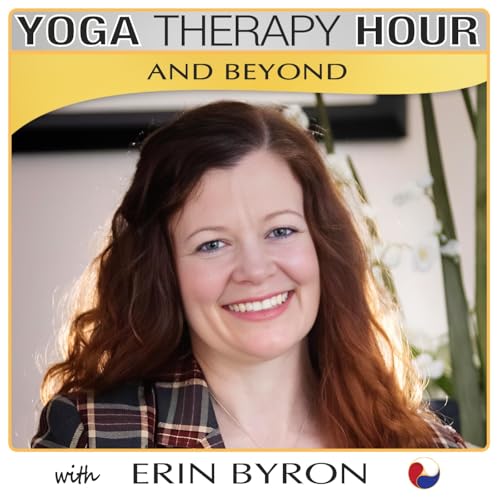
    Episode Summary: Amy sits down with therapist–author Erin Byron for a candid conversation that moves from Erin’s lived experience of trauma to the practical tools that help people feel safe in their bodies again. They explore how yoga therapy complements mental health care, why personalization matters, and how joy, play, and creativity support nervous system recovery. Midway, they wade into today’s hot topic: scope of practice and the identity of “yoga therapist.” Erin offers a clear, compassionate take on keeping sessions yoga-centered while collaborating across disciplines. They close with concrete, do-today practices and a peek at Erin’s free community gatherings and the Women’s Writers Collective in Yoga Therapy.Guest: Erin Byron, MA — psychotherapist, certified yoga therapist, author of Safety in the Body: Foundations in Mental Health Recovery through Yoga Therapy, Expressive Arts, and Neurophysiology; co-author of Yoga Therapy for Arthritis.Key Topics & Takeaways:Coming home to self: How classical yoga practices (breath, relaxation, attention training) quickly shifted Erin’s stress and sleep in early practice.Neurophysiology 101: Why connection, co-regulation, and prefrontal cortex “thickening” matter for trauma recovery.Judith Herman’s 3-stage model: Safety & trust → reconnection with joy/identity → integration and contribution.Joy is not a bypass: Adding play, beauty, and expressive arts prevents rehearsing trauma and accelerates healing.Personalized yoga works fast: Tailoring asana, breath, mantra, and visualization to the individual often yields quick, embodied results.Scope & language: Keeping sessions yoga-centered (practice-forward) while naming scope clearly; how to redirect talk into practice without overstepping.The profession today: Why holding firm to “yoga therapy” as a distinct, skillful discipline matters—and how collaboration (not dilution) serves clients.Practical nugget: Small “yoga snacks” (e.g., a fear-soothing mantra + mudra) can shift state in minutes when practiced consistently.Memorable Quotes:“Yoga didn’t change who I am; it taught me who I’ve always been.” — Erin“Do the hard work in the presence of joy—otherwise we just rehearse trauma.” — Erin“Bring the yoga only you can bring. No other field has these tools in this context.” — AmyResources Mentioned:Safety in the Body by Erin Byron (info and community updates via her newsletter/IG)Yoga Therapy for Arthritis (co-author Erin Byron)IG: @erinbyron.maNewsletter & free twice-monthly community hour: sign up via her website (link in show notes)Call to Action:Share this episode with a colleague who supports trauma recovery.Join the Women’s Writers Collective author spotlight Leave a rating/review if this conversation helped you—your support grows the reach of yoga therapy.Women’s Writers Collective in Yoga Therapy: monthly author spotlights & free book-club style events: · https://happy-back-yoga.teachable.com/p/the-yoga-therapy-book-club Plans of Study for NDMU Yoga Therapyhttps://livendm.sharepoint.com/sites/Academics/SitePages/Yoga-Therapy-Plans-of-Study.aspx?csf=1&web=1&share=EeZhGMscDMFOl1Lk0PD6gOsBTxvKkWvbfjhHLmMMuNpLFw&e=ApOX4h&CID=45c542e6-5528-4c68-a8ac-5596fb4fc161 School of Integrative Health at NDMU: https://www.ndm.edu/academics/integrative-healthMaster of Science in Yoga Therapy at NDMU: https://www.ndm.edu/academics/integrative-health/yoga-therapy Explore NDMU’s Post-Master’s Certificate in Therapeutic Yoga Practices: Designed specifically for licensed healthcare professionals: https://www.ndm.edu/academics/integrative-health/yoga-therapy/post-masters-certificate-in-therapeutic-yoga-practices Try our Post-Bac Ayurveda Certification Program at NDMU: https://www.ndm.edu/academics/integrative-health/ayurveda/post-baccalaureate-ayurveda-certification #IntegrativeHealth #HealthcareEducation #InterprofessionalEducation #GraduateSchool #NDMUproud #SOIHproud #SOIHYoga #SOIHAyurveda #NDMUYoga #NDMUAyurveda #SOIHGraduateSchool
    Afficher plus Afficher moins
    53 min
  • Grounded in Chaos, Growing in Joy: Rebuilding a Life, One Mindful Step at a Time with Dr. Lisa Nezneski
    Dec 19 2025
    Episode summaryAfter losing her home, savings, and a 34-year marriage, pharmacist and integrative medicine leader Dr. Lisa Nezneski chose a different path: put herself first, grieve fully, and cultivate joy deliberately. In this candid conversation, we trace the arc from rupture to renewal—restorative yoga twice a week, twice-daily meditation, beach “walking meditations,” and the seven mindful questions that helped her rewire patterns. We also talk relationships after loss, somatic signs of awe, and how to make the “next right step” when you don’t know what’s next. This is a clear-eyed look at resilience, seen through yoga’s lens of abhyāsa (steadfast practice) and vairāgya (non-attachment): effort rooted in discernment, without clinging to outcomes.Dr. Lisa Nezneski — Certified Mindfulness Meditation Teacher; board-certified pharmacotherapist; Reiki Master; poet and author of Grounded in Chaos: Leaning into Adversity, Learning Joy (2020; updated edition forthcoming). Former clinical pharmacist and hospital administrator; taught at Duquesne University; past Chief Clinical Officer at Schatz Clinical Services; founder of Healthy Mindful Self. Website: lisanezneski.comKey takeawaysChoose self-priority without apology. Midlife caretakers often land last on their own list; reclaiming agency is the hinge of recovery.Practice over prediction. Twice-daily meditation + consistent restorative yoga created the conditions for healing—abhyāsa in action.Non-attachment reduces reactivity. “This is this day.” Meet what is, breathe three times, then respond—classic vairāgya.Somatic joy is real data. Tingling, goosebumps, softening—felt sense can signal alignment more reliably than analysis.The “next right step” is enough. Use simple inner tests (Lisa’s “speedometer” method) and adjust course—no catastrophizing.Relational healing is possible. Mutuality, gratitude, and playfulness can re-pattern partnership after grief.Hands calm the nervous system. Repetitive handcrafts (e.g., finger-crochet) function like mudrā/nyāsa—bottom-up regulation.ResourcesDr. Lisa Nezneski — lisanezneski.comBook — Grounded in Chaos: Leaning into Adversity, Learning Joy (1st ed., 2020; updated edition forthcoming)Listener reflection (journal prompts)Where in my week do I practice abhyāsa without clinging to a result?What does my body feel like when a choice is a genuine “yes”?What micro-ritual will I use as my three-breath reset cue?Call to actionIf this episode helped you locate a little joy inside the storm, share it with one person who needs a steady hand. Subscribe, leave a review, and tell us the one practice you’re committing to this week.Plans of Study for NDMU Yoga Therapyhttps://livendm.sharepoint.com/sites/Academics/SitePages/Yoga-Therapy-Plans-of-Study.aspx?csf=1&web=1&share=EeZhGMscDMFOl1Lk0PD6gOsBTxvKkWvbfjhHLmMMuNpLFw&e=ApOX4h&CID=45c542e6-5528-4c68-a8ac-5596fb4fc161School of Integrative Health at NDMU: https://www.ndm.edu/academics/integrative-healthMaster of Science in Yoga Therapy at NDMU https://www.ndm.edu/academics/integrative-health/yoga-therapy Explore NDMU’s Post-Master’s Certificate in Therapeutic Yoga Practices, designed specifically for licensed healthcare professionals. https://www.ndm.edu/academics/integrative-health/yoga-therapy/post-masters-certificate-in-therapeutic-yoga-practices Try our Post-Bac Ayurveda Certification Program at NDMU: https://www.ndm.edu/academics/integrative-health/ayurveda/post-baccalaureate-ayurveda-certification#IntegrativeHealth #HealthcareEducation #InterprofessionalEducation #GraduateSchool #NDMUproud #SOIHproud #SOIHYoga #SOIHAyurveda #NDMUYoga #NDMUAyurveda #SOIHGraduateSchool
    Afficher plus Afficher moins
    54 min