Épisodes

  • 426. Brandon and Lindsey Taylor: Getting Fired From Patient and Caregiver
    Nov 2 2026

    Most couples leave stroke rehab with a discharge plan, a wheelchair and a list of medications. Nobody tells them how to be husband and wife again.

    Brandon Taylor was 35, a football coach and father of seven with an eighth on the way when multiple ischaemic strokes hit both sides of his brain in his sleep.

    His wife Lindsey was eight months pregnant and became his caregiver overnight. Nine years later, they talk openly about what that did to their marriage, their intimacy, and their family, and how they found their way back to being partners. Their book, The Waterline, grew out of the conversations they had to learn to have.

    Afficher plus Afficher moins
    1 h et 20 min
  • Is My Stroke a Punishment From God?
    Oct 20 2026

    Have you ever wondered if your stroke was a punishment from God? Many stroke survivors tell me they believe it. They think the stroke came as payback for something they did in the past, or that it was sent to teach them a lesson.

    In this short solo episode I explain why that belief isn't true, and why hanging on to it slows your recovery. If God punished people with strokes, why do so many people who have done terrible things live to 90 without one? I talk about where this kind of religious guilt usually comes from.

    It tends to get passed down by an elder, a parent or someone in the community who wanted people to keep showing up at church or temple and didn't know another way to motivate them. I also separate guilt from responsibility. Alcohol, drugs, diet and inactivity can all play a part in a stroke.

    Changing those habits is responsibility. Punishing yourself for them is guilt. My stroke happened at 37, when a blood vessel I was born with burst. I was also smoking and drinking at the time. I changed how I lived, but I didn't carry the guilt, and that decision made room for my recovery.

    Afficher plus Afficher moins
    4 min
  • 425. Nutrition, Copper and Waking the Brain with Dr. Robert Hedaya
    Oct 19 2026

    Dr. Robert Hedaya, Clinical Professor of Psychiatry at Georgetown University School of Medicine and a pioneer of functional medicine psychiatry, returns for his fourth and final conversation on Recovery After Stroke.

    He founded the Whole Psychiatry & Brain Recovery Center in New Jersey. Together, we cut through the nutrition noise and look at a passive therapy called HYLANE, including what it can't do.

    Afficher plus Afficher moins
    51 min
  • Unmet Needs After Stroke: What 83 Survivors and Carers Told Me
    Oct 16 2026

    If you had a stroke, you probably think the thing you need most is more therapy. I asked 83 stroke survivors and carers what they'd change about their recovery. The most common answer wasn't a body part. So what was it, and why do people who are getting therapy still feel like they're doing it alone?

    WHAT YOU'LL LEARN

    • What 83 stroke survivors and carers said they'd change about their recovery, and the answer that surprised me
    • Why nearly half don't feel supported, informed or empowered, even when they're in therapy
    • What a Cochrane review of 21 trials found when survivors got better information about their stroke
    • How self-management skills like goal-setting and problem-solving relate to quality of life after stroke
    • Three things to do this week to take more ownership of your recovery

    Afficher plus Afficher moins
    7 min
  • 424. Alan Durnwirth: 32 Years After an AVM Rupture and the Undercurrent That Shaped His Life
    Oct 12 2026

    Most conversations about stroke recovery stop at the first year, and this one picks up at year 32. Alan Durnwirth was 24 and five months from his wedding when an AVM in his left frontal cortex ruptured in March 1994.

    He woke one morning paralyzed down his right side, barely able to say his fiancée's name, and had brain surgery three days later. He is now 57, runs the design business he built around his own brain, and has written a book about the undercurrent he says was shaping his life long before the bleed.

    Afficher plus Afficher moins
    59 min
  • Why Waiting to Feel Ready Is Keeping Your World Small
    Oct 6 2026

    Many stroke survivors wait to feel ready before rebuilding their lives. Research on post-traumatic growth after stroke suggests readiness isn't a feeling that arrives first; it's built through small, repeated actions. This post looks at what a 2026 review and related studies show about how growth develops after stroke, and why it so often shows up alongside distress, not after it ends.

    Afficher plus Afficher moins
    8 min
  • 423. Learning to Cry After Stroke - Bobby Chaggar
    Sep 29 2026

    Ramandeep "Bobby" Chaggar is a veterinary surgeon originally from India, now living in Melbourne. In December 2023, he had a right ischaemic pontine stroke and had to find out, in real time, whether the belief he grew up with was actually true.

    Afficher plus Afficher moins
    1 h
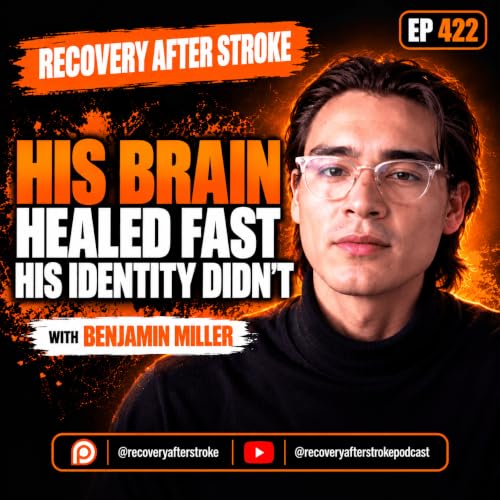
  • 422. He Was 16 When a Stroke Ended His Football Career — Benjamin Miller on Identity, Substances, and Finding His Way Back
    Sep 25 2026

    He was 16 years old. On September 22, 2017, everything changed.

    Benjamin Miller was a football player in Texas when a carotid artery dissection ended his career and split his sense of self in two. His brain began to recover. His identity didn't know how.

    What followed the substances, the silence, and the search for meaning is the story this episode is about.

    In this conversation with Bill Gasiamis, Benjamin opens up about what it's really like to have a stroke as a teenager, what nobody tells you about recovery when you're still growing into who you are, and how he found his way back not to the person he was, but to someone he could live with.

    If you're recovering from stroke or loving someone who is, this episode will meet you where you are.

    Afficher plus Afficher moins
    1 h et 10 min