Épisodes

  • The Problem of Loneliness
    Oct 15 2026

    Loneliness has two faces: it can become the suffering of isolation, but also a space for contemplation and self-knowledge.

    In this episode of WADING, I introduce the philosophical problem of loneliness, moving from its growing relevance in contemporary society to a much older metaphysical question: what happens when the part believes itself separated from the Whole?

    From Anaximander to the experience of suffering and human relationships, we begin a journey through the cursed and blessed faces of solitude, asking a fundamental question: when are we ever truly alone?

    Afficher plus Afficher moins
    13 min
  • Philosophical Counselling and the Generation of Meaning About Death and Dying
    Sep 24 2026

    In this episode of WADING, I explore how philosophical counselling can help us generate meaning around death, dying and loss.

    Philosophy has confronted these questions since its very beginning. From the pre-Socratics to Socrates, it has always asked what it means to appear, disappear, live and die.

    Philosophical counselling brings these questions into a helping relationship based on dialogue, listening and reflection. Its aim is not to provide definitive answers, but to help a person recognize the beliefs, assumptions and meanings through which they interpret their own existence.

    Loss, illness and death can interrupt the direction we thought our lives were taking. But they can also open deeper questions: How am I living? What gives meaning to my existence? What still matters to me?

    In this sense, philosophical counselling becomes a practice of awareness and orientation. A contemporary form of maieutics capable of helping us bring new meaning into the light.

    Afficher plus Afficher moins
    16 min
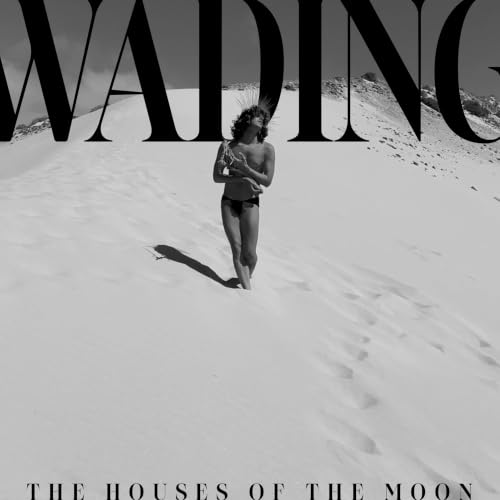
  • We Inhabit the Houses of the Moon
    Sep 3 2026

    In this episode of WADING, I explore a radical question: is death truly part of reality, or does it belong to the way reality appears to us?

    Through the allegory of Janus, the Sun and the Moon, I imagine two different ways of understanding existence. On one side are the Houses of Night, where birth and death appear as real and existence unfolds between beginning and end. On the other are the Houses of Day, where everything is eternal and death can only appear as an illusion.

    Between these two horizons, different philosophical voices emerge: death as finis, death as transitus, mortality, immortality, becoming and eternity.

    Perhaps we all inhabit the houses of the Moon, living in reflected light while trying to understand its source.

    And this is where philosophy begins again: not with what we want to believe, but with the question of what can actually be true.

    Afficher plus Afficher moins
    11 min
  • Death is Impossible! Witnessing Eternity with Emanuele Severino
    Aug 27 2026

    What if death doesn’t mean becoming nothing?

    In this episode of WADING, I explore the radical philosophy of Italian thinker Emanuele Severino and his claim that every being is eternal. If becoming means that something passes from being into nothingness, then becoming itself contains a contradiction. What disappears from our experience may not therefore be annihilated, but simply leave the horizon of appearance.

    Through philosophy, grief, personal memories, Chopin and butoh dance, I reflect on what happens when we begin to question one of our deepest convictions: that we are mortal.

    Perhaps we don’t need to become immortal. Perhaps we’ve never been anything other than eternal.

    Afficher plus Afficher moins
    15 min
  • Better Never to Have Been Born! Philosophy as Meditatio Mortis
    Aug 20 2026

    In this episode of WADING, I explore philosophy as meditatio mortis: an exercise in thinking about death in order to understand existence more deeply.

    Starting from the disturbing wisdom of Silenus — that it might have been better never to have been born — I move through Solon, Socrates, Epicurus, Prometheus, Heraclitus and Zen tradition to ask how human beings have tried to confront mortality.

    Is death simply something to fear and overcome? Or can it teach us something about life, birth and the meaning of existence itself?

    From the calm of Socrates to Epicurus’ attempt to dissolve the fear of death, philosophy offers different ways of facing the same fundamental question.

    And beneath all of them lies an even more radical possibility: what if existence were not ultimately suspended between birth and annihilation, but between annihilation and eternity?

    Afficher plus Afficher moins
    19 min
  • Tracing the Remedy Against Grief
    Aug 13 2026

    In this episode of WADING, I continue my journey through grief by asking a question that has accompanied human beings for centuries: what remedy do we seek when we’re confronted with death?

    Grief cannot simply be hidden or annihilated. But it can be listened to. And when we listen to it, it can reveal itself as another face of love: the trace of a presence that continues through memory, even when someone is no longer with us in the same way.

    Starting from my personal experience of bereavement, I explore how contemporary society often leaves us unprepared for death and mourning, and how human beings have historically searched for protection from precariousness through relationships, institutions, technology, spirituality, science and knowledge.

    But what about philosophy? From the earliest Greek thinkers to Seneca, Marcus Aurelius and Emanuele Severino, philosophy has long confronted the anguish of death by searching for meaning and truth.

    This episode is an invitation to rediscover philosophy as a possible practice of preparation: a meditatio mortis capable of helping us think about death before death forces us to.

    Afficher plus Afficher moins
    14 min
  • My Journey of Grieving Through Dance and Philosophy
    Aug 6 2026

    In this episode of WADING, I share my personal journey through grief after the death of my mother, and the path that led me to explore mourning through philosophy, death education, and butoh dance.

    How can we bear the pain of loss? What does death mean when it suddenly enters our lives? And can the body become a place where grief is not only endured, but listened to, transformed, and expressed?

    Through memories, philosophical reflection, and my experience of creating Letters to My Mom, I explore grief not as something to overcome or erase, but as a profound transformation of our relationship with life, death, memory, and presence.

    A personal episode about loss, dance, philosophy, and the search for a way to continue living without forgetting those who are no longer physically beside us.

    Afficher plus Afficher moins
    17 min
  • Spring of a Dancer (the poem)
    Oct 11 2025

    Spring of a Dancer is a film, a book, a poem, a theatrical performance, a podcast, and a philosophical lecture on dance.

    Wondering what is the point of dancing today is one of the questions that has been close to my heart since I first became involved in dance. Butoh dance invites us to the scandal of the flesh, because it rebels against the rules and norms that claim to tell us what movement is right and wrong, what is beautiful and ugly, to the point of reminding us that even the line between what is alive and what is dead is not so clear.

    Spring of a Dancer is a hymn to the timeless rhythm that pulses through all things: the fire that gives birth to the stars. Invoking his prayer to the Sun, indifferent to our questions, the dancer sheds the skin of the mundane, echoing the ancient wisdom of the serpent: “If you remain under your skin, you miss most of what moves the heavens”. As the Great Crow beats its wings and Janus whispers to us to open the door, FÜYA urges us to question the meaning of pain: "Life is hard. All this pain can destroy you. Yet, in dance, grace blossoms like the first flowers of spring, ephemeral and eternal. For this reason, it is worth dancing today."

    I invite you to ⁠⁠watch the trailer for my film Spring of a Dancer⁠ on YouTube⁠ and ⁠read my new book Spring of a Dancer on Amazon Books⁠.

    Afficher plus Afficher moins
    28 min