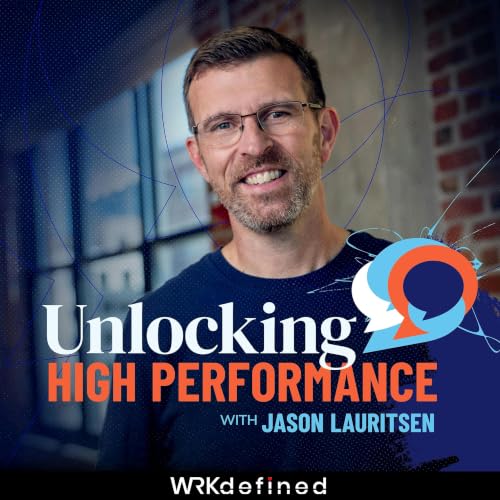
Couverture de Unlocking High Performance

Unlocking High Performance

Unlocking High Performance

De : WRKdefined Podcast Network
Écouter gratuitement

Unlocking High Performance, hosted by Jason Lauritsen, is a podcast for leaders who want strong results without burning out their people. Through solo reflections and honest conversations with leaders, Jason looks at how clarity, alignment, and connection shape the way work actually gets done.All rights reserved by WRKdefined Economie Management Management et direction Relations Sciences sociales
Épisodes
  • AI vs. the Manager
    Sep 3 2026
    Many leaders are asking whether AI will replace managers or just make their jobs harder. This episode takes a different angle and looks at how managers can use AI to get better at the work only they can do. Jason Lauritsen walks through three practical opportunities: using AI to sharpen clarity in how you set expectations and give feedback, giving managers a trusted place to get coaching instead of leaving it to chance, and paying attention to why employees increasingly turn to AI before they turn to their manager. If you lead people or support managers through AI adoption, this episode offers a clear picture of where AI helps and where the human work of building trust still matters most. Key Takeaways → AI is unlikely to replace capable managers, but it can pile more work onto them if organizations are not careful. → Clarity may be the most important management skill, and working with AI forces you to practice it. → Writing clear prompts is training for giving clearer expectations, direction, and feedback to people. → The fast feedback loop of AI shows you right away when your instructions are unclear, which rarely happens in everyday management. → Managers are already using AI for coaching and advice, so the real choice is whether to guide that or leave it to chance. → An internal AI coach trained on a company's values and leadership principles can reflect how the organization actually wants to lead. → Offering a trusted AI tool is a modern version of scripting and templating support, now possible at scale. → Research suggests many employees turn to AI for guidance before they turn to their manager or peers. → People often choose AI because the trust with their manager is not there, so they take the path of least resistance. → Real progress comes from investing in managers' relationship, conversation, and clarity skills, not only in AI adoption. Timestamps 00:02 – The debate over whether AI will replace managers 02:10 – How AI can add to a manager's workload and burnout 03:40 – Using AI to make managers better instead of obsolete 05:30 – Why clarity is a core management skill 07:15 – How writing clear prompts sharpens communication 12:00 – The fast feedback loop that builds clarity 15:10 – Why managers already turn to AI for coaching 18:20 – Building an AI coach aligned with company values 22:40 – What research shows about employees choosing AI 24:40 – The trust gap that sends people to AI first Keywords AI and management, using AI as a manager, will AI replace managers, manager burnout and AI, AI coaching for leaders, clarity in leadership, setting clear expectations, employee trust in managers, AI adoption for managers, people leadership skills JOIN THOUSANDS OF LEADERS WHO ARE HARNESSING THE POWER OF RELATIONSHIPS AT WORK. Subscribe to our newsletter: ⁠⁠⁠tinyurl.com/59nrvxnj Connect with Jason Lauritsen: Website: ⁠⁠⁠https://jasonlauritsen.com/⁠ YouTube: youtube.com/@jasonlauritsenvideo LinkedIn: linkedin.com/in/jasonlauritsen Instagram: instagram.com/jasonlauritsen
    Afficher plus Afficher moins
    22 min
  • How To Scale Culture Without Losing It with Dan Kessler
    Aug 19 2026
    Growing a company from twenty people to a few hundred changes almost everything about how you lead. Culture is usually the first thing to feel the strain. In this conversation, Jason Lauritsen talks with Dan Kessler, president of Energage, the research partner behind the Top Workplaces program. He shares what it actually takes to keep a culture healthy while a business grows, makes acquisitions, and reinvents itself more than once. Dan is candid about how his role has changed over fifteen years, when core values are worth revisiting, how to tell whether an executive team is working well, and how his own instinct to be helpful can work against him. If you lead people through growth and want practical ways to keep your culture and your team aligned, this episode offers a grounded and honest look at the work it takes. Key Takeaways → Culture and business performance tend to move together. A struggling culture can carry a business for a while, but strong results are hard to sustain without it. → Maintaining culture as you grow starts with the executive team, because the way the top operates sets the tone for the whole business. → There is no single right operating framework for a leadership team. What matters is picking one and adapting it to your business. → Core values should be durable, but they can be revisited as a company matures. Updating them is not the same as throwing them out. → Every strength has an underbelly. At Energage, the value of helpfulness can slide into enablement, where you solve problems people should be able to solve themselves. → A healthy executive team talks about the real issues, lets people say what they think in the room, and shares a clear sense of where the business is headed. Widespread, unnecessary friction is often a sign the leadership team left the room without alignment or clarity. → Leading at scale means knowing when to roll up your sleeves and when to step back and trust your team to do the work their way. → Knowing who you are and showing up that way consistently makes leadership easier. For Dan, it comes down to love, levity, and purpose. Timestamps 02:36 – Inside a purpose-driven B Corp software company 05:56 – The pressure of being a top workplace yourself 08:33 – Why strong culture and results go together 10:10 – What maintaining culture at scale really means 13:31 – Choosing an operating rhythm for your leadership team 16:22 – Why healthy culture starts at the top 18:51 – Knowing when to revisit your core values 23:56 – Signs your executive team is really working 27:32 – Leadership skills that growth and change demand 30:41 – Leading with consistency by knowing yourself Keywords scaling company culture, leading through growth, executive team alignment, when to update core values, workplace culture at scale, high performing leadership teams, Top Workplaces, culture and business performance, knowing when to delegate, leadership at scale — Connect with Dan: LinkedIn: ⁠⁠⁠⁠linkedin.com/in/dan-kessler-40b4a11/ — JOIN THOUSANDS OF LEADERS WHO ARE HARNESSING THE POWER OF RELATIONSHIPS AT WORK. Subscribe to our newsletter: ⁠⁠https://tinyurl.com/59nrvxnj⁠⁠ — Connect with Jason Lauritsen: Website: ⁠⁠jasonlauritsen.com/ YouTube: ⁠⁠youtube.com/@JasonLauritsenVideo LinkedIn: ⁠⁠linkedin.com/in/jasonlauritsen/⁠⁠ Instagram: ⁠⁠instagram.com/jasonlauritsen/⁠
    Afficher plus Afficher moins
    34 min
  • Why Team Agreement Falls Apart After Meetings
    Aug 12 2026
    You wrap up the meeting feeling good about it. Everyone nodded, the decision got made, and then the moment people step out of the room, it starts to come apart. This episode is about why that happens and what to do about it. The core idea is that agreement is not alignment. Agreement is the nod in the room. Alignment is when people leave and independently make the same call, and follow through the same way, without you standing over them. This episode digs into why senior teams so often mistake one for the other, shows how it plays out when a policy gets approved but every leader enforces it their own way, and gives you a simple practice you can run before the meeting ends to find out whether you have real alignment or just agreement on the surface. Key Takeaways → Agreement is the nod in the room. Alignment is people independently committing to the same action after they leave. → A meeting can feel successful and still produce no real alignment, and senior leaders make this harder because their agreement is so convincing. → This usually is not about lying or faking. People say yes to the version of the decision they each understood. → When a decision lacks shared meaning, every leader goes back and interprets and enforces it in their own way. → One approved policy can create very different employee experiences across departments, and that reads as unfairness. → The cost of skipping alignment shows up as friction, wasted energy, lower morale, and slower execution. → Before the meeting ends, have each person privately write down what was decided and what acting on it looks like for them and their team. → Then go around the room and have everyone read what they wrote. By halfway around, you will know whether you have alignment. → Alignment, not agreement, is where results come from, so do the work to create it while you are still in the room. Timestamps 00:02 – A meeting that felt settled, then came apart 02:18 – Why the room agreed but nothing moved forward 02:44 – Agreement versus alignment, and why it matters 03:30 – How approvals hide a lack of shared understanding 05:47 – One policy, very different experiences across teams 08:11 – The real costs of settling for agreement 10:06 – A practice that reveals alignment before people leave 12:11 – Doing the work so results actually follow Keywords agreement vs alignment, team alignment in meetings, why decisions fall apart after meetings, getting leadership buy-in, senior leadership alignment, decision making in meetings, performative agreement, aligning leaders on policy, meeting follow through, building consensus at work JOIN THOUSANDS OF LEADERS WHO ARE HARNESSING THE POWER OF RELATIONSHIPS AT WORK. Subscribe to our newsletter: ⁠⁠https://tinyurl.com/59nrvxnj⁠⁠ Connect with Jason Lauritsen: Website: ⁠⁠https://jasonlauritsen.com/⁠⁠ YouTube: ⁠⁠https://www.youtube.com/@JasonLauritsenVideo⁠ LinkedIn: ⁠⁠ ⁠⁠https://www.linkedin.com/in/jasonlauritsen/⁠ Instagram: ⁠⁠ ⁠⁠https://www.instagram.com/jasonlauritsen/⁠
    Afficher plus Afficher moins
    12 min
adbl_web_anon_alc_button_suppression_t1
Aucun commentaire pour le moment