Couverture de Secret Pollinators

Secret Pollinators

Secret Pollinators

De : Kelly Parks
Écouter gratuitement

Offres de saison | 0,99 € par mois pendant les 3 premiers mois

5,99 €/mois par la suite. Des conditions s’appliquent. Annulation mensuelle possible.
Native pollinators are responsible for 1 in 3 bites of food we eat — yet most of them are disappearing because nobody knows they exist. The Secret Pollinators is the native bee podcast that changes that, one tiny hero at a time. Each episode reveals the secret world of native bees, bumblebees, wild bees, butterflies, beetles, and the other lesser-known pollinators doing the real heavy lifting in American gardens, farms, and wild landscapes. Spoiler alert: that tomato on your plate was probably pollinated by a native bee, not a honeybee. The blueberry on your morning oatmeal? Almost certainly a bumblebee. Host Kelly - a Certified Pollinator Steward and published science writer based in Montana - is on a mission to make a real difference in the lives of native pollinators through short, mind-blowing episodes about the 4,000+ species of native bees you've never heard of. Mason bees that build with mud. Leafcutter bees that scissor flower petals. Ground-nesting bees that live underground by the millions. Bumblebees so specialized they only forage from a single wildflower. Plus the butterflies, beetles, and other pollinators working overtime in your backyard. Every episode is packed with bee science, surprising natural history, and simple actions you can take to support these essential creatures — whether you live in a big-city apartment or on a sprawling farm. Warning: you might become slightly obsessed with spotting bumblebees everywhere you go. Kelly definitely is. When that happens, visit secretpollinators.com to dig deeper into the world of native bees and wild pollinators. www.secretpollinators.com Nature et écologie Science
Épisodes
  • The Tomato Conspiracy
    Aug 17 2025

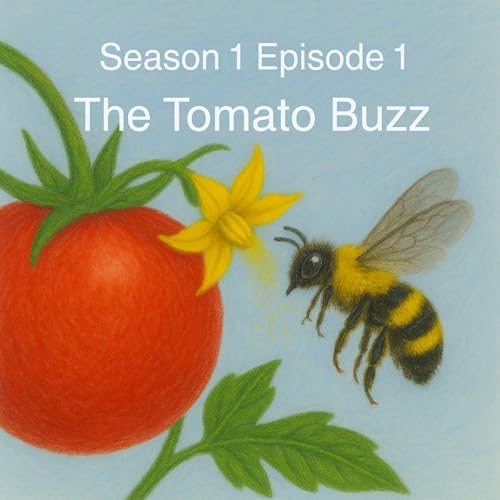
    What most of America doesn't know - every single time you bite into a tomato, you're tasting the work of a pollinator that ISN'T a honeybee. In fact, honeybees are about as useful for tomato pollination as I am at parallel parking."

    The fun podcast revealing secret pollinator heroes who are really feeding America. Spoiler: It's not honeybees - but we do love honey!

    www.secretpollinators.com

    KEY SOURCES

    Buzz pollination mechanics

    • De Luca, P. A., & Vallejo-Marín, M. (2013). What's the buzz about? The ecology and evolutionary significance of buzz-pollination. Current Opinion in Plant Biology, 16(4), 429–435. DOI: 10.1016/j.pbi.2013.05.002
    • Vallejo-Marín, M. (2019). Buzz pollination: studying bee vibrations on flowers. New Phytologist, 224(3), 1068–1074. DOI: 10.1111/nph.15666
    • Vallejo-Marín, M. (2022). How and why do bees buzz? Implications for buzz pollination. Journal of Experimental Botany, 73(4), 1080–1092.
    • Arroyo-Correa, B., Beattie, C. E., & Vallejo-Marín, M. (2019). Bee and floral traits affect the characteristics of the vibrations experienced by flowers during buzz pollination. Journal of Experimental Biology, 222: jeb198176.
    • King, M. J., & Buchmann, S. L. (2003). Floral sonication by bees: mesosomal vibration by Bombus and Xylocopa, but not Apis, ejects pollen from poricidal anthers. Journal of the Kansas Entomological Society, 76(2), 295–305.
    • Rosi-Denadai, C. A., et al. (2020). Buzz-pollination in Neotropical bees: genus-dependent frequencies and lack of optimal frequency for pollen release. Insect Science, 27(1), 133–142.

    Tomato pollination and yield

    • Cooley, H., & Vallejo-Marín, M. (2021). Buzz-pollinated crops: a global review and meta-analysis of the effects of supplemental bee pollination in tomato. Journal of Economic Entomology, 114(2), 505–519. DOI: 10.1093/jee/toab009 — meta-analysis of 71 experiments; supplemental buzz pollination increased tomato fruit weight by about 65% over no-pollination controls, and open pollination including buzz-capable bees by about 85%.
    • Ohio State University Extension, ENT-0092, Bumble Bee Pollination in Tomato Greenhouses. ohioline.osu.edu — honey bees do not perform buzz pollination; five commonly reared Bombus species worldwide, with B. impatiens most widely used in North America.
    • Banda, H. J., & Paxton, R. J. (1991). Pollination of greenhouse tomatoes by bees. Acta Horticulturae, 228, 194–198.
    • Velthuis, H. H. W., & van Doorn, A. (2006). A century of advances in bumblebee domestication and the economic and environmental aspects of its commercialization for pollination. Apidologie, 37(4), 421–451.

    Blueberries and other buzz-pollinated crops

    • Javorek, S. K., Mackenzie, K. E., & Vander Kloet, S. P. (2002). Comparative pollination effectiveness among bees on lowbush blueberry (Vaccinium angustifolium). Annals of the Entomological Society of America, 95(3), 345–351.
    • Isaacs, R., & Kirk, A. K. (2010). Pollination services provided to small and large highbush blueberry fields by wild and managed bees. Journal of Applied Ecology, 47(4), 841–849.

    #GardenTruth #PollinatorFacts #MindBlown

    #secretpollinators #nativebees #bumblebees #pollinatorpartnership #tomatoes #buzzpollination #gardens #wildbees

    Afficher plus Afficher moins
    12 min
  • Underground Heros - Mining Bees
    Aug 17 2025
    Those tiny volcanoes of soil in your spring lawn are front doors. Behind each one, a female mining bee is building an underground nursery. Here's what those holes really are, why you won't see them in late summer, why these bees are gentle, how their timing shifts with the weather, and how to find them next spring.www.secretpollinators.comKEY SOURCES & DOIsMining bee biology and nest structureMichener, C. D. (2007). The Bees of the World, 2nd ed. Johns Hopkins University Press. Andrenidae; scopa and pollen transport.Danforth, B. N., Minckley, R. L., & Neff, J. L. (2019). The Solitary Bees: Biology, Evolution, Conservation. Princeton University Press.Schrader, M. N., & LaBerge, W. E. (1978). The nest biology of the bees Andrena (Melandrena) regularis Malloch and Andrena (Melandrena) carlini Cockerell. Illinois Natural History Survey Biological Notes 108. Nest depth of 6–7 inches.Missouri Department of Conservation. Andrenid Bees (Miner Bees). Branching tunnels ending in brood cells; waterproof cell lining secretion.Cane, J. H. (1991). Soils of ground-nesting bees: texture, moisture, cell depth and climate. Journal of the Kansas Entomological Society, 64(4), 406–413.Ground-nesting prevalence and nesting habitatAntoine, C. M., & Forrest, J. R. K. (2021). Nesting habitat of ground-nesting bees: a review. Ecological Entomology, 46(2), 143–159. DOI: 10.1111/een.12986Xerces Society (2017). Nesting & Overwintering Habitat for Pollinators and Beneficial Insects. xerces.org. Tillage destroys ground nests.Wild Pollinator Partners / Fletcher Wildlife Garden: tilling destroys andrenid nests.Iowa State University Extension, Yard and Garden: Mining Bees. Grass is thin before the bees arrive; entrances are not damaging; sting risk is low.Aggregations and communal nestingPaxton, R. J., Thorén, P. A., Tengö, J., Estoup, A., & Pamilo, P. (1996). Mating structure and nestmate relatedness in a communal bee, Andrena jacobi (Hymenoptera, Andrenidae), using microsatellites. Molecular Ecology, 5(4), 511–519. Shared entrances with independent provisioning.Hoge, S., Kueneman, J., Fordyce, R., Dobler, C., Odanaka, K., & Danforth, B. N. (2026). Emergence dynamics and host-parasite associations in a large aggregation of Andrena regularis (Hymenoptera: Apoidea: Andrenidae). Apidologie. DOI: 10.1007/s13592-026-01256-6. The E37 cemetery study.Emergence timingCane, J. H. (2021). Global warming, advancing bloom and evidence for pollinator plasticity from long-term bee emergence monitoring. Insects, 12(5), 457. DOI: 10.3390/insects12050457. Four ground-nesting species over 12–24 years; first emergence varied 4–6 weeks and tracked thermal cues.PollinationRusso, L., Park, M. G., Blitzer, E. J., & Danforth, B. N. (2017). Flower handling behavior and abundance determine the relative contribution of pollinators to seed set in apple orchards. Agriculture, Ecosystems & Environment, 246, 102–108. DOI: 10.1016/j.agee.2017.05.033Park, M. G., Raguso, R. A., Losey, J. E., & Danforth, B. N. (2016). Per-visit pollinator performance and regional importance of wild Bombus and Andrena (Melandrena) compared to the managed honey bee in New York apple orchards. Apidologie, 47, 145–160.Schrader & LaBerge (1978), above: A. regularis as a blueberry pollinator.Park, M. G., Blitzer, E. J., Gibbs, J., Losey, J. E., & Danforth, B. N. (2015). Negative effects of pesticides on wild bee communities can be buffered by landscape context. Proceedings of the Royal Society B, 282(1809), 20150299. DOI: 10.1098/rspb.2015.0299. Wild bee abundance and species richness declined linearly with pesticide use one year after application; fungicides contributed significantly; surrounding natural habitat buffered the effect. Abstract verified.Tang, J., Quan, Q.-M., Chen, J.-Z., Wu, T., & Huang, S.-Q. (2019). Pollinator effectiveness and importance between female and male mining bee (Andrena). Biology Letters, 15(10), 20190479. PMCID: PMC6832193. Reviews Andrena as efficient pollinators of apple, pear, apricot, sweet cherry, blueberry and oilseed rape.Tepedino, V. J., Alston, D. G., Bradley, B. A., Toler, T. R., & Griswold, T. L. (2007). Orchard pollination in Capitol Reef National Park, Utah, USA. Honey bees or native bees? Biodiversity and Conservation, 16, 3083–3094. DOI: 10.1007/s10531-007-9164-8Garratt, M. P. D., et al. (2023). Addressing pollination deficits in orchard crops through habitat management for wild pollinators. Ecological Applications. DOI: 10.1002/eap.2743. Ground-nesting Andrena identified as especially important UK apple pollinators.Garibaldi, L. A., et al. (2013). Wild pollinators enhance fruit set of crops regardless of honey bee abundance. Science, 339(6127), 1608–1611. DOI: 10.1126/science.1230200. 41 crop systems worldwide.Specialist mining beesLarkin, L. L., Neff, J. L., & Simpson, B. B. (2008). The evolution of a pollen diet: host choice and diet breadth of Andrena bees. Apidologie, 39, 133–145. Aster-family specialists (subgenus ...
    Afficher plus Afficher moins
    6 min
  • The Leafcutter Bee Vandals
    Aug 21 2025

    Perfect semicircular cuts in your rose leaves look like vandalism. They aren't pest damage at all — they're evidence of one of the most precise construction projects in the insect world. Leafcutter bees shear pieces of leaf with toothed mandibles, carry them off, and use them to build overlapping, water-resistant nursery cells inside hollow stems and old beetle tunnels. This episode covers how to tell a leafcutter cut from actual pest damage, why the pollen brush on a leafcutter's abdomen makes her a more effective pollinator than a honey bee, when and where to watch for her, and why the genus Megachile includes both the largest bee on Earth and a non-native species now spreading across North America.

    www.secretpollinators.com

    KEY SOURCES

    Leafcutter bee biology and nesting

    • Michener, C. D. (2007). The Bees of the World, 2nd ed. Johns Hopkins University Press — Megachilidae and Megachile.
    • Sheffield, C. S., Ratti, C., Packer, L., & Griswold, T. (2011). Leafcutter and mason bees of the genus Megachile Latreille (Hymenoptera: Megachilidae) in Canada and Alaska. Canadian Journal of Arthropod Identification, 18.
    • USDA Forest Service, Leaf Cutting Bees (Megachile spp.). fs.usda.gov — about 242 Megachile species in North America; females carry pollen on the furry underside of the abdomen rather than in leg baskets.
    • Oregon State University Extension, PNW 692, Megachilid Bees in the Pacific Northwest: An Introduction. extension.oregonstate.edu — mandibles are large and sharply toothed for chewing leaves; scopa on the underside of the abdomen is the key identification feature; some species have slightly upturned abdomens that aid pollen collection.
    • NC State Extension, Leafcutter Bees. content.ces.ncsu.edu — females have a conspicuous abdominal scopa and pointed abdomens; males are smaller, with hairy faces, no scopa, and no stinger.
    • Minnesota Bee Atlas, Megachile rotundata. minnesotabeeatlas.umn.edu — leaf pieces used for cells and nest plugs, with visible veins in overlapping plugs.
    • Cane, J. H., Griswold, T., & Parker, F. D. (2007). Substrates and materials used for nesting by North American Osmia bees. Annals of the Entomological Society of America, 100(3), 350–358.

    Nest architecture and leaf use

    • Horne, M. (1995). Leaf area and toughness: effects on nesting material preferences of Megachile rotundata. Annals of the Entomological Society of America, 88(6), 868–875.
    • MacIvor, J. S. (2016). DNA barcoding to identify leaf preference of leafcutting bees. Royal Society Open Science, 3(3), 150623. DOI: 10.1098/rsos.150623

    Pollination

    • Pitts-Singer, T. L., & Cane, J. H. (2011). The alfalfa leafcutting bee, Megachile rotundata: the world's most intensively managed solitary bee. Annual Review of Entomology, 56, 221–237. DOI: 10.1146/annurev-ento-120709-144836
    • Parker, F. D., Batra, S. W. T., & Tepedino, V. J. (1987). New pollinators for our crops. Agricultural Zoology Reviews, 2, 279–304.

    Nesting habitat and bee hotels

    • Xerces Society (2017). Nesting & Overwintering Habitat for Pollinators and Beneficial Insects. xerces.org
    • MacIvor, J. S., & Packer, L. (2015). 'Bee hotels' as tools for native pollinator conservation: a premature verdict? PLOS ONE, 10(3): e0122126.

    #SecretPollinators #NativeBees #LeafcutterBee #Megachile #WildBees #PollinatorGarden #NativePollinators #BeeFacts #SolitaryBees #GardenScience #Entomology #PollinatorHabitat #BeeIdentification #WallacesGiantBee

    Afficher plus Afficher moins
    6 min
adbl_web_anon_alc_button_suppression_t1
Aucun commentaire pour le moment