Couverture de The Rule of Law

The Rule of Law

The Rule of Law

De : Allan Wisk
Écouter gratuitement

À propos de ce contenu audio

The podcast discovers the origins and history of the Rule of Law.2023 Politique et gouvernement Sciences politiques
Les membres Amazon Prime bénéficient automatiquement de 2 livres audio offerts chez Audible.

Vous êtes membre Amazon Prime ?

Bénéficiez automatiquement de 2 livres audio offerts.
Bonne écoute !
    Épisodes
    • Saving Magna Carta
      Nov 11 2024

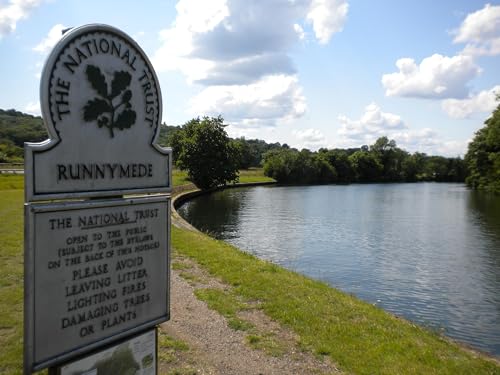
      Magna Carta was sealed by King John at Runnymede on June 15, 1215. However, its survival was in doubt. It served two purposes, a peace treaty and the grant of liberties to the rebel barons and the English People. If the peace did not hold, Magna Carta would disappear from the pages of history. Even while the King was negotiating the final language riding to Runnymede from Windsor Castle, he was behind the barons' backs petitioning the Pope to declare Magna Carta null and void. His envoys made the two month journey between England and Rome and back numerous times in 1215, carrying letters from the King to Rome asking for relief and returning with the replies from the Pope. The barons themselves also were not blameless. A group of northern barons had left Runnymede early, before the agreement was finalized, to escape being bound by the Charter. They soon began looting the King's estates in England's north.

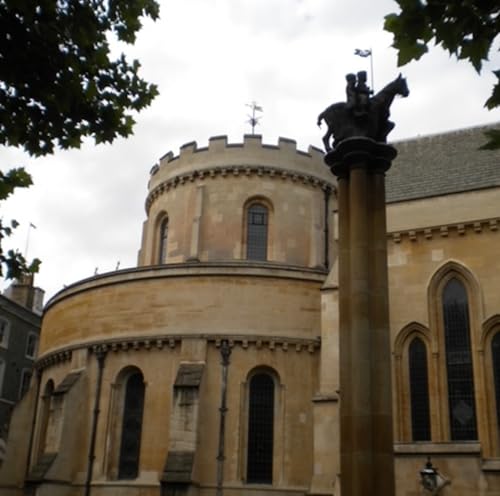
      Outwardly, the Charter was being complied with. Chapter 61 established a tribunal of 25 barons to hear compliants against the King, impose penalties and ensure compliance. However, King John had secretly secured credit from the Knights Templar to purchase European mercenaries to have fresh troops when he resumed his war with the barons. The Pope, in this Age of Faith, who had been the King's enemy during the controversy over the selection of a new Archbishop of Canterbury, became the King's ally after John acquiesced to the Pope's choice of Stephen Langton, an Englishman and a professor at the newly created University of Paris, as the new Archbishop of Canterbury; after John transferred the kingdoms of England and Ireland to Rome and leased them back for an annual rent of 1,000 silver marks; and after John agreed to lead the Fifth Crusade.

      It was Langton who had informed the barons in St. Paul's of the existence of the Coronation Charter of Henry I, which became the template for Magna Carta. It was Langton who had, with William Marshal, the greatest knight in the Middle Ages, served as the mediator in the negotiations of Magna Carta between the King and the barons.

      Why were the barons at odds with King John? Most historians regard him as the worst king in English history; a history rich in royal villians. He was a serial killer--his victims included his nephew, Arthur of Brittany, the wife and son of one of his closest barons and hostages taken from Welsh chieftains--their young sons. He was a sexual preditor--he raped and sexually assaulted the barons' wives and daughters. He was a monumentally incompetent general who lost an enormous portion of the European territories his father Henry II had amassed; the Angevin Empire that went from the Spanish border with France to the Scottish border with England. His nemesis, King Philip Augustus of France, captured those lands and with them created the modern nation of France.

      So, it was no surprise when England's barons needed an ally two years earlier against King John, they would seek out King Philip. He agreed to invade England in return for the barons' commitment to recognize his son Prince Louis as the new King of England. Philip assembled a massive fleet of ships in the harbors of France and Flanders, only to see much of it set adrift in the Channel and the rest of it torched before the ships could set sail.

      As it became apparent that the peace would not hold, the barons petitioned Philip again, asking for a new invasion of England.

      England was on a knife's edge. The opposing forces: King John alligned with the Pope with his potent spiritual weapons of excommunication and interdict and bolstered by John's European mercenaries; and the barons with a potential ally in Philip Augustus. Waiting in the wings, the King of Scotland, Alexander II and the English barons who were gauging which way the wind was blowing.

      Soon, England, France, Scotland and Rome, all would be pulled into the conflict as the peace treaty of Magna Carta unravelled.

      The plot spun around like a revolving door.

      Who would win? Who would lose? How would Magna Carta survive?

      Those questions are answered in Episode 8: Saving Magna Carta.

      Afficher plus Afficher moins
      35 min
    • Magna Carta
      Aug 31 2024

      The cornerstone of the Rule of Law and Modern Democracy is Magna Carta. It was a peace treaty between King John and the barons who rebelled against his dictatorship. The treaty was agreed to in June 1215 in Runnymede, a 150 acre grassy field on the south bank of the River Thames between Windsor and Staines. Nearly all of the nobility of England were present to witness the event. However, if it were simply a peace treaty, today it would be a shadowy figure obscured by the mists of time. It was much more. It is the Great Charter of English Liberties. English kings confirmed it sixty times. Its works underscore its significance in the history of the world; King John: "We have also granted to all free men of our kingdom, for ourselves and our heirs in perpetuity, all of the following liberties, for them and their heirs to have and to hold of us and our heirs."

      England, the United States and every nation that has a government derived from England's is built upon the bedrock of Magna Carta. Provisions of the Declaration of Independence and the U.S. Constitution can be directly traced to Magna Carta's chapters.

      This episode describes the events of June 1215 and highlights the links between Magna Carta's chapters and the foundational documents of American Democracy.

      Afficher plus Afficher moins
      28 min
    • Lost Liberties Found
      Jul 20 2024

      England was on the razor's edge between war and peace. The barons planned to assassinate King John. He had raped one of their wives and sexually assaulted one of their daughters. He had murdered another baron's wife and his son, by starving them to death in Windsor Castle. However, news of the assassination plot leaked out. The king was warned by two different sources, located hundreds of miles apart--in Scotland and Wales. Instead of being killed during his Welsh campaign and uncertain as to which of his barons to trust, the king dismissed all English barons and knights from his army and retreated to London guarded only by European mercenaries. Then, with a French fleet assembled for the invasion of England, John, who had battled Pope Innocent III for years over the Pope's choice as the new Archbishop of Canterbury, finally surrendered to the Pope and turned him from an enemy into an ally. That allowed John to narrowly avoid the French invasion when the Pope excommunicated the French King Philip Augustus. That excommunication caused a key ally of Philip's to defect to the English, resulting in the destruction of the French invasion fleet. When Stephen Langton finally entered England as the new Archbishop of Canterbury he met the king at Winchester, where King John swore that he would restore the good laws of Edward the Confessor. Langton had left England as a boy to study in Paris in the shadow of Notre Dame Cathedral (then under construction) and became a doctor of both theology and liberal arts--an expert on Aristotle. He was involved in the creation of the University of Paris in 1200. Because of his long absence, Langton was unfamiliar with the laws of England that King John had sworn to uphold. So, after Winchester, he had his clerics hunt the archives in England's cathedrals to find out what was meant by the "good laws of the Confessor." What he found became the first draft of Magna Carta. Langton was a catalyst in transforming that document into the monumental achievement of English law--Magna Carta. "Lost Liberties Found" is the story of how that happened.

      Afficher plus Afficher moins
      30 min
    Aucun commentaire pour le moment