Épisodes

  • Saving Magna Carta
    Nov 11 2024

    Magna Carta was sealed by King John at Runnymede on June 15, 1215. However, its survival was in doubt. It served two purposes, a peace treaty and the grant of liberties to the rebel barons and the English People. If the peace did not hold, Magna Carta would disappear from the pages of history. Even while the King was negotiating the final language riding to Runnymede from Windsor Castle, he was behind the barons' backs petitioning the Pope to declare Magna Carta null and void. His envoys made the two month journey between England and Rome and back numerous times in 1215, carrying letters from the King to Rome asking for relief and returning with the replies from the Pope. The barons themselves also were not blameless. A group of northern barons had left Runnymede early, before the agreement was finalized, to escape being bound by the Charter. They soon began looting the King's estates in England's north.

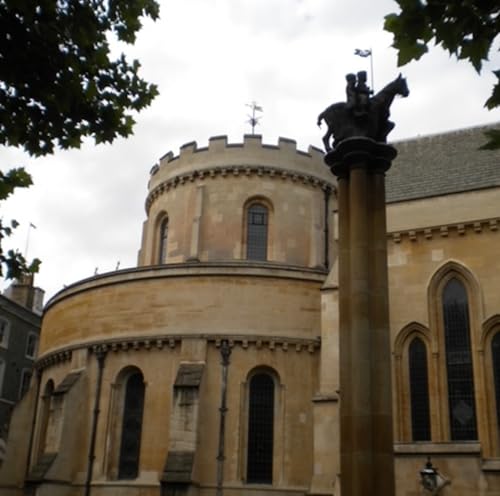
    Outwardly, the Charter was being complied with. Chapter 61 established a tribunal of 25 barons to hear compliants against the King, impose penalties and ensure compliance. However, King John had secretly secured credit from the Knights Templar to purchase European mercenaries to have fresh troops when he resumed his war with the barons. The Pope, in this Age of Faith, who had been the King's enemy during the controversy over the selection of a new Archbishop of Canterbury, became the King's ally after John acquiesced to the Pope's choice of Stephen Langton, an Englishman and a professor at the newly created University of Paris, as the new Archbishop of Canterbury; after John transferred the kingdoms of England and Ireland to Rome and leased them back for an annual rent of 1,000 silver marks; and after John agreed to lead the Fifth Crusade.

    It was Langton who had informed the barons in St. Paul's of the existence of the Coronation Charter of Henry I, which became the template for Magna Carta. It was Langton who had, with William Marshal, the greatest knight in the Middle Ages, served as the mediator in the negotiations of Magna Carta between the King and the barons.

    Why were the barons at odds with King John? Most historians regard him as the worst king in English history; a history rich in royal villians. He was a serial killer--his victims included his nephew, Arthur of Brittany, the wife and son of one of his closest barons and hostages taken from Welsh chieftains--their young sons. He was a sexual preditor--he raped and sexually assaulted the barons' wives and daughters. He was a monumentally incompetent general who lost an enormous portion of the European territories his father Henry II had amassed; the Angevin Empire that went from the Spanish border with France to the Scottish border with England. His nemesis, King Philip Augustus of France, captured those lands and with them created the modern nation of France.

    So, it was no surprise when England's barons needed an ally two years earlier against King John, they would seek out King Philip. He agreed to invade England in return for the barons' commitment to recognize his son Prince Louis as the new King of England. Philip assembled a massive fleet of ships in the harbors of France and Flanders, only to see much of it set adrift in the Channel and the rest of it torched before the ships could set sail.

    As it became apparent that the peace would not hold, the barons petitioned Philip again, asking for a new invasion of England.

    England was on a knife's edge. The opposing forces: King John alligned with the Pope with his potent spiritual weapons of excommunication and interdict and bolstered by John's European mercenaries; and the barons with a potential ally in Philip Augustus. Waiting in the wings, the King of Scotland, Alexander II and the English barons who were gauging which way the wind was blowing.

    Soon, England, France, Scotland and Rome, all would be pulled into the conflict as the peace treaty of Magna Carta unravelled.

    The plot spun around like a revolving door.

    Who would win? Who would lose? How would Magna Carta survive?

    Those questions are answered in Episode 8: Saving Magna Carta.

    Afficher plus Afficher moins
    35 min
  • Magna Carta
    Aug 31 2024

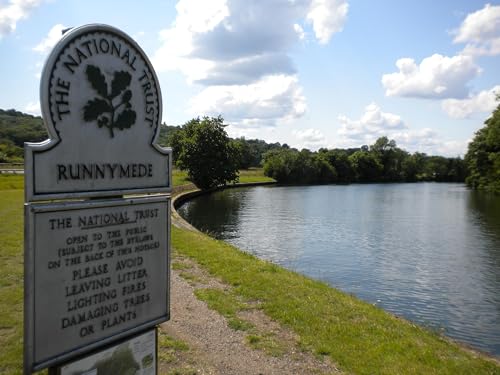
    The cornerstone of the Rule of Law and Modern Democracy is Magna Carta. It was a peace treaty between King John and the barons who rebelled against his dictatorship. The treaty was agreed to in June 1215 in Runnymede, a 150 acre grassy field on the south bank of the River Thames between Windsor and Staines. Nearly all of the nobility of England were present to witness the event. However, if it were simply a peace treaty, today it would be a shadowy figure obscured by the mists of time. It was much more. It is the Great Charter of English Liberties. English kings confirmed it sixty times. Its works underscore its significance in the history of the world; King John: "We have also granted to all free men of our kingdom, for ourselves and our heirs in perpetuity, all of the following liberties, for them and their heirs to have and to hold of us and our heirs."

    England, the United States and every nation that has a government derived from England's is built upon the bedrock of Magna Carta. Provisions of the Declaration of Independence and the U.S. Constitution can be directly traced to Magna Carta's chapters.

    This episode describes the events of June 1215 and highlights the links between Magna Carta's chapters and the foundational documents of American Democracy.

    Afficher plus Afficher moins
    28 min
  • Lost Liberties Found
    Jul 20 2024

    England was on the razor's edge between war and peace. The barons planned to assassinate King John. He had raped one of their wives and sexually assaulted one of their daughters. He had murdered another baron's wife and his son, by starving them to death in Windsor Castle. However, news of the assassination plot leaked out. The king was warned by two different sources, located hundreds of miles apart--in Scotland and Wales. Instead of being killed during his Welsh campaign and uncertain as to which of his barons to trust, the king dismissed all English barons and knights from his army and retreated to London guarded only by European mercenaries. Then, with a French fleet assembled for the invasion of England, John, who had battled Pope Innocent III for years over the Pope's choice as the new Archbishop of Canterbury, finally surrendered to the Pope and turned him from an enemy into an ally. That allowed John to narrowly avoid the French invasion when the Pope excommunicated the French King Philip Augustus. That excommunication caused a key ally of Philip's to defect to the English, resulting in the destruction of the French invasion fleet. When Stephen Langton finally entered England as the new Archbishop of Canterbury he met the king at Winchester, where King John swore that he would restore the good laws of Edward the Confessor. Langton had left England as a boy to study in Paris in the shadow of Notre Dame Cathedral (then under construction) and became a doctor of both theology and liberal arts--an expert on Aristotle. He was involved in the creation of the University of Paris in 1200. Because of his long absence, Langton was unfamiliar with the laws of England that King John had sworn to uphold. So, after Winchester, he had his clerics hunt the archives in England's cathedrals to find out what was meant by the "good laws of the Confessor." What he found became the first draft of Magna Carta. Langton was a catalyst in transforming that document into the monumental achievement of English law--Magna Carta. "Lost Liberties Found" is the story of how that happened.

    Afficher plus Afficher moins
    30 min
  • The War of the Worlds
    Jun 2 2024

    Magna Carta, the Great Charter of English Liberties, is the foundation upon which the Rule of Law is built. The story of its creation is more surprising and far more complex than is commonly known. It extends beyond King John, the most despised king in English history and the Barons who were compelled to wage war against him. The epic also includes the King of France, Philip Augustus, King William of Scotland, Duke Arthur of Brittany, Count Ferrand of Flanders, Prince Llywelyn ap Iorwerth of Wales, the Archbishop of Canterbury Stephen Langton, the greatest knight in the Middle Ages, William Marshal and Pope Innocent III. The parts they played in Magna Carta are revealed in Episode 5 of The Rule of Law, The War of the Worlds.

    Afficher plus Afficher moins
    35 min
  • Empire Falls
    Apr 28 2024

    Magna Carta, the English Charter of Liberties, didn't happen overnight. It was the culmination of a series of events, piled one on top of the other, over the preceding16 years. This episode is the beginning of that story. It is about the fall of the Angevin Empire. Henry II of England had amassed a vast empire in western Europe. It extended from the Scottish border to the Spanish border. That Empire was continued and maintained by his warrior son, Richard the Lionheart, who spent most of his life outside of England in continental battles and in a crusade. But Richard died on April 6, 1199, fatally wounded by an crossbow arrow. The new king of England was his brother John. With Richard dead and John in his place, King Philip Augustus of France began amputating the new English king's holdings in Europe, exposing his ineptitude as a military commander. This weakened him in the eyes of England's barons, most of whom refused to fight with him in Europe to defend his possessions. After King John lost his father's lands on the continent to Philip Augustus, his vulnerability was apparent for all to see. This is the story of the Fall of the Angevin Empire and with it begins the serpentine tale of Magna Carta, an epic that changed the history of the world. In the age of absolute monarchs, after Magna Carta, England became the only monarchy in which a king's powers were limited by a charter that granted liberties to the English people, boundaries that the king could not cross. The first chapter in the story was the awakening of the barons to the realization that King John was vulnerable. Added to this knowledge was the fact that King John is commonly regarded as the worst king in English history. As Winston Churchill said, "England has been blessed with many bad kings." Those blessings, however, were entirely man made. They were gained through bold action by the English, when confronted by a "bad king." Magna Carta was the extraction of freedom by force from a despot. King John's actions, dictatorial and many dissolute and despicable, were inflicted upon the barons and their families, and those acts became the spark that exploded England into civil war. The details of that war, its prelude and its aftermath, unknown to most today, would involve the King of France and many other players, including the Archbishop of Canterbury and one man who regarded all, kings, barons and bishops, as pawns on his chessboard. That story begins in this episode, "Empire Falls."

    Afficher plus Afficher moins
    31 min
  • Law and Murder
    Mar 9 2024

    In the 12th Century, the Rule of Law advanced when the Digest of the Roman Emperor Justinian was discovered in Italy 500 years after its creation. Young men from across Europe travelled to Bologna to study Roman law, including an Englishman named Thomas Becket. Roman law would become the foundation of the laws of many European nations. However, English law remained idiosyncratic. In England, Roman law was figuratively rebuffed. Yet, Justinian's Digest still indirectly led to the creation of the first book of English law, Tractatus de legibus et consuetudinibus regni Anglie or The Treatise on the Laws and Customs of the Realm of England attributed to Ranulf de Glanvill--the book is known by the shorthand of "Glanvill." It was modelled after Justinian's Digest and Gratian's Decretum, the code of the canon law of the Roman Church. Glanvill was the initial step in the creation of uniform English laws, replacing the patchwork quilt of different laws in different locations. Glanvill was a part of the movement to funnel cases into the king's courts in Westminster Hall and money into the king's treasury.

    However, as English law advanced, it remained the King's Law. All governmental power--judicial, executive and legislative--was held by the monarch. That was never more evident than when the Archbishop of Canterbury, Thomas Becket, was murdered by King Henry II's knights in Canterbury Cathedral.

    Afficher plus Afficher moins
    28 min
  • The Apocalypse
    Feb 4 2024

    Episode 2 is the story of the impact of the Norman Invasion on the Rule of Law in England. Saxon control of England was obliterated in 1066 by the Norman Conquest. The Normans' ancestors were Vikings. Technically, the liegemen of the King of France, in reality their military power in Northern France was enormous. They helped created the Capetian Dynasty in France when they changed their allegiance from their patrons, the Carolingians, to Hugh Capet in 987. They possessed the most feared cavalry on the continent, a brutal killing machine. They were led by the illiterate Duke of Normandy, known as "William the Bastard." At age 7, upon the death of his father, he became the Duke of Normandy. His three guardians were all assassinated in rapid succession. Not surprisingly, William grew into a violent, hardened man. Under his feudal system (land given in exchange for loyal military service), any man who challenged him was executed. On September 26th, 1066, he invaded England with 7,000 soldiers and 2,500 warhorses. Violence achieved the Conquest and continued as his means of control. All Saxon land was stolen and given to his barons, creating 1,500 "tenant-in-chief;" all but 2 were Normans. When the Saxons rebelled in the north, he exterminated the entire population in those northern counties--men by the sword, women and children by starvation. The purpose of famed Domesday Survey was squeezing taxes from the Saxon population. Episode 2 is the story of how the Conqueror used violence, taxes and the heirarchy of the Church to take control and keep control of Saxon England with an absolute dictatorship that continued for almost 700 years before the English people could begin dismantling it. However, It is also the story of how despite the Norman catastrophe, against enormous odds, progress in the law continued and milestones in the law were achieved. That progress would one day lead to complete establishment of the Rule of Law and democracy in Britain.

    Afficher plus Afficher moins
    33 min
  • From Time Immemorial
    Sep 20 2023

    This is a history of The Rule of Law.

    How was it created? Who were the people who created it? When were the principles of the Rule of Law created.

    As you may suspect, it required the efforts of many exceptional people in events that spanned 2,000 years to create the Anglo-American Rule of Law, the bedrock of Western Civilization.

    You'll hear about those events and the individuals who fought the great battles in England and America to create a system with as its central principle, as Thomas Paine said, "in America the Law is King."

    In this episode: "From Time Immemorial" you'll go back in time to 55 B.C. to find out that the assumption by some that English law was based on the laws of the Roman Empire is incorrect.

    You'll then proceed at a rapid pace covering 1,100 years of English history examining the evolution of Anglo-Saxon law up to 1066 A.D. and the Great Apocalypse, the Norman Invasion. Along the way, you'll discover that the legal principle carved into the stone pediment at the top of the United States Supreme Court, "Equal Justice Under the Law" has as its source, the only king in English history to be called "Great," a Saxon king.

    Then, in the next episode, The Apocalypse, you'll discover why it is more appropriate to call English law, "Anglo-Norman Law" than "Anglo-Saxon Law."

    Afficher plus Afficher moins
    30 min