Épisodes

  • Something To Talk About: 3 Free Conversation Tools
    Oct 11 2026

    After an affair is discovered, it takes over the airtime in a relationship. For many couples, every conversation eventually leads back to the betrayal, or almost nothing feels safe to say at all.

    Recovery requires hard conversations. But a marriage can't be rebuilt in hard conversations alone. Couples also need the easy ones back: the playful, curious, ordinary moments that make up most of a healthy relationship.

    In this bonus episode, Tim explains why small moments of connection matter so much, why connection tools are never a shortcut past accountability, and how to use three free AffairHealing.com resources as rungs on a ladder, each asking for a little more vulnerability than the last.

    You'll hear:

    Why recovering couples so often lose their everyday conversations

    What research on "bids for connection" says about the small moments

    Why the betrayed partner gets to decide when they're ready

    How even a positive question can land as a painful one, and what to do when it does

    Ground rules that keep these conversations safe

    A four-week challenge to start where you can (see below)

    LINKS and EXTRAS

    Episode Page: https://www.affairhealing.com/podcasts/076

    Free App: Tell Me About It

    Free Download: 160 Questions for Couples

    Free Exercise: 1 Week of Sex Talk

    Episode 74: Go FFISHing: What’s Beneath Your Anger?

    Building Us Course & Coaching

    4 WEEK CHALLENGE

    Week 1: Once a day, answer a prompt from the Tell Me About It app.

    Week 2: Each day, use either the Tell Me About It app or questions from the first two sections of the 160 Questions list to start a conversation.

    Week 3: Each day, use questions from the “Questions About You” and “Questions About Your Relationship” sections of the 160 Questions list.

    Week 4: Use the 1 Week of Sex Talk guide for your conversations.

    Afficher plus Afficher moins
    21 min
  • Making Sense: Creating a Story of WHY
    Oct 1 2026

    When Dana Killion's husband finished rehab for alcoholism, he came home with more than a commitment to sobriety. He came home with a confession: a pattern of infidelity that ran through more than twenty years of their marriage. "It caused me to question everything," Dana says. Their marriage, his commitment, what had been real, and even her own identity.

    Over the next eight years, Dana walked through the end of that marriage, the deaths of both parents, a move across the country, and the loss of her son. In this conversation, she talks with Tim about what it took to come through those losses without being hollowed out, and why she chose the word “unbreakable” to describe it. For Dana, unbreakable doesn't mean armored against future pain. It means having a process to return to when pain arrives.

    At the center of the conversation is an idea Dana calls creating the story of why. Betrayed partners usually expect the person who hurt them to explain it. When that explanation never comes, the mind tends to fill the gap with resentment or self-blame. Dana knew her former husband couldn't give her a satisfying answer, so she pieced one together herself from his childhood history, his addiction, and the patterns she could see. She acknowledges it may not be fully accurate, but it gave her what she needed: a way to put the question to rest. Tim and Dana also talk about the limits of that approach. The involved partner still has their own work to do in understanding their choices, and a betrayed partner's explanation is not an excuse for what happened.

    In this episode:

    What "unbreakable" means, and why it isn't the same as armor

    What therapy offered Dana, and what journaling and writing gave her that therapy couldn't

    Writing fiction first, when reality was too raw to put on the page

    Learning the truth as a byproduct of a partner's sobriety

    How the grief of betrayal differs from the grief of a death

    Creating the story of why, and why it may need to come before forgiveness

    The mantra "I will not let him destroy me," and using it as a measure of progress

    Baby steps after trauma: small actions that rebuild a sense of control

    Three versions of your trauma story: the one-liner, the short story, and the novel

    An unexpected conversation with another woman who had once been married to her husband

    LINKS and EXTRAS

    Episode Page: https://www.affairhealing.com/podcasts/075

    Dana's website: danakillion.com; social media: @danakillionauthor

    Becoming Unbreakable: A Big Sister's Guide to Trauma

    Where the Shadows Dance (Dana's memoir)

    Understanding WHY Course & Coaching

    Need personal help? Schedule a Session with one of our coaches.

    Afficher plus Afficher moins
    39 min
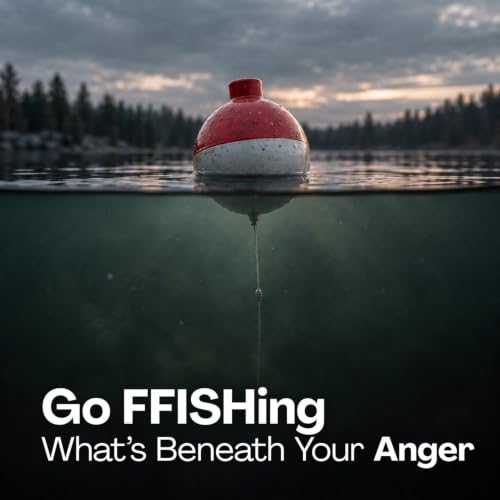
  • Go FFISHing for What’s Beneath Your Anger
    Sep 24 2026

    Anger has a bad reputation. We treat it as the thing to fix: control it, suppress it, or let it out and hope that helps. But anger isn't the problem. It's the announcement that there is one.

    In this episode, Tim uses the image of a fishing bobber to reframe what anger actually is. When the bobber dips, you don't stare at the bobber — you want to know what's on the line. Anger works the same way, and after betrayal, the thing tugging underneath is almost always something your partner needs to hear but never gets to, because it arrives in a form that guarantees a fight.

    You'll hear:

    Why venting doesn't work, and what a 2024 review of 154 studies found instead

    Why a betrayed partner's anger is a normal response to a real injury, not a coping failure

    Why an involved partner's anger when confronted is so often shame wearing a costume

    The five feelings beneath anger — Frustration, Fear, Injustice, Shame, Hurt — with the questions that help you identify each one

    How to take a time-out that actually works, and why most of them don't

    A one-week practice you can start today

    Plus two short dramatizations of the same evening, played twice.

    Understanding what's beneath your anger explains your behavior. It doesn't excuse it. Both of those are worth holding on to.

    LINKS and EXTRAS

    Episode Page: https://www.affairhealing.com/podcasts/074

    Anger FFISHing Guide

    Preview Courses with Coaching

    Afficher plus Afficher moins
    35 min
  • Beyond Stay or Go: Who You Become after Betrayal
    Sep 11 2026

    In this episode, I talk with psychotherapist and author Lauren LaRusso about her new book, Beyond Infidelity. Lauren's perspective is both professional and personal: her marriage ended after her husband's affair. Mine ended after I was the one who broke trust. We come at this experience from opposite sides, and that contrast shapes much of our conversation.

    Lauren makes a claim that may shift how you see your situation: the moment infidelity is revealed, the original version of your relationship is already gone. Whether a couple rebuilds or parts ways, they're no longer deciding about the marriage they had. They're deciding whether something new is possible. And the relationship isn't the only thing that changes. Who you thought you were inside that relationship changes, too.

    We talk about:

    What people are really asking when they ask "Should I stay or go?"

    Why that decision rarely becomes clear in the middle of a crisis—and what to focus on instead

    Letting go of the need to control the outcome, whether you're fighting to save the marriage or certain you'll leave

    How betrayal shatters identity, and why so much of our self-worth is tied to how others see us

    Lauren's story of a local magazine featuring her family on its cover just weeks after she discovered the affair

    Looking honestly at your role in the relationship—not in the infidelity—and why that matters for trusting yourself again

    Refusing to let the way a marriage ended erase everything that was real in it

    What Lauren looks for as evidence that someone who broke trust is actually doing the work

    Whether you were betrayed or you broke trust, and whether you're staying or going, this conversation is about the work that belongs to you—work nobody can take from you, no matter how your relationship turns out.

    LINKS and EXTRAS

    Episode Page: https://www.affairhealing.com/podcasts/073

    Lauren’s Book: Beyond Infidelity: How to Turn the End of Your Relationship into the Beginning of Your Life

    Review of Lauren’s book

    Lauren’s Website: laurenlarusso.com | Instagram: @laurenlarusso

    Need personal help? Schedule a Session with one of our coaches.

    Afficher plus Afficher moins
    30 min
  • Bonus: Beyond Infidelity
    Sep 5 2026

    This bonus episode is an introduction to Tim Tedder’s upcoming interview with therapist and writer Lauren LaRusso, author of the book Beyond Infidelity: How to Turn the End of Your Relationship into the Beginning of Your Life. In this episode, Tim talks about the book, explains why he recommends it, and plays clips from his conversation with Lauren.

    LINKS and EXTRAS

    Episode Page: https://www.affairhealing.com/podcasts/072

    Buy Beyond Betrayal on Amazon

    Read Tim’s review of Beyond Betrayal

    Afficher plus Afficher moins
    6 min
  • The Patterns We Learn: Attachment Styles, Infidelity, and the Road Back
    Aug 27 2026

    Long before we could think about it, we learned how close was safe to get. Those patterns (researchers call them attachment styles) quietly shape how we handle conflict, disappointment, and closeness for the rest of our lives.

    Bev Mitelman, founder of Securely Loved, joins Tim to explain the four attachment styles and how they show up in infidelity: why the dismissive-avoidant pattern carries the highest risk of cheating, why betrayal cuts so deeply for the anxious-preoccupied partner, and why fixing the marriage without examining the pattern rarely holds. Tim shares his own story, and Bev names his pattern before he reveals his quiz results.

    Understanding the pattern is not the same as being excused by it, and if these patterns were learned, they can be changed.

    LINKS and EXTRAS

    Episode Page: https://affairhealing.com/podcasts/071

    Bev Midelman’s Website: https://securelyloved.com

    Take the free Attachment Quiz!

    Understanding WHY Course & Coaching

    Need personal help? Schedule a Session with one of our coaches.

    Afficher plus Afficher moins
    41 min
  • Bonus: Free “Good Sex” eBook
    Aug 19 2026

    Three conversations. Three very different women. One idea that surfaced in all three: good sex doesn't begin with technique, and it doesn't begin with your partner. It begins with being honest about yourself.

    In this bonus episode, Tim revisits the three-part series on sexuality — sexual shame with therapist and intimacy coach Jocelyn Silva, sexual pleasure with intimacy coach Linda Landon, and sexual reconnection after betrayal with sex and intimacy coach Xanet Pailet — and shares an excerpt from each conversation.

    This episode also promotes the release of a free companion ebook, Good Sex: What Three Conversations about Sex Revealed about Shame, Intimacy, and Reconnection after Infidelity.

    Download the free eBook here → AffairHealing.com/goodsex

    Episode Page: AffairHealing.com/podcasts/070

    Jocelyn Silva Interview & Resources

    Linda Landon Interview & Resources

    Xanet Pailet Interview & Resources

    Afficher plus Afficher moins
    15 min
  • The Word After Sorry
    Aug 14 2026

    Episode Notes

    You apologized. You meant it. It didn't land.

    If that's happened to you, on either side of the conversation, this episode is about why.

    Two words in, an apology can still be intact. "I'm sorry." Nothing has gone wrong yet. It's the third word that decides everything, and there are four that show up in that position over and over again, each one quietly erasing the ownership that came before it.

    Through a series of dramatized conversations, we listen to all four fail, and then hear the same moments again, changed by a single word.

    In this episode:

    Why sincerity isn't enough, and why so many genuine apologies leave both people feeling worse

    BUT: the explanation that erases everything before it

    IF: the conditional apology, and why it does specific damage to someone whose perception has already been undermined

    YOU: the apology that makes your partner's reaction the problem

    THAT: the passive shrug, and why it's often shame rather than indifference

    FOR: the one word that forces specificity, and why that's a courage problem rather than a wording problem

    Why "for" is not a technique, and what happens when a betrayed partner senses performance

    For betrayed partners: what to do when the apologies you keep receiving don't help

    LINKS and EXTRAS

    Episode Page: https://www.affairhealing.com/podcasts/069

    The article: The Word After Sorry Makes or Breaks Your Apology

    The Understanding WHY Course & Coaching

    Need personal help? Schedule a Session with Tim, Sharon, or Jenn.

    APOLOGY EXERCISE

    Step 1. Think of an apology you've already given. A real one, to a real person. Write it out, word for word, as close as you can remember. Don't improve it as you write. Write the actual thing you said.

    Step 2. Circle the word that came right after "sorry." Just notice it. If it was one of the four — but, if, you, that — notice that too. Nearly everyone has said those four words, so you’re not alone. If the word is “for,” did you take specific responsibility and stop there?

    Step 3. Now rewrite the apology in three separate sentences, each one beginning "I'm sorry for" and each one naming something specific that you did. Not how the situation developed. Not how the other person acted or felt. What you did.

    Then here's the hard part: end each sentence there. Nothing after it. No explanation, no context, no "and I also want you to understand...” Just the named offense, and then a period.

    Step 4. Read them out loud to yourself.

    Pay attention to what happens in your body when you do. Most people feel the urge to add more — to soften it, to frame it, to make it survivable. Pay attention to that impulse; it's the same impulse that will show up in the actual conversation.

    If you get through step three and find you can't be specific (if you genuinely don't know what to name, or you can name the behavior but not why you chose it), that's useful information. It's usually a sign that the work in front of you is a need for insight, not wording. The Understanding Why course was built for exactly that need, so it may be worth checking out.

    Afficher plus Afficher moins
    29 min