Couverture de The Kirkcast by Ger Farinas

The Kirkcast by Ger Farinas

The Kirkcast by Ger Farinas

De : Gerald Farinas
Écouter gratuitement

3 mois pour 0,99 €/mois

Après 3 mois, 9.95 €/mois. Offre soumise à conditions.

À propos de ce contenu audio

From the desk of Edgewater Presbyterian Church Clerk of Session and Presbytery of Chicago Elder Commissioner Gerald Farinas—a member of the Presbyterian Church (USA).

gerfarinas.substack.comGerald Farinas
Christianisme Ministère et évangélisme Sciences sociales Spiritualité
Les membres Amazon Prime bénéficient automatiquement de 2 livres audio offerts chez Audible.

Vous êtes membre Amazon Prime ?

Bénéficiez automatiquement de 2 livres audio offerts.
Bonne écoute !
    Épisodes
    • Kirkcast: Explaining the lectionary and Year A readings starting in December
      Nov 30 2025
      If you go to a mainline Protestant or Catholic church, you have probably noticed a pattern. You sit in the pew, you open the bulletin, and you see a list of Bible readings for that specific day. Whether you are in a Lutheran, Episcopal, Methodist, Presbyterian, or Catholic church, you are likely hearing the same stories as millions of other people around the world at that exact same time.This system is called the lectionary. It is a schedule that assigns specific Bible passages to be read on specific days. We are about to enter a new cycle called Year A starting this Advent.I remember one specific Sunday when I was serving pulpit supply for Pastor Kristin Hutson. I looked at the schedule to see what reading was appointed for that day. It was a very difficult passage. It was one of those texts that makes you uncomfortable and is hard to explain to a congregation.Honestly, I was tempted to change it. I could have easily chosen to read a different part of the Bible and preach on that instead. It would have been safer and much easier to write.One thing my Jesuit education taught me was that we who are tasked with preaching should not skip the difficult parts of the Bible. Instead, we are supposed to break into them. We are supposed to wrestle with them until we can make them make sense.I stuck with the assigned reading that Sunday. It was a challenge, but that is exactly what the lectionary is for. It challenges preachers to treat every part of the Bible as significant. It forces us to believe that every part has a reason and needs to be proclaimed, even the parts that are hard to swallow.That experience highlights exactly why we use a lectionary. You can think of it like a balanced diet for a church. If a pastor chose their own readings every single week, they might accidentally stick to their favorite topics. They might preach often on love and comfort but skip the difficult passages about judgment or sacrifice.The lectionary forces the church to read the Bible broadly. Over a three-year cycle, a church will read through the vast majority of the New Testament and the most significant parts of the Old Testament. It ensures that we hear the whole story of God and not just the parts we like best.It also creates unity. On any given Sunday, a person sitting with me at Edgewater Presbyterian Church in Chicago, and someone sitting at Good Shepherd Catholic Cathedral in Singapore or Good Shepherd Methodist Church in Warsaw, Poland, are likely reflecting on the same stories of Jesus. This reminds us that we are part of one large and global family.The lectionary is divided into three years simply named Year A, Year B, and Year C. Each year focuses on one of the three main writers of the Gospels. We are entering Year A, which is the year of Matthew. Starting in Advent, your pastor or priest will primarily preach from the Gospel of Matthew. Matthew wrote his version of the story largely for a Jewish audience, so he focuses heavily on how Jesus connects to the history of Israel.There are a few specific themes you will likely hear this year. First, you will see Jesus presented as the new Moses. In the Old Testament, Moses went up a mountain to receive the Law. In Matthew, Jesus goes up a mountain to give the Sermon on the Mount. You will hear sermons about Jesus as a teacher who gives us a new way to live that fulfills the old laws. You can expect to be challenged to higher standards of anger, forgiveness, and love.You will also hear about the Kingdom of Heaven. While other Gospel writers call it the Kingdom of God, Matthew usually calls it the Kingdom of Heaven. He speaks of it as a reality that is invading our present world. You will hear stories about what this kingdom is like. It is like a mustard seed, a hidden treasure, or a net thrown into the sea. Sermons will ask you to look for God’s rule in the ordinary and small things of life.Another major theme is the promise that God is with us. Matthew frames his entire book with this idea. In the beginning, Jesus is called Emmanuel which means God with us. In the very last verse, Jesus tells his friends that He is with them always. Finally, you will hear about judgment and action. Matthew includes serious warnings about how we live, like the story of the sheep and the goats. Sermons in Year A often emphasize that faith is not just what you think or feel, but what you actually do.The lectionary is a tool that keeps the church healthy. It keeps us balanced. As we enter Year A, we are invited to walk with Jesus through the eyes of Matthew. It will be a year of learning from the Great Teacher. It will be a year where we are challenged to act with compassion in the world. And as I learned that Sunday in the pulpit, it is a year to face the difficult parts of our faith head-on. Get full access to Not Quite Communist by Gerald Farinas at gerfarinas.substack.com/subscribe
      Afficher plus Afficher moins
      5 min
    • Kirkcast: How the Catholic Feast of Christ the King ended up on Protestant calendars
      Nov 20 2025
      So, did you miss me after two weeks off the Kirkcast? I’m back just in time for the end of the liturgical year. This Sunday, I’ll be preaching about something else but I wanted to share on this Kirkcast a significant thing about Christ the King Sunday, as it is called on the church calendar.The Feast of Christ the King, started by Pope Pius XI in 1925 as a Catholic holy day, is a surprising celebration. Although its name sounds powerful, it was actually a protest. It was created to push back against Christian nationalism, white supremacy, and the total control that governments were taking in Europe after World War I.The feast, established in the Pope’s letter Quas Primas, was a smart way to say that Christ’s spiritual and universal rule was higher than any earthly ruler or ideology. This key anti-imperial message later strongly connected with mainline Protestant groups, including Presbyterians, which led them to add it to their own church calendars.A papal challenge to rising totalitarianismUnderstanding when Quas Primas was written is key. Pope Pius XI wrote it while Benito Mussolini’s Fascist government was growing strong in Italy, and secular, nationalist movements were taking hold across Europe.These groups often used national religious identities, which is like an early form of Christian nationalism, to support their power. They demanded that people’s top loyalty should be to the state, the nation, or the race.Pius XI saw this demand as a direct threat to the Church and to individual freedom. By creating a universal feast for Christ the King, he told the world’s faithful that their greatest loyalty belonged only to Jesus Christ.The feast, therefore, acted as a powerful, peaceful statement: no nation, no dictator, and no racial belief was ultimately in charge; all were under the divine Kingship of the one who ruled through the Cross.The Pope confirmed this stand against supremacy later in the 1930s when he openly condemned Nazism and planned a letter that criticized racism and anti-Semitism. This confirmed the feast’s role as a defense against all forms of state worship based on identity.The Crown of Thorns: Christ’s kingship of justice and serviceTheology further supports the feast’s protest. Pius XI purposely made Christ’s rule different from the rule of kings on Earth. He noted that Christ’s kingdom is one of “justice, love, and peace,” not one “sustained by arrogance, rivalries, and oppression.” Christ’s kingship, shown during his crucifixion, is defined by humility, service, and sacrifice, not by force.For Christians, saying Christ is King means rejecting any group, like Christian nationalists or white supremacists, that tries to use faith to gain temporary or exclusive power. These ideologies seek power through worldly force and division.This directly conflicts with the Kingship of the one who rules by sacrificial love and care for everyone. The feast asks the Church to show a public commitment to morality and social justice that goes against the forceful language of earthly empires.The feast’s urgent relevance in today’s americaThe original purpose of the Feast of Christ the King—to reject the idea that the state is the highest authority—is urgently relevant in places like Chicago and Charlotte today.When government agencies like ICE and CBP conduct brutal raids against immigrant families, it shows a government that puts its own power and restrictive laws above human life and dignity. The fear and separation caused by these actions echo the totalitarian impulses that Pope Pius XI fought against in the 1920s and 30s.The feast reminds Christians that their true King demands justice and protection for the vulnerable, including the immigrant and the non-citizen.The spreading rhetoric that creates distrust of non-white Americans is a modern form of the nationalism the Pope opposed. It attempts to use race to divide people and define who truly belongs to a nation.When government shows increasingly authoritarian tendencies, the feast stands as a yearly call to choose the kingdom of Christ, which is defined by universal welcome and sacrificial love, over the kingdoms of this world, which are often defined by borders, fear, and oppression.Adoption by mainline protestant traditionsWhile at first a strictly Catholic event, the Feast of Christ the King became popular among mainline Protestants in the second half of the 1900s.After the Church changed its services at the Second Vatican Council (1962-1965), it moved the feast to the last Sunday of the church year (right before Advent). It also changed the name to the Solemnity of Our Lord Jesus Christ, King of the Universe.This placement, which focuses on Christ as the beginning and end of history, helped bridge the gap with Protestant churches. Groups like the Presbyterian Church, the United Methodist Church, and others embraced this final Sunday. They often call it “Christ the King Sunday” or “Reign of ...
      Afficher plus Afficher moins
      7 min
    • Kirkcast: Hubris, the space burials that instead embraced the deep sea
      Oct 30 2025

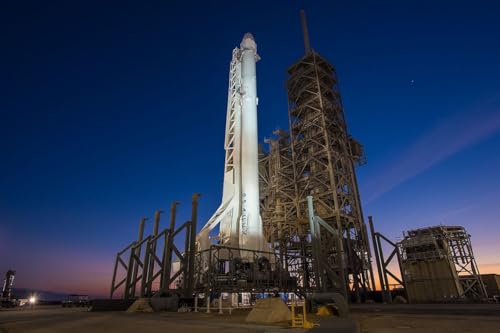
      SpaceX Falcon 9 rocket. Photo: SpaceX via Wikimedia Commons.

      I want to reflect today on a story I read recently, a story that, in a strange and heartbreaking way, speaks volumes about the limits of human aspiration and the enduring reality of God’s sovereignty over creation.

      I confess, as a lifelong Trekkie, I have often imagined my own final journey, inspired by that famous, poetic burial of Mr. Spock in The Wrath of Khan. I dreamt of having my body reach for the cosmos, but after reading this story, I think I’ll settle for a more earthly resting place: a plot of dirt right here in Chicago’s Graceland Cemetery.

      The story I read is of a final journey, one chosen by 166 souls: scientists, dreamers, and fans of the cosmos, who wished to make deep space their eternal resting place. In June of 2025, their cremated remains were aboard a special memorial capsule, designed to orbit our blue marble before its eventual return. It was meant to be the ultimate triumph of technology over finitude: an eternal memorial among the stars.

      The imagination behind this is immense, and perhaps, beautiful. We all feel the desire to transcend the dirt, the rain, and the limits of the grave. But this journey, powered by one of the most advanced launch systems in the world, did not reach its planned destination.

      Shortly after a failed attempt, completing its controlled re-entry to save the mission, the capsule’s parachutes failed to deploy. Instead of a soft landing, it crashed into the Pacific Ocean.

      What was meant to be a burial among the stars became, instead, a burial at sea.

      The memorial service, meant for the stars, was sharing space with companion payloads that included scientific instruments and, on this very commercial space mission carrying the remains, even cannabis seeds and plant matter intended for an extraterrestrial growth experiment.

      There is a profound, almost biblical irony in that descent. In our Reformed tradition, we talk about the doctrine of creation, and the truth of imago Dei, that we are made in God’s image. We also acknowledge the consequence of human pride, the deep-seated impulse to be as God, to erase our limits, to conquer mortality itself.

      This impulse, this striving to use technology to defeat the simple, humbling reality of dust you are and to dust you shall return is the very definition of modern hubris.

      We believe that if we build a machine fast enough, powerful enough, and tall enough, we can finally escape the constraints placed upon us by our Creator. But when the sacred ritual of burial becomes a line item on a commercial manifest, sharing space with the purely mundane or experimental, we reveal a spiritual emptiness.

      But creation, in its elemental power, is relentless. The ocean, often a symbol of chaos and untamable might in Scripture, reached up and reclaimed what the machine had tried to defy. The cold water, the immense pressure, the anonymity of the deep, these were the humbling realities that replaced the infinite promise of the void.

      The lesson for us, as people of faith, is not to judge the desires of those families, but to understand our own spiritual geography. We are, after all, dreamers who look up and imagine an ultimate transcendent farewell.

      Yet, our hope does not and cannot rest on the success of a rocket launch. The ultimate memorial for those we love is not located in any physical place, be it deep space or a churchyard plot. It rests in the unbreakable promise of the Resurrection, a promise that operates outside the laws of physics and the whims of technology.

      In a world obsessed with transcendence through engineering, where we attempt to launch our dearest hopes alongside commercial crops, the failure of that spacecraft is a powerful, sorrowful reminder: our final journey is not dictated by NASA or SpaceX, but by the love and grace of the One who holds the stars and the sea in the palm of His hand. When the rocket fails, our faith must hold. And in the mystery of God, it always does.


      Get full access to Not Quite Communist by Gerald Farinas at gerfarinas.substack.com/subscribe
      Afficher plus Afficher moins
      5 min
    Aucun commentaire pour le moment