Épisodes

  • The Letter His Father Left: A Legacy That Outlived a Tragedy – Ep35 Blake Brewer
    Oct 5 2026

    His father’s voice was still there. In a letter.

    At 19, Blake Brewer lost his father in a snorkeling accident during a family vacation in Hawaii. Hours later, his mother found a letter in his father’s briefcase—one he had intended to give Blake on that trip. His father was gone, but his words remained. More than two decades later, Blake still returns to that letter.

    In this episode, I sit down with Blake, founder of Legacy Letter, to hear how that experience became a mission to help one million people write a letter to their families. We spend years building businesses, providing for our children, and planning what we’ll leave behind. But how much thought do we give to what we’re leaving in them? Do they know how deeply we love them, what we admire about them, and why we believe in their future?

    Blake shares a practical framework for putting those things into words, including a section many parents would rather skip: the apology. We talk about why good intentions don’t always translate into close relationships, how pride can keep us from saying what needs to be said, and why “I’m doing it for my family” deserves an honest look.

    We also discuss when to give the letter, why your child’s initial reaction may tell you very little about its lasting value, and how this personal exercise has helped business teams connect. For anyone who has been meaning to say more to the people they love, this conversation offers a place to start—and a reason to follow through.

    EPISODE LINKS:

    Learn more about Blake Brewer and Legacy Letter: LegacyLetter.com

    Learn more about Freedom Founders: FreedomFounders.com

    Request your free copy of The Exit-Optional Playbook: ExitOptional.com

    HIGHLIGHTS:

    02:59 – The family vacation that changed Blake’s life
    06:46 – The letter his father left behind
    11:56 – Why “my kids know I love them” can leave room for doubt
    14:20 – What to include in a legacy letter—and why apology matters
    17:05 – Give the letter now: Why you don’t need to wait
    23:03 – A father’s letter that brought his daughter home
    24:20 – When “I’m doing it for my family” deserves a closer look
    27:16 – How legacy letters helped business teams connect
    28:34 – Defining success by the family relationships you’re building
    30:23 – Words your children can hear from you today

    Afficher plus Afficher moins
    34 min
  • The Retirement Tax Trap: When Tax Deferral Starts Working Against You – Ep34 Nate Hare
    Sep 28 2026

    You’ve probably spent years being told that putting money into a 401(k), IRA, or other retirement account is the responsible thing to do.

    Make the contribution. Take the deduction. Let it grow.

    But there is a part most busy doctors rarely think about:

    Eventually, the IRS wants its money back.

    If you build a large pre-tax retirement account without a plan for how that money will come out, what looked like a tax strategy may turn out to be a tax delay.

    That matters because once required minimum distributions begin, you lose some control. The government determines that money must come out, and those distributions can increase your taxable income whether you need the money or not.

    In this episode, I sit down with Nate Hare to unpack what that means in practical terms.

    We discuss:

    • Why tax deferral and tax elimination are very different
    • What required minimum distributions could mean for your future income
    • How Roth conversions can create more flexibility later
    • Why the years after you reduce active income may be a critical planning window
    • How self-directed retirement accounts can expand your investment options
    • Why certain investments may belong inside retirement accounts while others may not
    • How large pre-tax accounts can create an unexpected tax burden for your heirs

    You do not need to become a retirement-account expert.

    But you do need to understand the basic tradeoff.

    The decisions you make while you are earning at your peak can either preserve flexibility later—or quietly reduce it.

    That is what this episode is really about.

    Not tax tricks.

    Optionality.

    The ability to decide when income appears, when taxes are paid, and how much control you retain over the wealth you spent decades building.

    EPISODE LINKS:

    Directed IRA: https://directedira.com
    Learn more about Nate Hare and self-directed retirement accounts.

    Directed IRA Appointments: https://directedira.com/appointment/
    Connect with Nate and the Directed IRA team.

    Freedom Founders: https://www.freedomfounders.com
    Learn more about becoming financially independent and exit-optional.

    HIGHLIGHTS:

    00:00 – Why retirement accounts deserve more attention than most business owners give them

    01:34 – What you may be allowed to own beyond stocks and mutual funds

    06:58 – Why self-directed accounts appeal to entrepreneurial investors

    08:52 – The difference between tax-deferred and tax-free retirement income

    11:00 – Why Roth conversions may matter more than the deduction you received years ago

    24:00 – The danger of a large pre-tax retirement account with no exit strategy

    26:00 – What required minimum distributions actually mean for your future income

    28:00 – How your retirement account can create a tax problem for your children

    29:16 – The planning window between reducing active income and required distributions

    33:47 – Why you should diversify your tax exposure, not just your investments

    40:43 – How high-income earners may still be able to get money into Roth accounts

    Afficher plus Afficher moins
    43 min
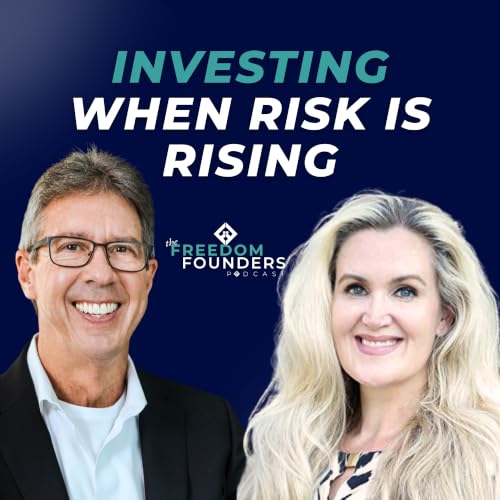
  • Investing When Risk Is Rising: Rates, Leverage, and Protecting Your Capital - Ep33 Anna Kelley
    Sep 21 2026

    The investments that performed well during the era of cheap money may carry far more risk today—even when the projected returns still look familiar.

    In this episode, I sit down with longtime real estate investor and former private banker Anna Kelley to examine what higher interest rates, a weakening labor market, and the growing wall of maturing debt could mean for everyday investors. Anna explains why the Federal Reserve is caught between persistent inflation and recessionary pressure—and why waiting for rates to simply “go back down” may not be a sound investment strategy.

    We also look closely at multifamily real estate, where rising rates have erased 40% or more of the value of some properties. Even experienced operators are struggling to refinance debt, preserve investor capital, and hold assets together. The problem is not always poor execution. Sometimes the economic assumptions that made a deal work have fundamentally changed.

    Most importantly, Anna translates the economic headlines into decisions investors can actually make. We discuss how to determine whether a prospective return adequately compensates you for the risk, why liquidity and diversification deserve renewed attention, and when protecting capital matters more than pursuing another double-digit return.

    This conversation ultimately goes beyond markets. Anna shares how financial margin gave her the ability to step away from work when her health and family needed her. Because the real purpose of liquidity is not to win an argument about portfolio allocation. It is to preserve your ability to respond when life refuses to follow the plan.

    EPISODE LINKS:
    Learn more about Anna Kelley: https://annakelleyinvesting.com/

    Learn more about Freedom Founders: http://FreedomFounders.com

    HIGHLIGHTS:
    00:00 – Introduction
    01:58 – The Fed’s conflict between inflation and a weakening economy
    04:39 – What the employment headlines may be missing
    05:53 – Why Anna sees a stagflationary environment
    10:36 – Growth, income, or preservation: What is your priority?
    14:37 – How to tell whether a return justifies the risk
    19:26 – Why multifamily worked so well during the low-rate era
    27:00 – How higher rates erased 40–50% of some property values
    28:44 – The refinancing wall facing real estate operators
    31:09 – The liquidity signal Anna is watching now
    34:39 – Why maturing debt through 2029 could create a larger crisis
    39:35 – What individual investors can do with this information
    42:16 – How debt and the Great Financial Crisis cost Anna a decade
    44:06 – Learning to sit patiently on cash
    45:02 – Building multiple income streams and an all-weather portfolio
    45:45 – When building wealth leaves no room for life
    48:02 – Why bigger is not always better

    Afficher plus Afficher moins
    51 min
  • How to Build Personal Sovereignty in a Changing World - Ep32 Lee Milteer
    Sep 14 2026

    Personal sovereignty starts with taking responsibility for your own life. David Phelps reconnects with entrepreneur, author, speaker, and business and mindset strategist Lee Milteer to discuss resilience, independent thinking, intentional habits, preparedness, entrepreneurship, and why protecting your attention and surrounding yourself with the right people matter in a rapidly changing world.

    EPISODE LINKS:
    Learn more about Lee Milteer: https://milteer.com/
    Free Five Types of Energy video series: https://fivetypesofenergy.com/

    Learn more about Freedom Founders: http://FreedomFounders.com

    HIGHLIGHTS:

    00:00 – Intro
    14:08 – Building a Fearless Mindset
    18:11 – Lessons From Dan Kennedy
    27:38 – Stop Following the Crowd
    33:05 – Your Habits Create Your Life
    45:31 – Protect Your Attention
    50:23 – Staying Relevant in the Age of AI
    52:57 – Why Masterminds Matter

    Afficher plus Afficher moins
    58 min
  • What Are You Trying to Prove? The Inner Game of Achievement, Success & Enough - Ep31 Brad Chandler
    Sep 7 2026

    For high achievers, success can become a moving target.

    You hit the goal. Make more money. Build the business. Earn the recognition.

    And somehow, it still doesn’t feel like enough.

    In this conversation, David sits down with Brad Chandler to explore the deeper beliefs that can drive achievement, workaholism, and the constant need to prove yourself.

    Brad shares how his own pursuit of success was shaped by a need for validation—and how that drive showed up in his business, relationships, and personal life. After years of building, producing, and chasing bigger outcomes, he began examining a different question:

    What if the next level of success isn’t the thing that fixes what you’re actually trying to solve?

    David and Brad discuss the connection between achievement and self-worth, why accomplished entrepreneurs can still feel driven by “not enough,” and what changes when you begin separating who you are from what you accomplish.

    Brad Chandler is a successful real estate investor and entrepreneur who has completed more than 4,500 real estate transactions. After building Express Home Buyers, his own personal journey led him into work focused on helping high achievers better understand the beliefs and patterns driving their behavior.

    EPISODE LINKS:
    Learn more about Brad Chandler: UnlockLimitlessYou.com/Brad

    Learn more about Freedom Founders: FreedomFounders.com

    HIGHLIGHTS:

    • Success, Achievement and the Need to Prove Yourself
    • The Beliefs Behind High Achievement
    • Brad’s Own Pursuit of Money and Validation
    • When Success Still Doesn’t Feel Like Enough
    • The Hidden Cost of Workaholism
    • Separating Self-Worth From Achievement
    • How Old Patterns Show Up in Business and Relationships
    • What Changes When You Stop Trying to Prove Yourself
    • Redefining Success From the Inside Out
    Afficher plus Afficher moins
    26 min
  • The Complexity Trap: When Growing Your Business Makes It Worse - Ep 30 Mark Drager
    Aug 31 2026

    What happens when the growth strategy that built your business becomes the very thing that breaks it?

    Mark Drager built a digital marketing agency from scratch starting in 2006, growing it into a multi-million dollar company working with international brands, national airlines, and NBA teams. Then COVID hit, wiping out 70% of his revenue overnight.

    Mark and David dig into the real story behind that collapse — not just the pandemic, but the slow erosion that came before it: chasing bigger clients, saying yes to too many services, and losing the profit margins that made the business work in the first place.

    They talk rebuilding, realigning his team and client base around who he actually wanted to serve, and why "being known for one thing" beats trying to be everything to everyone. Mark closes with the single piece of advice he'd give any business owner: stop trying to compete on being better, and start competing on being different.

    Episode Links
    Connect with Mark Drager - https://www.markdrager.com/

    Get David Phelps' Exit Optional Playbook – https://exitoptional.com

    Highlights Of Our Conversation
    00:00 – Intro
    05:08 – Starting a Digital Agency at 23
    10:16 – Growing Your Way Out of a Problem Doesn't Work
    14:28 – Cutting Services and the Trap of "Doing More"
    19:16 – Downsizing 24 Employees When 70% of Revenue Disappeared
    22:17 – Realigning the Business Around Culture, Not Just Clients
    26:19 – Why Differentiation Beats Being "Just As Good"
    32:28 – The Shift Toward Manufacturing and Local Trades

    Afficher plus Afficher moins
    35 min
  • More Than Money: Building a Truly Wealthy Life - Ep29 Jason Medley
    Aug 24 2026

    At some point, more money stops meaningfully changing your life.

    Jason Medley has experienced both sides of that equation. After losing nearly everything in 2008, he rebuilt, created significant financial success, and eventually reached a point where money no longer provided the same reward it once did.

    That forced a different question: If more money isn’t going to change your life, what will?

    In this conversation, Jason and David explore how our definition of wealth changes as we move through different seasons of life. They discuss relationships, family, faith, health, business growth, financial discipline, and the difference between continuing to build because you love creating versus building because you still believe the next number will finally make you feel successful.

    They also dig into the pressures that come with leadership, why growth can create stress even inside a highly profitable business, and why successful entrepreneurs need relationships with people who understand the challenges that often remain invisible from the outside.

    Jason Medley is the founder and CEO of The Collective Genius, a community of high-level real estate investors and entrepreneurs. He has more than two decades of experience in real estate and finance and has built his career around business, investing, leadership, and creating meaningful relationships.

    EPISODE LINKS:
    Learn more about The Collective Genius: TheCollectiveGenius.com

    Learn more about Freedom Founders: FreedomFounders.com

    HIGHLIGHTS:
    00:00 — Defining Wealth Beyond Money
    00:30 — Meet Jason Medley
    04:44 — When More Money Stops Changing Your Life
    08:44 — The Origins of Collective Genius
    11:23 — Scaling Through People and Impact
    14:21 — Why He Still Loves to Build
    16:42 — The Hidden Stress of Business Growth
    20:04 — Building a Financial Moat
    25:23 — The Challenge of Leading People
    31:33 — Why Successful People Still Need Community

    Afficher plus Afficher moins
    38 min
  • The Wealthy Don’t Invest Like Everyone Else: Taking Control Beyond Wall Street – Ep28 Mat Sorensen
    Aug 17 2026
    The Wealthy Don’t Invest Like Everyone Else: Taking Control Beyond Wall Street – Ep28 Mat Sorensen

    What if the money you’ve spent decades building is invested in things you barely understand—and controlled by people you’ll never meet?

    Mat Sorensen is a business and tax attorney, entrepreneur, author, and founder of Directed IRA. After helping thousands of investors use retirement accounts to purchase real estate, private businesses, oil and gas, venture capital, and other alternative assets, he became one of the nation’s leading authorities on self-directed investing.

    In this conversation, Mat and David explore why there is no single path to wealth, why earning money and preserving it require different skill sets, and why many successful investors prefer to stay closer to their capital.

    Mat explains how self-directed retirement accounts can allow investors to move beyond stocks and mutual funds and invest in assets they already know and understand. But greater control also brings greater responsibility. The investor must build the network, evaluate the operator, understand the risks, and develop the judgment to make informed decisions.

    They also discuss Mat’s unconventional path from becoming a father at 18 to building a national law firm and one of the fastest-growing self-directed retirement companies in the country.

    The goal is not simply to invest differently. It is to build wealth with greater clarity, connection, and choice.

    Episode Links

    Connect with Mat Sorensen and Directed IRA:
    https://directedira.com

    Use discount code FREEDOM150 to save $150.

    Connect with KKOS Lawyers:
    https://kkoslawyers.com

    The Self-Directed IRA Handbook:
    https://sdirahandbook.com

    Get David Phelps’ book, The Exit Optional Playbook:
    https://exitoptional.com

    Timecodes

    00:00 — What Does It Mean to Be Wealthy?
    01:19 — Why Mat Calls Himself a “Wealth Lawyer”
    03:12 — There Is No Single Path to Wealth
    06:06 — Becoming a Father and Husband at 18
    09:20 — Why Mat Chose Law and Entrepreneurship
    12:08 — Discovering Self-Directed IRAs
    15:25 — Building Directed IRA
    18:03 — Why Wealthy Investors Favor Alternative Assets
    21:20 — Staying Closer to Your Money
    23:48 — Who Is a Good Fit for Self-Directed Investing?
    26:34 — Control Requires Education and Due Diligence
    28:54 — Why the Best Investors Specialize
    30:18 — Tax Strategy, Asset Protection, and Estate Planning
    32:21 — How to Connect With Mat and Directed IRA

    Afficher plus Afficher moins
    33 min