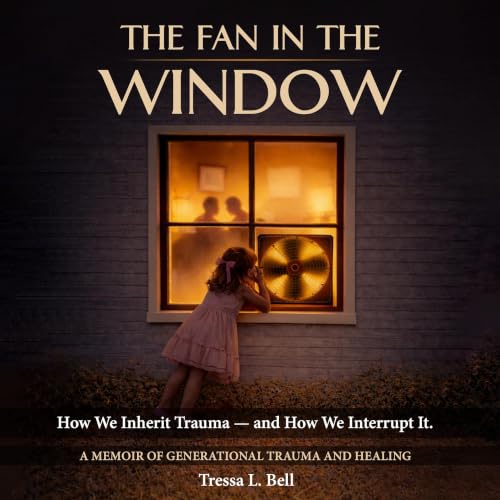
Cover of The Fan in the Window: Interrupting What We Inherit

The Fan in the Window: Interrupting What We Inherit

The Fan in the Window: Interrupting What We Inherit

By: Tressa L. Bell MBA BSN RN
Listen for free

Season's Savings | 0.99 €/month for 3 months

5.99 €/month thereafter - terms apply. Cancel monthly.
Summary
The Fan in the Window: Interrupting What We Inherit explores generational trauma, childhood trauma, domestic violence, emotional abuse, coercive control, and relationship safety. Host Tressa L. Bell, RN, forensic nurse examiner, author, and survivor, combines lived experience, clinical insight, and guest conversations about nervous system responses, trauma recovery, parenting after trauma, healthy relationships, safety planning, and breaking generational cycles. This didn’t start with you…but you can interrupt it. New episodes every other Tuesday.Tressa L. Bell, MBA, BSN, RN Relationships Social Sciences
Episodes
  • Interrupting the Masculinity Inheritance: Masculinity, Childhood Trauma, Relationships, and the Patterns We Pass Down
    17 Nov 2026
    Who taught boys how to be men? And what happens when those boys grow up carrying lessons that no longer serve them?For generations, boys have been told to toughen up, stop crying, be strong, provide for their families, and handle their problems themselves. But what happens when those same boys become husbands, fathers, and grandfathers who are expected to communicate their feelings and be emotionally available?In recognition of "Movember" and men's health awareness, I'm taking a closer look at how traditional expectations of masculinity, childhood trauma, and generational patterns can affect men's mental health and relationships.And this conversation isn't just for men.I think women could learn a lot by better understanding the messages the men in their lives received growing up. Sometimes what a man thinks he's communicating and what his partner hears are two completely different things.In this episode, we're talking about:The stereotypes boys grow up with and how they can shape masculinity.How childhood trauma can influence emotional expression, communication, and relationships.Why some men struggle to ask for help or talk about their feelings.How men and women sometimes misunderstand each other's intentions.Male survivors of sexual assault and intimate partner violence, including why so many hesitate to disclose or seek help.Men's mental health, suicide risk, and warning signs we shouldn't ignore.What breaking generational patterns can look like for men, fathers, and families.I'll also share research on masculinity, trauma, mental health, and help-seeking, along with my perspective as a registered nurse and forensic nurse examiner.Understanding someone's past doesn't excuse harmful behavior. But recognizing how childhood experiences shape us can help us understand where certain patterns come from and what needs to change.I also want to hear directly from men.What were you taught about being a man? What have you had to unlearn? And what's something you wish women understood about men?For the women listening, I'd love to know whether this episode changes how you think about the men in your life.I'm hoping to continue this conversation in a future episode by bringing a man's perspective into the discussion.Because if we're going to interrupt generational trauma, men need to be part of the conversation, too.This didn't start with you…but you can interrupt it.CDC — About Adverse Childhood ExperiencesCDC — National Intimate Partner and Sexual Violence SurveyCDC — Suicide PreventionNational Institute of Mental Health — Suicide PreventionMovember — Men's Health988 Suicide & Crisis Lifeline: Call or text 988 for free, confidential support in the United States. You can also reach out if you're concerned about someone else.National Domestic Violence Hotline: 800-799-SAFE (7233) or thehotline.org. Support is available to survivors of all genders.RAINN National Sexual Assault Hotline: 800-656-HOPE (4673) or rainn.org.If someone is in immediate danger, call 911.I'm Tressa L. Bell, MBA, BSN, RN with forensic nurse examiner experience, author, and host of The Fan in the Window: Interrupting What We Inherit.Website: https://thefaninthewindow.comSubstack: https://tressalbell.substack.comBooks: The Fan in the Window and You Can Interrupt ItAll my links: https://linktr.ee/tressalbellThis podcast is for education and awareness and is not a substitute for individualized medical or mental health care.
    Show more Show less
    38 min
  • Why Leaving Isn't Simple: Recognizing Unsafe Relationships and Making a Safety Plan
    2 Nov 2026
    The Fan in the Window: Interrupting What We InheritGuest: Callie Freenock, LCSW-C“Why don't they just leave?”It's one of the most common questions people ask about domestic violence. But it overlooks how complicated—and dangerous—leaving an abusive relationship can be.I'm joined by Callie Freenock, a licensed clinical social worker who works with victims of violence. Her background spans healthcare, child protective services, behavioral health, and housing advocacy.We discuss abuse beyond bruises: isolation, intimidation, financial control, threats, and monitoring. We explore emotional attachment, children and custody concerns, and why leaving can heighten danger. We also discuss how threats involving immigration status, police, or child protective services can keep someone trapped, and how a seemingly caring gesture can feel threatening when it comes from someone stalking you.Drawing on our professional experience and my lived experience, we explore safety planning before, during, and after leaving.Recognizing coercive control and behaviors disguised as love or concernBarriers to leaving: fear, housing, money, children, attachment, and threatsSeparation risks and the dangers of strangulation without visible injuriesSafety plans: trusted contacts, code words, supplies, documents, medication, exitsTeaching children to seek help, not intervenePhone monitoring, location sharing, vehicle trackers, and technology safetyForensic care, police involvement, and reporting exceptionsStalking, protective orders, and safety planning after separationSupporting someone without judgment or pressureWhy reaching out to a domestic violence advocate doesn't commit you to leavingAfter recording, Callie wanted to add one point:“Tell victims what they can do, not what they should do.”Offer options and resources rather than instructions. Someone experiencing abuse may already have their choices controlled. Staying connected matters. Sometimes success means planting a seed and being someone they can return to.You don't need proof, visible injuries, or a decision to leave before asking for help. Safety planning can start now.National Domestic Violence Hotline — confidential support and safety planning, 24/7:Call 1-800-799-SAFE (7233)Text START to 88788https://www.thehotline.orgOne Love Foundation — recognizing healthy and unhealthy relationships:https://www.joinonelove.orgStalking Prevention, Awareness, and Resource Center (SPARC) — stalking information:https://www.stalkingawareness.orgSafety Net Project — technology safety and privacy:https://www.techsafety.orgSafety reminder: If someone may be monitoring your phone, internet use, or location, consider using a safer device to seek help. Removing a tracker or changing settings without a safety plan may increase danger. If you're in immediate danger, call 911 when safe. If you've experienced strangulation or pressure on your neck, seek emergency medical evaluation, even without visible injuries.Callie Freenock, LCSW-C, studied Human Development and Family Studies at Penn State and earned her MSW at Edinboro University. She helps victims of violence navigate resources and complex systems.Tressa L. Bell, MBA, BSN, RN, is a nurse with forensic nurse examiner experience, author, podcast host, and survivor of childhood trauma and domestic violence. Her books are The Fan in the Window and You Can Interrupt It.Website: https://thefaninthewindow.comSubstack: https://tressalbell.substack.comMore links: https://linktr.ee/tressalbellIf this episode helped you see something differently, consider sharing it. Someone you know may need this information.This didn't start with you... but you can interrupt it.Educational content only; not individualized medical, legal, or safety advice.
    Show more Show less
    54 min
  • Why Didn’t You Tell Anyone? The Silence Around Domestic Violence.
    20 Oct 2026

    “If something like that were happening, she would tell me.”

    Maybe. But what would happen after she told you? Would you believe her? Confront her partner? Expect her to leave immediately? Would she still feel able to call you if she didn’t?

    For Domestic Violence Awareness Month, Tressa L. Bell—registered nurse with a background in forensic nursing, author, and survivor—explores what someone may be weighing before disclosing abuse.

    We discuss the good days, barriers to leaving, and offering support without taking over.


    🎙️ IN THIS EPISODE
    • Why someone might share only a small part of what’s happening.
    • Fear of judgment, retaliation, and losing privacy.
    • “But they’re not always like that”—acknowledging love without dismissing harm.
    • Why “just leave” doesn’t address children, housing, finances, attachment, or risk.
    • What to say—and avoid—when someone shares a concern.
    • Repairing the conversation if your first response was judgmental or rushed.
    • Using the Interruption Model™ as a supporter: Notice, Name, Regulate, Interrupt, Repair, Repeat.


    💭 REFLECTION
    Would someone feel able to tell me again if they didn’t follow my advice the first time?


    COMING UP
    Social worker Callie Freenock joins Tressa to discuss recognizing concerning relationship behaviors, considering options, safety planning, and resources.


    💜 SUPPORT
    National Domestic Violence Hotline:
    Call 800-799-7233 | Text START to 88788
    Free, confidential support, available 24/7.

    Visit The Hotline
    Explore safety planning

    If someone monitors your devices, consider using one they cannot access. Ask before sending abuse-related resources to someone else; their messages may be monitored.

    For suicidal thoughts or emotional distress in the U.S., call or text 988.


    📖 RESEARCH & GUIDANCE
    Sylaska & Edwards (2014): Review of intimate partner violence disclosure to friends, family, and other informal supporters.
    Read the research

    Heron & Eisma (2021): Review of 34 articles on domestic violence disclosure in healthcare, including concerns about judgment, privacy, retaliation, and children.
    Read the research

    Dworkin, Brill, & Ullman (2019): Meta-analysis of 51 studies on responses to interpersonal violence disclosure and mental health. Findings describe associations, not proof of causation.
    Read the research

    WHO’s LIVES approach: Listen, Inquire, Validate, Enhance safety, Support.
    Explore the guidance


    📚 BOOKS
    The Fan in the Window: How We Inherit Trauma—and How We Interrupt It

    You Can Interrupt It: A Practical Guide for the Parent Who Inherited Trauma and Swore They’d Do It Differently

    Find both books on Amazon

    🎧 The memoir is also on Audible, narrated by Tressa. Email Tressa to request a free code while available.


    🪟 FREE RESOURCE
    The First Interruption—a free starter kit and email series.
    Get the free kit


    LISTEN & CONNECT
    The Fan in the Window: Interrupting What We Inherit
    New episodes every other Tuesday. Listen wherever you get your podcasts or watch on YouTube.

    🎙️ Listen or watch
    🌐 Visit the website


    CONTENT NOTE & DISCLAIMER
    Discussion of domestic violence, threats, and barriers to support; no graphic descriptions. Education and personal perspective, not therapy, medical advice, psychological treatment, or individualized safety planning. The Interruption Model™ is an educational framework, not a clinically validated treatment.


    This didn’t start with you…but you can interrupt it.

    Show more Show less
    42 min
adbl_web_anon_alc_button_suppression_t1
No reviews yet