Épisodes

  • Podcast: Anti-trans attacks come from Catholic bishops and new bill in Congress
    Dec 17 2025
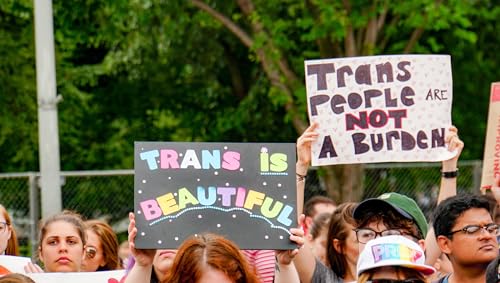
    Photo: Ted Eytan via Wikimedia Commons.I decided to focus my message today on trans issues because it’s what made me the most angry this week. And it’s only Tuesday night.A major fight is happening right now over gender-affirming care. Or actually, it has been attacked over and over this past decade. It’s just getting worse as the rhetoric gets worse.This healthcare is essential and even life-saving for many people, but it is getting mowed down politically and institutionally, largely because most people don’t fully understand what it is. The current public discussion is loud and often scary, but it’s built on a major misunderstanding.These attacks are coming from several directions, hitting both private institutions and potential federal law. The U.S. Conference of Catholic Bishops (USCCB) recently put an official ban on gender-affirming care in all Catholic hospitals. Since Catholic healthcare is a huge part of the U.S. system, this decision makes it much harder for transgender and gender-diverse people to get care. “Just don’t go to a Catholic hospital or medical clinic then!” they say. Well, the problem is in some places, the only hospital or clinic is the Catholic-affiliated one. Doctors at these facilities are now forbidden from offering hormonal or surgical treatments that help someone match their body to their gender identity.In Congress, the U.S. House is expected to vote on H.R. 3492, the “Protect Children’s Innocence Act.” This bill tries to make it a crime to offer gender-affirming care to minors, falsely calling it “mutilation” or “chemical castration.” If this law passes, doctors who provide this proven, necessary care could face up to ten years in federal prison. It’s important to note the contradiction here. While the bill seeks to stop this specific, consensual care for trans youth, it oddly leaves room to allow non-consensual surgeries on intersex infants and children, a practice human rights groups strongly oppose, arguing that those decisions should wait until the person is old enough to agree.The most common public idea is that gender-affirming care just means a big “sex-change” surgery. This is wrong. This incorrect idea is what is driving the push to ban the care.Gender-affirming care is a complete, personal plan that involves a range of support. For the vast majority of people, especially younger people, it does not involve surgery at all.The care usually starts with social affirmation. This is non-medical and completely reversible. It simply means using the person’s chosen name and pronouns and allowing them to present themselves (through clothes or hairstyle) in a way that aligns with their gender identity.Next is mental health support, which is crucial at every age. This involves counseling and therapy to help the person understand their gender identity and deal with gender dysphoria. This is the deep unhappiness that comes from their body not matching who they are inside. Therapy is also vital for addressing common mental health issues like depression and anxiety that affect gender-diverse young people.Medical steps are only taken after careful discussion with doctors and parents, following clear medical guidelines for different ages. These steps are mostly non-surgical. Puberty blockers temporarily pause puberty. This gives a young person time to explore their gender identity before their body changes in ways that are hard to undo; these blockers are fully reversible. Hormone therapy involves giving estrogen or testosterone to help a person develop physical features that match their gender. This is partially reversible.[By the way, there was another report this past week that more and more men are asking for testosterone treatments because they feel less virile, manly, or even have less sculpted bodies because of lack of testosterone. These are straight men wanting this. Guess what?! That’s gender-affirming care!]Surgical interventions are rarely done for minors. They are mostly reserved for adults, or sometimes older teenagers with extensive medical review and parental consent. Surgery, such as chest reconstruction or genital reconstruction, is the final option in the process and is not required to be considered to be receiving gender-affirming care.Gender-affirming care is standard, evidence-based medicine. It is supported by every major medical and mental health organization in the United States, all of which stress that decisions about care must stay between the patient, their family, and their doctors. Not politicians.The American Medical Association (AMA) calls attempts to ban gender-affirming care a “dangerous intrusion into the practice of medicine.” It states that medical and surgical treatments for gender dysphoria are medically necessary and opposes any laws that criminalize or prevent the provision of this evidence-based care. The AMA also supports protections for physicians, patients, and families who seek or provide ...
    Afficher plus Afficher moins
    9 min
  • Podcast: If we don't uphold due process, precedent could take away due process for all
    Dec 13 2025
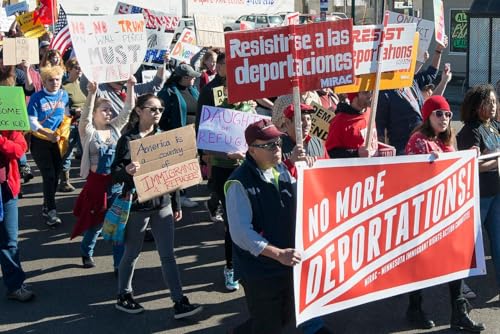
    The digital public square, whether it’s Facebook or X, often becomes a stage for what can only be described as armchair constitutional experts. They are quick to spew definitive statements, often about sensitive legal matters like immigration, and lately, the loudest nonsense has been about how undocumented immigrants, or “aliens,” as the law calls them, don’t deserve due process.Based on that single assertion, you can tell these folks have zero understanding of what due process actually is.This is more than just a legal quibble; it’s a dangerous oversimplification of American constitutional law. This common online belief is utterly wrong. Due process is a right that applies to all persons within U.S. borders, and most importantly, setting a legal precedent to allow deportations without due process can critically undermine and essentially “screw up” the rights of everyone else, including U.S. citizens.Since people don’t seem to understand, let’s use even simpler language here.The phrase “due process” is often thrown around on social media, especially when discussing immigration, usually by people who fundamentally misunderstand what it means. You see posts claiming that undocumented immigrants don’t deserve due process, and therefore should be summarily deported. This position is not only legally incorrect, but it also reveals a dangerous ignorance about one of the most bedrock principles of American law.Due process is essentially a simple guarantee. The government cannot take away a person’s life, liberty, or property without a fair procedure. It is enshrined in both the Fifth and Fourteenth Amendments of the U.S. Constitution.Notice that the text of the Fifth Amendment says that “no person” shall be “deprived of life, liberty, or property, without due process of law.” It does not say “no citizen.”This is a critical distinction. The Supreme Court has repeatedly affirmed that the constitutional protection of due process applies to all persons physically within the United States, regardless of their citizenship or immigration status.A person (whether a citizen, a legal resident, or an undocumented immigrant) has a right to a fair hearing before the government can subject them to a penalty like deportation, detention, or the loss of property.For an undocumented immigrant, due process typically means they have the right to be informed of the charges against them, to present evidence, to cross-examine government witnesses, and to appeal a deportation order, all before an immigration judge. It is the system that ensures the government acts according to law, not arbitrary decree.At issue today is that a vast majority of those detained by ICE and CBP raids have not had due process. And thankfully, courts are agreeing with this assertion.Now, let’s talk about the chilling consequence of setting a precedent that allows the government to strip anyone of their fundamental rights without due process.When people argue that due process is an unnecessary hurdle for deporting undocumented immigrants, they are essentially arguing that the government should be able to act with speed and efficiency over fairness and law. This is where the rights of everyone (including U.S. citizens) are put at risk.The law operates on precedent.If the government is allowed to create a system where one group of people (undocumented immigrants) can be detained or expelled without the basic safeguards of a fair hearing, that power does not magically stop there. Once the legal and political door is opened to shortcut due process for one politically unpopular group, it sets a terrible legal precedent that can be used against others in the future.Imagine a scenario where a U.S. citizen is mistakenly identified as a foreign national subject to deportation. If due process has been eroded, and the government can act quickly and secretly, that citizen has no meaningful way to prove their identity and assert their rights before they are potentially placed on a plane. The mechanism designed to protect the rights of non-citizens is the exact same mechanism that ensures a citizen cannot be unjustly imprisoned or have their property seized.The procedures may be different in immigration court versus criminal court, but the underlying principle is the same.The government must have a solid, legally verifiable reason and must follow fair procedures before it can act against a person.Due process is the great leveler; it is the constitutional chain that binds the power of the state.It is not a reward for good behavior or a privilege reserved for citizens.It is a fundamental right of simply being a person on U.S. soil, and it protects everyone equally, including the very citizens who wish to deny it to others.Undermining it for anyone is like dismantling a load-bearing wall in your own house. The collapse will eventually reach everyone inside. Get full access to Not Quite Communist by Gerald Farinas at ...
    Afficher plus Afficher moins
    6 min
  • Podcast: 'Why can't we have nice' immigrants, President asks
    Dec 13 2025

    The statement, “Why can’t we have nice people from Norway?” might sound harmless at first. However, when President Donald Trump made this statement recently, while discussing his rabid immigration policy, it becomes a deeply damaging message.

    The comment is inappropriate, not just because it’s so vile to say, but because the President is using his immense power, in his capacity as President of the United States, to say that certain races are better or more valuable than others.

    The harm is immediate.

    It belittles non-white immigrants. By setting up “nice people from Norway” against people from other, non-white countries that the President has criticized before, the message is clear. Some immigrants are automatically seen as good, and others are not.

    This is what we call in political science nativism, which means preferring native-born inhabitants over immigrants. Nativism is a type of government-supported racism.

    It tells immigrants of color, no matter how much they contribute (and we’re not just talking about undocumented immigrants here) that they are seen as second-class citizens or a potential problem, simply because of their background or looks.

    The President’s statement also gives comfort and strong words to people who already hold racist views, translating their private bias into a public, presidential-level preference.

    This comment echoes a racist past. This desire to pick immigrants based on race or culture is not new; it mirrors the ethno-nationalism that has caused trouble throughout history.

    The goal of racist nativists is to create a “purer” national identity by choosing who gets to come in. The U.S. has done this before, through laws like the Chinese Exclusion Act of 1882 and the Immigration Act of 1924.

    The 1924 Act specifically set limits to strongly favor people from northern and western Europe (like Norway) while shutting out people from Southern and Eastern Europe, Asia, and Africa. The goal then was to keep America a mostly white, Anglo-Saxon country.

    This recent comment brings back that old, racist way of thinking. It treats American identity not as shared ideas and values (something we were taught since elementary school), but as something based on a person’s race and ancestry.

    This language directly supports the beliefs of white Christian nationalism.

    This movement argues that America was meant to be a Christian nation for white people of European descent, and that all laws and culture should reflect this. In their view, immigrants from non-white and non-Christian countries are not just foreign; they are a major threat that must be stopped to “save” the nation.

    When a national leader suggests favoring immigrants from a country like Norway while speaking badly about those from non-white or non-Christian regions, like when the President disparaged Somalians in America as “garbage people,” they are essentially taking the idea of a racially and culturally “pure” America and making it a preference of the government.

    By using the phrase “nice people,” the President sends a subtle but clear signal that supports a policy based on race and religion. This confirms to his supporters that the country’s highest office agrees with their vision of a racial ranking.

    The preference for “nice people from Norway” is not an accident. It is a powerful, intentional move that smells of historical prejudice, promotes a harmful and unequal view of the world, and encourages those who want to turn the United States into a nation based on ethnicity alone.

    It is deeply wrong because it breaks the basic American promise of equality, replacing it with a presidential preference for one race and nation over others.

    This is not Christian. This is not American.


    Get full access to Not Quite Communist by Gerald Farinas at gerfarinas.substack.com/subscribe
    Afficher plus Afficher moins
    4 min
  • Podcast: The comedy of cringe, reclaiming the Asian American narrative
    Dec 12 2025
    The air in the auditorium is thick with anticipation. On stage, an Asian American comedian is winding up a joke, one that starts with a recognizable accent and a familiar parental expectation—the relentless push toward medicine or law. The punchline lands, and the entire room erupts in laughter. It’s a laughter that carries a complex resonance: recognition, relief, and perhaps a touch of discomfort.This genre of comedy, where Asian Americans, often second-generation, riff on their own experiences, frequently leans into self-deprecation and plays with established Asian stereotypes.The Tiger Mom, the perfect student, the perpetual foreigner, the pressure to succeed, and the often-hilariously misinterpreted efforts of immigrant parents to navigate a new culture. These are the building blocks of sold-out tours and viral clips delivered by names like Jo Koy, who famously captures the Filipino American experience; my favorite Zarna Garg, whose work dissects the strictures of Indian American motherhood; Atsuko Okatsuka, who finds the absurd in cultural contradictions with her mom and grandmother suffering dementia, with deadpan delivery; and Joel Kim Booster, who uses humor to navigate queer identity within the context of his Korean heritage.On the surface, it might look like selling out, a cheap embrace of the very tropes that have historically limited and pigeonholed the Asian American identity. But to view it this way is to miss the profound, almost therapeutic, function this humor serves for the community itself.When a comedian articulates a specific, often unspoken family dynamic, like the intense quietness during a car ride punctuated only by a passive-aggressive cough, they are validating an entire generation’s private reality.This shared recognition is where the power lies. It transforms isolated, sometimes alienating experiences into collective common ground. The laughter is the sound of a thousand people saying, “Me too.”Beyond the audience of shared heritage, this comedy is one of the most effective tools for outreach to the rest of America. Humor, by its nature, disarms. It allows for the transmission of serious, nuanced cultural experiences under the veil of a joke.When a comedian makes light of their parent’s broken English or their own discomfort with public displays of affection, they are not just mocking; they are translating. They are creating an accessible entry point into the immigrant experience for an audience that might otherwise view it through the lens of statistics or news reports.Self-deprecating humor, in this context, is a strategy of reclamation. By taking the stereotype and turning it into a punchline, the comedian strips the trope of its power to harm. It’s a form of ownership. It says, “We know this is what you think of us, and we are going to make it funny, on our own terms.”The comedy is often born from the friction between two worlds: the traditional expectations of the immigrant home and the individualistic, often confusing, landscape of American life.The frustration that fuels these jokes, the struggle to reconcile identity, the feeling of never being American enough or Asian enough, is channeled into art. This outlet of shared frustration helps to build bridges not just within the diverse Asian American communities, but between them and the broader American tapestry, one laugh at a time.It’s an assertion that the Asian American experience is not monolithic, not silent, and certainly not a punchline to be delivered by others. It is complex, funny, frustrating, and fundamentally, uniquely American.So when you see an Asian American do a comedy routine that pokes fun at their Asianess, it’s okay to laugh. Laugh with us.By the way, Zarna Garg has an awesome memoir out called This American Woman: A One-in-a-Billion Memoir now available at your favorite local indie bookstore. You can buy your books on Bookshop.org so more of your money goes to local book shops.The New York Times explains, “Zarna turns her astonishing life story into a hilarious memoir, spilling all the chai on her wild ride from escaping an arranged marriage and homelessness in India to carving her own path in America and launching a dazzling second act in midlife.” Get full access to Not Quite Communist by Gerald Farinas at gerfarinas.substack.com/subscribe
    Afficher plus Afficher moins
    5 min
  • Podcast: Immigrant poet Carlos Bulosan's words remain true 69 years after death
    Dec 1 2025

    We often talk about freedom as if it is a destination. We treat it like a statue carved in stone or a document sealed in glass. We think that once we have it, it sits there, unmoving and permanent. But that is not the reality of liberty.

    Liberty is organic. It breathes. It needs sustenance. And because it is alive, it is vulnerable.

    Carlos Bulosan, a man who knew the bitter taste of exclusion just as well as he knew the sweetness of the American dream, understood this fragility better than most. He wrote during a time when the world was on fire, yet his observations feel surgically targeted at our current moment.

    He said, “Our faith has been shaken many times, and now it is put to question. Our faith is a living thing, and it can be crippled or chained. It can be killed by denying us enough food or clothing, by blasting away our personalities and keeping us in constant fear. Unless we are properly prepared the powers of darkness will have good reason to catch us unaware and trample our lives.”

    When you read those words today, the shiver of recognition is not limited to just one group. It is felt deeply whether you trace your roots to the Philippines or Vietnam, to China or Korea, to Mexico or Venezuela. Bulosan was writing about the Manongs and Sakadas, the migrant workers of his time, but he was describing a machinery of fear that is all too familiar to the immigrant communities of today.

    We look around us now and see the erosion happening in real time. We see the rise of authoritarian impulses that thrive on the very fear Bulosan described.

    For many of us, the “powers of darkness” are not abstract concepts. They wear uniforms. They manifest in the looming threat of ICE and CBP raids that tear families apart in the middle of the night. They appear in the demonization of asylum seekers at the border who are denied that basic sustenance of food, clothing, and safety.

    This fear is compounded by the drums of war and geopolitical tension. As rhetoric heats up against China or North Korea, we see how quickly our Asian American neighbors are cast as the perpetual foreigner or the enemy within. As tensions rise with Venezuela or Colombia, we see how easily our Latino communities are flattened into caricatures and targets for political points. It is a specific kind of violence that blasts away our personalities and reduces complex human beings to potential national security threats.

    Bulosan was asked to define what freedom meant for someone on the margins. His answer was rooted in the ability to exist without fear.

    Today, that means the freedom to drive or take the bus and train to work without the terror of a checkpoint. It means the freedom to speak your heritage language without being viewed with suspicion. It means the freedom to exist in this country without being blamed for the actions of a government across the ocean.

    So what does it mean to be “properly prepared,” as he urged us to be?

    It means recognizing that our histories are linked. The story of the Filipino farmworker or sugarcane laborer (like my great grandfather and grandfather) is the story of the Bracero, too. The Chinese, Japanese, and Filipino exclusion acts of the past, or Mexican Repatriation policy of the Great Depression, are the travel bans and detention centers of the present. It is a shared lineage of people who maintained their dignity when the law denied it to them.

    It means understanding that our faith in this country is not blind loyalty. It is a demand. It is an insistence that the promises made on paper must be kept in practice for all of us.

    When we see authoritarianism rising, we cannot afford to be caught unaware. We have to feed that living thing. We have to protect it. Because if Bulosan taught us anything, it is that freedom does not survive by itself. It survives because we refuse to let it die.


    Get full access to Not Quite Communist by Gerald Farinas at gerfarinas.substack.com/subscribe
    Afficher plus Afficher moins
    4 min
  • Podcast: Administration demands ‘remigration’; another word for ethnic cleansing
    Nov 30 2025

    The stakes have never been higher, and the goal has never been more clear. That is the caption the U.S. Department of Homeland Security chose to accompany a single, terrifying command, “Remigration now.”

    It looks like a simple policy update, perhaps a bureaucratic shuffling of papers. But if you peel back the layers of that word, you find a history written in blood and a future that promises the same.

    Remigration is not just a synonym for deportation. It is a sanitized, academic-sounding euphemism for ethnic cleansing.

    To understand why this word is so dangerous, you have to look at where it comes from. It didn’t start in a policy think tank in Washington. It gained traction in the European far-right, specifically among Identitarian groups who needed a softer way to talk about violent expulsion.

    The term is designed to sound voluntary, like a return ticket purchased after a long vacation. It implies that people are simply going back to where they naturally belong, restoring some mythical natural order.

    But in practice, as outlined by political theorists and recent movements in Germany and Austria, remigration is not limited to undocumented immigrants.

    It targets citizens. It targets anyone who “can’t be assimilated” or who are “non-native” regardless of their passport.

    When the administration adopts this language, it is signaling a shift from border enforcement to demographic engineering. It is the administration deciding who the “real” people are and forcibly removing the rest.

    That is the textbook definition of ethnic cleansing: rendering an area ethnically homogeneous by using force or intimidation to remove persons of another group.

    We often tell ourselves that this kind of thing doesn’t happen here, that ethnic cleansing is something that happens in the Balkans or failing states, not in a democracy with a bill of rights. But the U.S. has a long, documented history of using the machinery of government to purge specific ethnic groups from the land.

    Consider the Indian Removal Act of 1830. Note the bureaucratic, neutral name. It wasn’t called the Native American Death March Act. It was framed as a land exchange, a necessary separation for the good of both parties.

    President Andrew Jackson described it as a “benevolent policy.” The reality was the Trail of Tears, where the Cherokee, Choctaw, Creek, Chickasaw, and Seminole nations were marched at gunpoint from their ancestral homes in the southeast to designated territory west of the Mississippi.

    Thousands died from exposure, disease, and starvation. It was ethnic cleansing wrapped in the language of law and order.

    Fast forward a century to the 1930s and the Mexican Repatriation.

    As the Great Depression ravaged the economy, local and federal officials looked for scapegoats. They targeted people of Mexican descent, blaming them for taking jobs and draining relief funds.

    Through raids and coercion, up to two million people were repatriated to Mexico. Estimates suggest that 60 percent of them were birthright U.S. citizens.

    They were not deported through legal channels; they were bullied into remigrating by a society that suddenly decided they didn’t belong.

    Then there was Operation Wetback in 1954.

    The government used military tactics to round up and deport over a million people. It was a massive dragnet that terrorized communities, split families, and often sent U.S. citizens to Mexico by mistake or indifference. The name of the operation itself was a slur, proving that the cruelty was the point.

    The danger of the DHS posting, “Remigration now,” is that it signals the return of these dark chapters, but with different branding. It suggests that the government is once again preparing to strip away the rights of residency and citizenship based on blood and soil.

    When a government uses a word like remigration, they are trying to numb you. They want you to think of logistics, of paperwork, of “facilitating return.”

    They don’t want you to think of the knock on the door at midnight, the buses waiting to take your neighbors away, or the camps that will inevitably be built to hold them.

    They are asking you to accept the unacceptable by hiding it behind a word that sounds almost civilized.

    But make no mistake. When the administration demands the mass removal of a specific group of people to “purify” the nation, there is only one honest name for it.

    And it isn’t remigration.


    Get full access to Not Quite Communist by Gerald Farinas at gerfarinas.substack.com/subscribe
    Afficher plus Afficher moins
    5 min
  • Podcast: The real cost of Black Friday
    Nov 28 2025

    When I hear the name “Black Friday,” I think about how it perfectly shows what capitalism is really about. The name comes from accounting. Red ink means a store is losing money, while black ink means they are making a profit. So, this holiday is named after the moment businesses start making money. It is not about being thankful or being with family. It is about businesses making sure their bank accounts look good. I think this holiday hides some big ethical problems with how we buy things today.

    The first big problem is how stores trick our brains. Black Friday is not natural. It is a panic created by companies on purpose. I see how they make us feel scared that we will miss out on a deal. They use short time limits to stop us from thinking clearly. We do not buy things because we need them. We buy them because we are afraid we will not get another chance. I think it is wrong to treat people this way just to sell products.

    This trick leads to the second problem, which is waste. This holiday is built on buying things we will eventually throw away. The cheap items sold on Black Friday are often made poorly so they can be sold for less money. They break easily. This hurts the planet. We use up natural resources and burn fuel to ship these things around the world. Then we wrap them in plastic. Soon, these items end up in the trash. It feels like we are destroying the earth just to save a few dollars.

    Then there is the cost to actual people. I know that low prices usually mean someone is being treated badly. It might be the person making the product in a factory for very low pay. Or it might be the worker at the store right here in America. Many workers have to leave their own families on Thanksgiving to get the store ready. We act like it is normal for workers to be tired and treated poorly so we can get a cheap TV. Sometimes people even get hurt in the crowds. This teaches us that owning things is more important than treating people with respect.

    Finally, I worry about what this does to our hearts. Black Friday takes over Thanksgiving. We stop saying “thank you” for what we have and immediately start running to get more. It changes our focus from being grateful to just wanting more stuff. To me, Black Friday puts money over people. As long as we join in without thinking, we are part of a system that only cares about our wallets, not our well-being.


    Get full access to Not Quite Communist by Gerald Farinas at gerfarinas.substack.com/subscribe
    Afficher plus Afficher moins
    3 min
  • Podcast: The Thanksgiving table is not overwhelmingly turkey and mashed potatoes
    Nov 27 2025
    When most Americans picture Thanksgiving, their minds drift almost automatically to Norman Rockwell. We all know the image. It is the famous painting titled Freedom from Want, featuring a matriarch placing a perfectly roasted turkey onto a table surrounded by smiling faces. The table is set with the standard pantheon of sides including bread stuffing, mashed potatoes, green bean casserole, candied sweet potatoes, and pumpkin pie. It is an image of abundance and uniformity that has been sold to us as the singular American experience. While this image is beautiful, it has never been a mirror for my reality. As an Asian American born and raised in Hawaii, my Thanksgiving table never looked like that.In our Filipino American household, the center of gravity was not a dry turkey that required gallons of gravy to be palatable. It was the lechon, a spit-roasted pork with skin so crisp it shattered like glass, or perhaps a savory roasted chicken seasoned with soy sauce and calamansi. While others were passing bowls of gravy, we were passing the steamed white rice. It was not a side dish. It was essential to the meal, the canvas upon which all other flavors were painted.Our starch wasn’t limited to potatoes. We had mounds of macaroni salad, made strictly with Best Foods mayonnaise because any other brand would be sacrilege in a local Hawaii home. The pasta was cooked soft, absorbing the rich dressing, offering a cool counterpoint to the hot, savory meats. We had pancit noodles teeming with vegetables and meat, and crispy lumpia fried to golden perfection, shattering with every bite. Instead of creamed corn or green bean casserole, our vegetable rotation included braised eggplant and the sharp, distinct bite of bittermelon, flavors that spoke to our heritage rather than the expectations of a New England autumn.The diversity of the holiday extended beyond the walls of my family’s apartment. In the vertical neighborhood of our condo building, the smells drifting through the hallways told a dozen different stories of gratitude. It was a symphony of aromas that defied the traditional holiday spice palette. Next door on the sixth floor, my Vietnamese neighbors celebrated with lemongrass roasted pork chops and fried chicken. Their table featured vermicelli rice noodles tossed with fresh herbs and veggies, alongside platters of fresh and fried spring rolls that crunched with freshness.Meanwhile, the Korean family downstairs had their own feast that mingled with ours in the stairwell. Their table was laden with kalbi short ribs marinated in soy and sesame, savory meat jhun, and delicate fish jhun dipped in egg batter. They adapted the holiday bird into turkey juk, a comforting rice porridge that warmed the soul and made use of the bird in a way that felt like home. And just like us, and just like the neighbors next door, they always had steamed white rice. It was the common thread in our tapestry of cultures.That is the reality we need to embrace. The Rockwell ideal is not the normal Thanksgiving for millions of us. Now that I live here in Chicago, the menu has changed, but the diversity remains. The tropical humidity has been replaced by the Midwestern chill, yet the warmth of the table persists. I have been welcomed to tables featuring Polish sausages and hearty hunter stew rich with cabbage and meat. I have eaten slow-braised German ham hocks and pigs feet that fall off the bone. I have celebrated with Lao friends who served noodles and fish cakes spicy enough to chase away the cold. This is what America actually tastes like. It is a potluck of histories and traditions.It is time we stop imagining the table as a single, uniform surface. We must also acknowledge that for many, the table this year is not defined by abundance, but by survival. We are living through a time of massive job losses and stagnant wages that simply cannot keep pace with the highest grocery costs in history. The anxiety of the grocery checkout line is real. For many families, the Thanksgiving meal will be lean. It might be a box of mac and cheese or grilled cheese sandwiches.We must also remember the millions of people who have no table at all to partake in this holiday. The empty chairs this year are not just metaphoric. They represent a systemic struggle that we cannot ignore while we pass the food.If we strip away the expectation of the turkey and the trimmings, we are left with what actually matters. Whether the table is heavy with lechon and kalbi, or light with a simple grilled cheese, the essence of the holiday remains the same. It is not about the food. It is about the pause. It is about taking a moment, amidst the struggle and the diversity of our lives, to give thanks for all that we do have. It is about recognizing that the “American” table is big enough for rice, for noodles, for turkey, and for whatever sustenance we can share with one another. Get full access to Not Quite Communist by Gerald Farinas at ...
    Afficher plus Afficher moins
    6 min