Couverture de Podcast: If we don't uphold due process, precedent could take away due process for all

Podcast: If we don't uphold due process, precedent could take away due process for all

Podcast: If we don't uphold due process, precedent could take away due process for all

Écouter gratuitement

Voir les détails

À propos de ce contenu audio

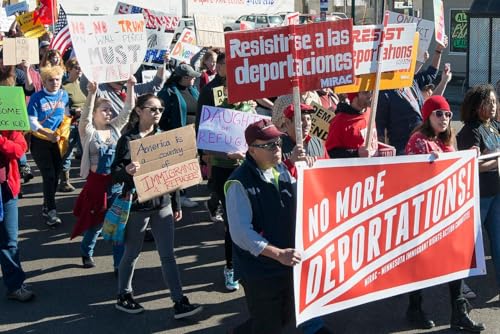
The digital public square, whether it’s Facebook or X, often becomes a stage for what can only be described as armchair constitutional experts. They are quick to spew definitive statements, often about sensitive legal matters like immigration, and lately, the loudest nonsense has been about how undocumented immigrants, or “aliens,” as the law calls them, don’t deserve due process.Based on that single assertion, you can tell these folks have zero understanding of what due process actually is.This is more than just a legal quibble; it’s a dangerous oversimplification of American constitutional law. This common online belief is utterly wrong. Due process is a right that applies to all persons within U.S. borders, and most importantly, setting a legal precedent to allow deportations without due process can critically undermine and essentially “screw up” the rights of everyone else, including U.S. citizens.Since people don’t seem to understand, let’s use even simpler language here.The phrase “due process” is often thrown around on social media, especially when discussing immigration, usually by people who fundamentally misunderstand what it means. You see posts claiming that undocumented immigrants don’t deserve due process, and therefore should be summarily deported. This position is not only legally incorrect, but it also reveals a dangerous ignorance about one of the most bedrock principles of American law.Due process is essentially a simple guarantee. The government cannot take away a person’s life, liberty, or property without a fair procedure. It is enshrined in both the Fifth and Fourteenth Amendments of the U.S. Constitution.Notice that the text of the Fifth Amendment says that “no person” shall be “deprived of life, liberty, or property, without due process of law.” It does not say “no citizen.”This is a critical distinction. The Supreme Court has repeatedly affirmed that the constitutional protection of due process applies to all persons physically within the United States, regardless of their citizenship or immigration status.A person (whether a citizen, a legal resident, or an undocumented immigrant) has a right to a fair hearing before the government can subject them to a penalty like deportation, detention, or the loss of property.For an undocumented immigrant, due process typically means they have the right to be informed of the charges against them, to present evidence, to cross-examine government witnesses, and to appeal a deportation order, all before an immigration judge. It is the system that ensures the government acts according to law, not arbitrary decree.At issue today is that a vast majority of those detained by ICE and CBP raids have not had due process. And thankfully, courts are agreeing with this assertion.Now, let’s talk about the chilling consequence of setting a precedent that allows the government to strip anyone of their fundamental rights without due process.When people argue that due process is an unnecessary hurdle for deporting undocumented immigrants, they are essentially arguing that the government should be able to act with speed and efficiency over fairness and law. This is where the rights of everyone (including U.S. citizens) are put at risk.The law operates on precedent.If the government is allowed to create a system where one group of people (undocumented immigrants) can be detained or expelled without the basic safeguards of a fair hearing, that power does not magically stop there. Once the legal and political door is opened to shortcut due process for one politically unpopular group, it sets a terrible legal precedent that can be used against others in the future.Imagine a scenario where a U.S. citizen is mistakenly identified as a foreign national subject to deportation. If due process has been eroded, and the government can act quickly and secretly, that citizen has no meaningful way to prove their identity and assert their rights before they are potentially placed on a plane. The mechanism designed to protect the rights of non-citizens is the exact same mechanism that ensures a citizen cannot be unjustly imprisoned or have their property seized.The procedures may be different in immigration court versus criminal court, but the underlying principle is the same.The government must have a solid, legally verifiable reason and must follow fair procedures before it can act against a person.Due process is the great leveler; it is the constitutional chain that binds the power of the state.It is not a reward for good behavior or a privilege reserved for citizens.It is a fundamental right of simply being a person on U.S. soil, and it protects everyone equally, including the very citizens who wish to deny it to others.Undermining it for anyone is like dismantling a load-bearing wall in your own house. The collapse will eventually reach everyone inside. Get full access to Not Quite Communist by Gerald Farinas at ...
Les membres Amazon Prime bénéficient automatiquement de 2 livres audio offerts chez Audible.

Vous êtes membre Amazon Prime ?

Bénéficiez automatiquement de 2 livres audio offerts.
Bonne écoute !
    Aucun commentaire pour le moment
