Épisodes

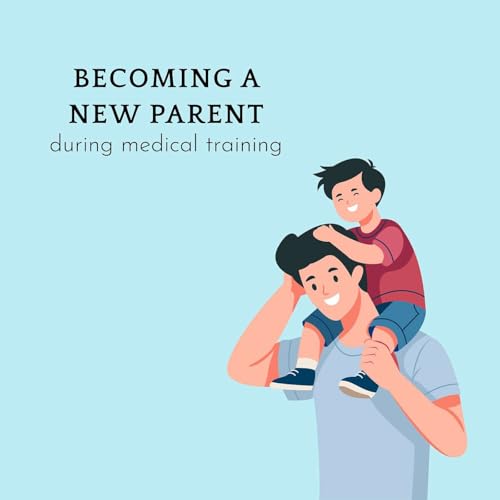
  • BONUS episode: Becoming a New Parent During Medical Training
    Jan 2 2026

    In this episode our producer, Helen Cai, leads a far reaching conversation with Alissa (guest speaker on Breastfeeding episode) about the joys and challenges of raising children while pursuing rigorous medical training.


    === About Us ===

    The Primary Care Pearls (PCP) Podcast is created in collaboration with faculty, residents, and students from the Department of Internal Medicine at the Yale School of Medicine. The project aims to create accessible and informative podcasts about core primary care topics centered around real patient stories.


    Hosts: Helen Cai

    Producers: Helen Cai, Josh Onyango

    Logo and Name: Eva Zimmerman

    Theme music and Editing: Helen Cai, Josh Onyango

    Other background music: Steve Adams, The Mini Vandals, Density & Time


    Instagram: @pcpearls

    Twitter: @PCarePearls

    Listen on your favorite podcast platforms: linktr.ee/pcpearls

    Afficher plus Afficher moins
    15 min
  • BONUS Episode: Lactation Medicine in Medical Education
    Dec 30 2025

    In this bonus episode, one of our producers, Helen Cai, dives deeper into the challenges and opportunities of training medical providers to be more competent and confident in guiding new parents through breastfeeding. Our expert is Dr. Deanna Nardella, MD, MHS, a Yale Pediatrician.


    === About Us ===

    The Primary Care Pearls (PCP) Podcast is created in collaboration with faculty, residents, and students from the Department of Internal Medicine at the Yale School of Medicine. The project aims to create accessible and informative podcasts about core primary care topics centered around real patient stories.


    Hosts: Helen Cai

    Producers: Helen Cai, Josh Onyango

    Logo and Name: Eva Zimmerman

    Theme music and Editing: Helen Cai, Josh Onyango

    Other background music: Schwartzy


    Instagram: @pcpearls

    Twitter: @PCarePearls

    Listen on your favorite podcast platforms: linktr.ee/pcpearls

    Afficher plus Afficher moins
    13 min
  • "Thank goodness there is Formula" - Infant Nutrition (Part II)
    Dec 15 2025

    In this episode, Helen Cai and Dr. Faith Crittenden chat with Katherine and Dr. Porto about the challenges and opportunities of relying on infant formula, especially if it wasn’t a parent’s original plan.


    === Outline ===

    Chapter 1: The realities of Infant Feeding

    Chapter 2: The history and science behind formula

    Chapter 3: Safe practices in handing infant formula

    Chapter 4: Formula’s unintended benefits on family life


    === Learning Points ===

    1. All infant formula are safe and complete due to regulations by the FDA and Infant Formula Act of 1980
    2. The majority of infants thrive on standard intact cow’s milk protein formula
    3. Prepared, refrigerated formula can be safely stored for up to 24 hours
    4. Never dilute formula to stretch it, as this can lead to electrolyte abnormalities and failure to thrive

    === Our Expert(s) ===

    Dr. Anthony Porto is a board-certified pediatric gastroenterologist and Professor of Pediatrics at Yale, where he serves as Associate Chief of Pediatric Gastroenterology and Medical Director of the Yale Pediatric Celiac Program. He is a recognized expert in infant nutrition and feeding, co-author of The Pediatrician’s Guide to Feeding Babies and Toddlers, and a spokesperson for the American Academy of Pediatrics


    === Further Reading ===

    • CDC 2022 Breastfeeding Report Card: https://www.cdc.gov/breastfeeding-data/breastfeeding-report-card/index.html
    • NASPGHAN list of formula equivalents: https://naspghan.org/recent-news/naspghan-tools-for-hcps-affected-by-formula-recall/
    • Cernioglo K, Smilowitz JT. Infant feeding practices and parental perceptions during the 2022 United States infant formula shortage crisis. BMC Pediatr. 2023 Jun 24;23(1):320. doi: 10.1186/s12887-023-04132-9. PMID: 37355589; PMCID: PMC10290398.
    • Calello DP, Jefri M, Yu M, Zarraga J, Bergamo D, Hamilton R. Notes from the Field: Vitamin D–Deficient Rickets and Severe Hypocalcemia in Infants Fed Homemade Alkaline Diet Formula — Three States, August 2020–February 2021. MMWR Morb Mortal Wkly Rep 2021;70:1124–1125. DOI: http://dx.doi.org/10.15585/mmwr.mm7033a4
    • Anderson CE, Whaley SE, Goran MI. Lactose-reduced infant formula with corn syrup solids and obesity risk among participants in the Special Supplemental Nutrition Program for Women, Infants, and Children (WIC). Am J Clin Nutr. 2022 Oct 6;116(4):1002-1009. doi: 10.1093/ajcn/nqac173. PMID: 35998087; PMCID: PMC10157812.


    === About Us ===

    The Primary Care Pearls (PCP) Podcast is created in collaboration with faculty, residents, and students from the Department of Internal Medicine at the Yale School of Medicine. The project aims to create accessible and informative podcasts about core primary care topics centered around real patient stories.


    Hosts: Helen Cai

    Producers: Helen Cai, Josh Onyango

    Logo and Name: Eva Zimmerman

    Theme music and Editing: Helen Cai, Josh Onyango

    Other background music: Jeremy Black, Nat Keefe, Schwartzy, Corbyn Kites, Dan Bodan, The Mini Vandals, Moonrise, Density&Time, Quincas Moreira, Jesse Gallagher, John Patitucci, Steve Adams


    Instagram: @pcpearls

    Twitter: @PCarePearls

    Listen on your favorite podcast platforms: linktr.ee/pcpearls

    Afficher plus Afficher moins
    50 min
  • “I did not expect it to be as challenging as it was” - Breastfeeding, Infant Nutrition (Part I)
    Nov 28 2025

    In this episode, Helen Cai chats with Dr. Chen and Dr. Nardella about the challenges and joys involved with feeding babies through breastfeeding.


    === Outline ===

    Chapter 1: Motivation for Learning

    Chapter 2: Counseling on benefits of Breastfeeding

    Chapter 3: Collecting a history and troubleshooting

    Chapter 4: Not all situations are the same


    === Learning Points ===

    1. Breastfeeding Pain is Not Normal: While some tenderness may occur in the very early days, ongoing pain, is a sign of a problem.
    2. Supply and Demand Basics: Breastfeeding largely operates on supply and demand. Parents need to be encouraged to drain the breast 8 to 12 times in 24 hours to establish an adequate milk supply.
    3. Universal Provider Responsibility: All primary care physicians should have a foundational knowledge of common breastfeeding challenges and counseling techniques.
    4. Focus on Parent Goals and Informed Decision: Counseling should avoid shaming and move past yes/no questions and use motivational interviewing.

    === Our Expert(s) ===

    Deanna Nardella, MD, MHS is a general pediatrician at Yale who completed her pediatrics residency at The Children’s Hospital of Philadelphia and later joined Yale as a National Clinician Scholar, bringing a strong background in infant care and breastfeeding medicine to her work with families.


    === Further Reading ===

    1. American Academy of Pediatrics. Policy Statement: Breastfeeding and the Use of Human Milk https://publications.aap.org/pediatrics/article/150/1/e2022057988/188347/Policy-Statement-Breastfeeding-and-the-Use-of?autologincheck=redirected
    2. Academy of Breastfeeding Medicine: links to “Need to Know” videos
      https://www.bfmed.org/need-to-know-videos
    3. Institute for the Advancement of Breastfeeding and Lactation Education (IABLE): Offers online CME and eCourses, including a “1 Day Primary Care Breastfeeding Medicine Course for Physicians and Other Providers”
      https://lacted.org/
    4. Global Health Media Project: Offers free instructional videos on a wide range of breastfeeding topics
      https://globalhealthmedia.org/video/?_topic=breastfeeding&_language=english&~1
    5. E-lactancia: Spanish and English information about compatibility between medications and breastfeeding. https://www.e-lactancia.org/
    6. Drugs and Lactation Database (LactMed), maintained by the NIH: https://www.ncbi.nlm.nih.gov/books/NBK501922/


    === About Us ===

    The Primary Care Pearls (PCP) Podcast is created in collaboration with faculty, residents, and students from the Department of Internal Medicine at the Yale School of Medicine. The project aims to create accessible and informative podcasts about core primary care topics centered around real patient stories.


    Hosts: Helen Cai

    Producers: Helen Cai, Josh Onyango

    Logo and Name: Eva Zimmerman

    Theme music and Editing: Helen Cai, Josh Onyango

    Other background music: Alge, futuremono, Joel Cummins, Schwartzy, Density & Time, The Tower of Light, Asher Fulero, Track Tribe, Penguinmusic, Esther Abrami, the Mini Vandals, Godmode, Quincas Moreira, Nathan Moore, Adam MacDougall,


    Instagram: @pcpearls

    Twitter: @PCarePearls

    Listen on your favorite podcast platforms: linktr.ee/pcpearls

    Afficher plus Afficher moins
    1 h et 6 min
  • "The doctor is also just a person" - Transitions of Care for Adolescents (Part II)
    Aug 13 2025

    In this episode, Dr. Liang chats with Alexis and Dr. Quinn about the challenges involved with helping adolescents transition care into the adulthood.


    === Outline ===

    Chapter 1: Building a team of specialists

    Chapter 2: Transitions to adult care

    Chapter 3: The role of parents

    Chapter 4: Parting advice

    Chapter 5: Conclusion


    === Learning Points ===

    1. While it’s tempting to think of adolescents as simply younger versions of adult patients, we need to recognize that they have their own needs and considerations. They’re learning about how to navigate the health care system for the first time, and will likely need our help to understand it.
    2. If you’re listening to this as a specialist or as an adult provider who sees young adults, just remember that they may need a little bit of extra grace and kindness when they show up to see you for the first time. Your attitude easily becomes their attitude.
    3. Emphasize interdependence, rather than independence. Who do teens have on their team, and how can we build up their toolkit of strategies and problem solving to best set them up for success?

    === Our Expert(s) ===

    Sheila M. Quinn, DO, is an attending physician in the Craig-Dalsimer Division of Adolescent Medicine and the Transition to Adult Care Program at Children's Hospital of Philadelphia. Her areas of expertise include adolescent and young adult health, reproductive health, and health care transitions.

    === Toolkits and Resources ===

    • https://gottransition.org/


    === About Us ===

    The Primary Care Pearls (PCP) Podcast is created in collaboration with faculty, residents, and students from the Department of Internal Medicine at the Yale School of Medicine. The project aims to create accessible and informative podcasts about core primary care topics centered around real patient stories.


    Hosts: Addy Feibel

    Producers: Helen Cai, Josh Onyango

    Logo and Name: Eva Zimmerman

    Theme music and Editing: Helen Cai, Josh Onyango

    Other background music: Patrick Patrikios, Nat Keefe, The Mini Vandals, John Patitucci, DivKid, Joel Cummins, Godmode, Ammil


    Instagram: @pcpearls

    Twitter: @PCarePearls

    Listen on your favorite podcast platforms: linktr.ee/pcpearls


    Afficher plus Afficher moins
    43 min
  • "We Have a Voice" - Mental Health, Social Media, and Sexual & Reproductive Health in Adolescents (Part I)
    Jun 30 2025

    In this episode, Dr. Liang interviews Dr. Quinn (Adolescent Health Provider) and Alexis (Teenager) on her personal experience with navigating social media, mental health struggles, and reproductive health with her healthcare providers.


    === Outline ===

    Chapter 1: Definitions

    Chapter 2: Establishing a relationship with the patient

    Chapter 3: Mental health

    Chapter 4: Social media

    Chapter 5: Sexual and reproductive health

    Chapter 6: Conclusion


    === Learning Points ===

    1. First impressions are important. How you set up and frame the relationship with a teen patient will set the tone for the teen’s trust, and how much they choose to confide in you in the coming years.
    2. Instead of being prescriptive or setting limits, such as with social media, we can equip teens with the skills to reflect on their interactions. What does it mean to be kind in an online world? Is it leading to meaningful and constructive interactions? Or is it quickly becoming a detriment to someone’s identity and how they see themselves?
    3. No matter the topic, using normalizing language can go a long way in empowering adolescents to share. When discussing topics included in the social history, using simple language can go a long way in avoiding misunderstandings. Remember, it might be the first time that teens are hearing these words being used.


    === Our Expert(s) ===

    Sheila M. Quinn, DO, is an attending physician in the Craig-Dalsimer Division of Adolescent Medicine and the Transition to Adult Care Program at Children's Hospital of Philadelphia. Her areas of expertise include adolescent and young adult health, reproductive health, and health care transitions.

    === Toolkits and Resources ===

    • n/a


    === About Us ===

    The Primary Care Pearls (PCP) Podcast is created in collaboration with faculty, residents, and students from the Department of Internal Medicine at the Yale School of Medicine. The project aims to create accessible and informative podcasts about core primary care topics centered around real patient stories.


    Hosts: Addy Feibel

    Producers: Helen Cai, Josh Onyango

    Logo and Name: Eva Zimmerman

    Editing: Helen Cai, Josh Onyango

    Theme music: Josh Onyango

    Other background music: Nat Keefe, TrackTribe, Geographer, Asher Fulero, Loopop, Freedom Trail Studio, Chris Haugen, Aaron Kenny, Ammil, penguinmusic,


    Instagram: @pcpearls

    Twitter: @PCarePearls

    Listen on your favorite podcast platforms: linktr.ee/pcpearls


    Afficher plus Afficher moins
    42 min
  • "My whole life changed." - Dialysis and Kidney Transplantation (ESRD, Part II)
    May 19 2025

    In the final episode of the ESRD series, Dr. Montano and Bernstein discuss the implications and mechanisms behind dialysis and our patients share their experiences with both dialysis and kidney transplantation.


    === Outline ===

    Chapter 1: Approaching dialysis

    Chapter 2: Hemodialysis vs peritoneal dialysis

    Chapter 3: Practicalities of living on dialysis

    Chapter 4: Kidney transplantation


    === Learning Points ===

    1. Hemodialysis and peritoneal dialysis are the two primary options for long-term renal replacement therapy. The two modalities are very different, and the patient’s lifestyle and individual needs should be considered when choosing a form of dialysis.
    2. The decision to start dialysis is complex and should involve shared decision-making between the patient and their healthcare team with open communication.
    3. Dialysis significantly impacts patients’ lives by requiring them to change their daily routines and dietary restrictions. Beyond this, it can significantly impact their emotional and social well-being.
    4. Kidney transplantation offers a potential for improved quality of life and further longevity, as compared to dialysis options.


    === Our Expert(s) ===

    Dr. Paul Bernstein graduated from Union College in 1982, where he earned a BA in Biology. He then attended the Albert Einstein College of Medicine, where he was elected to AOA. In 1988, he joined the Yale Traditional Internal Medicine Residency, serving as Chief Resident from 1991-1992. From 1992-1995, he was a Yale nephrology fellow, and after that, he joined the faculty at the University of Rochester. From 1997-2000, he was an APD for the University of Rochester Primary Care Residency, and from 2000-2012, he was Program Director for the Internal Medicine Residency at Rochester General Hospital.


    === Further Reading ===

    1. NIH National Institute of Diabetes and Digestive and Kidney Diseases: Facts about Peritoneal Dialysis
      https://www.niddk.nih.gov/health-information/kidney-disease/kidney-failure/peritoneal-dialysis
    2. Wong B, Ravani P, Oliver MJ, Holroyd-Leduc J, Venturato L, Garg AX, Quinn RR. Comparison of Patient Survival Between Hemodialysis and Peritoneal Dialysis Among Patients Eligible for Both Modalities. Am J Kidney Dis. 2018 Mar;71(3):344-351. doi: 10.1053/j.ajkd.2017.08.028. Epub 2017 Nov 22. PMID: 29174322.


    === About Us ===

    The Primary Care Pearls (PCP) Podcast is created in collaboration with faculty, residents, and students from the Department of Internal Medicine at the Yale School of Medicine. The project aims to create accessible and informative podcasts about core primary care topics centered around real patient stories.


    Host: Josh Onyango

    Producers: Helen Cai, Josh Onyango

    Logo and Name: Eva Zimmerman

    Theme music and Editing: Helen Cai, Josh Onyango

    Other background music: Aaron Kenny, The Tides, TrackTribe, Dan Bodan, Astron, Asher Fulero, VYEN, The Soundlings


    Instagram: @pcpearls

    Twitter: @PCarePearls

    Listen on your favorite podcast platforms: linktr.ee/pcpearls

    Afficher plus Afficher moins
    46 min
  • "Is this really happening to me?" - Diagnosing End-Stage Renal Disease (Part I)
    May 5 2025

    In this first episode of the ESRD series, Dr. Montano and Bernstein discuss how to diagnose kidney failure while Drs. Hart and Aklilu wrestle with the fraught history of using race in the measurement of kidney function.


    === Outline ===

    Chapter 1: A gradual progression

    Chapter 2: A history of EGFR through the lens of race

    Chapter 3: Involving the nephrologist

    Chapter 4: Medication adjustments and monitoring


    === Learning Points ===

    1. The symptoms underlying a progression from CKD to ESRD are often vague. A definitive diagnosis requires measuring kidney function.
    2. The history of measuring kidney function includes the use of creatinine as a biomarker and the development of equations to calculate EGFR. Many of these equations have historically explicitly involved race, which has come under scrutiny and controversy.
    3. Once a patient’s creatinine is consistently higher than 1.6, consider referral to a nephrologist for assistance with ongoing monitoring and considerations for transplantation.
    4. A diagnosis of ESRD may require medication adjustments and careful monitoring for complications such as anemia, electrolyte changes, bone mineral disease, and swings in blood pressure.


    === Our Expert(s) ===

    Dr. Paul Bernstein graduated from Union College in 1982, where he earned a BA in Biology. He then attended the Albert Einstein College of Medicine, where he was elected to AOA. In 1988, he joined the Yale Traditional Internal Medicine Residency, serving as Chief Resident from 1991-1992. From 1992-1995, he was a Yale nephrology fellow, and after that, he joined the faculty at the University of Rochester. From 1997-2000, he was an APD for the University of Rochester Primary Care Residency, and from 2000-2012, he was Program Director for the Internal Medicine Residency at Rochester General Hospital.


    === Further Reading ===

    1. NIH National Institutes of Diabetes and Digestive and Kidney Diseases: Fast Facts on Kidney Disease https://www.niddk.nih.gov/health-information/health-statistics/kidney-disease
    2. Diao JA et al. National Projections for Clinical Implications of Race-Free Creatinine-Based GFR Estimating Equations. J Am Soc Nephrol. 2023 Feb 1;34(2):309-321. doi: 10.1681/ASN.2022070818. Epub 2022 Nov 11. PMID: 36368777; PMCID: PMC10103103.
    3. St Peter WL et al; Written on behalf of the National Kidney Foundation Workgroup for Implementation of Race-Free eGFR-Based Medication-Related Decisions. Moving forward from Cockcroft-Gault creatinine clearance to race-free estimated glomerular filtration rate to improve medication-related decision-making in adults across healthcare settings: A consensus of the National Kidney Foundation Workgroup for Implementation of Race-Free eGFR-Based Medication-Related Decisions. Am J Health Syst Pharm. 2024 Nov 18:zxae317. doi: 10.1093/ajhp/zxae317. Epub ahead of print. PMID: 39552516.


    === About Us ===

    The Primary Care Pearls (PCP) Podcast is created in collaboration with faculty, residents, and students from the Department of Internal Medicine at the Yale School of Medicine. The project aims to create accessible and informative podcasts about core primary care topics centered around real patient stories.


    Host: Josh Onyango

    Producers: Helen Cai, Josh Onyango

    Logo and Name: Eva Zimmerman

    Theme music and Editing: Helen Cai, Josh Onyango

    Other background music: I Think I Can Help You, John Patitucci, Chris Haugen, DivKid, Asher Fulero, Jesse Gallagher, Saidbysed


    Instagram: @pcpearls

    Twitter: @PCarePearls

    Listen on your favorite podcast platforms: linktr.ee/pcpearls


    Afficher plus Afficher moins
    51 min