Couverture de Hometown History

Hometown History

Hometown History

De : Shane Waters
Écouter gratuitement

À propos de ce contenu audio

Discover forgotten stories from small-town America that never made it into history books. Hometown History is the podcast uncovering hidden American history—overlooked events, local mysteries, and untold tragedies from communities across the nation. Every week, meticulous research brings pre-2000 small-town stories to life in 20-minute episodes. From forgotten disasters to local legends, hidden chapters to pivotal moments, each episode explores a different town's overlooked history. Perfect for history enthusiasts seeking forgotten American stories, small-town history, and local history that shaped our nation. Respectful storytelling meets educational depth—history podcast content for curious minds who want to learn about America's hidden past without hour-long episodes.

© Copyright Hometown History Podcast
Sciences sociales
Épisodes
  • Forsyth County, Georgia: The Town Georgia Tried to Bury Twice
    May 5 2026

    In the rolling foothills of Georgia's Blue Ridge Mountains, about forty miles north of Atlanta, an entire Black community once thrived. By 1910, Forsyth County was home to 1,117 Black residents—families who had built something remarkable just four decades after emancipation. Fifty-nine Black property owners held nearly 2,000 acres. Joseph Kellogg, born into slavery around 1842, had accumulated roughly 200 acres near Sawnee Mountain. In the northeastern corner of the county, a settlement called Oscarville anchored Black community life with five churches serving as schools, meeting halls, and social centers.

    Then came September 1912, and everything changed.

    Following the death of a young white woman named Mae Crow, mobs of white residents launched a systematic campaign of terror against their Black neighbors. Rob Edwards, a 24-year-old man, was lynched in downtown Cumming—beaten, shot, dragged through the streets, and hanged from a telephone pole. Two teenagers, Ernest Knox (16) and Oscar Daniel (17-18), were executed after one-day trials by all-white juries. Their court-appointed attorneys had objected to even representing them. The prosecutor was Mae Crow's uncle.

    Within weeks, armed bands calling themselves "Night Riders" burned all five Black churches, dynamited buildings, and delivered 24-hour ultimatums to every Black family they could find. By December 1912, 98 percent of Black residents had fled—eleven hundred people vanished from Forsyth County's tax rolls. Their land was stolen at forced-sale prices or simply abandoned. Their names were erased.

    The county stayed all-white for 75 years. And in 1956, the community of Oscarville disappeared a second time—buried beneath the rising waters of Lake Lanier.


    Advertising Inquiries: https://redcircle.com/brands

    Privacy & Opt-Out: https://redcircle.com/privacy
    Afficher plus Afficher moins
    25 min
  • Carrollton, Mississippi: The 1886 Courthouse Massacre That History Forgot
    Apr 28 2026

    In January 1886, two brothers named Ed and Charley Brown accidentally spilled molasses on a white man's sleeve while making a delivery to a saloon in Carrollton, Mississippi. The man accepted their apology. The matter should have ended there. Instead, a local attorney named James Monroe Liddell decided to make the accident his personal cause, confronting the Browns weeks later and igniting a chain of events that would end in one of the deadliest acts of racialterrorism in American history. On March 17, 1886, as the Brown brothers stood trial in the Carroll County Courthouse, between fifty and one hundred armed white men stormed the building and opened fire on every Black person inside. Twenty-three people were killed. No one was ever charged.


    Advertising Inquiries: https://redcircle.com/brands

    Privacy & Opt-Out: https://redcircle.com/privacy
    Afficher plus Afficher moins
    22 min
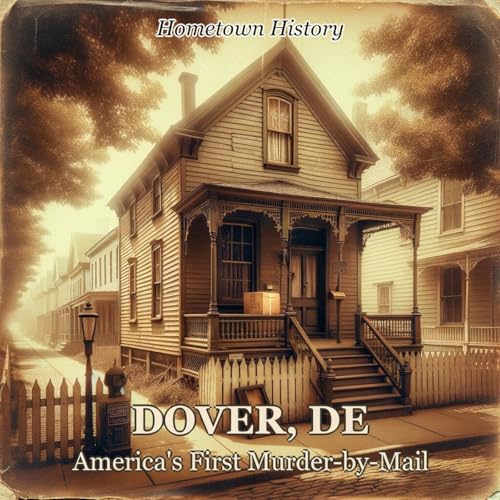
  • Dover, Delaware: The Poisoned Chocolates That Changed American Law
    Apr 21 2026

    In August 1898, a small package arrived at a prominent home in Dover, Delaware, bearing no return address. Inside: a box of chocolate bonbons, a cambric handkerchief, and a note reading "With love to yourself and baby." Mary Elizabeth Penington Dunning shared the candy with her sister Ida Harriet Deane and several guests on the family porch that evening. Within hours, everyone who ate the chocolates was violently ill. Within days, Mary and Ida were dead from arsenic poisoning.

    The killer was Cordelia Botkin, a woman sitting three thousand miles away in San Francisco. She had nevermet her victims. Her target had been the family of her former lover, Associated Press correspondent John Preston Dunning, who had ended their three-year affair when he departed for the Spanish-American War. Botkin purchased arsenic from a drugstore on Market Street, laced a box of bonbons from George Haas and Sons Confectionery, and mailed the package from the Ferry Post Office. She had weaponized the United States Postal Service.

    The investigation that followed linked Botkin to the crime through handwriting analysis, drugstore receipts, candy shop identification, and a price tag she forgot to remove from the handkerchief. San Francisco Police Chief Isaiah W. Lees coordinated the cross-continental investigation, and handwriting expert Daniel T. Ames matched Botkin's penmanship to the package and anonymous letters she had previously sent to the family. Her trial in San Francisco captivated the nation, with William Randolph Hearst's Examiner erecting a public bulletin board outside the courthouse to update the crowds.


    Advertising Inquiries: https://redcircle.com/brands

    Privacy & Opt-Out: https://redcircle.com/privacy
    Afficher plus Afficher moins
    22 min
adbl_web_anon_alc_button_suppression_c
Aucun commentaire pour le moment