Épisodes

  • Forsyth County, Georgia: The Town Georgia Tried to Bury Twice
    May 5 2026

    In the rolling foothills of Georgia's Blue Ridge Mountains, about forty miles north of Atlanta, an entire Black community once thrived. By 1910, Forsyth County was home to 1,117 Black residents—families who had built something remarkable just four decades after emancipation. Fifty-nine Black property owners held nearly 2,000 acres. Joseph Kellogg, born into slavery around 1842, had accumulated roughly 200 acres near Sawnee Mountain. In the northeastern corner of the county, a settlement called Oscarville anchored Black community life with five churches serving as schools, meeting halls, and social centers.

    Then came September 1912, and everything changed.

    Following the death of a young white woman named Mae Crow, mobs of white residents launched a systematic campaign of terror against their Black neighbors. Rob Edwards, a 24-year-old man, was lynched in downtown Cumming—beaten, shot, dragged through the streets, and hanged from a telephone pole. Two teenagers, Ernest Knox (16) and Oscar Daniel (17-18), were executed after one-day trials by all-white juries. Their court-appointed attorneys had objected to even representing them. The prosecutor was Mae Crow's uncle.

    Within weeks, armed bands calling themselves "Night Riders" burned all five Black churches, dynamited buildings, and delivered 24-hour ultimatums to every Black family they could find. By December 1912, 98 percent of Black residents had fled—eleven hundred people vanished from Forsyth County's tax rolls. Their land was stolen at forced-sale prices or simply abandoned. Their names were erased.

    The county stayed all-white for 75 years. And in 1956, the community of Oscarville disappeared a second time—buried beneath the rising waters of Lake Lanier.


    Advertising Inquiries: https://redcircle.com/brands

    Privacy & Opt-Out: https://redcircle.com/privacy
    Afficher plus Afficher moins
    25 min
  • Carrollton, Mississippi: The 1886 Courthouse Massacre That History Forgot
    Apr 28 2026

    In January 1886, two brothers named Ed and Charley Brown accidentally spilled molasses on a white man's sleeve while making a delivery to a saloon in Carrollton, Mississippi. The man accepted their apology. The matter should have ended there. Instead, a local attorney named James Monroe Liddell decided to make the accident his personal cause, confronting the Browns weeks later and igniting a chain of events that would end in one of the deadliest acts of racialterrorism in American history. On March 17, 1886, as the Brown brothers stood trial in the Carroll County Courthouse, between fifty and one hundred armed white men stormed the building and opened fire on every Black person inside. Twenty-three people were killed. No one was ever charged.


    Advertising Inquiries: https://redcircle.com/brands

    Privacy & Opt-Out: https://redcircle.com/privacy
    Afficher plus Afficher moins
    22 min
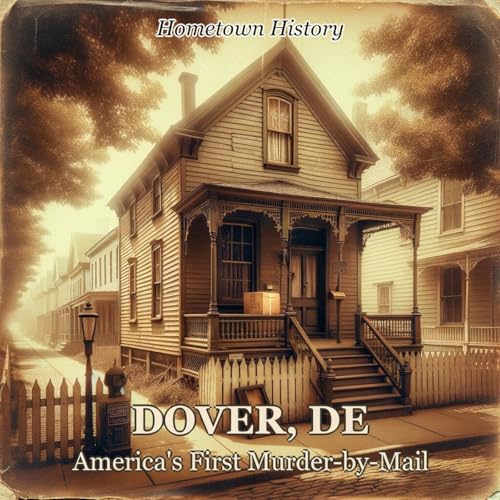
  • Dover, Delaware: The Poisoned Chocolates That Changed American Law
    Apr 21 2026

    In August 1898, a small package arrived at a prominent home in Dover, Delaware, bearing no return address. Inside: a box of chocolate bonbons, a cambric handkerchief, and a note reading "With love to yourself and baby." Mary Elizabeth Penington Dunning shared the candy with her sister Ida Harriet Deane and several guests on the family porch that evening. Within hours, everyone who ate the chocolates was violently ill. Within days, Mary and Ida were dead from arsenic poisoning.

    The killer was Cordelia Botkin, a woman sitting three thousand miles away in San Francisco. She had nevermet her victims. Her target had been the family of her former lover, Associated Press correspondent John Preston Dunning, who had ended their three-year affair when he departed for the Spanish-American War. Botkin purchased arsenic from a drugstore on Market Street, laced a box of bonbons from George Haas and Sons Confectionery, and mailed the package from the Ferry Post Office. She had weaponized the United States Postal Service.

    The investigation that followed linked Botkin to the crime through handwriting analysis, drugstore receipts, candy shop identification, and a price tag she forgot to remove from the handkerchief. San Francisco Police Chief Isaiah W. Lees coordinated the cross-continental investigation, and handwriting expert Daniel T. Ames matched Botkin's penmanship to the package and anonymous letters she had previously sent to the family. Her trial in San Francisco captivated the nation, with William Randolph Hearst's Examiner erecting a public bulletin board outside the courthouse to update the crowds.


    Advertising Inquiries: https://redcircle.com/brands

    Privacy & Opt-Out: https://redcircle.com/privacy
    Afficher plus Afficher moins
    22 min
  • Brattleboro, Vermont: The Asylum Tower Holding a Century of Secrets
    Apr 14 2026

    In the woods above Brattleboro, Vermont, a 65-foot stone tower has stood since the 1890s. It was not built by architects or hired masons. It was built by the patients of an insane asylum, stone by stone, under the direction of their doctors who believed that breaking rocks could fix broken minds. But some patients found another use for the tower they had built with their own hands. They climbed it one last time. In 1938, officials sealed the door shut. At the base of that tower sits a cemetery holding more than 650 burials, many marked only with numbers.

    This is the story of Anna Hunt Marsh, the daughter of Vermont's Lieutenant Governor, who watched her husband's patient die from ice water submersion and forced opium comas in 1806. She spent twenty-eight years turning that grief into action. When she died in 1834, her will contained a single sentence that would change Brattleboro forever: ten thousand dollars left for the purpose of building a hospital for the insane in Windham County. She became the first woman in American history to found a mental health institution.


    Advertising Inquiries: https://redcircle.com/brands

    Privacy & Opt-Out: https://redcircle.com/privacy
    Afficher plus Afficher moins
    20 min
  • Waterbury, Vermont: The Asylum That Turned a Towns Name Into a Warning
    Apr 7 2026

    In 1891, the first twenty-five patients stepped off a train and walked into the Vermont State Asylum for the Insane in Waterbury, a sprawling brick-and-stone campus built along a ridge above the Winooski River. The facility was supposed to heal broken minds through fresh air and structured labor. Instead, it grew into something the entire state whispered about -- a place so defined by confinement that saying someone "ought to go to Waterbury" became shorthand for madness itself.

    This episode traces the full arc of the Waterbury asylum, from its founding under Governor William P. Dillingham through the decades of overcrowding that packed 1,728 patients into wards designed for far fewer. It follows the rise of Dr. Eugene A. Stanley, the superintendent who opened patient records to University of Vermont zoology professor Henry Perkins and the Eugenics Survey of Vermont -- a program that cataloged more than 6,000 Vermonters by bloodline and targeted Abenaki, French-Canadian, disabled, and low-income families for sterilization.


    Advertising Inquiries: https://redcircle.com/brands

    Privacy & Opt-Out: https://redcircle.com/privacy
    Afficher plus Afficher moins
    23 min
  • Riceville, Maine: The Ghost Town Whose Plague Never Happened
    Mar 31 2026

    Episode Summary

    In the deep forests of Hancock County, Maine, there's a place that time forgot--Riceville, a company town that once thrived around a tannery on Buffalo Stream. For over a century, whispers have circulated about a plague that supposedly wiped out the entire population overnight, with tales of bodies in the streets and a mass grave hidden somewhere in the woods. The truth is far more human, and perhaps more unsettling: Riceville died not from disease, but from a single catastrophic fire and the cold economics that followed.

    At its peak in 1890, Riceville was home to 136 residents. Workers peeled bark from hemlock trees and processed it into tannin for the leather industry. The community had a general store, a boarding house, and a schoolhouse where children learned their letters. Some accounts even mention a baseball team. But every soul in Riceville depended on one employer--the tannery.


    Advertising Inquiries: https://redcircle.com/brands

    Privacy & Opt-Out: https://redcircle.com/privacy
    Afficher plus Afficher moins
    16 min
  • Prudence Island: The Keeper Who Relit the Light After Losing Everything
    Mar 24 2026

    I have covered a lot of tragedies on this show, but this one hit different. George Gustavus lost his wife and his twelve-year-old son when a seventeen-foot storm surge destroyed his home during the 1938 hurricane. He was pulled from the water half a mile away. And that same night--still soaking wet, still grieving--he climbed back up the lighthouse tower and helped restore the beacon. The light at Prudence Island has never gone dark since. Some stories remind you what duty really means.


    Advertising Inquiries: https://redcircle.com/brands

    Privacy & Opt-Out: https://redcircle.com/privacy
    Afficher plus Afficher moins
    18 min
  • Watch Hill, Rhode Island: The Fort Road Massacre That Killed 15
    Mar 17 2026

    Episode Summary

    On September 21, 1938, a Category 3 hurricane racing northward at sixty miles an hour blindsided the wealthy summer colony of Watch Hill, Rhode Island. With no radar, satellites, or modern forecasting, residents had almost no warning before a wall of water--estimated at fifty feet high--rolled over Fort Road's exclusive Napatree Point peninsula. Forty-two people were trapped in their Victorian summer cottages. Fifteen didn't survive. Those who lived rode debris across Little Narragansett Bay, clinging to floating roof sections as waves crashed over them.

    The Fort Road Massacre, as locals would call it, wiped out an entire way of life in less than an hour. Thirty-nine cottages, the Yacht Club, the Beach Club, and a bathing pavilion--all destroyed. The families who had summered there for generations never rebuilt. Seven years later, in 1945, the Watch Hill Fire District purchased Napatree Point for ten thousand dollars and made a decision that still stands: the land would remain forever wild. Today, Napatree Point is an eighty-six-acre conservation area where piping plovers nest and visitors can walk where mansions once stood.

    Timeline of Key Events

    September 4, 1938: Hurricane forms near Cape Verde Islands off Africa

    September 19, 1938: Storm reaches Category 5 strength near Bahamas

    September 21, 1938 (10:00 AM): Washington Weather Bureau downgrades storm to tropical storm

    September 21, 1938 (1:00 PM): Mrs. Camp's luncheon at Weekapaug; guests note "strange yellow light" over water

    September 21, 1938 (3:00-4:30 PM): Hurricane strikes Fort Road; storm surge devastates peninsula

    September 21, 1938 (6:00 PM): Winds die; Fort Road has ceased to exist

    1945: Watch Hill Fire District purchases Napatree Point; no rebuilding permitted

    Historical Significance

    The Great New England Hurricane of 1938 remains the most powerful and deadly to strike the region in recorded history, killing between six hundred and seven hundred people across Long Island and southern New England. Rhode Island suffered the worst casualties. The disaster exposed catastrophic gaps in the nation's weather forecasting infrastructure--a twenty-eight-year-old junior forecaster was the only meteorologist on duty when the storm made landfall because senior staff were at a conference.

    The tragedy led directly to massive improvements in hurricane tracking and warning systems that Americans take for granted today. Providence completed the Fox Point Hurricane Barrier in 1966. Coastal building codes were strengthened throughout New England. The decision to preserve Napatree Point as a wildlife refuge--made decades before such conservation efforts became common--stands as one of the first examples of managed retreat from a vulnerable coastal area. According to the Watch Hill Conservancy, the piping plover, a federally endangered species, now nests on the same barrier beach where Victorian mansions once stood.

    Sources: Watch Hill Conservancy, PBS American Experience "Wake of '38", National Weather Service, Rhode Island Historical Society


    Advertising Inquiries: https://redcircle.com/brands

    Privacy & Opt-Out: https://redcircle.com/privacy
    Afficher plus Afficher moins
    19 min