Épisodes

  • The Three-Sided Growth Problem with Robin Izsak-Tseng
    Jul 7 2026
    Episode #227: Robin Izsak-Tseng — Marketing one brand to three audiences at once

    Most B2B companies fight to win one customer segment. WellHub has to win three at the same time.

    For marketers and operators running multi-audience, marketplace, or multi-country growth.

    Robin Izsak-Tseng is VP of global B2B marketing at WellHub, a corporate wellness platform serving over 40,000 companies across 18 countries. She runs a three-sided marketplace — HR buyers, fitness partners, and the employees who use it — through three distinct teams that report to one CMO. In this episode she breaks down how those teams stay aligned without becoming siloed, how acquisitions like Urban Sports Club buy instant brand recognition, and why pulling back GymPass paid search and web properties too early after the rebrand opened a door for a competitor in Brazil. She also names the simple mistake complex teams make: assuming the same level of market maturity everywhere, when a household name in one country still gets "what's WellHub?" at marketer dinners in another.

    What you’ll hear
    • How WellHub structures three marketing teams (B2B, partners, B2C) under one CMO and keeps them aligned around a single company story
    • Using zip-code-level data to map partner supply down to individual neighborhoods, not just cities
    • Why cutting GymPass search bids and web properties too soon let a competitor gain authority in Brazil
    • When to put the product in employees' hands first (a SoulCycle class, 30 days on the diamond plan) so engagement opens the door to HR
    Chapters
    • 00:00 — The market-maturity trap (cold open)
    • 00:42 — The three-sided growth engine
    • 02:46 — Inside WellHub's triple-sided marketplace
    • 04:48 — Proving ROI on employee wellness
    • 05:49 — Acquisitions and instant brand recognition
    • 08:24 — The GymPass to WellHub rebrand
    • 10:08 — Martech, HubSpot, and AI disruption
    • 15:35 — Events and the product-led sell-through
    • 20:11 — The biggest mistake: assuming market maturity
    • 22:58 — Lightning round
    Links & resources

    Guest
    Robin Izsak-Tseng — VP of Global B2B Marketing, WellHub
    Website
    LinkedIn

    About Frank Growth

    Frank Growth is a podcast about how companies actually grow—real operators, real constraints, real decisions. Hosted by Jason Shafton.

    Promotional links
    • Work with Winston Francois: Work with Winston Francois
    • Subscribe / Follow Jason: Follow Jason on LinkedIn
    Afficher plus Afficher moins
    27 min
  • The $10 Million Rule with Seth Lowery
    Jun 30 2026
    Episode #226: Seth Lowery — The $10M rule that kills good ideas, not just bad ones

    How to decide which growth bets to fund when every idea on the table already looks good.

    For marketing and growth leaders drowning in too many opportunities and a team that's too small to chase them all.

    Seth Lowery is VP of Marketing at Octane, a fintech that has originated over $8 billion in consumer loans and runs both a lending arm (Roadrunner Financial) and an in-house SaaS layer—with close to 50% of the company in product and tech. On Seth's first day, his CEO handed him a single rule: a new initiative needs to clear $10 million in incremental originations to get approved. In this episode he breaks down why that number is a guideline rather than a hard rule, how it forces his team into P1/P2/P3 backlogs, his four-prong method for working with sales, and how he runs three different go-to-market motions—OEMs, dealers, and B2B2C—at the same time.

    What you'll hear
    • The $10M incremental-originations bar, and why Seth treats it as a compass rather than a cage
    • The four-prong method for sales and marketing: to sales, for sales, through sales, and in lieu of sales
    • Why the hardest no's are the easy internal asks—a better-looking slide deck, an event t-shirt—and why he tells his team "let me be the bad guy"
    • How he runs three GTM motions at once while deliberately keeping Octane's own brand in the background
    Chapters
    • 00:00 — Cold open: the problem isn't too few ideas, it's too many
    • 00:33 — Intro and the initiative-overload problem
    • 02:35 — Lending company or tech company?
    • 03:40 — Where the $10 million rule came from
    • 05:13 — How the rule changes what to run and what to kill
    • 06:30 — The hardest no's and "let me be the bad guy"
    • 07:57 — Running a remote team to results, not hours
    • 08:40 — The four-prong method for sales and marketing
    • 11:21 — Hiring for B2B and channel marketing over fintech
    • 12:15 — Octane's moat: the octane score and the soft pull
    • 12:54 — Running three GTM motions at once
    • 15:04 — The overlooked lever: loyalty
    • 15:34 — The two biggest prioritization mistakes
    • 16:33 — Lightning round
    • 17:53 — Jason's top three takeaways
    Links & resources

    Guest
    Seth Lowery — VP of Marketing, Octane
    Website
    Roadrunner Financial
    LinkedIn

    About Frank Growth

    Frank Growth is a podcast about how companies actually grow—real operators, real constraints, real decisions. Hosted by Jason Shafton.

    Promotional links
    • Work with Winston Francois: Work with Winston Francois
    • Subscribe / Follow Jason: Follow Jason on LinkedIn
    Afficher plus Afficher moins
    20 min
  • The Taylor Swift Effect with Blakely Neilson
    Jun 23 2026
    Episode #225: Blakely Neilson — Building a high-growth EdTech brand when buyers aren't on LinkedIn

    This episode is a tactical playbook for marketing to a buyer that ignores LinkedIn, retargeting, and white papers: the school district.

    For operators and founders selling into education, or any relationship-first market where you can't performance-market your way to pipeline.

    Blakely Neilson came from finance and joined the founding team at Parallel Learning, an EdTech company building virtual special education services for school districts in over 25 states. She built the B2B marketing function from scratch as the company pivoted from DTC to B2B, which meant trading paid social and paid search for conferences, webinars, email, and thought leadership, and shifting the message from emotion and urgency to compliance, scale, and risk mitigation. She gets concrete about what works: a lemonade-stand booth during a California heat wave, a Taylor Swift email sent the minute the engagement news broke, and using AI to track Google alerts so the message can adapt when a district like Wake County cuts $18 million from special education.

    What you'll hear
    • Why the DTC-to-B2B pivot meant moving from paid acquisition to an organic mix of conferences, webinars, email, and thought leadership, with messaging built around compliance, scale, and risk mitigation
    • How the team pairs marketing with revenue at conferences, sets up pre-conference meetings, and uses creative on-the-ground tactics like a lemonade stand during a heat wave to drive top-of-funnel leads
    • Why leading with "we're radically changing the field through AI" backfires with late-adopter special-ed buyers, and why the message instead focuses on absorbing administrative burden
    • How to keep one core message constant while tailoring execution state by state, using Google alerts to flex when budgets get cut
    Chapters
    • 00:00 — Cold open: why most B2B EdTech marketing is boring
    • 00:27 — Why EdTech marketing breaks the standard playbook
    • 01:33 — Meet Blakely Neilson and Parallel Learning
    • 02:32 — From finance to building marketing through a DTC-to-B2B pivot
    • 03:39 — Building trust with relationship-first district buyers
    • 04:44 — Making conferences a real pipeline driver
    • 05:59 — The webinar formula that stands out post-COVID
    • 07:17 — Marketing an AI product to AI-skeptical buyers
    • 08:27 — Pop culture, the Taylor Swift email, and humanizing B2B
    • 11:05 — Awareness vs. conversion in a two-sided marketplace
    • 11:45 — Scaling across 25 states with Google alerts and AI
    • 13:01 — Sales and marketing operating rhythm
    • 13:50 — Lightning round
    • 15:22 — Jason's top three takeaways
    Links & resources

    Guest
    Blakely Neilson — Founding team, Parallel Learning
    Website
    LinkedIn (Blakely)
    LinkedIn (Parallel Learning)
    Instagram

    About Frank Growth

    Frank Growth is a podcast about how companies actually grow—real operators, real constraints, real decisions. Hosted by Jason Shafton.

    Promotional links
    • Work with Winston Francois
    • Subscribe / Follow Jason
    Afficher plus Afficher moins
    17 min
  • The Bootstrapper's Revenge with Alex Roy
    Jun 16 2026
    Episode #224: Alex Roy — Bootstrapping an AI company for 12 years, no funding

    He founded an AI company in 2014—when AI was a punchline—bootstrapped it with zero outside capital, and landed Fortune 50 clients.

    For founders and growth operators figuring out how to build (and sell) AI products in a market that shifts every few weeks.

    Alex Roy is the founder of SalesBox AI, a single-founder, bootstrapped company he started in 2014 after 20+ years in martech (MarketFirst, TrueInfluence). With no outside funding, he reached Fortune 50 clients through a partner-led, agency managed-service model—building the part of the product that generated both capital and data first. In this episode he walks through why he moved from lead-centric to a buying-group, opportunity-centric model, how SalesBox's agents work toward one unified revenue goal, how he proves ROI to enterprises burned by AI promises, and why he says product-market fit now lasts "maybe a month."

    What you’ll hear
    • Why he scrapped lead-centric and account-based marketing for a revenue/opportunity model that scores and prioritizes buying groups
    • How he bootstrapped: building the managed-service module first to capture both capital and data, then reaching Fortune 50 through a partner-led agency model
    • Where founders go wrong—chasing the hype to "hop off" in a couple of years instead of building, and not yet knowing when to override the agent
    • How to apply it: start with a pilot before a full rollout, and learn how the system makes decisions so you know when to step in
    Chapters
    • 00:00 — Cold open: don't build it for free
    • 00:31 — Intro: the three AI traps
    • 01:50 — What breaks when you scale revenue
    • 02:29 — Betting on AI in 2014
    • 03:39 — Building in 2014 vs. 2026: PMF as a moving target
    • 05:10 — Why bootstrap, and what it cost
    • 05:52 — Landing Fortune 50 clients with no VC logos
    • 06:38 — What makes SalesBox AI different
    • 08:00 — How the platform works
    • 08:51 — Lead to account to buying group
    • 09:45 — Hype vs. real: start with a pilot
    • 10:27 — What AI can't do: knowing when to override
    • 11:37 — Proving ROI to burned enterprises
    • 12:56 — What founders get wrong about timing
    • 14:39 — Advice: get someone to pay the first dollar
    • 15:38 — Lightning round
    • 16:22 — Live demo: RevOps, voice agents, LinkedIn
    • 20:47 — Where to find Alex + the offer
    • 21:28 — Closing takeaways
    Links & resources

    Guest
    Alex Roy — Founder, SalesBox AI
    Website
    LinkedIn

    Mentioned
    Get $1,000 in SalesBox AI credits

    About Frank Growth

    Frank Growth is a podcast about how companies actually grow—real operators, real constraints, real decisions. Hosted by Jason Shafton.

    Promotional links
    • Work with Winston Francois
    • Subscribe / Follow Jason
    Afficher plus Afficher moins
    23 min
  • Most Tests Will Fail, That's Fine with Divya Ramaswamy
    Jun 9 2026
    Episode #223: Divya Ramaswamy — Running one growth function across travel and fintech

    How a lean team runs acquisition, retention, and cross-sell across a travel marketplace and a fintech suite on a single brand.

    For growth leaders who own multiple products serving one customer across very different trust thresholds.

    Divya Ramaswamy runs growth across travel and fintech at Super.com—acquisition, activation, retention, and cross-sell—on a lean team of around 16 people. The products span hotels, flights, cash advance, credit, cash back, direct deposits, and a new pharmacy product, built for everyday Americans that premium brands typically walk past. She explains how the Super+ membership ties these disparate products together, why turning a $79 hotel booking into a fintech relationship is the hardest conversion they face, and what building financial trust actually requires beyond performance marketing. She also walks through the company's first major brand push—New York subway and out-of-home ads, plus becoming NASCAR's official savings partner—and why ruthless prioritization is the underrated lever that keeps the team focused.

    What you’ll hear
    • Why Super+ membership is the flywheel that ties travel and fintech together, not just a perk layer on top (the “house and rooms” frame)
    • How the team predicts cross-product adoption using behavioral signals—booking frequency, product bundles, in-app activity like games and surveys—alongside direct user research
    • Why a direct travel-to-fintech handoff doesn’t happen, and how they build the journey through “value moments” instead (cashback on headphones, gas savings on the drive to a hotel)
    • How they split channels by intent—Google for demand capture, Meta for storytelling—and use quarterly OKR resets to ruthlessly prioritize on a lean team
    Chapters
    • 00:00 — Why trust in fintech can never be taken for granted (cold open)
    • 00:29 — Intro: one growth function across travel and fintech
    • 02:16 — What Super.com is, in one sentence
    • 02:42 — The day-to-day operating model: acquisition to cross-sell
    • 03:40 — Running one growth function across products that don’t behave alike
    • 04:32 — The Super+ membership flywheel (house and rooms)
    • 05:59 — The customer Super.com is built for
    • 07:01 — Turning a $79 hotel booking into a fintech relationship
    • 08:19 — Signals for predicting cross-product adoption
    • 09:22 — Channel strategy built on customer context, not product category
    • 10:20 — Google vs. Meta: capturing demand vs. storytelling
    • 11:36 — What building financial trust actually requires
    • 12:36 — The brand push: NYC subway and out-of-home
    • 13:43 — Betting on quality creative and the NASCAR partnership
    • 14:45 — One creative team, one brand voice across products
    • 15:44 — The most underrated growth lever: prioritization
    • 16:51 — Hard lessons on meaningful testing and embracing failure
    • 17:57 — Advice for leading a complex product portfolio
    • 18:33 — Lightning round
    • 19:15 — Where to find Divya + closing takeaways
    Links & resources

    Guest
    Divya Ramaswamy — leads growth (travel and fintech) at Super.com
    Website
    LinkedIn

    About Frank Growth

    Frank Growth is a podcast about how companies actually grow—real operators, real constraints, real decisions. Hosted by Jason Shafton.

    Promotional links
    • Work with Winston Francois
    • Subscribe / Follow Jason
    Afficher plus Afficher moins
    22 min
  • Getting a CFO on Board with Your Growth Plan with Simon Heyrick
    Jun 2 2026
    Episode #222: Simon Heyrick — How CFOs become real growth partners

    What it actually takes to turn your CFO into a growth ally instead of a gatekeeper.

    For founders, CEOs, and CMOs trying to align finance with marketing and growth investments.

    Simon Heyrick is the CFO of Sun World International and was Jason's CFO and then CEO at Soothe. In this conversation, Simon walks through what changes the moment you step into the CEO seat ("overnight, there was a shift in the relationships"), what every CFO role across green Dot, Soothe, and Sun World has had in common, and how he evaluates growth pitches from CMOs. He shares the story of Soothe's brand refresh that didn't survive a single board member's objection, the TV spend he'd take back in hindsight, and why at Sun World — a 50-year-old PE-backed agriculture IP business — the finance model runs out 25 years and the data sets matter more than the AI strategy.

    What you'll hear
    • The two CFO archetypes — growth partner vs. growth gatekeeper — and how risk tolerance separates them
    • How to pitch growth investments to a CFO without getting dismissed (skip the impression counts, bring an intellectually honest ROI story)
    • Why institutional investors rarely understand operations, and how to manage the "feet below the surface" dynamic
    • What Simon learned moving from tech and marketplaces to a 50-year-old agriculture IP company where customers are farmers, not consumers
    Chapters
    • 00:00 — Stepping into the CEO seat: the loneliness shift
    • 00:54 — Introducing Simon Heyrick
    • 02:19 — The through line across a CFO career
    • 05:37 — From CFO to interim CEO at Soothe
    • 08:33 — What translates across every CFO role: managing institutional investors and the under-promise / over-deliver rule
    • 11:32 — The growth bet Simon greenlit and the brand refresh that didn't land
    • 14:16 — Growth partner CFO vs. growth gatekeeper CFO
    • 17:21 — How CMOs should (and shouldn't) pitch growth investments
    • 21:53 — Inside Sun World: a 50-year-old PE-backed agriculture IP business
    • 24:31 — Climate risk, varietal IP, and a 25-year forecast model
    • 25:56 — Data as the linchpin of the AI strategy
    • 28:07 — Lessons across five C-level roles, and advice to a younger Simon
    • 30:57 — Lightning round
    • 32:33 — What a founder should do this week to turn their CFO into a partner
    • 34:17 — Jason's three takeaways
    Links & resources

    Guest
    Simon Heyrick — CFO, Sun World International
    Website
    LinkedIn

    About Frank Growth

    Frank Growth is a podcast about how companies actually grow—real operators, real constraints, real decisions. Hosted by Jason Shafton.

    Promotional links
    • Work with Winston Francois
    • Subscribe / Follow Jason
    Afficher plus Afficher moins
    37 min
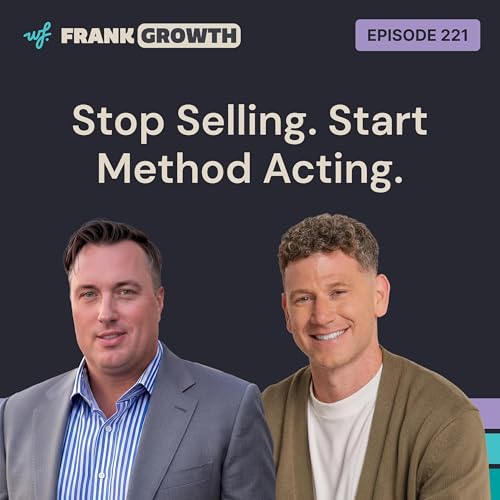
  • Stop Selling. Start Method Acting. with John O'Donnell
    May 26 2026
    Episode #221: John O'Donnell — Selling AI Trust When Your Best Outcome Is Invisible

    How do you sell infrastructure that works best when nothing bad happens?

    For GTM leaders, founders, and sellers building pipeline in category-creating, mission-critical sales motions.

    John O'Donnell leads go-to-market at Alice, where he sells AI trust and safety to the top foundation model companies and the enterprises deploying AI in production. Before Alice, he built pipeline at Rapid7 in cybersecurity and led GTM in music distribution. In this episode, John breaks down his "method acting" approach to selling, why storytelling beats feature pitches in invisible-infrastructure categories, the milestone approach Alice uses to convert AI FOMO into committed deals, and why he sees the AI trust category today as the cybersecurity space in 2008-2010. He also shares the one discovery question most enterprise sellers never ask: "Can you live with your current situation for another year?"

    What you'll hear
    • The "method acting" framework for entering a buyer's world before the first call
    • Why Alice leans on storytelling and 200+ PhD dark web experts instead of feature pitches
    • The milestone approach for converting AI FOMO buyers into committed deals
    • What breaks when you scale founder-led sales too fast, and how to train a team to replicate it
    Chapters
    • 00:00 — Cold open and the three GTM traps in invisible-infrastructure sales
    • 02:56 — Method acting: living inside the buyer's character
    • 06:13 — Marketing something mission-critical but invisible
    • 09:33 — The AI FOMO problem and the milestone approach to closing
    • 12:19 — Scaling beyond founder-led sales without breaking culture
    • 16:58 — Where the AI trust category is now, lightning round, and takeaways
    Links & resources

    Guest
    John O'Donnell — Alice
    Website
    LinkedIn

    About Frank Growth

    Frank Growth is a podcast about how companies actually grow—real operators, real constraints, real decisions. Hosted by Jason Shafton.

    Promotional links
    • Work with Winston Francois
    • Subscribe / Follow Jason
    Afficher plus Afficher moins
    23 min
  • The Neobank of Insurance Playbook with Jacob Batist
    May 19 2026
    Episode #220: Jacob Batist — Launching the first new health insurance company in Canada in 70 years

    How a European challenger broke into a market controlled by three incumbents — without a CEO on the ground, without brand awareness, and without growth-at-all-costs spend.

    For founders and growth leaders entering markets dominated by entrenched incumbents, where trust is the real constraint and speed alone won't win.

    Jacob Batist is Head of Growth at Alan in Canada — the first new health insurance company to launch in the country since 1957. Backed by a European parent valued at over 5 billion euros, Alan competes against three companies that hold roughly 80% of policies. Jacob breaks down why their initial blitz strategy failed, the warm-first pivot they made instead, why they target 20–100 employee companies, and how they say no to revenue they're not ready for. Concrete detail: Alan can process claims in as little as 15 minutes and onboard employees same-day.

    What you'll hear
    • Why Alan positions itself as "the neo bank of insurance" and what that means operationally (sign-ups in minutes, claims in 15 minutes, one platform vs. multiple vendors)
    • The warm-first pivot: what they tried first, why it failed, and the four credibility levers (events, organic media, partnerships, in-person moments) they replaced it with
    • Why 20–100 employee companies are the sweet spot — and how Jacob says no to larger deals that would damage trust
    • How to balance European credibility with the local Canadian story without leaning too hard on either
    Chapters
    • 00:00 — Cold open and host intro: Canada's silent oligopoly
    • 04:28 — The "neo bank of insurance" positioning, in practice
    • 09:42 — Why 20–100 employee companies are the sweet spot
    • 11:56 — The warm-first pivot: why blitzing failed and what replaced it
    • 18:59 — Saying no to revenue you're not ready for
    • 21:27 — Lightning round and closing principle
    Links & resources

    Guest
    Jacob Batist — Head of Growth, Alan Canada
    Alan
    Jacob on LinkedIn

    About Frank Growth

    Frank Growth is a podcast about how companies actually grow—real operators, real constraints, real decisions. Hosted by Jason Shafton.

    Promotional links
    • Work with Winston Francois
    • Subscribe / Follow Jason
    Afficher plus Afficher moins
    26 min