Épisodes

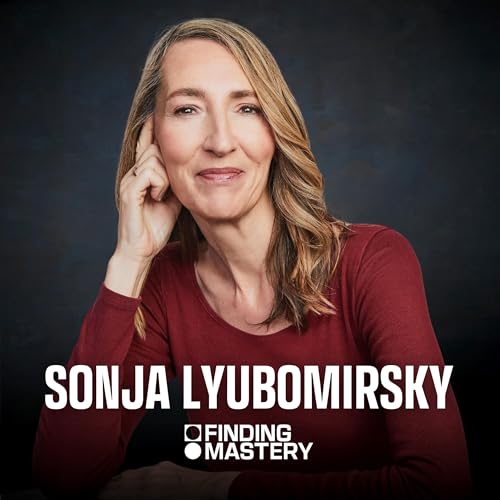
  • The Psychology Of Feeling Loved | Dr Sonja Lyubomirsky
    May 20 2026
    Why is it that so many of us are loved... and yet don’t actually feel loved?Dr. Sonja Lyubomirsky is a Professor of Psychology at UC Riverside and one of the world’s leading researchers on happiness. Her newest book, How to Feel Loved, co-authored with relationship scientist Harry Reis, lands at a strange moment: a time when more people than ever say they are connected, and more people than ever say they don’t actually feel it. In this conversation with Dr. Michael Gervais, Sonja offers a quietly radical reframe. After 36 years of studying what makes a life happy, she has come to believe the answer lies in this: Feeling loved.And here is where it gets interesting. Sonja’s research is showing that feeling loved is not something we have to wait for. It’s something we can help create. Most of us, when we sense the absence, default to one of two strategies. We try to be more lovable. Or we try to change the person on the other side. Sonja argues that neither one actually works. What changes a relationship is changing the conversation.She walks Mike through the five mindsets at the heart of the book: the sharing mindset, listening to learn, radical curiosity, open heart, and multiplicity. Along the way, they explore why most of us are listening to respond instead of listening to learn, the three words people actually want to hear (hint: it’s not I love you), and why ‘tell me more’ might be one of the most loving phrases in the English language. Sonja shares her foggy glass metaphor for why being known is the prerequisite to being loved, the Michelangelo effect, and a striking line the Dalai Lama once said to her about how we hold each other.The conversation also gets honest about the harder edges. Bridging political divides at the dinner table. Staying curious about a partner of 30 years. Navigating the modern questions around AI companions, monogamy, and what it means to really go deep with another human. And the research on what tiny acts of kindness, including the impact a 10-second compliment can have.If you’ve ever been surrounded by people who love you and still felt unseen, this conversation is a gentle invitation back in. The good news is that feeling loved is under your control, more than you think. Sonja’s research will show you exactly where to start.Most of us are waiting to feel loved. Sonja shows us how to create the conditions for it... starting today._____________________________________________________Links & ResourcesSubscribe to our YouTube Channel for more conversations at the intersection of high performance, leadership, and wellbeing: https://www.youtube.com/c/FindingMastery Get exclusive discounts and support our amazing sponsors!Go to: https://findingmastery.com/sponsors/ Subscribe to the Finding Mastery newsletter for weekly high performance insights: https://www.findingmastery.com/newsletter Download Dr. Mike’s Morning Mindset Routine: findingmastery.com/morningmindsetFollow on YouTube, Instagram, LinkedIn, and XBook: How to Feel Loved by Dr. Sonja Lyubomirsky and Harry Reis. Learn more and take the mindset quiz at howtofeellove.com See Privacy Policy at https://art19.com/privacy and California Privacy Notice at https://art19.com/privacy#do-not-sell-my-info.
    Afficher plus Afficher moins
    1 h et 4 min
  • The Psychology of Being a Super Communicator | Charles Duhigg
    May 13 2026

    Why do so many conversations break down, even when both people are trying to connect?

    Charles Duhigg is a Pulitzer Prize-winning journalist and the bestselling author of The Power of Habit and Supercommunicators. This is his third conversation on Finding Mastery, and the timing matters. The world has shifted since the last time he and Dr. Michael Gervais spoke. Families, friendships, even whole countries are talking past each other. AI has quietly eroded the signals we used to read each other by. And the ability to genuinely connect with another human has gone from useful to essential.

    The first thing Charles makes clear is that being a great communicator is not a gift reserved for a lucky few. It's a habit. And it starts with noticing something most of us miss in real time: we are all moving through three kinds of conversations every day. The practical, the emotional, and the social. Most of our misunderstandings happen for one simple reason. The person across from us is in one kind of conversation while we're in another.

    Charles unpacks what he calls the matching principle and one of the most useful questions a teacher ever taught him: do you want to be helped, hugged, or heard? He explains why looping for understanding tends to work when arguing does not, why deep questions invite people to reveal worldviews they didn't even know they had, and why polish and fluency no longer mean what they used to in a world where AI can make any email sound thoughtful.

    The conversation also gets personal. Mike shares the story of a professor who once interrupted him mid-trauma with a single odd question and walked away, an act of communication so strange it took him years to understand. Charles talks about how he tries to stay genuinely connected to his two teenage sons, how to navigate Thanksgiving with someone you voted against, and the quiet research finding that strangers can become friends in under an hour if the questions are deep enough and the back-and-forth is real.

    If you've ever walked away from a conversation feeling unseen, struggled to get through to someone you love, or wondered why connection feels harder than it used to, this conversation offers a practical, science-backed way back in.

    Anyone can be a super communicator. Charles will show you how it actually works.

    _____________________________________________________

    Links & Resources

    Subscribe to our Youtube Channel for more conversations at the intersection of high performance, leadership, and wellbeing: https://www.youtube.com/c/FindingMastery

    Get exclusive discounts and support our amazing sponsors!

    Go to: https://findingmastery.com/sponsors/

    Subscribe to the Finding Mastery newsletter for weekly high performance insights: https://www.findingmastery.com/newsletter

    Download Dr. Mike's Morning Mindset Routine: findingmastery.com/morningmindset

    Follow on YouTube, Instagram, LinkedIn, and X

    Link: Charles and Mike reference “36 Questions” or the Fast Friends Procedure: https://www.stafforini.com/docs/Aron%20et%20al%20-%20The%20experimental%20generation%20of%20interpersonal%20closeness.pdf

    Citation: Aron, A., Melinat, E., Aron, E. N., Vallone, R. D., & Bator, R. J. (1997). The Experimental Generation of Interpersonal Closeness: A Procedure and Some Preliminary Findings. Personality and Social Psychology Bulletin, 23(4), 363–377.

    Link: New York Times Article: “36 Questions That Lead to Love.” https://www.nytimes.com/2015/01/09/style/no-37-big-wedding-or-small.html

    See Privacy Policy at https://art19.com/privacy and California Privacy Notice at https://art19.com/privacy#do-not-sell-my-info.

    Afficher plus Afficher moins
    52 min
  • 5 Questions to Unlock Your Inner Potential | Dr. Mike Gervais - AMA Vol.29
    May 6 2026
    What questions are tugging at you right now, and how might exploring the answers help you live and perform with more clarity?We're back with another special edition of the Finding Mastery podcast: an Ask Me Anything episode, built from the deep and sometimes vulnerable questions submitted by our community.Joining Dr. Michael Gervais again is Jeff Byers, former NFL player, Co-Founder and CEO of Momentous, and a longtime friend of Finding Mastery. Jeff built Momentous on a foundation of transparency and scientific integrity in an industry that can be full of noise, and he brings that same standard of honest engagement to the questions we explore here. His experience navigating the identity shift from elite athlete to entrepreneur makes him a uniquely grounded co-host for conversations about who we are, what drives us, and how we keep growing when the road ahead isn't clear.The questions we explored:Navigating a major life transition... how to work through the grief of leaving a sport, the psychology of identity foreclosure, and why transitions are actually an invitation to examine who you are and who you're becoming.When your life is good but something feels missing... the difference between being stuck and being in the fog, what the biology might be telling you, and how self-efficacy, agency, and your own life history factor into the picture.Finding your purpose when it hasn't revealed itself yet... the research on purpose as a cornerstone of a thriving life, the three components of a clear purpose, and a practical framework to start building one right now.What community actually means... why belonging goes deeper than shared interests, what we lose when we slide toward digital connection only, and why community is built on responsibility as much as relationship.AI and human potential... whether the race toward AI is pulling our attention away from mindfulness and human development, and how to think about this new tool without losing sight of what makes us human.Who and what shaped us... a personal look at the heroes, idols, and influences that shaped both Mike and Jeff, and what those figures reveal about the values and first principles we carry forward.The questions in this episode came from real people wrestling with real things. If any of them resonate with something you're carrying right now, that's the point.__________________________________Links & ResourcesSubscribe to our Youtube Channel for more conversations at the intersection of high performance, leadership, and wellbeing: https://www.youtube.com/c/FindingMasteryGet exclusive discounts and support our amazing sponsors! Go to: https://findingmastery.com/sponsors/Subscribe to the Finding Mastery newsletter for weekly high performance insights: https://www.findingmastery.com/newsletter Download Dr. Mike's Morning Mindset Routine: findingmastery.com/morningmindset Follow on YouTube, Instagram, LinkedIn, and XSee Privacy Policy at https://art19.com/privacy and California Privacy Notice at https://art19.com/privacy#do-not-sell-my-info.
    Afficher plus Afficher moins
    1 h
  • The Psychology of Performance Under Pressure |Andrew Whitworth
    Apr 29 2026
    What does it really take to stay at the top for 16 years and still know who you are when it ends? Andrew Whitworth is a Super Bowl champion, four-time Pro Bowler, and the oldest left tackle in NFL history to start a Super Bowl. He spent 16 seasons protecting the most valuable position on the field, finished his career by winning a championship at 40, and walked off in one of the most viral moments in NFL Films history, sitting in a circle with his kids, telling them “that was daddy’s last game.” In this conversation with Dr. Michael Gervais, Andrew pulls back the curtain on what made it all possible, and what almost broke him along the way.The first thing you notice about Andrew is the contradiction. 6'7", 345 pounds, built to dominate. And the engine underneath all of it is empathy. He explains how he prepared for opponents not by lifting more or running more, but by inhabiting them, studying their bodies until he could feel what they were going to do before they did it. “I'm going to study them to a point where we can dance together because I can actually feel everything they're going to try and accomplish before we do it,” he says. That is the offensive line position rendered as jazz. But this conversation goes a lot deeper than craft. Andrew is candid about the anxiety, self-doubt, and self-punishment that shadowed much of his career. He talks about walking home alone in the dark after college games to punish himself for mistakes, about needing to watch tape of the all-time greats failing just to feel okay running out of the tunnel, and about how Sean McVay eventually helped him believe he was “worthy of the light.” He also shares what Nick Saban taught him about process, what Marvin Lewis taught him about consistency, and what fatherhood taught him about everything. In this conversation, we explore:Why empathy, not size or strength, was Andrew’s greatest competitive advantageHow to study an opponent so deeply you can feel their next move before they make itWhy mastery of self always has to come before mastery of craftHow to hold people accountable in a way that builds rather than breaksWhy vulnerability comes before trust, not the other way aroundWhat changed about how Andrew competed once he became a fatherWhy telling someone what you see in them may be more powerful than telling them you believe in them Andrew's story is a reminder that empathy can be one of the most powerful tools on the path to mastery. And that the greatest thing you leave with anyone is how you made them feel._____________________________________________________Links & ResourcesSubscribe to our Youtube Channel for more conversations at the intersection of high performance, leadership, and wellbeing: https://www.youtube.com/c/FindingMasteryGet exclusive discounts and support our amazing sponsors! Go to: https://findingmastery.com/sponsors/Subscribe to the Finding Mastery newsletter for weekly high performance insights: https://www.findingmastery.com/newsletter Download Dr. Mike's Morning Mindset Routine: findingmastery.com/morningmindset Follow on YouTube, Instagram, LinkedIn, and XSee Privacy Policy at https://art19.com/privacy and California Privacy Notice at https://art19.com/privacy#do-not-sell-my-info.
    Afficher plus Afficher moins
    1 h et 25 min
  • The Psychology Of Money | Tom Bilyeu
    Apr 22 2026
    Are you playing the game, or being played by it?Tom Bilyeu is an entrepreneur, co-founder of Quest Nutrition, and founder of Impact Theory, one of the most-watched interview platforms in the world. He has spent years studying the systems that shape financial outcomes, and in this conversation with Dr. Michael Gervais, he makes a case that most people find unsettling: the financial system you're working inside was not designed with your interests in mind.Tom argues that the single most important thing most people are missing is not effort or ambition, it's a clear-eyed understanding of how the system actually works. He walks through why inflation is not a natural economic phenomenon but a mechanism that quietly transfers purchasing power from workers to asset owners, why 10% of Americans own 93% of assets, and why the gap between the wealthy and everyone else is not a bug in the system, it's a feature.But this conversation goes well beyond economic critique. It's also about the beliefs and mental models we carry that keep us operating on a map that no longer matches the terrain. Tom introduces the idea that beliefs are not truths, they're interpretations, and that updating them, especially the ones about money, work, and what's possible, is the most leveraged thing a person can do. He also offers a clear-eyed take on AI and why the people who learn to use it as a force multiplier will have an enormous edge over those who don't.In this conversation, we explore:Why the Federal Reserve system was designed to benefit asset owners and how inflation quietly steals purchasing powerHow 10% of Americans came to own 93% of assets, and why it was baked in by designWhy your beliefs are interpretations, not truths, and how to use that insight to your advantageHow to think about investing across 12 to 15 economic forces rather than chasing individual stocksWhy AI is the most important force multiplier available right now, and how to use it without losing your own thinkingWhat the K-shaped economy is, what it means for the next generation, and what parents need to knowTom's not here to make you feel good about where things stand and where we’re headed. He's here to hand you a better map. What you do with it is up to you.___________________________________________________Links & ResourcesSubscribe to our Youtube Channel for more conversations at the intersection of high performance, leadership, and wellbeing: https://www.youtube.com/c/FindingMasteryGet exclusive discounts and support our amazing sponsors! Go to: https://findingmastery.com/sponsors/Subscribe to the Finding Mastery newsletter for weekly high performance insights: https://www.findingmastery.com/newsletter Download Dr. Mike's Morning Mindset Routine: findingmastery.com/morningmindset Follow on YouTube, Instagram, LinkedIn, and XSee Privacy Policy at https://art19.com/privacy and California Privacy Notice at https://art19.com/privacy#do-not-sell-my-info.
    Afficher plus Afficher moins
    1 h et 7 min
  • The Psychology of Happiness | Dr. Laurie Santos
    Apr 15 2026

    Why do we keep chasing happiness in ways that don't actually work?

    Dr. Laurie Santos is a cognitive scientist and professor of psychology at Yale, where she created the most popular course in the university's 300-year history, the Science of Well-Being. Since then, that course has reached millions of people around the world, and her podcast, The Happiness Lab, has become one of the most trusted resources on the science of living well. In this conversation with Dr. Michael Gervais, Laurie pulls back the curtain on why our minds so reliably get happiness wrong, and what we can do about it.

    The conversation starts with a sobering look at the student mental health crisis: more than 40% of college students report being too depressed to function, more than 60% report overwhelming anxiety. Laurie saw it firsthand at Yale, and it launched her on a mission to translate happiness research into practical tools that actually work.

    She explains why the things we predict will make us happy – more money, more success, more achievement – don't deliver the boost we expect, or the lasting satisfaction we hope for. She digs into the science of social comparison, why our brains default to the comparisons that make us feel worse, and why even the most high-performing people can feel inexplicably stuck. And she outlines the evidence-based habits, social connection, mindset shifts, emotional awareness, that actually move the needle.

    In this conversation, we explore:

    • Why our minds are wired to predict happiness incorrectly
    • How social comparison shapes our experience of achievement, and rarely in our favor
    • What the research actually says about money, status, and wellbeing
    • Why social connection is the most underrated predictor of happiness
    • How to work with your emotions rather than suppress or spiral into them
    • What leaders and organizations can do to build genuinely happier, higher-performing teams


    Everyone wants to live a good life. This is one of those rare conversations that might genuinely help you do it.

    ____________________________________

    Links & Resources

    Subscribe to our Youtube Channel for more conversations at the intersection of high performance, leadership, and wellbeing: https://www.youtube.com/c/FindingMastery

    Get exclusive discounts and support our amazing sponsors!

    Go to: https://findingmastery.com/sponsors/

    Subscribe to the Finding Mastery newsletter for weekly high performance insights: https://www.findingmastery.com/newsletter

    Download Dr. Mike's Morning Mindset Routine: findingmastery.com/morningmindset

    Follow on YouTube, Instagram, LinkedIn, and X

    See Privacy Policy at https://art19.com/privacy and California Privacy Notice at https://art19.com/privacy#do-not-sell-my-info.

    Afficher plus Afficher moins
    1 h et 12 min
  • The Psychology of Hunger | Dr Jason Fung
    Apr 8 2026
    Why do diets so often fail... is it discipline or biology?Dr. Jason Fung is a physician, nephrologist, and one of the most influential voices challenging how we understand metabolism, obesity, and chronic disease. He is the bestselling author of The Obesity Code, The Diabetes Code, and his newest book, The Hunger Code, which explores a deceptively powerful question: what is actually driving hunger, and what does the answer tell us about why so many people struggle with their weight?In this conversation with Dr. Michael Gervais, Dr. Fung explains why the standard advice of "eat less and move more" isn't just ineffective, it's missing the point entirely. The real question isn't how much you eat. It's why you eat. And the answer, he argues, is far more complex, and far more interesting, than anyone has told us.At the center of the conversation is Dr. Fung's framework of three distinct types of hunger: homeostatic hunger, driven by hormones and biology; hedonic hunger, driven by pleasure and reward; and conditioned hunger, driven by environment and learned behavior. Each has its own cause, its own pattern, and its own solution. And until we understand which type of hunger we're dealing with, we'll keep solving the wrong problem.Dr. Fung also digs into the science of insulin, explaining why it is the master switch of fat storage and release, why ultra-processed foods are designed to spike it in ways that leave us hungry again almost immediately, and why intermittent fasting can be one of the most powerful tools available for driving insulin down and letting the body do what it's built to do.The conversation covers a lot of ground: the GLP-1 debate, the gender differences in fasting, what perimenopause does to appetite, how food order affects insulin response, why walking after a meal can reduce your insulin spikes, and why the cultural food environments of Italy and Japan offer a compelling blueprint for what sustainable health can actually look like.In this conversation, we explore:Why "eat less, move more" fails to address the root cause of weight gainThe three types of hunger and how each one requires a different responseHow ultra-processed foods hijack biology, behavior, and environment all at onceWhy insulin, not calories, is the key metabolic variable to understandHow intermittent fasting works, who it's for, and how to do it wellWhat perimenopause does to hunger hormones, and what to do about itWhy the Italian and Japanese food environments produce radically different health outcomesYour hunger isn't a character flaw. Learn what's actually behind it.__________________________________Links & ResourcesSubscribe to our Youtube Channel for more conversations at the intersection of high performance, leadership, and wellbeing: https://www.youtube.com/c/FindingMasteryGet exclusive discounts and support our amazing sponsors! Go to: https://findingmastery.com/sponsors/Subscribe to the Finding Mastery newsletter for weekly high performance insights: https://www.findingmastery.com/newsletter Download Dr. Mike's Morning Mindset Routine: findingmastery.com/morningmindset Follow on YouTube, Instagram, LinkedIn, and XSee Privacy Policy at https://art19.com/privacy and California Privacy Notice at https://art19.com/privacy#do-not-sell-my-info.
    Afficher plus Afficher moins
    1 h et 15 min
  • The Psychology of Winning | Michael Johnson
    Apr 1 2026
    What separates the athletes who perform when it matters most from those who don't... and can that difference be trained?Michael Johnson is one of the greatest sprinters in history: four-time Olympic gold medalist, nine-time World Champion, and the former world record holder in both the 200 and 400 meters. He was also, by his own account, one of the most psychologically prepared competitors the sport has ever seen.In this conversation with Dr. Michael Gervais, Michael takes us inside the hidden moments before the race, the call room, the gathering space beneath the stadium where eight finalists wait together in silence (or something far less than silence) before stepping out under the brightest lights in sport. He explains why the call room isn't just a logistical stop before the race. It's where the race is often decided. And he breaks down exactly how he prepared his mind to show up there.At the center of the conversation is a distinction that Michael discovered early in his career: the difference between being nervous and being scared. Nervousness, he came to understand, was fuel, a sign that he wanted it, that he was alive to the moment. Fear was something different. Fear meant he was underprepared. And once he understood that, he could do something about it.Michael shares how he used mental imagery, constantly, automatically, almost without thinking, to rehearse races until every scenario felt familiar. He explains how he learned to control his environment on race day, why Usain Bolt's pre-race routine was the polar opposite of his own (and worked just as well), and what it really means to master the controllables when the world's fastest sprinters are sitting two feet away trying to get into your head.The conversation also moves into the second half of Michael's life. Eight years ago, at age 50, he suffered a stroke that forced him to relearn how to walk. He reflects on how the same mental frameworks that made him a champion, recognizing small improvements, managing what he could control, and staying present in the process, carried him through that recovery. And he opens up about what the experience taught him: how to depend on people, how to let relationships go both ways, and why the things he'd always controlled most tightly weren't the things that mattered most.In this conversation, we explore:Why the call room is where races are won and lost, and how to navigate itThe difference between nervousness (fuel) and fear (a signal of underpreparation)How Michael used mental imagery every single day, without structure or scheduleWhy self-knowledge is the single most impactful factor in sustained performanceHow Usain Bolt's exact opposite approach led to the same outcome, and what that meansWhat a stroke at 50 taught Michael about control, vulnerability, and relationshipsThe call room is everywhere. Learn how to master it.__________________________________Links & ResourcesSubscribe to our Youtube Channel for more conversations at the intersection of high performance, leadership, and wellbeing: https://www.youtube.com/c/FindingMasteryGet exclusive discounts and support our amazing sponsors! Go to: https://findingmastery.com/sponsors/Subscribe to the Finding Mastery newsletter for weekly high performance insights: https://www.findingmastery.com/newsletter Download Dr. Mike's Morning Mindset Routine: findingmastery.com/morningmindset Follow on YouTube, Instagram, LinkedIn, and XSee Privacy Policy at https://art19.com/privacy and California Privacy Notice at https://art19.com/privacy#do-not-sell-my-info.
    Afficher plus Afficher moins
    57 min