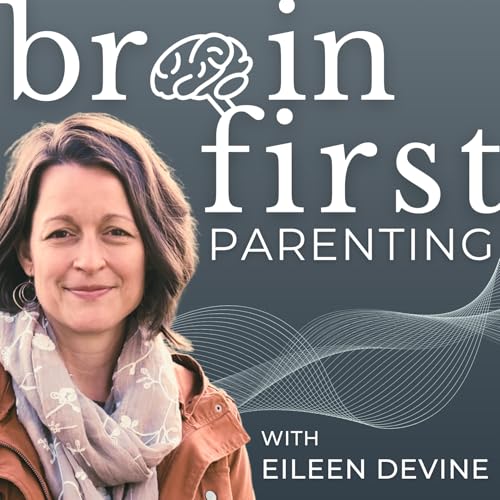
Couverture de Brain First Parenting with Eileen Devine

Brain First Parenting with Eileen Devine

Brain First Parenting with Eileen Devine

De : Eileen Devine
Écouter gratuitement

À propos de ce contenu audio

The Brain First Parenting podcast supports parents who are raising children, teens or young adults with brain-based differences and challenging behavioral symptoms. We are a safe space for parents who have historically felt like there isn't a place for them in the parenting advice world. At Brain First Parenting, we see each child as a unique individual with a unique brain, who deserves accommodations to thrive in a world that is frequently not set up for people with neurobehavioral challenges. We prioritize supporting the parents of these kids and teens so that they can, in turn, feel hope and confidence and joy in their parenting experience.© 2026 null All Rights Reserved. Hygiène et vie saine Parentalité Psychologie Psychologie et psychiatrie Relations
Les membres Amazon Prime bénéficient automatiquement de 2 livres audio offerts chez Audible.

Vous êtes membre Amazon Prime ?

Bénéficiez automatiquement de 2 livres audio offerts.
Bonne écoute !
    Épisodes
    • Ep. 36 | Supporting Siblings When Home Feels Unpredictable - Pt. 1
      Feb 23 2026

      SUMMARY - In this episode, Eileen explores the sibling experience in families where one child struggles with intense, challenging behaviors. Siblings are not passive observers. Their nervous systems are deeply impacted by the unpredictability, confusion, trauma, grief, and conflicting emotions that can arise in these dynamics. This conversation offers clarity around what siblings may be carrying, and sets the stage for Part 2, where we’ll discuss practical steps parents can take to support them.


      TAKEAWAYS:

      • The sibling experience often mirrors the parents’ experience. The way we frame and respond to the struggling child shapes how siblings make sense of it all.
      • Supporting siblings requires a “both/and” approach: we can hold empathy for the child with behavioral symptoms without dismissing the sibling’s pain or experience.
      • Many siblings live with a pervasive sense of confusion, especially when behavior is not addressed in the moment or feels like a double standard.
      • Many siblings carry intense, conflicting emotions: love, resentment, guilt, protectiveness, and grief.
      • Some siblings cope by trying not to be a burden, becoming perfectionistic, overly independent, or parentified over time.
      • Living with scary or unpredictable behaviors can be traumatic, and recovery depends on protective factors that parents can strengthen.
      • Clarity is the first step toward meaningful support and Part 2 will focus on practical actions parents can take.


      RESOURCES:

      Brain First Parenting Podcast, Episode 22: Parental Grief (Recommended to revisit through the lens of the sibling experience, as many of the same themes apply)

      =======================

      If you appreciated this episode, and would like to receive a weekly note from Eileen about the Brain First Parenting journey every Monday, you can subscribe to her free newsletter HERE!


      You can also check out all the FREE resources Eileen offers for parents, and learn more about all things Brain First at her website: eileendevine.com


      And of course, find and follow Eileen on social media:

      Facebook

      Instagram

      YouTube

      Pinterest

      Afficher plus Afficher moins
      17 min
    • Ep. 35 | When "Good Parenting" Meets Brains That Don’t Work Typically
      Feb 9 2026

      SUMMARY - Many parenting struggles with neurodivergent kids don’t come down to behavior, they come from a clash between deeply held parental values and a child’s brain-based capacities. In this episode, Eileen explores what happens when beliefs about “good parenting” collide with asynchronous development, emotional regulation challenges, and inconsistent cognitive skills. You’ll learn why pushing harder often backfires and how shifting from a behavior lens to a Brain First lens allows your parental values to actually take root.


      TAKEAWAYS:

      • Parenting frustration often lives at the intersection of adult values and a child’s neurobiology, not a lack of effort or care.
      • Chronological age does not equal ability for kids with brain-based differences; uneven skill development changes what’s reasonable to expect.
      • You don’t need to abandon your parental values, you need to adjust how you teach them so they align with your child’s cognitive skills.
      • You cannot consequence a skill into existence; responsibility develops through repeated teaching, regulation, and scaffolding.
      • Flexibility in rules and expectations is not permissive parenting, it’s responsive parenting that reduces power struggles and supports growth.


      RESOURCES:

      Your Lens Matters – Free downloadable infographic

      =======================

      If you appreciated this episode, and would like to receive a weekly note from Eileen about the Brain First Parenting journey every Monday, you can subscribe to her free newsletter HERE!


      You can also check out all the FREE resources Eileen offers for parents, and learn more about all things Brain First at her website: eileendevine.com


      And of course, find and follow Eileen on social media:

      Facebook

      Instagram

      Pinterest

      Afficher plus Afficher moins
      24 min
    • Ep. 34 | The Birds & the Bees and Your Neurodivergent Child w/ Amy Lang
      Jan 26 2026

      SUMMARY - In this episode, Eileen sits down with Amy Lang, sexuality educator and expert, for a frank and open conversation about sex education for kids who are neurodivergent. Amy is the founder of Bird & Bees & Kids, and since 2006 has helped thousands of families have stronger, more open communication about sexuality and relationships.


      TAKEAWAYS:

      • Talking to kids about sexuality is a health and safety issue; knowledge is empowering and reduces vulnerability.
      • This is an essential on-going conversation to have with your kids, especially given the access kids have to misinformation from friends and online.
      • Having conversations about sexuality and changing bodies early and often helps normalize very natural part of the human experience, especially given that these changes can be extremely distressing to neurodivergent kids.
      • All parents come into parenthood with deeply held beliefs and values that play into their level of comfort with sexuality and talking about this with their kids. Reflecting on this as a parent will help with confidence in moving forward with these conversations.


      RESOURCES:

      • Birds & Bees & Kids
      • Sexuality and Safety with Tom and Ellie Book Series
      • Never Have I Ever (TV series)

      =======================

      If you appreciated this episode, and would like to receive a weekly note from Eileen about the Brain First Parenting journey every Monday, you can subscribe to her free newsletter HERE!


      You can also check out all the FREE resources Eileen offers for parents, and learn more about all things Brain First at her website: eileendevine.com


      And of course, find and follow Eileen on social media:

      Facebook

      Instagram

      Pinterest

      Afficher plus Afficher moins
      34 min
    Aucun commentaire pour le moment
