Épisodes

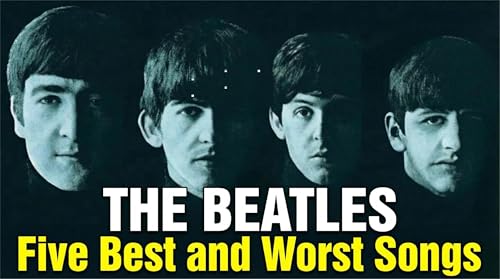
  • The Good, the Bad, and the Ugly: The Beatles’ Best and Worst Songs
    Jan 25 2026
    When we discuss the greatest band in rock history, we tend to focus on the triumphs—the revolutionary albums, the screaming fans, the cultural earthquakes. But what makes The Beatles truly fascinating is that even they, with all their genius, occasionally laid an egg. Who doesn’t? For every “A Day in the Life,” there’s a “Wild Honey Pie.” For every “Strawberry Fields Forever,” there’s a “Revolution 9.” Or a “Mr. Moonight.” 🎸Because music appreciation is subjective, there’s no single “official” list of their best and worst work. But here is a deep analysis aggregated from professional critics, fan polls, streaming analytics (play counts and skip rates on Spotify and Apple Music), and the band members’ own testimonies from interviews, the Anthology series, and Mark Lewisohn’s recording session documentation. And I’ve sprinkled in my own opinions here and there. 📊The Good: Five Songs Acknowledged as Their Best1. A Day in the LifeNearly universally ranked as The Beatles’ greatest achievement, this Sgt. Pepper closer is praised for its ambitious structure, orchestral crescendos, and profound lyricism drawn from Lennon and McCartney at their creative peak. Rolling Stone’s “100 Greatest Beatles Songs” consistently places it at No. 1, and for good reason. John worries about holes in the road, while Paul gets startled by his alarm clock, all building to that apocalyptic orchestral climax and final piano chord. 🎹2. Strawberry Fields ForeverHas there ever been a more perfect marriage of tripped-out psychedelia with pure, perfect pop? This Lennon masterpiece appears in the top three of virtually every critical ranking. Pitchfork and Vulture, which tend to favor the “art-rock” side of the band, consistently champion this as peak Beatles. Originally recorded during the Sgt. Pepper sessions, George Martin later removed it from the album to release it as a double A-side with “Penny Lane”—a marketing misstep, perhaps, but one that only added to the song’s mystique. 🍓3. In My LifeIt’s maybe impossible to say that any one Beatles song is their best, but it’s hard to argue against “In My Life.” Helped along by George Martin’s sped-up piano solo, it’s a gorgeous, heartbreaking, and nostalgic meditation on memory and loss. What’s remarkable is that Lennon was only 24 when he wrote it, transforming a long poem about riding a bus through Liverpool into this perfectly realized reflection. “It was the first song I wrote that was consciously about my life,” John said. “I think this was my first major piece of work.” 💭4. YesterdayOne of the most covered songs in music history (over 2,000 versions), “Yesterday” remains what Entertainment Weekly calls “the untouchable gold standard” for The Beatles’ melodic legacy. McCartney’s simple, emotional ballad—recorded with just acoustic guitar and string quartet—proves the band didn’t need complexity to achieve greatness. Sometimes less is more. Though some critics now find it mawkish and overplayed, its enduring popularity is undeniable. By 2012, the BBC calculated that “Yesterday” had generated some £19.5 million in royalty payments. 💰 Not bad for a song Paul thought up while he was sleeping.5. Hey JudeThe Beatles’ best-selling UK single and the song that launched a billion wobble-headed “Na-na-na-naaaa!”s. This seven-minute epic starts as Paul’s consolation to John’s son Julian during his parents’ divorce and builds to one of rock’s most iconic singalong endings. It was the first Beatles song recorded on then-state-of-the-art eight-track equipment and remains a massive moment during McCartney’s solo shows. 🎤Honorable mentions that appear across multiple “best of” lists: “Something,” “Let It Be,” “Help!,” “Eleanor Rigby,” “Come Together” ✨A footnote: The Beatles’ early up-tempo songs are often the favorites of Baby Boomers (like me) who were alive in 1964 and grew up experiencing the band in real time, album by album. If you tried telling me that “I Want to Hold Your Hand” and “I Saw Her Standing There” aren’t two of the best pop songs ever, I’d tell you to get your ears examined 🤣.The Bad and Ugly: Five Songs Most Frequently CriticizedThe “worst” list is harder to track. So this data comes from Reddit survivor polls (where thousands of fans vote off their least favorite tracks), streaming skip-rate data, and—most tellingly—the band members’ own commentary. 🗣️1. Revolution 9Eight minutes of avant-garde sound collage that tops almost every “worst Beatles songs” list. It’s not that John Lennon’s experimental piece is totally terrible—in its jarring, abrasive way, it’s “art” on the most outré level. It just doesn’t belong on a Beatles record, not even one as wildly uneven as the White Album. On Reddit’s “Survivor” polls, where thousands of fans vote off their least ...
    Afficher plus Afficher moins
    5 min
  • The Secret Supergroup: How George Harrison Accidentally Created the Traveling Wilburys
    Jan 24 2026
    When we think of 'Supergroups,' we usually imagine massive egos colliding in high-stakes negotiations and expensive studios. But the greatest supergroup of all time didn't start with a contract; it started because George Harrison left his guitar at Tom Petty’s house and needed to knock out a B-side before dinner." 🍽️The Traveling Wilburys—consisting of George, Petty, Bob Dylan, Roy Orbison, and Jeff Lynne—wasn’t a calculated move. It was a happy accident that George “secretly” assembled in a Malibu garage. By pretending to be a family of half-brothers named “The Wilburys,” these five legends managed to pull off the ultimate rock-and-roll heist: they made a masterpiece while the world wasn’t even looking. 🤫Despite being a “casual garage band,” the group was a massive commercial powerhouse; their debut album, Traveling Wilburys Vol. 1, reached No. 3 on the Billboard 200 and eventually went triple-platinum in the U.S. alone. They even took home a Grammy Award in 1990 for Best Rock Performance by a Duo or Group, proving that their “secret” project had truly captured the public’s imagination. 🏆The Traveling Wilburys never played a single public concert. 🚫🎸 While George Harrison said he would have loved to tour with them, it remained strictly a studio-based brotherhood. The closest they ever got was the “End of the Line” music video, which remains our only visual of the “brothers” performing together as a unit.The Garage Band with Five FrontmenRewind to 1988. George Harrison was in L.A. and needed a bonus track for his European single called “Handle with Care.” He was having dinner with Jeff Lynne and Roy Orbison, and he simply asked them if they’d help him record something the next day.The only problem? They didn’t have a studio booked. George called Dylan, who offered up his garage studio in Malibu. On the way there, George stopped by Tom Petty’s house to pick up a guitar he’d left behind, and he figured, “Why not invite Tom, too?” Just like that, the most over-qualified garage band in history was born. As Petty later recalled in a 2010 interview with Mojo Magazine:“It was just too good to miss... George conned us into doing it! ... We were all sitting there throwing in words and it was so easy you couldn’t believe it. It was so, so easy.” 🎤Watching the Masters at WorkWhile the world saw Dylan as an untouchable enigma, Petty was fascinated by the “Human Spark” of watching Bob and George collaborate over a kitchen table. Petty’s accounts of these sessions give us a rare look at how Dylan actually “builds” a song.In that same Mojo interview, Petty marveled at Dylan’s process:“There’s nobody I’ve ever met who knows more about the craft of how to put a song together than he does. I learned so much from just watching him work... He’ll write lots and lots of verses, then he’ll say, ‘this verse is better than that.’ Slowly, this great picture emerges.”Imagine being Tom Petty, sitting in a garage, watching Dylan scribble lyrics while Harrison works out a slide guitar part. It wasn’t about being famous; it was about the work. They wrote and recorded “Handle with Care” in a single afternoon. When George played it for his record label, they told him it was “too good” to be a B-side. They said: Give us a whole album. 📀The inclusion of Orbison wasn't just a nod to the past; it was an act of musical reverence. To the rest of the Wilburys, Roy was the "Big O," a man who had been a titan of the industry while the Beatles were still teenagers playing in Liverpool basements. Later, the Beatles toured the UK as co-headliners with Orbison in May 1963, and they spent those nights huddled in the wings, watching in awe as Roy stood perfectly still in his dark glasses and decimated audiences with nothing but the sheer power of his four-octave voice. With the Wilburys, Roy bridged the gap between the birth of rock-and-roll and the modern era. 🌟Checking the Ego at the DoorThe genius of the Wilburys was their anonymity. George decided they should all use pseudonyms—Nelson, Otis, Lucky, Lefty, and Charlie T. Wilbury. By ditching their real names, they ditched their baggage.They even had a rule: no “serious” technology. They wanted a sound that was raw and acoustic—mostly guitars and voices around a single microphone. It was the antithesis of the slick, over-produced 80s sound. It was five friends laughing, eating together, and rediscovering why they fell in love with music in the first place.Who Was Who?On the first album (Vol. 1), the band members were credited as the sons of Charles Truscott Wilbury Sr. Here is the lineup of the “brothers”:* Nelson Wilbury (George Harrison): The “spiritual leader” of the group. George was the one who gathered the guys and insisted on the slide guitar sound that defines the album.* Otis Wilbury (Jeff Lynne): The producer behind the curtain. Jeff was responsible ...
    Afficher plus Afficher moins
    10 min
  • Ringo's Mistake That Created Heavy Metal Drumming 🥁
    Jan 23 2026
    Why does “Ticket to Ride” sound so heavy compared to everything else the Beatles recorded in early 1965? Seriously, put on “Eight Days a Week” or “I Feel Fine” or any other Beatles single from that era, then play “Ticket to Ride” immediately after. Something’s different. The drums hit harder, the chord changes so dramatic. The whole song has this weight, this thudding insistence that Beatles records simply didn’t have before. Most people can hear that something’s off—or rather, something’s incredibly on in a way that feels almost proto-heavy metal for 1965. But what exactly changed? 🤔The answer is gloriously simple and perfectly Beatles: Ringo played it wrong. During the “Ticket to Ride” sessions at EMI Studios in February 1965, Ringo was supposed to play a standard rock beat, the kind of straightforward drumming that powered most Beatles songs up to that point. But either accidentally or instinctively—accounts vary on whether this was a mistake or a creative impulse—Ringo started playing the floor tom with the bass drum, creating that distinctive thudding sound that makes “Ticket to Ride” feel like it’s being played by a band twice as heavy as the actual Beatles. George Martin and the band liked the “mistake” so much they kept it. And in keeping it, they accidentally invented a drum sound that would help define hard rock for the next decade. 🎵The Sound That Shouldn’t Have WorkedHere’s what Ringo did that was “wrong”: instead of playing a traditional rock beat with the snare drum providing the backbeat while the bass drum kept time underneath, he doubled up the floor tom and bass drum together. That floor tom—the largest drum in the kit, the one that sits on the floor and produces the deepest tone—became a primary voice rather than an occasional accent. The result is that thudding, almost tribal quality that drives “Ticket to Ride” forward with relentless momentum. Every beat lands with more weight than standard 1965 pop drumming allowed. 🥁If you listen to the isolated drum stem from “Ticket to Ride” you can hear exactly what Ringo’s doing. That floor tom is absolutely front and center, providing a low-end thud that works in tandem with the bass drum to create a sound that’s less “pop band” and more “something heavier is coming.” The snare is still there doing its job, but the floor tom/bass drum combination is what you remember. It’s what makes the song sound like it’s being played by a band that’s discovered something darker and more powerful than “She Loves You.” 🔊The technical side gets interesting when you consider how EMI Studios captured it. This was 1965, which means four-track recording with limited options for mixing. The microphone placement on Ringo’s drums had to capture that floor tom prominence without drowning out everything else. The drums in “Ticket to Ride” are mixed louder and more prominently than on previous Beatles records, which amplifies Ringo’s unconventional beat into something that dominates the entire sonic landscape. 🎚️Compare “Ticket to Ride” to literally any other Beatles single from early 1965 and the difference is shocking. “Eight Days a Week” has perfectly competent, cheerful drumming that serves the song without calling attention to itself. “I Feel Fine” features Ringo’s solid backbeat. These are good drumming performances, but they’re playing the role drums traditionally played in pop music—keep time, provide rhythm, don’t overshadow the vocals. “Ticket to Ride” throws that playbook out. The drums aren’t just keeping time; they’re a primary melodic element, creating a hypnotic, almost menacing pulse that defines the song’s character as much as John’s vocals or George’s guitar. 🎸The Pattern of Productive Mistakes“Ticket to Ride” fits perfectly into a broader Beatles pattern of turning accidents into innovations that changed popular music. The most famous Beatles “mistake” is probably the feedback that opens “I Feel Fine,” recorded in October 1964 just a few months before “Ticket to Ride.” John leaned his guitar against an amp during a take, creating unintentional feedback that the band loved so much they deliberately incorporated it into the recording. But “I Feel Fine” was a gimmick, a cool effect at the beginning of a song. The “Ticket to Ride” drum mistake was structural; it changed how the entire song sounded and felt. ⚡Later Beatles mistakes-turned-features include John’s backwards guitar solo on “Tomorrow Never Knows,” created when he accidentally played a tape backwards and realized it sounded better than the original. The Beatles developed a reputation for recognizing when “wrong” was actually better, when the accident revealed something more interesting than the plan. But “Ticket to Ride” represents something special because it came relatively early—this is still mop-top ...
    Afficher plus Afficher moins
    10 min
  • The Beatles' Secret Favorite Drug: It Wasn't What You Think 🎸💊
    Jan 22 2026
    When we look back at the 1960s, we tend to see it through a hazy, sometimes romanticized, Technicolor lens of peace, love, and “flower power.” But if you want to know the truth about how the Beatles actually survived their decade of world domination, you have to look past the incense and peppermint. The Beatles weren’t just musical pioneers; they were elite-level chemical explorers, for better or worse.From the grimy clubs of Hamburg to the high-society dinner parties of London, the band’s sound evolved in lockstep with what they were swallowing, smoking, or snorting. They moved from drugs that helped them work, to drugs that helped them think, and finally—tragically—to drugs that helped them disappear.The Hamburg “Work” Ethic: Speed and the Prellies 💊Before they were the darlings of the Ed Sullivan Show, the Beatles were musical endurance athletes. In 1960, they were sent to Hamburg, Germany, to play in the Reeperbahn—a red-light district that makes modern Las Vegas look like a church picnic.They were expected to play for eight hours a night, seven days a week. You can’t do that on a diet of bratwurst and tea. To keep their energy up, they turned to Preludin, or “Prellies.” These were diet pills—essentially pharmaceutical-grade speed—that the club waiters and even the “friendly” local ladies would provide.John Lennon later admitted that they would be “talking their mouths off” and playing at a breakneck, frantic pace just to stay awake. That high-energy, “mach schau” (make a show) style that defined their early hits? That wasn’t just youthful exuberance. It was a chemical byproduct of a band trying to survive a German basement at 4:00 AM.The Great Pivot: Bob Dylan and the Green Room 🌿For the first few years of their fame, the Beatles were mainly “drinkers.” They’d have Scotch and Cokes, but they were still essentially professional showmen. But everything changed on August 28, 1964, at the Delmonico Hotel in New York.Bob Dylan arrived at their suite and, thinking the Beatles were already “experienced,” offered them a joint. As legend has it, Dylan had misheard the lyric in I Want to Hold Your Hand—”I can’t hide”—as “I get high.” When he realized the Beatles were “green,” he lit up anyway. Ringo, not knowing the etiquette, Bogarted that first doobie all by himself and dissolved into a fit of giggles. Soon, all four were “flying.” As Ringo later recalled, “We got high and laughed our asses off.”This was a massive pivot. Speed makes you loud and fast; marijuana can make you introspective and weird. Perhaps it wasn’t coincidence that the Beatles soon ditched the jelly-baby tunes. They quit writing about “holding hands” and began writing about “Nowhere Men” and “Paperback Writers.” By the time they were filming Help!, they were stoned for breakfast. If you watch the movie today and wonder why they look so genuinely confused during the action scenes, it’s because they probably were.The Hidden Playlist: Drug Lore vs. Reality* “Lucy in the Sky with Diamonds” — (1967) The public was convinced they had cracked a secret code here, pointing to the initials L-S-D. It seemed like an open-and-shut case, but Lennon insisted until his dying day that it was purely inspired by a drawing his son Julian brought home from school, and the subject was his classmate, Lucy O’Donnell. (Verdict: Misinterpreted) 🎨* “Got to Get You Into My Life” (1966) — For decades, teenagers listened to this as a standard, upbeat Motown-style love song about a girl. But Paul eventually let the cat out of the bag: this was his “ode to pot.” He wrote it as a literal love song to the plant itself, celebrating the way it had changed his perspective. Once you know that, the lyric “I was alone, I took a ride, I didn’t know what I would find there” takes on a whole new meaning. (Verdict: Correct) 🌿* “Day Tripper” (1965) — Many listeners thought it was about a literal traveler, but John later revealed it was a “sneer” at “weekend hippies.” He was making fun of the people who would take acid on a Saturday but put on their suits and short hair for their office jobs on Monday. (Verdict: Correct) 🚌* “A Day in the Life” (1967) — The BBC banned this masterpiece because of the line “I’d love to turn you on.” The authorities saw it as a blatant invitation to the youth to start experimenting. For once, the BBC was actually right—John and Paul admitted the line was a deliberate nod to the “mind-expanding” culture they were currently leading. (Verdict: Correct) 🌀* “Yellow Submarine” (1966) — In the late ‘60s, the counterculture was convinced the “submarine” was a metaphor for Nembutal capsules (yellow barbiturates). The common interpretation: As the “submarine” went down, the drug submerged your feelings. In reality, Paul just wanted to write a fun, slightly surreal children’s song ...
    Afficher plus Afficher moins
    14 min
  • Queen's Reign: The REAL Streaming King of Spotify? 🎸
    Jan 21 2026
    What is “great” music? Everyone’s got an opinion. And while there’s no accounting for taste, let’s assume, for the moment, that popularity (the amount of listening) equals “great.”Whatever our taste, “great” music must stand the test of time. Let’s say 10 years. By my math, that means anything released in 2016 or earlier is now officially entering “Oldies” territory. And when you look at the data right now, the results are shocking. Ladies and gentlemen, we aren’t just listening to the past, we are living in it. Oldies currently account for over 75% of all music consumed in the U.S. 🤯But who is at the top of the mountain? Let’s dive in.The “Immortals” of the Digital Age 🎧When it comes to pure “volume”—how many times a song is clicked on a streaming app—three names consistently rise like cream.Queen: This is the big surprise, the perfect example of an act more popular today than during their creative zenith 40 years ago. Back in the ‘70s and ‘80s, Queen was a superstar band, but they weren’t necessarily “Number One.” They didn’t have the endless string of chart-toppers that the Beatles or the Bee Gees had. But today? They are the undisputed heavyweight champions of legacy streaming. 👑 With over 50 million monthly listeners on Spotify, they are outperforming almost everyone, including today’s pop megastars. Even though the legendary Freddie Mercury has passed away, original members Brian May and Roger Taylor have kept the flame alive by touring the world’s biggest stadiums with vocalist Adam Lambert. The Beatles: They remain the gold standard. While they stream well (over 40 million monthly), their real power is in Physical Ownership. In a world where music is mostly “free,” the Beatles still move millions of dollars in physical merchandise every year, including vinyl. People don’t just want to hear Abbey Road, they want to hold it in their hands. 🍏 Not to mention the endless stream of books and documentaries— on average, between 20 and 40 new Beatles-related books are published each year. Fleetwood Mac: Rumours is a permanent resident of the Top 20. It has spent over 600 weeks on the Billboard 200. Thanks to a unique “vibe” that 19-year-olds have adopted as their own, the Mac is a streaming juggernaut. Their superpower: The music never gets old.The TikTok Time Machine 📱TikTok has become the most powerful force for resurrecting old music since classic rock radio (and believe it or not, many kids today don’t even know what “radio” is). When Kate Bush’s “Running Up That Hill” appeared in Stranger Things in 2022, that 1985 song hit #1 on iTunes 37 years after release. And this pattern repeats constantly: Fleetwood Mac’s “Dreams” went viral in 2020 after a skateboarding-cranberry-juice video, resulting in a 127% spike in streams and re-entering the Billboard Hot 100 after 43 years. TikTok doesn’t just revive songs; it strips away the “oldness” and presents them as fresh discoveries. (Of course, it helps if the music is good.) 🛹Cross-Generational Discovery 🎸Now, something fascinating: Younger generations are bypassing their parents’ tastes and diving straight into their grandparents’ era. When I was a kid, nothing was more cringeworthy than hearing my parents’ muzak. But today, a 16-year-old might scroll past Taylor Swift to listen to Led Zeppelin, unaware that “Stairway to Heaven” is an antique. Algorithms don’t care about chronology: if you like guitar-heavy rock, Spotify serves you up Nirvana and Metallica alongside Greta Van Fleet. In a college dorm this semester, you might hear Dark Side of the Moon blasting down the hallway, not because it’s a “classic” but because it just slaps. And the kicker: discovering your favorite “new” song is actually 40 years old doesn’t diminish it—it enhances it. In a world of disposable content, that permanence is credibility. 🌙The “New” Oldies (The 10-Year Graduates) 📱Since we’re using the 10-year rule, we have to acknowledge the obvious: The “Oldies” club keeps getting bigger. We are now welcoming the heavyweights of the late 2000s and early 2010s.Eminem is the poster child for this. He is currently one of the top 10 most-streamed artists period. His catalog from 20 years ago (like “Lose Yourself”) is pulling daily numbers that would make a modern pop star weep. 🎤Then there’s Linkin Park and Nirvana. For the current generation, these aren’t just “alt-rock” bands; they are the “Classic Rock” of their era. Their 10-year-plus tracks are the foundation of the “Billion Stream Club,” proving that raw grit has a much longer shelf life than polished pop. 🤘Albums vs. Songs: How We “Vote” 🗳️Do people still listen to albums? Short answer: “yes and no.”* The “Single Song” Stars: There are plenty of “Oldies” stars kept alive by one or two massive songs. Think of Journey with “Don’t ...
    Afficher plus Afficher moins
    12 min
  • If the Beatles Started Today, Would They Use Guitars or AI?
    Jan 20 2026
    When we think of the Beatles, perhaps the most iconic image is of four young men in suits singing and strumming guitars. When they burst onto the scene in America in 1964, guitar sales exploded; boys started buying them because they wanted that same look, that same attention. The guitar wasn’t just an instrument; it was a ticket to fame and a physical extension of a new kind of creative power.Some fans have gone even further to secure a connection to those instruments. In May 2024, a collector paid $2.85 million at auction for John Lennon’s 1964 Framus Hootenanny 12-string acoustic—the “lost” guitar heard on Help! and Rubber Soul. That someone would almost three million for a piece of wood with strings speaks volumes about how deeply the guitar is embedded in our cultural memory of what makes a “band.”Yet, there was a practical reality to the Beatles’ gear. They needed musical accompaniment, and a backup band wasn’t an option. They needed sound to support the vocals—George Harrison might never have been invited into the group if not for his endless practice and his ability to serve as a lead guitarist. While they weren’t classical virtuosos, their musicianship was the essential engine that supported their true gifts: transcendent vocals and songwriting creativity.The World Has ChangedWith today’s technology, playing a traditional instrument is no longer a prerequisite for stardom. In one sense, it never was—throughout history, vocalists like Frank Sinatra or Barbra Streisand built legendary careers on their voices alone, but they still required a physical backing band—musicians standing in the shadows or an orchestra in the pit, playing in real time.Now, with prerecorded musical backing tracks, you can be a global superstar without needing a band at all. Nowadays, you’re more likely to see a troupe of dancers accompanying a singer than a bassist or a drummer. While Taylor Swift still tours with a full band, many of her contemporaries—Ariana Grande, Billie Eilish, and various other chart-toppers—perform primarily to backing tracks, focusing their energy on choreography and visual spectacle.This is a massive shift from the evolution of popular music. To understand where we’re headed, it helps to look at where we’ve been. In the early 20th century, the banjo was king because its punchy, percussive sound could cut through a room without electronic amplification. Jazz bands of the 1920s relied on brass; the electric guitar revolution of Chuck Berry and Buddy Holly followed. By the 1980s, synthesizers began to take precedence. Yet, through all these shifts, one thing remained constant: a human being was playing an instrument in real time.A Recent RevelationI am not a music snob. I genuinely enjoy today’s pop stars. But lurking in the back of my mind is always the issue of “the band”—or the conspicuous absence thereof.I recently attended a show by Halsey, a powerhouse performer who blends alternative pop with confessional, hip-hop-influenced lyrics. She actually had a 12-piece band dressed in sharp white suits, but they were hidden on a platform below the right side of the stage. Perhaps 80 percent of the audience didn’t even know they were there. It begs the question: why go to the expense of touring with a dozen professional instrumentalists if you’re going to hide them? It feels like a strange middle ground: keeping the “authenticity” of live musicians while presenting the visual aesthetic of a solo performer.Contrast this with Post Malone. He tours with no band whatsoever, and frankly, nobody in the arena seems to care. He has genuine charisma that fills the space. At a recent show I saw, about 15 minutes into his set, he sat on a stool and sang a ballad while playing an acoustic guitar. It was a beautiful change of pace after he had come out like a house on fire, singing to prerecorded tracks so loud they rattled my bones, quickly pacing around a stage lit in multiple colors from below.Then, as the quiet ballad ended, he stood up, raised that guitar high, and smashed it on the ground. He spent a full minute pounding it into the stage until it was nothing left but a pile of splinters and a mess of broken strings.The Art of DestructionThis routine reminded me of The Who and Pete Townshend’s “auto-destructive art.” Townshend’s guitar smashing began as an accident at the Railway Hotel in 1964 when his guitar neck snapped when he hit is against a low ceiling. When the audience laughed, he reacted in anger and smashed it to smithereens.It became a signature move, but Townshend’s reasons were complex. He once suggested it was an act of rebellion against his father, a musician who didn’t believe in Pete’s talent. Frontman Roger Daltrey viewed it as a “sacrificial lamb,” describing the “incredible sonic experience” of a guitar screaming as it died. Others connected it to Gustav Metzger’s art movement, protesting consumerism. Eventually,...
    Afficher plus Afficher moins
    12 min
  • Ghost in the Machine: How The Beatles Survived Their First Live TV Nightmare
    Jan 19 2026
    Picture this: December 17, 1962. Granada Television studios in Manchester. Four young men from Liverpool are stepping up to the microphones to perform their forthcoming song “Please Please Me,” which their producer, George Martin, has declared will become their first number-one hit (no pressure 😂). Cameras go live, the red light is on, and there’s no safety net because this is early live television—no edits, no rewinds, and no time for amateurs. These were the days before cable, when being on TV was a big deal.Granada’s People and Places was a fast-moving program, but the audio technicians were accustomed to mixing polite jazz quartets, not the aggressive, dual-vocal assault of Lennon and McCartney. As soon as the band launched into “Please Please Me,” the studio mix went haywire. It wasn’t a minor glitch; it was a total failure of the vocal balance, leaving the lead vocals struggling to compete with the sheer volume of the guitars and drums. 📺The harmonica riffs and ascending vocal harmonies were badly mangled. Historians and eyewitnesses noted that the harmonica microphone—essential for the song’s “hook”—either failed to activate or was mixed so low it became a ghost in the machine. For a band that relied on the tight interplay between instruments and voices, this was a potential disaster in real-time, and something everyone could hear. (This was in the days before incessant screaming drowned out the Beatles’ sound.) 😱The Beatles didn’t panic. Instead, they leaned into the chaos with the same cheeky wit they had honed in the damp cellars of the Cavern Club and the rowdy bars of Hamburg. Earlier in the show, during the pre-performance banter with host Bill Grundy, John Lennon had set the tone by jokingly warning that the wires had a mind of their own. Minutes later, when those wires actually failed, the band treated the mishap not as a tragedy, but as part of the act. 😅 No sweat. After the show, George Harrison quipped: “It wasn’t us, Bill. We were perfectly in tune. It was the wires.”Paul kept singing, his voice strong despite having no way to hear himself properly. George delivered his lead guitar parts by feel alone, trusting muscle memory over his ears. And Ringo—beautiful, steady Ringo—kept the time like a metronome, becoming the anchor that kept the ship from capsizing. 🚢Fast forward just over a year to February 9, 1964—the Beatles’ legendary American debut on The Ed Sullivan Show. Seventy-three million Americans tuned in, and once again, technical gremlins crashed the party. Paul’s lead vocal mic was barely audible—the CBS engineers simply weren’t prepared for a rock band whose sound depended on precise vocal blending and instrumental balance. 📻Paul compensated by projecting his voice harder, and the band adjusted their positions on the fly. They made it work, and the vast majority of those 73 million viewers had no idea anything was wrong. What they saw was a confident, electric performance by a band that looked like they’d been conquering television studios their entire lives. 🗽Sadly, that Grenada TV performance no longer exists. Granada TV, like most studios of that era, routinely wiped and reused their videotape to save money. No one dreamed that decades later, people would still care about a regional TV show that featured an unknown band. What survives are only fragments: still photographs snapped from TV screens by fans (and Paul’s brother, Mike McCartney). 📼So that moment exists now only in memory and myth but reminds us they were, first and foremost, one of the greatest live acts in history. 🏆Ultimately, perfection isn’t what matters—connection and energy are the real currency of a great performance. 🎯 S**t happens. The "show must go on" tradition demands that an artist never acknowledge a technical failure because doing so shatters the "fourth wall" and ruins the audience's immersion. Always, the gremlins show up just when they’re least expected, none more so than during Adele’s performance of "All I Ask" at the 2016 Grammys. When a piano microphone fell onto the strings, creating a jarring, metallic clatter, she didn’t flinch. Adele kept her composure and stayed perfectly in key, proving that true professionals conquer the sonic chaos without ever missing a beat. 🎤Ultimately, the People and Places incident is the final word on the “luck” of the Beatles. People often say they were in the right place at the right time, but the truth is they were the right people for the wrong circumstances. They understood that the show must go on, and that high-level psychological warfare against failure would define their entire career. Whether facing technical disasters or the pressure of global fame, they kept their heads up and their wit sharp. 🌟Not bad for a Tuesday night in Manchester. Not bad at all. 🔥✨Visit my Beatles Store: Get full access to Beatles Rewind at beatlesrewind.substack.com...
    Afficher plus Afficher moins
    4 min
  • How McCartney Survived a Robbery, Band Walkout, and African Heat to Make His Best Album 🔥
    Jan 18 2026
    In 1973, Paul McCartney stood at a crossroads. His post-Beatles band, Wings, had released three albums to mixed reviews, and critics were brutal, questioning whether the once-golden songwriter was now toast. His answer was Band on the Run, recorded under circumstances so chaotic and dangerous they would have derailed most projects. The album became McCartney’s finest post-Beatles work and a touchstone of the 1970s.Here’s something today’s music fans may forget—or never have known: Wings wasn’t some sad consolation prize after the Beatles split. The band scored seven top 10 hits in the US, including “Band on the Run,” “Listen to What the Man Said,” “Silly Love Songs,” and “With a Little Luck.” This wasn’t Paul desperately clinging to relevance—this was a legitimate commercial juggernaut that dominated 1970s radio. Wings sold millions of albums, filled stadiums, and proved that McCartney could build something successful from scratch. 🎸But it wasn’t all a bowl of cherries. Now comes Man on the Run, a documentary directed by Academy Award-winner Morgan Neville that revisits that pivotal Lagos moment. The film premiered at the Telluride Film Festival last August, and its public release comes next month on Amazon Prime Video. And if you care at all about how great music gets made under impossible circumstances, you need to watch. Because what happened in Nigeria in 1973 is one of the most dramatic stories in rock history—and most people only know the sanitized version. This documentary shows you what actually went down, warts and all. 😅What Happened in Lagos (Everything That Could Go Wrong, Did)The scene: McCartney decides to record Band on the Run in Lagos, Nigeria—partly for tax reasons (even megastars appreciate a good tax break), partly because he wanted to experience a different culture and musical environment. 🌍 Just before the sessions began, two members of Wings quit the band—guitarist Henry McCullough and drummer Denny Seiwell—leaving McCartney with only his wife, Linda, and always-loyal guitarist Denny Laine to complete the album. Imagine planning to make a rock album with a full band and suddenly you’re down to three people, one of whom is your wife, whom critics say can’t sing, and is only in the band because she’s married to you. 💔It gets worse: Shortly after arriving in Lagos, Paul and Linda were mugged at knifepoint. The thieves made off with his cash and, most crucially, a bag containing his notebooks of lyrics and the demo tapes. So now Paul’s got to recreate everything from memory while also managing drums, bass, guitar, and keyboards. And singing.Oh, and the studio equipment kept breaking down. Oh, and the heat was so oppressive that Paul literally sweated through his clothes during sessions. Oh, and legendary Nigerian musician Fela Kuti accused him of coming to Lagos to steal African music. Oh, and there was political strife in Nigeria at the time. 🌡️ Most artists would have said “screw this” and gone home. Instead, Paul made a masterpiece: Band on the Run topped charts worldwide, won a Grammy, and forced critics who’d written him off to eat crow. Sometimes the best revenge is a triple-platinum album that people are still talking about 50 years later. 🏆Why You Should WatchHere’s what makes Man on the Run different from other McCartney documentaries: it focuses on the exact moment when everything was falling apart and Paul had to prove he could still do it without the Beatles safety net. This isn’t a greatest hits compilation or a victory lap. This is watching an artist in crisis mode, figuring out how to rescue an album that seemed doomed.The documentary features previously unseen footage from the Lagos sessions, much of it shot by Linda. This isn’t polished promotional material, it’s raw footage of Paul working out arrangements, battling equipment failures, dealing with the heat, and occasionally looking like he’s questioning every life choice that led him to this sweltering Nigerian studio. You see him exhausted. You see him frustrated. You see him refusing to quit. 📹 As Paul says in the film: It forced me to rely on my own instincts. Every part you hear on that album, except for Denny’s guitar work, is me or Linda. That was terrifying but also liberating.”That’s not the usual McCartney spin—that’s genuine vulnerability from a guy who’s had 50 years to process what happened. 💡Laine, the guitarist who stuck with Paul through the Lagos nightmare, provides his own perspective: “Paul was under tremendous pressure. He’d play bass, then overdub drums, then do piano parts, then guitars. He was essentially making a band album as a one-man show. I’d never seen anyone work that hard.” But here’s the revelation that makes this documentary essential: Linda McCartney’s contributions to Band on the Run were far more significant than anyone acknowledged. For years, critics dismissed Linda ...
    Afficher plus Afficher moins
    13 min