Couverture de Beatles Rewind Podcast

Beatles Rewind Podcast

Beatles Rewind Podcast

De : Steve Weber and Cassandra
Écouter gratuitement

3 mois pour 0,99 €/mois

Après 3 mois, 9.95 €/mois. Offre soumise à conditions.

À propos de ce contenu audio

Beatles. All day, every day. Eight Days a Week !!!

beatlesrewind.substack.comSteve Weber
Musique
Les membres Amazon Prime bénéficient automatiquement de 2 livres audio offerts chez Audible.

Vous êtes membre Amazon Prime ?

Bénéficiez automatiquement de 2 livres audio offerts.
Bonne écoute !
    Épisodes
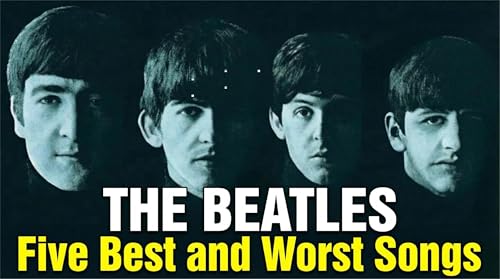
    • The Good, the Bad, and the Ugly: The Beatles’ Best and Worst Songs
      Jan 25 2026
      When we discuss the greatest band in rock history, we tend to focus on the triumphs—the revolutionary albums, the screaming fans, the cultural earthquakes. But what makes The Beatles truly fascinating is that even they, with all their genius, occasionally laid an egg. Who doesn’t? For every “A Day in the Life,” there’s a “Wild Honey Pie.” For every “Strawberry Fields Forever,” there’s a “Revolution 9.” Or a “Mr. Moonight.” 🎸Because music appreciation is subjective, there’s no single “official” list of their best and worst work. But here is a deep analysis aggregated from professional critics, fan polls, streaming analytics (play counts and skip rates on Spotify and Apple Music), and the band members’ own testimonies from interviews, the Anthology series, and Mark Lewisohn’s recording session documentation. And I’ve sprinkled in my own opinions here and there. 📊The Good: Five Songs Acknowledged as Their Best1. A Day in the LifeNearly universally ranked as The Beatles’ greatest achievement, this Sgt. Pepper closer is praised for its ambitious structure, orchestral crescendos, and profound lyricism drawn from Lennon and McCartney at their creative peak. Rolling Stone’s “100 Greatest Beatles Songs” consistently places it at No. 1, and for good reason. John worries about holes in the road, while Paul gets startled by his alarm clock, all building to that apocalyptic orchestral climax and final piano chord. 🎹2. Strawberry Fields ForeverHas there ever been a more perfect marriage of tripped-out psychedelia with pure, perfect pop? This Lennon masterpiece appears in the top three of virtually every critical ranking. Pitchfork and Vulture, which tend to favor the “art-rock” side of the band, consistently champion this as peak Beatles. Originally recorded during the Sgt. Pepper sessions, George Martin later removed it from the album to release it as a double A-side with “Penny Lane”—a marketing misstep, perhaps, but one that only added to the song’s mystique. 🍓3. In My LifeIt’s maybe impossible to say that any one Beatles song is their best, but it’s hard to argue against “In My Life.” Helped along by George Martin’s sped-up piano solo, it’s a gorgeous, heartbreaking, and nostalgic meditation on memory and loss. What’s remarkable is that Lennon was only 24 when he wrote it, transforming a long poem about riding a bus through Liverpool into this perfectly realized reflection. “It was the first song I wrote that was consciously about my life,” John said. “I think this was my first major piece of work.” 💭4. YesterdayOne of the most covered songs in music history (over 2,000 versions), “Yesterday” remains what Entertainment Weekly calls “the untouchable gold standard” for The Beatles’ melodic legacy. McCartney’s simple, emotional ballad—recorded with just acoustic guitar and string quartet—proves the band didn’t need complexity to achieve greatness. Sometimes less is more. Though some critics now find it mawkish and overplayed, its enduring popularity is undeniable. By 2012, the BBC calculated that “Yesterday” had generated some £19.5 million in royalty payments. 💰 Not bad for a song Paul thought up while he was sleeping.5. Hey JudeThe Beatles’ best-selling UK single and the song that launched a billion wobble-headed “Na-na-na-naaaa!”s. This seven-minute epic starts as Paul’s consolation to John’s son Julian during his parents’ divorce and builds to one of rock’s most iconic singalong endings. It was the first Beatles song recorded on then-state-of-the-art eight-track equipment and remains a massive moment during McCartney’s solo shows. 🎤Honorable mentions that appear across multiple “best of” lists: “Something,” “Let It Be,” “Help!,” “Eleanor Rigby,” “Come Together” ✨A footnote: The Beatles’ early up-tempo songs are often the favorites of Baby Boomers (like me) who were alive in 1964 and grew up experiencing the band in real time, album by album. If you tried telling me that “I Want to Hold Your Hand” and “I Saw Her Standing There” aren’t two of the best pop songs ever, I’d tell you to get your ears examined 🤣.The Bad and Ugly: Five Songs Most Frequently CriticizedThe “worst” list is harder to track. So this data comes from Reddit survivor polls (where thousands of fans vote off their least favorite tracks), streaming skip-rate data, and—most tellingly—the band members’ own commentary. 🗣️1. Revolution 9Eight minutes of avant-garde sound collage that tops almost every “worst Beatles songs” list. It’s not that John Lennon’s experimental piece is totally terrible—in its jarring, abrasive way, it’s “art” on the most outré level. It just doesn’t belong on a Beatles record, not even one as wildly uneven as the White Album. On Reddit’s “Survivor” polls, where thousands of fans vote off their least ...
      Afficher plus Afficher moins
      5 min
    • The Secret Supergroup: How George Harrison Accidentally Created the Traveling Wilburys
      Jan 24 2026
      When we think of 'Supergroups,' we usually imagine massive egos colliding in high-stakes negotiations and expensive studios. But the greatest supergroup of all time didn't start with a contract; it started because George Harrison left his guitar at Tom Petty’s house and needed to knock out a B-side before dinner." 🍽️The Traveling Wilburys—consisting of George, Petty, Bob Dylan, Roy Orbison, and Jeff Lynne—wasn’t a calculated move. It was a happy accident that George “secretly” assembled in a Malibu garage. By pretending to be a family of half-brothers named “The Wilburys,” these five legends managed to pull off the ultimate rock-and-roll heist: they made a masterpiece while the world wasn’t even looking. 🤫Despite being a “casual garage band,” the group was a massive commercial powerhouse; their debut album, Traveling Wilburys Vol. 1, reached No. 3 on the Billboard 200 and eventually went triple-platinum in the U.S. alone. They even took home a Grammy Award in 1990 for Best Rock Performance by a Duo or Group, proving that their “secret” project had truly captured the public’s imagination. 🏆The Traveling Wilburys never played a single public concert. 🚫🎸 While George Harrison said he would have loved to tour with them, it remained strictly a studio-based brotherhood. The closest they ever got was the “End of the Line” music video, which remains our only visual of the “brothers” performing together as a unit.The Garage Band with Five FrontmenRewind to 1988. George Harrison was in L.A. and needed a bonus track for his European single called “Handle with Care.” He was having dinner with Jeff Lynne and Roy Orbison, and he simply asked them if they’d help him record something the next day.The only problem? They didn’t have a studio booked. George called Dylan, who offered up his garage studio in Malibu. On the way there, George stopped by Tom Petty’s house to pick up a guitar he’d left behind, and he figured, “Why not invite Tom, too?” Just like that, the most over-qualified garage band in history was born. As Petty later recalled in a 2010 interview with Mojo Magazine:“It was just too good to miss... George conned us into doing it! ... We were all sitting there throwing in words and it was so easy you couldn’t believe it. It was so, so easy.” 🎤Watching the Masters at WorkWhile the world saw Dylan as an untouchable enigma, Petty was fascinated by the “Human Spark” of watching Bob and George collaborate over a kitchen table. Petty’s accounts of these sessions give us a rare look at how Dylan actually “builds” a song.In that same Mojo interview, Petty marveled at Dylan’s process:“There’s nobody I’ve ever met who knows more about the craft of how to put a song together than he does. I learned so much from just watching him work... He’ll write lots and lots of verses, then he’ll say, ‘this verse is better than that.’ Slowly, this great picture emerges.”Imagine being Tom Petty, sitting in a garage, watching Dylan scribble lyrics while Harrison works out a slide guitar part. It wasn’t about being famous; it was about the work. They wrote and recorded “Handle with Care” in a single afternoon. When George played it for his record label, they told him it was “too good” to be a B-side. They said: Give us a whole album. 📀The inclusion of Orbison wasn't just a nod to the past; it was an act of musical reverence. To the rest of the Wilburys, Roy was the "Big O," a man who had been a titan of the industry while the Beatles were still teenagers playing in Liverpool basements. Later, the Beatles toured the UK as co-headliners with Orbison in May 1963, and they spent those nights huddled in the wings, watching in awe as Roy stood perfectly still in his dark glasses and decimated audiences with nothing but the sheer power of his four-octave voice. With the Wilburys, Roy bridged the gap between the birth of rock-and-roll and the modern era. 🌟Checking the Ego at the DoorThe genius of the Wilburys was their anonymity. George decided they should all use pseudonyms—Nelson, Otis, Lucky, Lefty, and Charlie T. Wilbury. By ditching their real names, they ditched their baggage.They even had a rule: no “serious” technology. They wanted a sound that was raw and acoustic—mostly guitars and voices around a single microphone. It was the antithesis of the slick, over-produced 80s sound. It was five friends laughing, eating together, and rediscovering why they fell in love with music in the first place.Who Was Who?On the first album (Vol. 1), the band members were credited as the sons of Charles Truscott Wilbury Sr. Here is the lineup of the “brothers”:* Nelson Wilbury (George Harrison): The “spiritual leader” of the group. George was the one who gathered the guys and insisted on the slide guitar sound that defines the album.* Otis Wilbury (Jeff Lynne): The producer behind the curtain. Jeff was responsible ...
      Afficher plus Afficher moins
      10 min
    • Ringo's Mistake That Created Heavy Metal Drumming 🥁
      Jan 23 2026
      Why does “Ticket to Ride” sound so heavy compared to everything else the Beatles recorded in early 1965? Seriously, put on “Eight Days a Week” or “I Feel Fine” or any other Beatles single from that era, then play “Ticket to Ride” immediately after. Something’s different. The drums hit harder, the chord changes so dramatic. The whole song has this weight, this thudding insistence that Beatles records simply didn’t have before. Most people can hear that something’s off—or rather, something’s incredibly on in a way that feels almost proto-heavy metal for 1965. But what exactly changed? 🤔The answer is gloriously simple and perfectly Beatles: Ringo played it wrong. During the “Ticket to Ride” sessions at EMI Studios in February 1965, Ringo was supposed to play a standard rock beat, the kind of straightforward drumming that powered most Beatles songs up to that point. But either accidentally or instinctively—accounts vary on whether this was a mistake or a creative impulse—Ringo started playing the floor tom with the bass drum, creating that distinctive thudding sound that makes “Ticket to Ride” feel like it’s being played by a band twice as heavy as the actual Beatles. George Martin and the band liked the “mistake” so much they kept it. And in keeping it, they accidentally invented a drum sound that would help define hard rock for the next decade. 🎵The Sound That Shouldn’t Have WorkedHere’s what Ringo did that was “wrong”: instead of playing a traditional rock beat with the snare drum providing the backbeat while the bass drum kept time underneath, he doubled up the floor tom and bass drum together. That floor tom—the largest drum in the kit, the one that sits on the floor and produces the deepest tone—became a primary voice rather than an occasional accent. The result is that thudding, almost tribal quality that drives “Ticket to Ride” forward with relentless momentum. Every beat lands with more weight than standard 1965 pop drumming allowed. 🥁If you listen to the isolated drum stem from “Ticket to Ride” you can hear exactly what Ringo’s doing. That floor tom is absolutely front and center, providing a low-end thud that works in tandem with the bass drum to create a sound that’s less “pop band” and more “something heavier is coming.” The snare is still there doing its job, but the floor tom/bass drum combination is what you remember. It’s what makes the song sound like it’s being played by a band that’s discovered something darker and more powerful than “She Loves You.” 🔊The technical side gets interesting when you consider how EMI Studios captured it. This was 1965, which means four-track recording with limited options for mixing. The microphone placement on Ringo’s drums had to capture that floor tom prominence without drowning out everything else. The drums in “Ticket to Ride” are mixed louder and more prominently than on previous Beatles records, which amplifies Ringo’s unconventional beat into something that dominates the entire sonic landscape. 🎚️Compare “Ticket to Ride” to literally any other Beatles single from early 1965 and the difference is shocking. “Eight Days a Week” has perfectly competent, cheerful drumming that serves the song without calling attention to itself. “I Feel Fine” features Ringo’s solid backbeat. These are good drumming performances, but they’re playing the role drums traditionally played in pop music—keep time, provide rhythm, don’t overshadow the vocals. “Ticket to Ride” throws that playbook out. The drums aren’t just keeping time; they’re a primary melodic element, creating a hypnotic, almost menacing pulse that defines the song’s character as much as John’s vocals or George’s guitar. 🎸The Pattern of Productive Mistakes“Ticket to Ride” fits perfectly into a broader Beatles pattern of turning accidents into innovations that changed popular music. The most famous Beatles “mistake” is probably the feedback that opens “I Feel Fine,” recorded in October 1964 just a few months before “Ticket to Ride.” John leaned his guitar against an amp during a take, creating unintentional feedback that the band loved so much they deliberately incorporated it into the recording. But “I Feel Fine” was a gimmick, a cool effect at the beginning of a song. The “Ticket to Ride” drum mistake was structural; it changed how the entire song sounded and felt. ⚡Later Beatles mistakes-turned-features include John’s backwards guitar solo on “Tomorrow Never Knows,” created when he accidentally played a tape backwards and realized it sounded better than the original. The Beatles developed a reputation for recognizing when “wrong” was actually better, when the accident revealed something more interesting than the plan. But “Ticket to Ride” represents something special because it came relatively early—this is still mop-top ...
      Afficher plus Afficher moins
      10 min
    Aucun commentaire pour le moment