

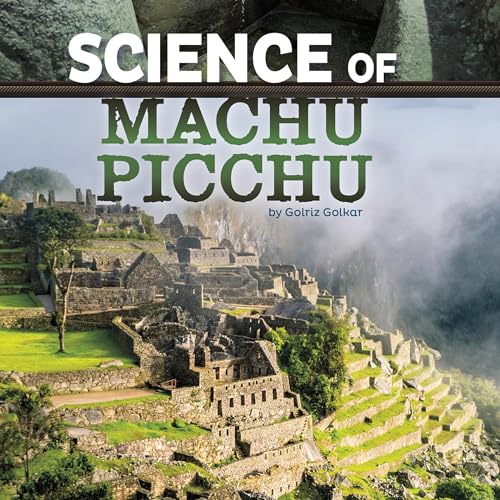
Science of Machu Picchu
The Science of History
Impossible d'ajouter des articles
Désolé, nous ne sommes pas en mesure d'ajouter l'article car votre panier est déjà plein.
Veuillez réessayer plus tard
Veuillez réessayer plus tard
Échec de l’élimination de la liste d'envies.
Veuillez réessayer plus tard
Impossible de suivre le podcast
Impossible de ne plus suivre le podcast
Bénéficiez gratuitement de Standard pendant 30 jours
5,99 €/mois après la période d’essai. Annulation possible à tout moment

Science of Machu Picchu
Lu par :
uncredited
Acheter pour 7,00 €
-
Lu par :
-
uncredited
-
De :
-
Golriz Golkar
Have you ever heard of Machu Picchu? It’s an ancient citadel high in the mountains of Peru. Science played a big role in the building of Machu Picchu and the daily life of the Inca people who lived there. Find out the science behind Machu Picchu. Discover how modern technology is being used to uncover more mysteries of this ancient place.
©2022 Golriz Golkar (P)2024 Capstone Press
adbl_web_anon_alc_button_suppression_t1
Commentaires
Each title explores a wide range of scientific principles that apply to these historic locations and events. The incredible stonemasonry of Machu Picchu, the speed and flexibility of Viking longships, and the use of celestial navigation on the Underground Railroad are all explored. Cotton gins, telegraphs, and aqueducts played a part in historical events, while DNA analysis, satellite imagery, and submersibles are used to uncover new details. Maps, diagrams, photos, and other images help to bring it all to life for readers. Additional supports include sidebars, captions, a glossary, and suggested books and websites for further reading. VERDICT An excellent way to interest history-lovers in science, or vice versa, and to expand existing collections. (Suzanne Costner, Fairview Elementary School, TN)
Aucun commentaire pour le moment


