Épisodes

  • ServiceNow's Approach to Skills and Workforce Readiness: Jayney Howson
    Sep 30 2026
    The rapid transformation of work, driven by technological acceleration and evolving business needs, is leaving organizations scrambling to keep their employees future ready. ServiceNow’s Chief Learning Officer Jayney joins me to share her thoughts on how organizations can move beyond traditional skilling to focus on comprehensive readiness, including the unique human abilities that set people apart from machines. Jayney discusses ServiceNow’s model of a "talent signature"—a multidimensional skill profile that brings together AI fluency, functional expertise, and the elusive but critical human advantage. You'll hear how ServiceNow is transforming learning into a personalized, playful, and data-driven experience, why curiosity can’t be taught but can be learned, and how measuring what makes us uniquely human is key. You will want to hear this episode if you are interested in...03:46 Measuring uniquely human skills13:08 Assessing employee skill readiness15:03 Emerging AI skills and demand18:56 Creating conditions for curiosity27:26 Workforce readiness and skills gap32:32 Focus on customer-centric strategy35:43 Debating centralized vs. federated learning37:33 Introducing SimStudio for training47:04 Creating a unique learning environment48:12 Solving the learning experience puzzle56:09 How the Lead Boldly model worksThe Shift from Skilling to Workforce ReadinessWorkforce readiness has become the new clarion call for organizations. Between 30 and 100% of skills are going to change in the workforce over the next 3 years. This volatility demands a seismic shift in how we think about people development: not as one-off, reactive upskilling, but as continuous preparation for evolving roles and technologies.At ServiceNow, readiness means aligning workforce capabilities with both current role requirements and the unpredictable demands of tomorrow’s jobs. Readiness isn’t about checking boxes on completed learning modules—it’s about ensuring employees can confidently perform in their roles now and adapt to what’s next.Rethinking Skills: The Talent Signature ModelCentral to ServiceNow’s approach is the concept of the “talent signature”—a model that assesses employees across three dimensions:AI Fluency: The understanding and leverage of AI, scaled according to job requirements.Functional Skills: Core competencies needed for specific roles (e.g., technical, sales, marketing).Human Skills: The human advantage—skills that remain when AI takes over routine work, such as critical thinking, judgment, curiosity, courage, and interpersonal connection.This framework recognizes that the interplay between these domains is dynamic and context-dependent. An AI skill alone, without a human skill, is actually a skill that AI could do on its own. The difference is the foundational human layer. The model leverages nearly 200 signals—from learning completions and assessments to project work and interpersonal feedback—to generate a unique skill profile for each employee. This data-rich fingerprint enables more precise, personalized development paths and better workforce planning.Can Curiosity Be Learned?We discuss whether qualities like curiosity and courage are innate or can be developed. While training modules for curiosity might fall short, Jayney’s perspective is that these attributes can’t be taught, but they can be learned. The distinction matters: it's about creating the right conditions for growth rather than direct instruction. By fostering environments where it’s safe to experiment and fail, organizations can unlock these human traits. The Power of Safe ExperimentationTo build a culture of learning, ServiceNow draws on the “science of play.” Drawing inspiration from educational theorists like Johan Huizinga, Jayney advocates for “magic circles”—playgrounds within the organization where different rules apply, and the risk of failure is reduced. In these environments, employees are more willing to try, iterate, and improve.The shift from passive consumption (read-and-test courses) to hands-on, playful approaches is evidenced in their adoption of AI-driven roleplay. Strikingly, 93% of participants returned to repeat these immersive simulations, a testament to the draw and efficacy of playful, experiential learning.Leading Boldly in Times of UncertaintyIn a climate of rampant change and declining organizational trust, leadership takes center stage. ServiceNow’s “Lead Boldly” model encourages leaders to trust boldly, communicate clearly (even without certainty), and champion change—a people-centered approach that recognizes leaders as the primary catalysts for psychological safety, resilience, and adaptive learning. Resources & People MentionedBill McDermott CEO of ServiceNowRachel Botsman on LinkedInHomo Ludens: A Study of the Play Element in CultureLOL- Learning out Loud!Jayney Howson on Substack Connect with Guest NameJayney Howson - Chief Learning Officer @ ...
    Afficher plus Afficher moins
    1 h et 1 min
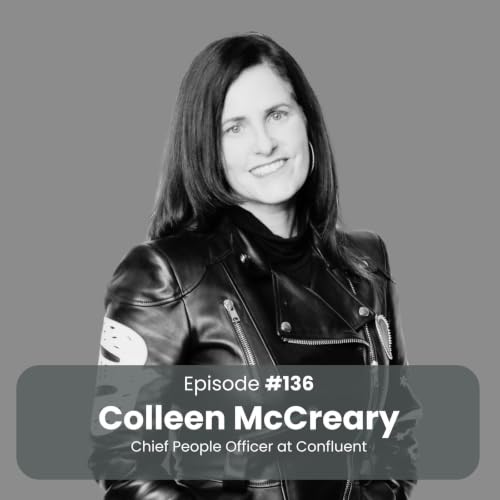
  • Pay Transparency and Living Wage Initiatives: Colleen McCreary
    Sep 16 2026
    When we think about culture, compensation is rarely at the heart of the conversation. But how organizations approach pay, structure, transparency, and performance ties speaks volumes about their values and priorities. We sit down with Colleen McCreary, former Chief People Officer at Credit Karma, to explore the intricacies of compensation as a strategic organizational system. Colleen shares how a convoluted pay structure led to a complete overhaul at Credit Karma, resulting in a transparent, role-based compensation system focused on fairness and impact. We discuss pay transparency, the difference between impact and performance, eliminating performance ratings, and introducing a living wage initiative that aligned pay practices with organizational values.You will want to hear this episode if you are interested in...[01:25] Transparent processes for compensation decisions [06:01] Alignment of compensation practices with company mission of financial wellness [10:41] Discussing compensation systems[20:11] Designing the employee compensation structure[30:46] Restructuring team roles and pay[33:19] Addressing pay equity issues[53:10] Developing a promotion budget model[56:14] Managing underperformers and their compensationBuilding the RelationshipPay is central to the employment relationship, the systems around it are often opaque, and inconsistent—and that breeds confusion and erodes trust. Many leaders default to inherited systems or fail to connect the dots between compensation and the broader organizational culture. This neglect carries hidden costs of noisy complaints, employee disengagement, unhealthy attrition, and management headaches. Redefining Pay TransparencyTraditionally, pay transparency means posting salary ranges or employee pay for all to see. Credit Karma’s approach went much further. In their context, transparency meant everyone understood how compensation worked: how often it was evaluated, by what benchmark, and through what decision-making process. It wasn’t about broadcasting individual pay; it was about demystifying systems, leveling the informational playing field, and removing the perception of favoritism or randomness.When Credit Karma rolled out its new compensation structure, employee perceptions of fairness soared. Surveys found over 90% of respondents felt their pay was fair, even if it wasn’t always exactly what they wanted, compared to a baseline closer to 50%.Leveling the Playing FieldCredit Karma moved to a role-based pay system: everyone in the same role, at the same location, received the same compensation—no negotiations or special deals. Annual and merit bonuses were rolled into base salaries, and instead of annual performance increases, pay adjustments were driven by market comparisons at regular intervals.This meant that newly hired employees could no longer leapfrog existing ones in pay, removing a frequent source of managerial angst and employee resentment. Managers were freed from salary negotiations and instead spent energy on developing talent, while systemic reviews twice a year ensured pay stayed competitive without employees having to ask.Decoupling Compensation from Performance RatingsAn innovative move was uncoupling compensation from traditional performance ratings. By eliminating ratings, Credit Karma relied on promotions and defined job architecture to help employees progress, using clear criteria for advancement. To recognize outstanding contributions, they created an Exceptional Impact Program (EIP), using stock grants to reward employee impact rather than routine high performance.Acceptance rates in recruiting increased, and attrition rates fell during tumultuous periods in both the company and the wider world. The new system also built organizational trust, employees no longer questioned whether newcomers or others were being paid unfairly; they could focus on their roles and development, knowing the system was both transparent and fair. Resources & People MentionedCredit KarmaConfluentIntuitCulture AmpRadford McLagan Compensation Database SalesforceLiving Wage Calculator Colleen Wheeler McCreary on Medium Connect with Colleen McCrearyColleen McCreary on LinkedIn Connect With RedThread ResearchWebsite: RedThread ResearchOn LinkedInSubscribe to WORKPLACE STORIES
    Afficher plus Afficher moins
    1 h et 8 min
  • Making Order Out of Chaos in L&D: Tracie Cantu
    Sep 2 2026
    In this episode, I welcome Tracie Cantu, Chief Learning Strategist and author of Running L&D Like a Business. We discuss the operational challenges facing today’s L&D teams, the critical distinction between workflows and processes, and the dangers of succumbing to “shiny object syndrome” in the era of AI. From the looming risk of a mid-level talent gap to predictions about the future of L&D itself, our conversation offers practical frameworks, strategic advice, and a glimpse into what it will take for learning leaders to thrive in an uncertain future. You will want to hear this episode if you are interested in...06:39 Optimizing learning function operations08:14 Defining workflows vs processes16:33 Evaluating investment value in L&D18:35 Using the ‘5 Whys’ method24:29 Discussing the problem-solving mindset30:09 Training models and workforce readiness36:45 AI in talent acquisition and L&D challenges43:09 Expectations and projections for L&D's futureThe Power of Process Over WorkflowTraditionally, L&D departments have been highly reactive—responding to requests, putting out fires, and churning out solutions, often without a clear line of sight to business goals. Tracy sees L&D as an optimizer of systems more than anything.She distinguishes between workflows—a series of tasks, often repeated for each new problem—and processes, which are more strategic, goal-oriented, and repeatable across scenarios. Many L&D teams are stuck in workflow mode, leading to reinventing the wheel rather than building scalable, impactful models. Processes enable organizations to rise above reactive task management, free up resources for strategic initiatives, and lay the groundwork for measuring real business value.People, Processes, and TechnologyTracie’s operating model blueprint has three pillars—people, process, and technology:People: Are the right skills in the right roles? Or are teams over-indexed in content production but lacking capabilities in data and strategy?Process: Are you operating by checklists or by cohesive, strategy-backed processes that align to business goals?Technology: Do your tools work together as an ecosystem, or are they siloed, duplicating effort and data?L&D teams often falter at the process stage where prioritization, governance, and strategic trade-offs live. Without this backbone, even the shiniest technology will fail to deliver.Why AI Isn’t a Silver BulletToo often, L&D falls prey to “shiny object syndrome”—embracing new technologies before understanding whether they solve any actual problem. Tracie shares the story of a company that spent half a million dollars on VR headsets for employee training, only to realize that what the team needed was human interaction and real feedback, not another gadget. Lots of organizations see AI as a means to crank out content faster, rather than as a tool to fundamentally rethink how we solve business challenges. For AI or any new tech to really be transformative in L&D, the back end—data, processes, and governance—needs to be tight. Otherwise, as Tracie says, “garbage in, garbage out, only louder with AI.”The Future of L&DTracie shares why she thinks L&D may be split into a production-focused function in the future, essentially an in-house content shop, and a more strategic workforce enablement team, possibly absorbed into talent or HR. The risk is that as organizations cut costs and chase efficiency, they neglect long-term skills development, creating a skills dearth by 2032.Who will be responsible for upskilling and reskilling when L&D is gone? If L&D disappears, the job may fall to talent acquisition or management, but neither is equipped to oversee ongoing learning at scale. L&D professionals who embrace business partnership, systems thinking, and continuous reinvention can still carve out vital space within organizations. The path forward requires tough choices—rethinking team structure, adopting true process discipline, and resisting the allure of fast fixes. Resources & People MentionedRunning L&D Like a Business Shock of the New: The Challenge and Promise of Emerging Technology by Chad Udell and Gary Woodill Range: Why Generalists Triumph in a Specialized World by David Epstein Rep. Liccardo Introduces SKILL Act to Prepare Workers for AI-Driven Job Market ShiftsConnect Education To Jobs And Create An AI Workforce Transition PlanMEEK - Fabulous (Official Video) Connect with Tracie CantuTracie CantuTracie M. Cantu on LinkedIn Connect With RedThread ResearchWebsite: RedThread ResearchOn LinkedInSubscribe to WORKPLACE STORIES
    Afficher plus Afficher moins
    47 min
  • Rethinking DEI Paradigms: Jennifer McCollum
    Aug 19 2026
    This week on the podcast, we welcome Jennifer McCollum, President and CEO of Catalyst and author of the new book Men at Work: The Roadmap to Gender Partnership. Jennifer shares her perspective on whether true gender equity in the workplace can be achieved without fully engaging men in the solution. We dig into the data showing that modern workplaces are failing not just women, but men as well—fueling rigid expectations and limiting everyone’s potential. We discuss Catalyst’s new earned universalism framework in response to legal and societal shifts, and discuss practical strategies HR and talent leaders can use to advance inclusion, even as DEIB functions are restructured or absorbed into other parts of the business. You will want to hear this episode if you are interested in...[00:00] Discussing gender equity strategies[07:09] Catalyst's workplace research and commitment[12:52] Work-life stress and gender expectations[16:50] Evaluating post-E.O. impact study[18:23] Balancing inclusion and flexibility[20:54] Focus shift from metrics to fairness[26:27] Promoting equal parental leave[33:28] Leadership and cultural transformation[39:48] Changing organizational culture for managersA Universal Approach to Inclusion Can Transform Work for EveryoneFor decades, the chief narrative was that workplaces weren’t built to support women. But Catalyst’s research is now surfacing a broader truth: many modern work environments also fall short for men. Data from their studies reveal that 82% of men feel immense pressure to conform to traditional “man box” stereotypes—such as competitiveness and emotional restraint—while 87% long for more freedom to express traits like empathy and kindness. Crucially, this “man box” doesn’t just restrict individual men. Because men still comprise much of senior leadership, these norms perpetuate rigid, stifling workplace cultures that limit everyone.Introducing Earned Universalism: Catalyst’s New Inclusion FrameworkFaced with mounting political and legal pressures—such as recent executive orders impacting DEI practices—many organizations are anxious about how to maintain progress without running afoul of the law. In response, Catalyst, in partnership with NYU’s Meltzer Center, introduced the concept of earned universalism.This framework acknowledges the paradox between the desire for inclusion that serves everyone and the need to support those long disadvantaged by systemic barriers. The idea is not to abandon equity, but to earn the right to universal policies by first removing specific barriers holding marginalized groups back. Practical Steps for HR LeadersWith DEI departments being restructured and relabeled in many organizations, HR leaders face unique challenges. The key is to integrate partnership skills—such as curiosity, courage, accountability, and allyship—into broader talent, culture, and leadership development programs.Jennifer outlines a 5B framework for building gender partnership:Begin with You: Start with self-reflection and awarenessBreak Down What’s Not Working: Address both individual and systemic obstaclesBuild Up What’s In It for Men: Explicitly communicate how everyone gains from equityBridge the Gender Gap: Model and drive behaviors that close divides at all levelsBring Humanity to Work: Foster real human connection and openness.Workplace equity isn’t about ceding ground or ticking boxes; it’s about pushing past old dichotomies and building cultures where all people belong and can contribute fully. Resources & People MentionedMen at Work: The Roadmap to Gender Partnership by Jennifer McCollum Lean In by Sheryl SandbergIn Her Own Voice: A Woman's Rise to CEO by Jennifer McCollumMcKinsey's Women in the Workplace reportRisks of retreat: The path forward | Catalyst Connect with Jennifer McCollumJennifer McCollum on LinkedInConnect With RedThread ResearchWebsite: RedThread ResearchOn LinkedInSubscribe to WORKPLACE STORIES
    Afficher plus Afficher moins
    48 min
  • Why Pulling Beats Pushing in the Modern Workplace: Benjamin Granger
    Aug 5 2026
    Leadership is often the deciding factor in whether organizations thrive or falter, but the way we lead matters even more. In the latest episode of Workplace Stories, Dr. Benjamin Granger, Chief Workplace Psychologist at Qualtrics and author of A Leader Worth Following, explores why so many organizations still default to dominance-based leadership, and what it means to build cultures that reward prestige-based approaches instead. Blending insights from evolutionary psychology, neuroscience, and years of workplace research, Ben shares his thoughts on how leadership styles shape employee experience and business success. You will want to hear this episode if you are interested in...00:00 Discussing Leadership Challenges and Trust06:21 Understanding organizational psychology07:30 Balancing theory and practical application14:50 Playing the power politics game20:00 Discussing organizational power shifts22:36 Operating under dominant leaders35:12 Handling Uncertainty as a Leader37:46 Influence of environment on behavior40:58 The impact of physical environment50:44 Focusing on honest feedbackThe Evolutionary Roots of LeadershipMost social animals, including humans, establish hierarchies where certain individuals rise to the top. In non-human species, this rise is usually based on dominance: the biggest, strongest, or most aggressive become the alphas by imposing their will on others. Humans, however, have developed an alternative: prestige. Prestige-based leaders earn followership by demonstrating genuine competence and contributing to the group's well-being, prompting others to follow willingly rather than out of fear or obligation.Prestige is one of the things that makes us the most evolutionarily distinct. But despite its clear advantages, modern organizations too often favor dominance. Dominance works in the short term, it gets quick results, especially in high-pressure situations, but, like alphas in the animal kingdom, it’s always temporary and can be overturned by newer, stronger rivals.Why Organizations Default to DominanceDespite prestige-based leadership delivering better outcomes, structural pressures and cultural inertia mean that organizations still often rely on dominance. Environments that obsess over immediate results—hitting quarterly numbers, quick responses to crises—inevitably reward those who can “get it done now,” even if it means sidelining empathy, trust-building, or transparency.Organizations often pay lip service to soft skills, layering emotional intelligence and empathy expectations over systems fundamentally designed for command-and-control. This is backward, though, every organization exists to meet the needs of other people, and if it doesn't do that, it doesn't exist. Building Prestige-Based CulturesChanging leadership norms starts with both organizational systems and individual behaviors. Audit Your Core Values: Are they truly reflected in observable behaviors and environmental cues—from glass doors symbolizing transparency to real open Q&As in all-hands meetings? Measure What Matters: Don’t just reward outcomes; examine how results were achieved, looking for consistency with your stated values.Foster High-Fidelity Communication: In an age of automation and AI, preserve spaces for genuine human dialogue to counteract the erosion of trust and connection.Invest in Leadership Skills: Require training in rhetoric, body language, and executive presence for all leaders—not to polish surface impressions, but to deepen real influence and trust.The Future of Leadership in an AI WorldAI and automation are accelerating every aspect of business, but they also risk stripping away the very things that make organizations human. Rigid digital systems (like micromanaged expense policies) can signal distrust as surely as an angry boss. If organizations lean too heavily on these tools, they may unwittingly degrade the high-trust, collaborative communication on which true prestige-based leadership is built.As Benjamin says, “Mankind's greatest achievements have come about by talking, its greatest failures by not talking. All we need to do is make sure we keep talking”. Leadership for the future is about mastery of self and service to others, pulling people forward by example, not pushing them down by force. Resources & People MentionedDr. Steve Hunt Josh Bersin Edgar ScheinStephen Hawking A Leader Worth Following: How to Master Yourself, Influence Others, and Create Exceptional Experiences by Benjamin GrangerSapiens by Yuval Noah HarariAn Integrative Model of Organizational Trust Connect with Benjamin GrangerBenjamin Granger on LinkedIn Connect With RedThread ResearchWebsite: RedThread ResearchOn LinkedInSubscribe to WORKPLACE STORIES
    Afficher plus Afficher moins
    1 h
  • Driving Workforce Agility at Scale: Maryjo Charbonnier
    Jul 22 2026
    When IBM spun off its infrastructure services business into Kyndryl, it created the largest public company spin in New York Stock Exchange history—launching with 90,000 employees and a daunting reality: 60% of customer accounts were unprofitable, and revenues were shrinking. Amid intense pressure to reset the trajectory, Kyndryl’s then-CHRO Maryjo Charbonnier architected a workforce strategy that prioritized people, data, and adaptability. On the podcast this week, Maryjo shares her expertise on how to build a skills-centric enterprise ready for an AI-powered future. You will want to hear this episode if you are interested in...[04:22] Overcoming workforce skill challenges at Kyndryl[13:51] Defining company culture and values[16:45] Reducing and restructuring the workforce[24:58] Improving employee redeployment rates[31:05] Tackling vended labor challenges[38:21] Managing skills across job families[42:49] Finding allies in unexpected departments[52:10] Improving Kyndryl resource planning[53:02] Future workforce tracking challengesBuilding a Culture First, Systems SecondWhile it may be tempting for HR to leap into systems and processes, Maryjo insists that everything should begin with culture and purpose. Kyndryl first articulated the culture they wanted to be by conducting research with customers and employees to distill the company’s values. These values of kinship, growth, restlessness, empathy, and devotion to shared success shaped the Kyndryl way and anchored every subsequent transformation, from talent architecture to performance management.Shaping the Workforce with Skills Data—Not Just HeadcountMaryjo describes her central CHRO responsibility as keeping as many people employed as possible through responsible enterprise stewardship. That means managing the direct workforce and aggressively addressing contractor and vended labor. Instead of allowing easy backdoor entry for outsourced services when headcount was reduced, Kyndryl prioritized retraining and reallocating internal employees—a strategy that cut the vended workforce by 50% and drove up redeployment to nearly 80%.Critical to this approach was creating a unifying global job architecture and skills taxonomy, merging inventory across employees, contractors, and service vendors. This required overcoming system fragmentation and forging new alliances with procurement, IT, and legal to track all labor, however it came in, and create transparency across all workstreams.From Data Layers to Business ImpactWhile a single-pane-of-glass HR system was the dream for Maryjo, the reality meant integrating financial, HR, procurement, and vendor management systems and building semantic layers that could track, reconcile, and translate skill data at scale. No single software suite could do it all, so success depended on building partnerships with IT and developing custom layers, predictive tools, and AI agents for matching talent to customer needs.Kyndryl anchored its use of AI in solving real business and customer problems rather than tracking individual productivity. The most important thing is to have someone ready to go with the skills that the customer needs to do that piece of work. Resources & People MentionedEightfoldSkyHiveTechWolfWorkdayDave Ulrich Connect with Guest NameMaryjo Charbonnier on LinkedIn Connect With RedThread ResearchWebsite: RedThread ResearchOn LinkedInSubscribe to WORKPLACE STORIES
    Afficher plus Afficher moins
    59 min
  • Preparing Students for the AI-Driven Workplace: Michael Noble
    Jul 8 2026
    Artificial intelligence is transforming not just our workplaces, but the very nature of education and professional development. Our guest this week, Michael Noble, Vice President of Academic Program Development at Western Governors University (WGU), shares his views on how higher education can rise to the current moment, bridging the gap between academic learning, employable skills, and the changing needs of the workforce. We also dig into how WGU’s innovative approach might become a template for organizations and educational institutions navigating the AI era. You will want to hear this episode if you are interested in...[00:00] Upskilling entry-level talent with AI[03:59] Integrating liberal arts with tech skills[09:34] Discussing higher education trends[15:36] Creating personalized skill-based curriculums[26:13] Leveraging WGU's alumni network[29:14] Challenges in employee development[31:43] Impact of AI on job training[35:17] Integrating philosophy into the curriculum[48:40] Specialization vs. flexibility[55:28] Finding fulfillment through creative workFrom Degree to CompetencyHigher education is experiencing a moment of reckoning around its relevance for today's job market. Traditional models have long focused on grades and credit hours, but WGU centers its model on competency-based education. Students demonstrate mastery of validated competencies—skills verified through rigorous assessment, rather than simply accumulating classroom hours or participation credits. This approach better aligns with employer demands, emphasizing what learners can actually do rather than what they have passively experienced.WGU’s adaptability has enabled it to cater to working adults seeking career advancement, and to students entering directly from high school, who now make up over 40% of its enrollment. By focusing on practical skills and direct assessment, WGU is closing the gap between academic learning and the immediate needs of employers, allowing for more individualized and efficient upskilling.The Power and Challenge of University-Corporate PartnershipsWith AI and automation taking over many entry-level tasks, companies and universities face a new imperative: how do we prepare new hires for roles that require immediate impact and advanced judgment, skipping the traditional ramp-up provided by routine tasks? We discuss WGU’s partnerships with companies like CVS Health, where tailored programs help pharmacy techs advance within the organization and are supported by real-time competency and skills data.Internships, micro-internships, and simulated externships emerged as critical solutions for giving students hands-on, relevant experience. Aligning incentives between corporations seeking skilled workers and universities eager to prove their graduates’ real-world readiness could radically reshape how both sectors approach workforce entry.AI as a Catalyst for Change in Learning and DevelopmentAI isn’t just changing what skills are needed, but how learning itself happens. WGU is embracing AI-native tools—virtual assistants for students, personalized learning feedback, and AI-assisted evaluation—to both scale quality learning and support the work of instructors and curriculum developers.This technological shift is also transforming the structure of learning and development teams. Specialists are becoming “augmented generalists,” using AI tools to speed up design, delivery, and personalization, but the need for deep expertise and sound judgment remains crucial. Just because something looks polished doesn’t mean it’s fully accurate or effective.Recognizing that many students lack the networking advantages of elite institutions, WGU is using its growing alumni network, piloting programs that help students connect with industry veterans, and offering achievement “wallets” to showcase their skills and experiences—key ingredients in leveling the playing field for career advancement. Resources & People MentionedOffice of the President Scott Pulsipher Bryan Alexander: Georgetown University Ruth Bader GinsburgMidwest Innocence Project Connect with Michael NobleMichael Noble on LinkedIn Connect With RedThread ResearchWebsite: RedThread ResearchOn LinkedIn
    Afficher plus Afficher moins
    58 min
  • Three Paths for L&D in the Age of AI: Don Taylor & Egle Vinauskaite
    Jun 24 2026
    Learning and Development (L&D) is at a crossroads. As artificial intelligence (AI) accelerates changes in the workplace, L&D’s traditional stronghold—the creation and curation of content—is rapidly losing its strategic value. In this episode, I discuss the rapidly evolving intersection of AI and Learning & Development (L&D) with Don Taylor and Egla Vinauskaite. Our conversation explores how the AI “on ramp” has disappeared, leaving many L&D organizations feeling left behind, and highlights the importance of direction, not just decision, for real transformation. You will want to hear this episode if you are interested in...[05:56] Early years of AI in L&D[08:16] Adapting to AI in Industry[18:44] Technological turmoil and AI evolution[20:29] Challenges in transforming organizations[25:40] Decision-making and organizational hierarchy[28:59] Importance of fieldwork and presence[37:42] Understanding Drag in L and D[46:49] Role of a Leader in Change[53:40] Activating independent organizational growthThe Vanishing ‘On-Ramp’ and the Challenge of Catching UpThe rapid evolution of AI in the workplace has created a new sense of urgency for L&D teams. In 2023, everyone was at the same starting line, experimenting with generative AI tools for the first time. Now, the landscape has shifted dramatically, with advanced conversations moving toward AI agents and full-scale workforce transformation. Those who didn’t jump on the AI bandwagon early are finding it increasingly difficult to catch up, with the “on-ramp” to entry effectively gone for newcomers. This sense of inaccessibility is causing some people to self-select out of L&D entirely, feeling left behind by the accelerating pace of change.The Disappearing Content MoatFor years, L&D has built its identity around its expertise in content creation—the so-called “moat” that protects its value. But the rise of AI has reduced the barriers to creating effective learning content. Anyone can now create quality resources with minimal expertise, eroding the unique advantage L&D once held. Content can no longer be the cornerstone of L&D’s strategy. Instead, L&D needs to determine its new value proposition in a world where content is ubiquitous.The Transformation TriangleThe Transformation Triangle proposes three potential futures for L&D organizations.Skills Authority: Organizations that pursue this path become the go-to stewards for everything related to skills in the business—tracking what skills exist, what’s needed, and how to develop them. They treat skills as a critical business asset and ensure the organization stays competitive by closing gaps efficiently.Enablement Partner: Acting as connectors rather than creators, these organizations focus on surfacing, amplifying, and distributing the expertise already embedded within the workforce. Their role is to ensure knowledge flows efficiently where it’s needed to elevate performance organization-wide.Adaptation Engine: The most transformative model, these teams see themselves as stewards of organizational adaptability. They diagnose and address performance issues as complex systems problems—sometimes solving them through learning, but often intervening through process or tool changes to maximize business impact.None of these are final destinations—organizations may move between them, combine elements, or adapt over time.Overcoming Structural, Cultural, and Capability DragAchieving escape velocity from the gravitational pull of content-focused L&D isn’t easy. In the conversation, we identify three types of “drag” that hold teams back:Structural drag: Where L&D sits in the org chart and its direct authority.Cultural drag: Long-standing perceptions of L&D’s role as content creators.Capability drag: Skills and mindsets required to operate in new, more impactful ways.Successfully overcoming these drags and embedding new models into systems and infrastructure. ensures changes stick even as leaders come and go. Resources & People MentionedLearning Technologies in the Workplace by Don TaylorClaude CodeClaude CoworkMicrosoft CopilotOne of Each | Newsletter by NodesGlobal Sentiment SurveyConnect with Don Taylor & Egle VinauskaiteEgle Vinauskaite on LinkedIn Don Taylor on LinkedIn Connect With RedThread ResearchWebsite: RedThread ResearchOn LinkedInSubscribe to WORKPLACE STORIES
    Afficher plus Afficher moins
    59 min