Épisodes

  • Black soldiers and racial abuse on the Gothic Line: 80 years later the Pentagon has a special program to ID uknown 92nd Buffalo soldiers U.S. military Gothic Line cemetery in Florence Pt. 3
    Feb 4 2026

    At the top of the hillside U.S. military cemetery on the fringe of the Italian city of Florence there is a large wall that describes the Allied Force troop movements that fought on the Gothic Line from August 1944 to April 1945. There is a dizzying array of arrows that provides an inkling of how complicated the story of the final phase of what is often referred to as WWII's ``Forgotten Front.'' There is smaller plaque that mentions how the U.S. Army Fifth Corp led by U.S. General Mark Clark included the only U.S. African American infantry division to face combat in WWII. Often referred to as the ``Buffalo Soldiers'' they included the 92nd Infantry Division and an attachment known as the 366th Regiment, many of whom had joined the military after serving in ROTC programs while pursuing a college education.

    What the plaque description does not mention is the racial abuse these black soldiers and their segregated units faced as they fought, in the words of a Pentagon historian, two wars: one against the Nazis and Italian Fascists and another against white racist U.S. commanders. The cemetery also does not mention that there is an ongoing special U.S. Department of Defense project to identify more than 50 unknown African American soldiers buried in the Florence cemetery.

    Despite the ongoing efforts by the Trump Administration and Secretary of Defense Pete Hegseth to whitewash the story of racial abuse in the U.S. military before, during and after WWII, the special project to ID the unknown African American soldiers continues. Launched in 2014 the remains of seven soldiers - some from the 92nd Division and some from the attached 366th Regiment - have been identified. To provide more details about the special Pentagon project, the program's historian Ed Valentin explains in this episode the background and details of how work continues using various identification techniques including DNA analyses, field work, archive research and other methodologies. He also expressed optimism the program would be announcing new identification success in the coming year.

    Afficher plus Afficher moins
    22 min
  • Righting the wrong of U.S. Army racial abuse faced by African American soldiers on the Gothic LineI
    Jan 22 2026

    Welcome again to the podcast and this second of a three-part series where we will look back at the story of African American soldiers who braved Nazi and Italian Fascist attacks but also white U.S. Army officer racist abuse while fighting on the Gothic Line. The first episode of the series included an interview with Solace Wales who published a book in 2020 titled Braided in Fire – Black GIs and Tuscan Villagers on the Gothic Line 1944. That episode was published earlier in this Gothic Line podcast series.

    The second part centers around an interview with military historian and author Daniel Gibran who the U.S. Department of Defense employed in the 1990s to do a report on why no U.S. African American, including those fighting on the Gothic Line, received a Medal of Honor, after WWII ended. As a result seven African American soldiers, including Lt. John Fox and Lt. Vernon Baker, were awarded the Medal of Honor by former U.S. President Bill Clinton at the White House in 1997. Fox received the medal posthumously while Baker was present at the WH East Room ceremony.

    The third part of the series includes an interview with Ed Valentin, the official historian of an ongoing, special U.S. Department of Defense POW/MIA Accounting Agency U.S. Army 92nd Infantry Division program to identify the unknown African American soldiers killed in combat on the Gothic Line more than eighty years ago and whose remains are buried in a U.S. military cemetery in Florence, Italy. As Valentin will tell us, racism played a major role in why the African American soldiers were not identified more than seven decades ago and are having such a difficult time today to identify the remains even though the special program was launched in 2014.

    Afficher plus Afficher moins
    27 min
  • Unsung Brothers in Arms, Gothic Line heroes: Indian troops side by side with Scottish Highlanders - Part 1
    Dec 12 2025

    There are many Gothic Line heroes who helped free Italy from Nazi and Italian Fascist tyranny but arguably some of the most unsung soldiers who fought and died for democracy even though they did not have it at home were the 50,000 Indians troops. They played a pivotal in the British-led Eighth Army on the Adriatic sector of the Allied Force campaign. Three Indian Divisions, each embedded with Scottish Highlander troops and sometimes other British soldiers, fought mainly in the rugged Apennine mountains to cover the flank of English, Canadian. Polish and Greek troops advancing up the Adriatic coastal plain. The bond forged between the Indians and British soldiers, especially with different divisions of the Scottish Highlander troops, is a multicultural success story .

    Daniel Cesaretti began a crusade 40 years ago to honor the Indian soldiers that fought in Italy and to inform his fellow Italian citizens of their noble efforts. During the past four decades he has visited every battlefield where Indian soldiers fought and where more than 5,000 of them died. His efforts have led to various memorials. He is now leading an effort to establish a Indian soldier memorial site outside the city of Rimini so their valor will never be forgotten.

    The story of the Indian soldiers is one that is not only an important historical landmark but also a vital reference point in today's politics when it comes to the debate over immigration in Europe. For the next two episodes of this podcast we will examine all of these issues in a two-part series dedicated to the Indian soldier story on the Gothic Line.

    Afficher plus Afficher moins
    1 h et 5 min
  • D-day Dodgers and the Senio River Crucible: the epitomy of the British Eighth Army frustrations, failures and blood-soaked Gothic Line breakthrough
    Nov 10 2025

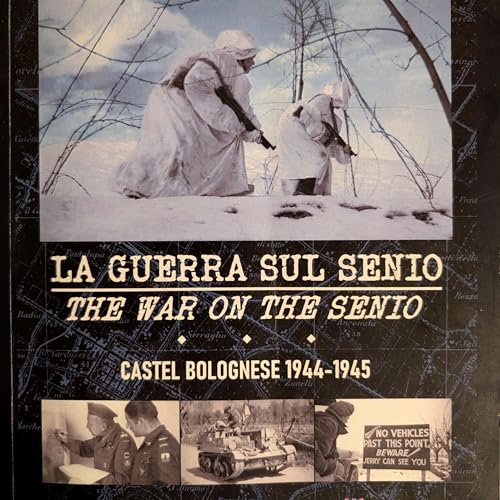
    From an early age 34-year-old Marco Dalmonte accompanied his father on field trips combing the Adriatic coastal plain and Apennine mountains searching for WWII artifacts and even body parts of soldiers that remained unidentified decades after the Allied Armies engaged in the Gothic Line Offensive. Since that time, Dalmonte's family has accumulated a massive collection of abandoned Army surplus. As he grew older Marco Dalmonte transitioned from combing the old battlefield sites to exploring WWII film archives as well as internet platforms where vintage film and photos are traded. As a result, he gathered a collection of original film material taken primarily by the British Army but also American forces as well as German Wehrmacht. In recent years he has collated the material and engaged on a tour with film presentations customized for more than 50 towns in the Adriatic hills and the coastal plain where the British Eighth Army slogged up northeastern Italy before hitting a brick wall in the form of approximately 500,000 German troops. They were under orders from Hitler to defend at all costs the Senio River that flows from the Apennines towards the Adriatic Sea. By December of 1944 the British Eighth Army, low on arms, soldiers and, perhaps most of all, morale, reverted to WWI tactics and dug in for a four-month battle of attrition. Along a 30-kilometer stretch of the river English, Scottish, Welsh, Irish, Canadian, New Zealander, Polish, Indian soldiers along with one of the first Jewish armies since Roman times hunkered down and engaged in a fierce, daily barrage of artillery exchanges as well as regular cat-and-mouse guerrilla fighting. Today the territory is still hazardous due to unexploded ordnance. Along with his travels across the region, Dalmonte can guide you along the banks of the Senio River and recount the stalemate that makes visitors understand the agony of battle and the enduring aftermath along one of WWII's least known but decisive military fault lines.

    Afficher plus Afficher moins
    49 min
  • The Jewish Brigade on the Gothic Line: the first Jewish army since Roman times
    Oct 19 2025

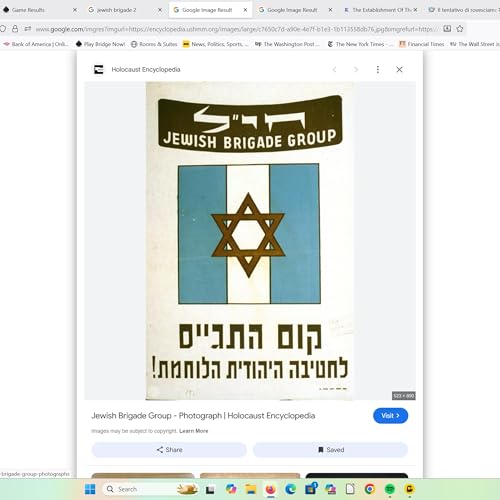
    Eighty some years before the Israeli Defense Force became one of the most powerful armies in the Middle East, it was a flelging, disparate group of volunteers that were part of the Zionist movement in what was the Palestine Mandate established by the League of Nations and governed by the United Kingdom. When WWII began after Adolph Hitler began his blitzkrieg in Poland in 1939 and Italian Dictator Mussolini joined him by attacking France and the Balkans, some members of the Zionist movement joined the British Army. Facing constant pressure from those Zionist volunteers to have their own Jewish Brigade instead of serving within British units, the British military and government originally resisted. But when in 1944 the British and American governments began to receive witness accounts and intelligence about German extermination camps slaughtering Jews that had been rounded up from all over Europe, the British acquiesced and thus the first Jewish Army since Roman times was born. It was made up of approximately 5,000 soldiers - mostly men but some women from the Palestine Mandate - and it took up positions in March of 1945 in Italy on the Adriatic sector of the Gothic Line as part of the British Eighth Army. After participating in various battles along the Senio River in the April 1945 offensive to break through German forces and capture Bologna, the Jewish Brigade was moved to northern Italy in the mountains along the borders of what is today Italy, Slovenia and Austria. From there some Jewish Brigade members began unauthorized missions using British vehicles to rescue Jewish refugees who had escaped the Holocaust and bring them to ports in Italy so they could be transported to the Palestine Mandate. The Jewish Brigade soldiers would eventually return to the Palestine mandate and their experience on the Gothic Line was instrumental when tensions between Jews and Arabs erupted in war in 1948. After Israel was established as an independent nation in 1949 and the Israeli Defense Force was formed, the Jewish Brigade veterans were a core part. This included officers, who used their military training in the British Army to continuously overcome far larger and better-equipped Arab armies, especially the Egyptian Forces, as Israel evolved. This story is told by Stefano Scaletta, a native of Italy and resident of Tel Aviv, in a recent book titled La Brigata Ibraica tra Guerra e Salvataggio dei Sopravvissutti alla Shoah (1939-1947) or in English: The Jewish Brigade between war and rescuing the Holocaust survivors (1939-1947). And as part of the podcast's Past is Present theme, Scaletta also responded to questions about whether or not Israeli government and the Israeli Defense Force's policies in Gaza and the West Bank since the April 7, 2023 attack by Hamas have been disproportionate and, as some human rights groups and others claim, amount to a genocide against the Palestinians.

    Afficher plus Afficher moins
    43 min
  • Pet therapy, comic relief, military asset: Wojtek the bear was the Polish Army's secret weapon in Italy - Part 3
    Sep 28 2025

    When you learn the story of some Polish soldiers and civilians' WWII saga including being imprisoned in the Soviet Union at the start of WWII, then escaping down through what is today central Russia, Iran, Syria, Palestine and Libya before arriving in Italy in 1943 to help Allied Forces end Nazi and Italian Fascist tyranny, it is easy to wonder how they survived such trauma. Surely, human perseverance played the biggest role. But they had a little help from a furry animal they found in the mountains of Iran. Named Wojtek - which means joyful warrior in Polish - it was a cub brown bear whose mother had been killed. Raised by the Poles during their saga across the Middle East and North Africa, he was enlisted in the Polish Army in late 1943 in order to get around British Navy rules forbidding the presence of animals on battleships that were transporting troops across the Mediterranean Sea to Italy. By that time Wojtek was far more than a morale-boosting pet. He was a brave artillery brigade asset who transported ammunition in the heat of battle. Mimicking fellow soldiers , Wojtek also adopted their fondness for beer, cigarettes and wrestling. Although Wojtek's presence was not enough to save some Polish soldiers from desperate acts upon hearing the news of the betrayal by Roosevelt and Churchill at the February 1945 Yalta Conference, he did help keep a smile on many a face during the Gothic Line Offensive and well after the end of WWII in Italy and Europe.

    For more info about this story and others in the podcast contact Joe Kirwin at the following email address: joekirwin@compuserve.com

    Afficher plus Afficher moins
    20 min
  • The long,dangerous WWII Polish diaspora to Italy, Gothic Line - Part 2; a simple twist of fate turns potential tradedy into a love story for a Jewish refugee that fought in the Polish Army in Italy
    Aug 29 2025

    When Leone Singer escaped Austria and Hitler's Jewish genocide the ever changing national borders in central Europe confused a bureaucratic in the city of Trieste. As a result he issued iin 1938 an identity card that determined Leone's nationality as stateless and, most important, it omitted his Jewish heritage. As a result he was able to begin a new life in Italy. But eventually the Fascist government caught up with him and had him arrested in mid 1943 - but not as a Jew but as a stateless refugee. When Mussolini was arrested and Italy signed an armistice in September of 1943 with the Allied countries, Italian police released Leone Singer and others at the prison and told them to flee before the Nazis arrived. Leone Singer and several others escaped to a small fishing village east of Rome on the Adriatic Sea and paid a fisherman to take them over the night to the port town of Ancona where the Polish army was preparing for the Gothic Line offensive. Leone Singer joined the Polish Army. In February when the fighting against the Nazis halted along the Senio River and the devastating news of the Yalta Conference arrived Leone Singer was able to convince bureaucrats in Rome that he had residency rights thanks to the faulty info on his 1938 residency card. Working In that Rome bureaucratic office was a former partisan from the Justice and Liberty group named Fortunata Romeo. Shortly thereafter, she and Leone would fall in love and son Enrico Singer was born in 1947. Enrico would go on to become a prominent Italian journalist where he served as a foreign correspondent in different European capitals until retiring 15 years ago. He tells the family story of tragedy (his grandparents were killed in the Holocaust) as well as luck, love and now dismay as refugees are scapegoated and war is raging in Ukraine where his family descended.

    Afficher plus Afficher moins
    22 min
  • The long, dangerous WWII Polish Army diaspora to Italy, Gothic Line- Part 1
    Aug 17 2025

    The story of war and the refugees it provokes is a story as old as homo sapiens. But few are as complicated, confusing and enduring as the story of how more than 100,000 Polish soldiers ended up fighting as part of the British Eighth Army in Italy in 1944-45 , including on the Gothic Line. The saga began when Hitler invaded Poland on Sept. 1, 1939 which triggered the start of WWII. The Soviet Union followed up with a Polish invasion two weeks later after the infamous Molotov-Ribbentrop Pact between Germany and the Soviet Union went into force. The dual invasions scattered hundreds of thousands of Polish refugees throughout Europe, Asia, Africa and other parts of the world. The heroic sacrifice to get to Italy and then again onto the battlefield climaxed in April 1945 when the second Polish Army Corp liberated Bologna in the final days of the Gothic Line Offensive and WWII in Italy. However there were no spoils of victory for the Polish Army in Italy thanks to the February 1945 Yalta Conference when British Prime Minister Winston Churchill and U.S. President Franklin Roosevelt ceded Eastern Europe control to the Soviet Union and its murderous dictator Josef Stalin.

    Michel Zarychta, an historian with the Polish Institute for National Remembrance in Warsaw provides the details of the complex Polish soldier diaspora triggered by WW II and how they ended up in Italy in this 2-part series about Poland and their contribution in Italy and the Gothic Line.

    The second episode of this two-part series focuses on the story of the Jewish father of prominent Italian journalist Enrico Singer. Leone Singer escaped to Italy in 1938 from central Europe and the Nazis and then again from the Italian Fascists and joined the Polish Second Army Corp in Ancona on the Adriatic Coast of Italy as they were launching their part of the Gothic Line Offensive.

    Photo of Polish General Wladyslaw Anders courtesy of Polish Institute for National Remembrance photographic archives.

    Afficher plus Afficher moins
    45 min