Épisodes

  • Camille Saint-Saens, Composer VV033
    Feb 26 2026

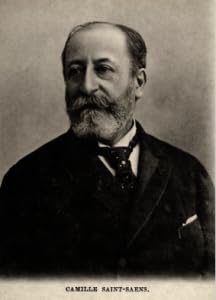
    Today ON VINYL VIBRATIONS I FEATURE THE MUSIC OF the MULTI-TALENTED, Camille Saint-Saens.

    M1 Saint-Saens: Symphony No.1 in E Flat, Op 2, III Adagio, (Saint-Saens 1853), Capitol Records/Angel, 1973 (10:00)

    M2 SAINT-SAENS: Symphony No.2 in A Minor, Op 55, II Adagio, (Saint-Saens 1859), Capitol Records/Angel, 1973 (3:59)

    M3 Symphony No.2 in A Minor, Op 55, IV Prestissimo, (Saint-Saens 1859), Capitol Records/Angel, 1973 (7:19)

    M4 Saint-Saens: Symphony No.3 in C Minor Op 78 (Organ Symphony), Philadelphia Orchestra, I Allegro Moderato, Poco adagio, (Saint-Saens 1886) Columbia Records, 1963 (9:00)

    M5 Saint-Saens: Symphony No.3 in C Minor Op 78 (Organ Symphony), Philadelphia Orchestra, II Maestoso, Allegro, (Saint-Saens 1886) Columbia Records, 1963 (7:20)

    M6 The Swan – The Carnival of the Animals XIII, (Saint-Saens 1886), Silhouettes -Virgil Fox/Organ” Capitol Records, 1960 (2:39)

    Saint-Saens lived from 1835 to 1921, and was born in PARIS. He was a composer, organist, conductor and pianist of the Romantic Era, that’s music that was featured throughout the 19th century. He was a musical prodigy, of course. He had perfect pitch. A grand aunt taught him some piano basics at three, and he was a music pupil at the age of 7. He gave informal performances at the age of 5, and his public debut was at age 10 performing the music of Mozart and Beethoven. He and studied at the Paris Conservatoire starting at age 13 to age 18. His first “job” was a ORGANIST at the Saint Merri Church – 26,000 parishioners. That sounds like a typical trajectory for a young musical prodigy.

    But, unlike other music students, Saint-Saens had a broad focus. He was a multi-tracker of the day, with varying and distinguished interests such as the study of Latin, Greek, Divinity and Mathematics. He was talented amateur Astronomer throughout his adult life.

    In today’s podcast I review portions of 4 SAINT-SAENS COMPOSITIONS, pieces composed between 1853 and 1886, or when Saint-Saens was from the age of 17 to 50.

    We will hear 6 movements from 4 works – those 4 works are

    1. Symphony No. 1
    2. Symphony No. 2
    3. Symphony No. 3
    4. Carnival of the Animals
    Afficher plus Afficher moins
    59 min
  • JEAN-LUC PONTY – VIOLIN VV032
    Feb 16 2026

    M1 “Idiot Bastard Son”, King Kong Jean-Luc Ponty Plays the Music of Frank Zappa, (Frank Zappa) World Pacific Jazz Records, 1970 (4:00).

    M2 “Twenty Small Cigars”, King Kong Jean-Luc Ponty Plays the Music of Frank Zappa, (Frank Zappa) World Pacific Jazz Records, 1970 (5:35).

    M3 “Bowing-Bowing”, Jean Luc Ponty-Stephane Grappelli (Jean-Luc Ponty), Inner City Records, 1976, recorded 1973, (6:28)

    M4 “Valerie”, Jean-Luc Ponty-Stephane Grappelli (Jean-Luc Ponty), Inner City Records, 1976 (7:00)

    M5 “Upon The Wings Of Music”, Upon The Wings of Music, (Jean-Luc Ponty), Atlantic Recording/Warner Communications, (5:24).

    M6 “Now I Know”, Upon The Wings of Music, (Jean-Luc Ponty), Atlantic Recording/Warner Communications, (4:25)

    WELCOME TO THIS EPISODE OF VINYL VIBRATIONS – musical exploration into sounds and grooves from artists whose works are produced onto vinyl records. The Vinyl Record has stood the test of time- – Vinyl is durable and delivers stunning sound. With Vinyl Records, we capture a rich period in music history including pop, rock, jazz, and classical genres. In each show I explore a topic in the artist’s music that makes their work unique and timeless. From these podcasts, the actual vinyl LPs played in this show go back to the 1950s – I am enjoying these discs some 70+ years after their production date. Tangible music, always available great quality. … I’m your host, Brian Frederick. WELCOME to this episode of Vinyl … Vibrations.

    ABOUT TODAY’S PROGRAM

    ABOUT THE ARTIST

    Today our featured artist is Jean-Luc Ponty – He is a French JAZZ-ROCK and JAZZ FUSION violinist and composer, born in 1942. Ponty graduated from Conservatoire National Supérieur de Musique de Paris with the PREMIER PRIX the first prize, a great accomplishment. Then he was hired by Orchestra Lamoureux. He also had a side job playing in a college jazz band and he evolved and developed a jazz interest. In his 20’s, Ponty went on to play at jazz clubs in Paris as the “JAZZ FIDDLE” role. Ponty was at the right time and the right place. In 1965, the VIOLIN did not have a place in the jazz world or in the jazz sound. Ponty has a unique sound, and he has made a huge impact in JAZZ-ROCK and in JAZZ FUSION. (pause)

    One characteristic of Ponty’s style is his spared use of vibrato. His style favors powerful long notes, with just a trace of vibrato.. Another characteristic is that he plays the electric violin, and thirdly, he uses effects processing. He is truly a modern and pioneering violinist with his jazz and fusion roots starting in the 1960s.

    In the1970’s he collaborated as sideman with FRANK ZAPPA- and with CHICK COREA- and with the MAHAVISHNU ORCHESTRA- resulting in 18 sideman records between those three groups. Before that PONTY had many recording accomplishments – with 8 recordings as LEADER going back to 1964 when he released his premier record [JAZZ LONG PLAYING] In 1967 he played at the MONTEREY JAZZ FESTIVAL, and this landed him a recording contract with the WORLD PACIFIC label. In 1970, he was working with Frank Zappa on the KING KONG album, and working with Elton John on the HONKY CHATEAU album.

    I was lucky and thrilled to see PONTY live in 1972 at the BROWN SHOE, a bar in the Chicago Old Town neighborhood. He played an electric violin, and had floor pedals with basic effects, and played a mind-boggling 45-minute set of ROCK FUSION music. That was during his MAHAVISHNU-ZAPPA-COREA days. I had my proof, he was the real thing.

    And now, let’s go into the music of Jean Luc Ponty.

    In today’s podcast I review three records of Jean Luc Ponty AS LEADER, his early years, 1970 to 1975.

    1. King Kong Jean-Luc Ponty Plays the Music of Frank Zappa 1970
    2. Jean-Luc Ponty-Stephane Grappelli 1973
    3. Upon The Wings of Music 1975

    Afficher plus Afficher moins
    51 min
  • Johanne Sebastian Bach - the Clavier - VV-031
    Feb 5 2026
    SONGS in this podcast episode: M1 NUN KOMM DER HEIDEN HEILAND, JS BACH, 1714, BWV 61 (5:21) M2 TOCCATA & FUGUE in C MAJOR M.2 ADAGIO, 1710-1717, BWV 564 (4:20). M3 TWO-PART INVENTION in F MAJOR, JS BACH, 1720-1723 (0:40). M4 TWO-PART INVENTION in B-FLAT MAJOR, JS BACH, 1720-1723 (1:30) M5 TWO-PART INVENTION in D MINOR, JS BACH, 1720-1723, (0:55). M6 PRELUDE & FUGUE No. 5 “Le Clavier Bien Tempere” D-Major, JS BACH, 1722, BWV 850 (3:06). M7 JESU, JOY OF MAN’S DESIRING, JS BACH, 1723, BWV 147 (2:56) M8 CHORALE PRELUDE “WACHET AUF”, JS BACH, 1731, BWV 140 (3:37) PROGRAM NOTES Johann Sebastian Bach was a German composer and organist from the late Baroque period. He was born in Eisenach, in what is now central Germany. Bach lived from 1685 to 1750, The Baroque period was a 150-year period in music, dating from 1600 to 1750. Baroque music is Western Classical Music that followed the Renaissance period. Baroque music features drama, ornamentation, major and minor tones, and was presented in new ways – – like the Opera, Concerto, and Sonata, Baroque composers included BACH, HANDEL, VIVALDI. M9 AIR ON A G-STRING, JS BACH, 1730, BWV 1068 (2:27). Bach probably used the CLAVICHORD to compose most of his music. The Clavichord is small, lightweight and would not disturb people. The clavichord was very temperamental, because it required tuning before each play, just like a violin or guitar. The keyboard instruments of the day were referred to as a general category: the “KLAVIER”….these included HARPSICHORD, CLAVICHORD, ORGAN and PIANOFORTE. Bach’s favorite KLAVIER instrument was the LAUTENWERK or LUTE HARPSICHORD with animal gut strings. The writing of music was in support of GOD and KINGS. Over time, Baroque Music evolved into what is today known as the modern Orchestra. Bach was a prolific composer, writing hundreds of pieces for solo instruments, particularly the organ. He also wrote pieces for orchestra and choir. Bach is MOST known for writing two or more melodies or voices against each other. Also called point against point, or, Counterpoint. Bit Bucket A BWV catalog number is a unique identifier for musical works composed by Johann Sebastian Bach, standing for Bach-Werke-Verzeichnis (Bach Works Catalogue). Today I will present 9 compositions, dating from 1710 to 1731, during the time Bach was about age 25 to 45. M1 TOCCATA & FUGUE in C MAJOR M.2 ADAGIO, 1710-1717, BWV 564 (4:20) Our first piece — TOCATA & FUGUE in C MAJOR , the 2nd movement (ADAGIO). an ORGAN COMPOSITION. It is taken from a 1959 album of BACH ORGAN WORKS . The movement is called ADAGIO ….which indicates “At Ease”, or “Slow and Stately”. Tempo is only 66-76 BPM. like the resting heart rate for many people. Great liner notes. HERE IS AN excerpt from the liner notes on that album – – QUOTE “OUR BACH” said the obituary notice, “was the greatest organ and clavier player that ever lived”. Though it may seem strange to us now, Bach’s genius during his life was recognized only as a master of the organ—not as a composer. It was actually over a hundred years after his death that his works revealed him as a unique and mighty composer. His reputation as an organist brought many invitations to test new organs and advise on the construction of them. UNQUOTE As with most of his organ works , there is no autograph or manuscript score from Bach, his organ work manuscript copies are lost. This song has a CONCERTO style and rhythm. We will hear the 2nd or ADAGIO movement. . It is all very calm and beautiful and pastoral and serene…until Bach pulls out all the stops in the last minute of this ADAGIO movement. He is really rocking the walls and windows of that church. Without any further adieu, here is TOCATA & FUGUE in C MAJOR , the 2nd movement (ADAGIO). PLAY M2 SHOW PLUG – DON’T TOUCH THAT DIAL ! That was…M2 MUSICAL CREDIT: This Bach organ work was recorded on the Luneburg Organ at St. Johanniskirche, in the town of Luneburg, in northern Germany, the organist is Professor Michael Schneider. This LP was produced and released on the SOMERSET label here in the US in 1959 The album title is BACH The Majesty of the Luneburger Organ. M2 NUN KOMM DER HEIDEN HEILAND, JS BACH, 1714, BWV 61 (5:21) Our next piece is the most famous church cantata written in 1714 for THE FIRST SUNDAY IN ADVENT. NUN KOMM DER HEIDEN HEILAND or in English “NOW COME, SAVIOR OF THE HEATHANS” A HEATHAN is a person with no religion, i.e., a PAGAN. In this chorale, Jesus is asked to … come and save the pagans. In 1714, Bach would have been 29 years of age. It turns out that this song goes back almost two centuries before BACH’s time. It’s based on a LUTERAN CHORALE with words written by Martin Luther for the 1523 first Advent Sunday. For centuries, this was the first hymn for the first Sunday of ADVENT. What I will play next is an arrangement for as modern symphony orchestra (...
    Afficher plus Afficher moins
    47 min
  • Fats Waller Solo Performances VV030
    Nov 7 2024
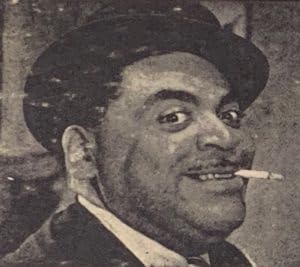
    VV-030 PROGRAM LIST M1 Squeeze Me (Fats Waller) Rec. 2/14/1926, FATS WALLER EARLY UNDISCOVERED SOLOS, Riverside Records RLP 12-103, 1955 (2:55)M2 Handful of Keys (Fats Waller) Rec. 3/1/1929, HANDFUL OF KEYS, FATS WALLER AND HIS RHYTHM, RCA Victor, LPM-1502, 1957 (2:45)M3 Ain’t Misbehavin’ (Fats Waller, Harry Brooks) Rec. 8/2/1929, AIN’T MISBEHAVIN’, FATS WALLER AND HIS RHYTHM, RCA Victor LPM-1246, 1956 (3:00)M4 Tanglefoot (Fats Waller) Rec. 8/24/1929, THE RAREST FATS WALLER, Volume 1, RFW-1, 1955. (3:10)M5 Honeysuckle Rose (Fats Waller) Rec 5/13/1941, AIN’T MISBEHAVIN’, FATS WALLER AND HIS RHYTHM, RCA Victor LPM-1246, 1956 (3:21)M6 Bouncin’ on a V-Disc (Fats Waller) Rec. 9/23/1943, FATS WALLER PLAYS, SINGS AND TALKS, Jazz Treasury JT-1001, 1956 (4:46) Background songs for this episode: M7 Please Take Me Out of Jail (Fats Waller) Rec. 12/1/1927, THE RAREST FATS WALLER, Volume 1, RFW-1, 1955.M8 Sometimes I Feel Like a Motherless Child (Fats Waller) Rec. 9/23/1943, FATS WALLER PLAYS, SINGS AND TALKS, Jazz Treasury JT-1001, 1956 ABOUT THE ARTIST Today’s show features the LATE GREAT Thomas Wright Waller, a jazz pianist and organist, composer and singer, born in New York City in 1904 The 7th of 11 children, his mother was a musician, and his father was a trucker and pastor in NYC. Fats started playing piano when he was 6. He played the organ at his father’s church at age 10. PAUSE He was home-schooled early-on by his mother and worked in a grocery store. He quit high school after just one semester at age 15 to work as an organist at the Lincoln Theater in Harlem. PAUSE At the Lincoln Theater, he earned $32 a week. That was 1929. He became known as “Fats Waller” because he was big — both in body and in mind. PAUSE Fats Waller laid some of the building blocks for what is NOW ‘modern jazz piano’. He popularized the use of The stride piano style, which is widely used by jazz pianists today. He toured internationally and two of his biggest hits were Ain’t Misbehavin’ and Honeysuckle Rose. PAUSE You are listening to Sometimes I Feel Like a Motherless Child by Fats Waller) Recorded back in 1943.PAUSE Waller copyrighted over 400 songs. He probably composed many more, but, when he was in financial difficulty, he would sell songs to other writers and performers, who would not acknowledge the real composer, claiming the songs as their own. Today’s podcast features Fats Waller and a few of his SOLO piano and organ compositions that were recorded between the years 1926 and 1943, or from the age of 22 to 39. Some of these songs are not available today, except where they are rediscovered – – – on my old and treasured Fats Waller record collection! SHOW PLUG – SHOW PLUG – DON’T TOUCH THAT DIAL ! ! BIT BUCKET Waller is also credited with his composition and performance work in Broadway Musicals. Waller is perhaps the FIRST BLACK composer to write the score and perform for a mostly all-white show on Broadway. That was the 1943 Broadway musical EARLY TO BED, produced by Richard Kollmar – the Broadway Flyer for EARLY TO BED reads “Music by Thomas (“Fats”) Waller”. . M1 M1 Squeeze Me (Thomas Waller) Rec. 2/14/1926, FATS WALLER EARLY UNDISCOVERED SOLOS, Riverside Records RLP 12-103, 1955 (2:55) Our first recording is titled “SQUEEZE ME” It’s a piano solo, and the composer and performer is Thomas Waller.He is not billed as “Fats” Waller yet, as he is not that unusually large at the young age of 22.This song SQUEEZE ME was recorded for production of piano rolls in 1926, making this among Waller’s EARLIEST recordings. Waller recorded his piano solos for the production of Piano Rolls between 1926 and 1927.These rolls operate on player pianos. Insert the roll, and the piano plays the song.PAUSEThe player piano is a specialty item, affordable by the wealthy, and not a great way to release new music to the masses. Decades later, in 1955, Riverside Records discovered these and many other piano rolls, and realized they contained a treasure trove of long-lost songs, including songs from Jazz great Thomas “Fats” Waller. Riverside tracked down the manufacturer of the rolls, “QRS” founded in 1900, located in NYC.PAUSERiverside Records secured many piano rolls, and released several LP records in the 1950s.This song SQUEEZE ME is one of a dozen that Fats Waller recorded in 1926. The music is really alive. Waller shows remarkable skill as a jazz pianist.You can hear the stride piano on the left hand. Play SQUEEZE ME CLIP That was from SQUEEZE ME. Here’s another short example of stride piano… Play HANDFUL OF KEYS CLIP That was from A HANDFUL OF KEYS by Fats Waller.The Stride Piano is found throughout Fats Wallers catalog of songs. It is called stride because the left hand, which is the rhythm hand, is actually running or striding back and forth, left and right. The left hand is playing two parts really, with stride. It is playing the bass ...
    Afficher plus Afficher moins
    46 min
  • Stevie Wonder Instrumentals – VV029
    Sep 17 2023
    SONG LIST*M1 How Can You Believe (Stevie Wonder) Eivets Rednow, Motown Records LP 1968 (3:10)M2 Which Way the Wind (Stevie Wonder) Eivets Rednow, Motown Records LP 1968 (2:40)M3 Contusion (Stevie Wonder) Songs in the Key of Life, Motown Records 2LP, 1976 (3:45)M4 Easy Goin Evenin’ / My Mama’s Call (Stevie Wonder) A Something’s Extra for Songs in the Key of Life, Motown Records 2LP, 1976 (3:58)M5 The First Garden (Stevie Wonder) Journey Through the Secret Life of Plants, Motown Records 2LP, 1979 (2:32)M6 Voyage to India (Stevie Wonder) Journey Through the Secret Life of Plants, Motown Records 2LP, 1979 (6:23)M7 Tree (Stevie Wonder) Journey Through the Secret Life of Plants, Motown Records 2LP, 1979 (5:55) Today’s Vinyl Vibrations episode features Stevie Wonder in his early years, and more specifically his Instrumental compositions. Stevie Wonder is an international pop icon, a singer-songwriter, a record producer, AND a multi-instrumental musician (for example…harmonica, keyboards, drums, bass guitar, guitar, and an incredibly talented singer. Wonder is an innovator – he pioneered the use of the early analog synthesizer during the 1970s. His albums are individual works of art, carefully crafted and thematic. Stevie Wonder’s influence extends across a range of genres that include R&B, pop, soul, gospel, funk, and jazz. He has often been referred to as a “ONE MAN BAND” because of his broad range of talents in music composition, music production and most of all – – music performance. Born Stevland Hardaway Morris, Stevie Wonder was born on May 13, 1950, in Saginaw, Michigan. That’s near Saginaw Bay off Lake Huron, about 100 miles northwest of Detroit. In the 1950s, Saginaw County had several General Motors plants and many companies building parts that went down to the big DETROIT assembly plants. It was a booming economic period for the entire US auto industry. It was a difficult birth. Wonder was born six weeks premature and placed in an oxygen-rich incubator, which resulted in retinopathy of prematurity – causing his blindness. When he was 4, his Mother divorced with his father, and along with her 3 kids, moved 100 miles down the road to bustling Detroit…. home of MOTOWN RECORDS. At age 8, Steveland attended the Whitestone Baptist Church on Detroit’s west side. There, he developed his musical talents — playing piano, drums and harmonica — and he also sang in the choir and there became a soloist. Stevie was quickly recognized as a prodigy.. He further developed his singing talent with a friend …and they performed as Stevie and John on street corners. When he was just 11, this musical prodigy was discovered by Ronnie White of the MIRACLES, and that in-turn resulted in a meeting with Motown Records founder Barry Gordy, who signed him with the TAMLA label of Motown Records. At that time, he was given the professional name Little Stevie Wonder. That was 1961 and Wonder had a 5-year rolling contract with royalties that were to be held in trust until he was 21. The weekly pay for this young artist was meager – a stipend of just $2.50 a week plus a tutor for Stevie when he was on tour. That $2.50 weekly stipend would be worth about $25 a week today. At age 12 he enrolled in Michigan School for the Blind in Lansing, Michigan. BIT BUCKET Saginaw is also where I was born, just 2 years after Stevie. My family also moved from Saginaw to Detroit, around same year as Stevie – 1954. ­­ M1 How Can You Believe (Stevie Wonder) Eivets Rednow, Motown Records LP 1968 (3:10) PLAY BACKGROUND – HOW CAN YOU BELIEVE To start today’s podcast, I feature the album titled Eivets Rednow. There is some humor in the album title. Eivets Rednow is Stevie Wonder spelled backwards, and on the first release of the album, Stevie’s name did not appear on the cover. The album is also UNIQUE for Stevie as it is an INSTRUMENTAL album. No lyrics. No poetry. This an easy listening POP and R&B instrumental album, released on the Gordy Records label in 1968. Gordy was one of the four MOTOWN labels – those labels were Gordy, Tamla, Motown, and Soul. The release I have was released on the MOTOWN LABEL and adds “How do you spell Stevie Wonder backwards?” …on the cover. Stevie was only 18 at the time of this release, although this is Wonder’s ninth studio album! Prolific. Boundless energy. Featured on this song is the skillful harmonica melody. Wonder plays the harmonica, drums, piano, but most notably, his harmonica style is unique, very melodic, rich with feeling, and unmistakably Stevie Wonder, listening to it 55 years later. Have a listen to this wonderful song and Stevie Wonder’s distinctive harmonica line. And Now How Can You Believe PLAY M1 Don’t Touch That Dial that was M1 M1 How Can You Believe (Stevie Wonder) Eivets Rednow, LP 1968 a short 3:10 in length, a pop tune. Song credits Credits go to Stevie Wonder, music composer arranger and producer Stevie Wonder ...
    Afficher plus Afficher moins
    52 min
  • Pat Metheny – Guitarist VV028
    Aug 22 2023
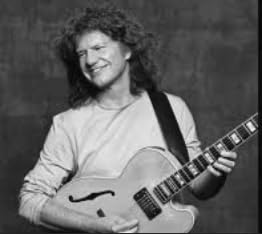
    SONG LIST* M1 Bright Size Life (Pat Metheny), Bright Size Life, Pat Metheny, Released ECM, LP 1976, (4:55) M2 Sirabhorn (Pat Metheny), Bright Size Life, Pat Metheny, Released ECM, LP 1976, (5:27) M3 Unity Village (Pat Metheny), Bright Size Life, Pat Metheny, Released ECM, LP 1976, (3:38) M4 Unquity Road (Pat Metheny), Bright Size Life, Pat Metheny, Released ECM, LP 1976, (3:36) M5 So May It Secretly Begin (Pat Metheny), Still Life, Pat Metheny Group, Released Geffen Records, LP 1987, (6:24) M6 Last Train Home (Pat Metheny), Still Life, Pat Metheny Group, Released Geffen Records, LP 1987, (5:38) Pat Metheny is an American guitarist and composer. He has worked as a soloist, in duets and small jazz ensembles, and, for decades, with the Pat Metheny Group. His musical styles include Jazz Fusion, Jazz (both progressive and contemporary jazz) …..and also Latin Jazz. He was born in Lee’s Summit, Missouri in 1954. Lee’s Summit is a suburb on the southeast side of Kansas City. His main influences have been other musicians, his musical family and the British Invasion. Musicians influencing Metheny include trumpeter Miles Davis, Gary Burton on vibes, jazz guitarists Jim Hall and Wes Montgomery and Jazz Sax players John Coltrane and Ornette Coleman. PAUSEA major foundational influence for Metheny is his musical family. His father played trumpet, his brother Mike Metheny plays jazz trumpet, and Pat’s maternal grandfather was a professional trumpeter. Brother Mike taught Pat how to play the trumpet, and so trumpet is actually Pat Metheny’s first Musicians in the family. Metheny attributes his early success to the local musical environment he was brought up in – the years 1964-1972, in Kansas City. Much of this is described in his biography titled BENEATH MISSOURI SKIES. Seems like Metheny is destined to become a great trumpeter, with all that musical environment…. PAUSE.. there was a bump in the road at age 10. The BRITISH INVASION was in full force. Metheny saw the Beatles perform on TV in 1964, probably the Ed Sullivan Show, because that year the Beatles appeared. The Beatles are what inspired Metheny to defect from Trumpet to Guitar. Metheny persuaded his father to buy him a guitar for his 12th birthday. That first guitar was a Gibson ES-140. PAUSE That’s a hollow-body guitar, built in ¾ scale for young players and small hands. It’s a scale model of the Gibson ES-175 hollow body. Metheny soon got bigger hands and acquired a Gibson ES-175 …and that guitar is featured on his early albums like those in this podcast episode… Metheny started playing in pizza parlors at age fourteen (that’s 1968). At age 15, Metheny won a scholarship from Down Beat Magazine to attend a jazz camp (1969). That camp led to a meeting with Jazz guitarist Jim Hall, and bassist Ron Carter. So, by the time he graduated from high school (1972) he was the first-call guitarist for Kansas City jazz clubs, private clubs, and jazz festivals. Metheny had A LOT of support from his musical environment. Even though he switched from trumpet to guitar. Metheny briefly attended college at U of Miami in Florida, but quickly realized after practicing on guitar for years all day long… he was unprepared for a college program … He realized then he was first and foremost, a serious guitarist and composer. Metheny moved to Boston to teach at Berklee College of Music at the age of 19, where he met Jazz Vibraphonist Gary Burton. Teaching Jazz Theory and Performance was in demand. BIT BUCKET and for those not familiar, the ES-175 is sought-after by jazz country and rock guitarists – – – these vintage guitars today sell for $3,000 to $25,000. Back in the day, made in Kalamazoo MI. How about that for your first guitar? I am jealous, my first guitar was a Kay (named after John Kay) and it was … a very basic and cheap and crude electric starter guitar. Metheny, on the other hand, got a wonderful instrument, because There have been many collaborations with Metheny and Burton over the decades since then. that guitar was retired 20 years later- – in 1995. ­­ M1 Bright Size Life (Pat Metheny), Bright Size Life, Pat Metheny, Released ECM, LP 1976, (4:55) Metheny released his debut album, Bright Size Life (ECM, 1976), with Jaco Pastorius on electric bass guitar and Bob Moses on drums. This is a studio album, recorded in Ludwigsburg Germany. It is amazing to think that this is a debut album. Released in 1976, BRIGHT SIZE LIFE is still fresh today. In this title song, Metheny begins his work in a signature way, his entrance is unmistakable with a quick ascending line. Many of his solos begin with the signature Metheny sound….and Pastorious presents an equally inmistakable bass guitar part. Here’s that fabulous BRIGHT SIZE LIFE INTRO SAMPLE Play that intro ascending line with Jaco solid bass line in Bright Size Life Pastorius and Metheny are weaving together guitar and bass lines in this song. The bass is so ...
    Afficher plus Afficher moins
    54 min
  • Stephen Stills Singer Songwriter VV_027
    Jul 27 2023
    TODAY’S PROGRAM…… M1 For What It’s Worth (Stephen Stills), Buffalo Springfield, Buffalo Springfield, Released ATCO, LP 1969 (3:00)… M2 Bluebird (Stephen Stills) Buffalo Springfield Again, Released ATCO, LP 1967, (4:28)… M3 Suite: Judy Blue Eyes (Stephen Stills), Just Roll Tape, Recorded 1968, Released Eyewall, LP 2007 (6:33)…. M4 Wooden Ships (Stills, Kantner, Crosby) Just Roll Tape, Recorded 1968, Released Eyewall, LP 2007 (2:26)… M5 Carry On (Stephen Stills) Déjà Vu, Crosby Stills Nash & Young Taylor & Reeves, Atlantic LP 1970 (4:25)… M6 4+20 (Stephen Stills), Déjà Vu, Crosby Stills Nash & Young Taylor & Reeves, Atlantic LP 1970 (1:55)… M7 Sugar Babe (Stephen Stills), Stephen Stills 2, Atlantic Records LP, 1971 (4:04). M8 Change Partners, (Stephen Stills), Stephen Stills 2, Atlantic Records LP, 1971 (3:14)… Stephen Stills is an American musician, singer, and songwriter best known for his work with Buffalo SpringfieldCrosby, Stills & NashManassas …and as a SOLO ARTIST. He was born in 1945 in DALLAS TEXAS. He is 78 at the time of this podcast’s production. He is still active. He plays guitar, bass guitar, keyboards… he’s not only a singer and songwriter… also an arranger and producer. Stills has had a long and prosperous career. Starting out in 1963, he has given us some 60 years of songwriting and musical performance. Today I FEATURE original compositions by singer songwriter Stephen Stills. From my collection we will hear 5 albums: Buffalo Springfield album and For What It’s Worth,Buffalo Springfield Again album with BluebirdStephen Stills’ demo tape album JUST ROLL TAPE with Suite: Judy Blue Eyes, and Wooden ShipsCrosby Stills Nash and Young’s DÉJÀ VU album with 4+20 and Carry OnAnd finally, the STEPHEN STILLS 2 solo album with Sugar Babe and Change Partners. We are now listening to ROCK AND ROLL WOMAN from BUFFALO SPRINGFIELD AGAIN. These selections were each recorded between 1966 and 1971. Just a small time slice of this singer/songwriter’s career. Stills was between the ages of 21 and 26. These works are important because these songs are each hand crafted by Stills. I also wanted to showcase his array of talents like multi-instrumental musician, arranger, and producer. In addition to being a successful singer/songwriter, who work has had a large musical impact. Much more for future podcasts. M1 For What It’s Worth (Stephen Stills), Buffalo Springfield, Buffalo Springfield, Released ATCO, LP 1969 (3:00) Stephen Stills’ first HIT recording was FOR WHAT IT’S WORTH (or “Stop, Hey, What’s That Sound”). It was 1966. Stills was just 21 years old. This was his first big break. He had written several songs, by now.. Not only did he have an inventory of original songs, he had helped to form a new band. Along with two other singer-songwriters, Richie Furay and Neil Young… they formed Buffalo Springfield out in Los Angeles. Neil Young came from Winnipeg Alberta, and Furay and Stills left a New York City gig with the Au Go-Go Singers, a 9-member group performing at the Café Au Go-Go. Two other Canadians — bassist Bruce Palmer and rock drummer Dewey Martin were added — 5 band members in all. 2 Americans, 3 Canadians. “For What It’s Worth” became one of the most recognizable songs of the 1960s. It was first released as a 45 RPM single in late 1966. In t1967, For What It’s Worth featured on the first Buffalo Springfield LP. The lyrics in FOR WHAT ITS WORTH are all about a confrontation Stills had with LAPD Riot Police in Los Angeles’ earlier that year. There had been many summer nights of rowdy crowds of kids causing late-night traffic issues in the Sunset Strip neighborhood. LA responded by announcing a curfew of 10PM. As a result, there were reported to have been over 1,000 persons out on the Strip protesting and trouble broke out. There were clashes between police and young people. Peter Fonda was handcuffed by police. Jack Nicholson was also on the scene. Whisky a Go-Go was a nightclub on the Sunset Strip, where many great bands have performed. At that time, in 1966, their house band was Buffalo Springfield. Because of continuing issues of unrest, some clubs on the Sunset Strip were forced to close their doors for weeks. It was because of these civil disturbances on Sunset Strip that Stills recorded “For What It’s Worth”. And now, For What It’s Worth (Stephen Stills) Play M1 Don’t Touch That Dial That was M1 FOR WHAT ITS WORTH – STOP HEY WHATS THAT SOUND Credits Stephen Stills – Guitar and Vocals and songwriterRichie Furay – Guitar and vocalsDewey Martin – DrumsBruce Palmer – BassRecord Company ATCO, a division of Atlantic Records “For What It’s Worth” became a top ten hit, reaching No. 7 on the US Billboard 100 in Spring of 1967. BIT BUCKET I was a very impressionable age 14 at the time of this song’s release… the song chorus lyrics were very impactful on me...
    Afficher plus Afficher moins
    59 min
  • Wendy Carlos Electronic Composer VV_026
    May 12 2023
    Wendy Carlos Electronic Composer VV_026 SONG LIST*M1 Air on a G String (JS Bach 1730, W Carlos 1968), Switched-On Bach, Columbia/CBS, 1968 (2:27) · Wendy Carlos – Moog Synthesizer · Benjamin Folkman, AssistanceM2 Two Part Invention in F-Major,(JS Bach 1723, W Carlos, 1968), Switched-On Bach, Columbia/CBS, 1968 (0:40) · Wendy Carlos – Moog Synthesizer · Benjamin Folkman, AssistanceM3 Jesu, Joy of Man’s Desiring ,(JS Bach 1723, W Carlos 1968), Switched-On Bach, Columbia/CBS, 1968 (2:56) · Wendy Carlos – Moog Synthesizer · Benjamin Folkman, AssistanceM4 Chorale Prelude “Wachet Auf”, (JS Bach 1731, W Carlos 1968), Switched-On Bach, Columbia/CBS, 1968 (3:37) · Wendy Carlos – Moog Synthesizer · Benjamin Folkman, AssistanceM5 Brandenburg Concerto #3 in G Major 2nd Movement, (JS Bach 1723, W Carlos 1968), Switched-On Bach, Columbia/CBS, 1968 (2:50) · Wendy Carlos – Moog Synthesizer · Benjamin Folkman, AssistanceM6 Brandenburg Concerto #3 in G Major 3rd Movement, (JS Bach 1723, W Carlos 1968), Switched-On Bach, Columbia/CBS, 1968 (5:05) · Wendy Carlos – Moog Synthesizer · Benjamin Folkman, AssistanceM7 Title Music from A Clockwork Orange), (Purcell, 1695, W Carlos, R Elkind 1972) , Columbia/CBS, 1972 (2:21) · Wendy Carlos – Moog Synthesizer · Rachel Elkind ProducerM8 Theme from A Clockwork Orange (Beethoviana), (W Carlos, R Elkind 1972) , Columbia/CBS, 1972 (1:44) · Wendy Carlos – Moog Synthesizer · Rachel Elkind Producer M9 Timesteps (Excerpt), (W. Carlos 1970, Tempi Music BMI), Stanley Kubrick’s A Clockwork Orange, Warner Bros Records, 1972 (4:13) · Wendy Carlos – Moog Synthesizer · Rachel Elkind ProducerM10 March from A Clockwork Orange/Ninth Symphony, 4th Movement, (L v Beethoven 1824, W Carlos, R Elkind 1970) Stanley Kubrick’s A Clockwork Orange, Warner Bros Records, 1972 (7:00) · Wendy Carlos – Moog Synthesizer · Rachel Elkind Producer and Articulations Today’s Vinyl Vibrations podcast features the artistry of Wendy Carlos, an American composer, arranger, and electronic musician. Wendy Carlos was born Walter Carlos in Rhode Island in November 1939. She is the first transgender recipient of a Grammy Award, her album SWITCHED-ON BACH won three Grammys in 1970. Later, in 2005 she was the recipient of the SEAMUS Lifetime Achievement Award for her contribution to the art and craft of electro-acoustic music. Wendy Carlos is best known for her electronic music such as SWITCHED-ON BACH…and film scores such as A CLOCKWORK ORANGE, THE SHINING and TRON. Her studies of music composition at Columbia University in New York City in the 1960s led to her working with electronic musicians and technicians where she helped in the development of the MOOG SYNTHESIZER. This was the first commercially available keyboard instrument from Robert Moog. During her time at Columbia, Carlos ordered components of a custom designed synthesizer from Robert Moog, and she collaborated with Moog on the design of that early instrument, which became known as the MOOG SYNTHESIZER. Some of the modules included a touch-sensitive keyboard, a portamento control, which slides notes in the scale between one note and the next, a filter bank, and a 49-oscillator polyphonic generator bank that could create chords and arpeggios, arpeggios are the individual notes of those chords played in cycles. Today, we take the synthesizer for granted. The keyboard synthesizer has become widely-available, and most keyboard musicians today, including me, use a synth keyboard such as BEHRINGER, KORG, NORD, ROLAND, YAMAHA, and yes… even the brand Carlos herself helped design with Robert Moog, the MOOG synthesizer. After getting her Masters in Music Composition from Columbia University in 1965, Carlos worked for three years at Gotham Recording Studios in New York City, to support herself. She also used her Moog Synthesizer to record jingles for TV commercials. The recording engineering job would prove to be extremely valuable just three years later as she self-recorded the entire SWITCHED-ON BACH album, which is featured in today’s podcast. In 1968, Carlos, then Walter Carlos, released her first LP, SWITCHED-ON BACH, containing several pieces written by Johann Sebastian Bach, which she arranged and recorded from her Moog Synthesizer. SWITCHED-ON BACH was released on Columbia Masterworks as part of a two-record recording contract. Carlos negotiated a good royalty arrangement, because the label really didn’t expect the album would sell many copies. Classical music rarely, if ever, achieves Gold let alone Platinum unit sales. What makes this first album fascinating is knowing that the MOOG Synthesizer was in a very early state – – – barely a usable product. …You could ...
    Afficher plus Afficher moins
    1 h et 7 min