Épisodes

  • The 1904 Olympic Marathon: Cheating, Rat Poison & Total Chaos
    Nov 3 2026

    THE 1904 OLYMPIC MARATHON: CHEATING, RAT POISON & TOTAL CHAOS

    Imagine running nearly 25 miles in 90-degree heat, choking on dust, and struggling to stay on your feet.

    Now imagine another Olympic competitor passing you in a car.

    Welcome to the 1904 Olympic Marathon.

    On August 30, 1904, 32 competitors lined up in St. Louis, Missouri, for what would become one of the most bizarre sporting events in Olympic history.

    Only 14 would finish.

    The course was brutal. The roads were dusty. Water was dangerously limited. And the organizers made decisions that would be almost unimaginable in modern Olympic competition.

    But the conditions were only the beginning.

    In this episode of the Triple T Podcast, Beard Laws and Luther investigate the unbelievable true story of the 1904 St. Louis Olympic Marathon.

    THE RUNNER WHO TOOK A CAR

    Meet Fred Lorz.

    During the marathon, Lorz stopped running and traveled part of the course in an automobile.

    Then he got out and started running again.

    He eventually crossed the finish line first.

    Was it cheating, a practical joke, or the most ridiculous transportation strategy in Olympic history?

    THE CUBAN MAIL CARRIER WHO STOPPED FOR FOOD

    Felix Carvajal traveled from Cuba to compete in the Olympics without the resources available to many other athletes.

    He reportedly ran in modified street clothes and stopped for food during the race.

    Despite everything, he finished fourth.

    THE MARATHON'S MOST DANGEROUS DECISIONS

    The race took place in extreme heat with very limited access to drinking water.

    Some competitors suffered serious medical problems, including runner William Garcia.

    And then there was Thomas Hicks.

    THE GOLD MEDALIST WHO WAS GIVEN POISON

    As Hicks struggled toward the finish line, his handlers administered a combination of egg whites, brandy, and strychnine, a poisonous substance once used as a stimulant.

    Somehow, Hicks survived the ordeal and became the Olympic marathon champion.

    The story raises an incredible question:

    Was this a remarkable display of human endurance, or one of the worst-organized athletic competitions in history?

    WHAT YOU'LL HEAR IN THIS EPISODE

    • Why the 1904 Olympics were so different from today's Games
    • How the St. Louis World's Fair influenced the event
    • The brutal conditions facing the marathon runners
    • Why competitors had so little access to water
    • The Cuban runner who stopped for food and finished fourth
    • The story of a South African runner reportedly chased by dogs
    • Fred Lorz's infamous automobile ride
    • Thomas Hicks and the dangerous substances administered during the race
    • How the Olympic marathon evolved into the event we recognize today

    From Olympic cheating scandals to questionable medical practices, this episode explores a race so outrageous that it almost sounds fictional.

    But it really happened.

    ABOUT THE TRIPLE T PODCAST

    Join Beard Laws and Luther as they explore unbelievable true stories, strange historical events, bizarre mysteries, conspiracy theories, and the moments in history that leave you asking, "Wait... WHAT?!"

    If you love weird history, unbelievable sports stories, historical mysteries, and entertaining conversations about things that actually happened, you've found your people.

    Follow the Triple T Podcast on your favorite podcast platform so you never miss another unbelievable story.

    And remember:

    If you're running a marathon and somebody offers you a ride, maybe check the rules before you get in.


    Hosted by Simplecast, an AdsWizz company. See pcm.adswizz.com for information about our collection and use of personal data for advertising.

    Afficher plus Afficher moins
    36 min
  • The Day an Entire Lake Disappeared: The Lake Peigneur Disaster
    Oct 27 2026

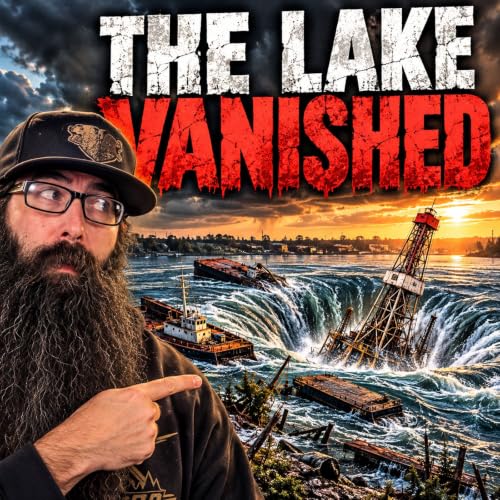
    THE DAY AN ENTIRE LAKE DISAPPEARED: THE LAKE PEIGNEUR DISASTER

    Imagine showing up to work on a perfectly normal Thursday morning, only to watch an entire lake disappear before your eyes.

    On November 20, 1980, something extraordinary happened in Louisiana.

    Lake Peigneur, a peaceful freshwater lake near New Iberia, suddenly began draining into the earth. Within hours, a massive whirlpool had swallowed an oil drilling rig, barges, trees, and portions of the surrounding shoreline.

    But the disaster was only beginning.

    Deep beneath the lake, dozens of workers were trapped in a race against time as water rushed into an enormous underground salt mine.

    Above ground, the impossible was happening.

    A canal began flowing backward. A temporary waterfall formed. Barges vanished beneath the surface.

    And somehow, despite the destruction, everyone escaped with their lives.

    HOW DOES AN ENTIRE LAKE JUST DISAPPEAR?

    In this episode of the Triple T Podcast, Beard Laws and Luther investigate the unbelievable true story of the 1980 Lake Peigneur disaster.

    Together, they explore the strange geology beneath Louisiana, the oil drilling operation that preceded the catastrophe, and the remarkable series of events that transformed an ordinary lake into one of America's most extraordinary industrial disaster sites.

    IN THIS EPISODE:

    • What happened at Lake Peigneur on November 20, 1980

    • The enormous underground salt mine beneath the lake

    • How oil drilling and salt mining operations became connected to the disaster

    • The terrifying moments before a drilling rig disappeared

    • How approximately 50 miners escaped the flooding underground

    • The giant whirlpool that swallowed barges, equipment, and shoreline

    • Why the nearby canal suddenly reversed direction

    • The incredible story of barges resurfacing after the lake refilled

    • How Lake Peigneur was permanently transformed

    • The controversy over responsibility and the investigations that followed

    • Why the absence of fatalities remains one of the most remarkable parts of the story

    A DISASTER THAT SOUNDS IMPOSSIBLE

    The Lake Peigneur disaster is a reminder that sometimes the most unbelievable stories aren't science fiction.

    They're history.

    And sometimes the most dangerous thing beneath your feet is something you never even knew was there.

    Join Beard Laws and Luther as they investigate a catastrophe involving geology, engineering, industrial mistakes, extraordinary survival, and a lake that quite literally disappeared.

    Because no matter how bad your day at work gets, at least you didn't lose an entire lake.

    ABOUT THE TRIPLE T PODCAST

    The Triple T Podcast takes you down the rabbit hole of unbelievable true stories, strange historical events, unsolved mysteries, fascinating discoveries, and the extraordinary things that make you stop and ask:

    "Wait... WHAT?!"

    Hosted by Beard Laws and Luther, the Triple T Podcast combines curiosity, humor, history, and entertaining conversations about the world's strangest stories.

    New episodes weekly.

    Presented on the Bleav Network.

    FOLLOW & SHARE

    Enjoyed this episode? Follow the Triple T Podcast on Spotify, Apple Podcasts, or your favorite podcast platform so you never miss another strange story.

    Share this episode with someone who loves unbelievable history, bizarre disasters, and real-life mysteries.

    QUESTION OF THE WEEK:

    If you had been standing beside Lake Peigneur when the water started disappearing, what would you have thought was happening?

    And who do you think should have been held responsible?

    TOPICS: Lake Peigneur, Lake Peigneur disaster, Louisiana lake disaster, 1980 industrial disaster, disappearing lake, underground salt mine, Texaco drilling accident, Louisiana history, engineering disasters, strange history, unbelievable true stories, historical mysteries, Triple T Podcast, Beard Laws, Bleav Network.


    Hosted by Simplecast, an AdsWizz company. See pcm.adswizz.com for information about our collection and use of personal data for advertising.

    Afficher plus Afficher moins
    29 min
  • Rogue Waves: The 84-Foot Monster That Changed Ocean Science
    Oct 20 2026

    Rogue Waves: The 84-Foot Monster That Changed Ocean Science

    Imagine you're aboard a ship in the middle of the ocean. The weather is rough, the waves are crashing, and suddenly something appears on the horizon that shouldn't be possible.

    A wall of water towers above everything around it.

    You can't outrun it. You can't turn around. And you might have only seconds to react.

    For centuries, sailors described terrifying encounters with enormous waves that seemed to appear without warning. Their stories were often dismissed as exaggerations, maritime folklore, or simply the imagination of frightened crews.

    Then came January 1, 1995.

    An instrument on the Draupner offshore platform in the North Sea recorded an extraordinary wave measuring approximately 84 feet from trough to crest.

    The evidence changed how scientists understood extreme ocean waves.

    This week on the Triple T Podcast, Beard Laws and AI co-host Luther Grimwood dive into the frightening reality of rogue waves and the science behind some of the ocean's most extraordinary events.

    In this episode:

    • The centuries-old sailor stories that scientists struggled to verify.
    • The 1995 Draupner wave and the incredible 84-foot measurement.
    • What actually qualifies as a rogue wave.
    • How constructive interference, crossing seas, and ocean currents can contribute to extreme waves.
    • Why rogue waves are so difficult to predict.
    • The tragic 2022 Viking Polaris cruise ship incident.
    • Whether extreme waves could help explain historical ship disappearances.
    • The Bermuda Triangle connection: real ocean science versus maritime mythology.
    • How modern research is changing what we know about the ocean.

    And, naturally, Beard Laws has a few questions about whether getting on another cruise ship is really a good idea.

    Because sometimes the most terrifying mysteries aren't supernatural.

    They're completely real.

    The Triple T Podcast explores conspiracy theories, strange mysteries, unexplained phenomena, scientific discoveries, and unbelievable true stories with Beard Laws and AI co-host Luther Grimwood.

    New episodes bring curiosity, skepticism, humor, and the occasional argument between a man with a legendary beard and his artificial intelligence co-host.

    Follow the Triple T Podcast on Spotify, Apple Podcasts, or wherever you listen.

    Have you ever experienced terrifying waves at sea? Would learning about rogue waves make you think twice about taking a cruise?

    Share your thoughts and join the conversation.

    Part of the Bleav podcast network.


    Hosted by Simplecast, an AdsWizz company. See pcm.adswizz.com for information about our collection and use of personal data for advertising.

    Afficher plus Afficher moins
    32 min
  • Project Azorian: The CIA Tried to Steal a Soviet Nuclear Submarine
    Oct 13 2026

    In 1968, Soviet submarine K-129 disappeared in the Pacific Ocean while carrying nuclear-armed ballistic missiles.

    The Soviet Union searched for it and eventually gave up.

    The United States found it.

    Then somebody inside the U.S. government asked an absolutely insane question:

    Could we steal it?

    This week on the TTT Podcast, Beard Laws and Luther Grimwood dive into Project Azorian, one of the most ambitious and bizarre intelligence operations of the Cold War.

    The CIA's plan required building the massive Hughes Glomar Explorer, creating a believable deep-sea mining cover story involving billionaire Howard Hughes, and engineering an enormous mechanical capture device nicknamed "Clementine."

    Its mission was simple to describe and nearly impossible to accomplish:

    Travel to the wreck site, lower Clementine more than three miles into the Pacific Ocean, grab part of a Soviet nuclear submarine weighing thousands of tons, and secretly bring it back to the surface without the Soviet Union figuring out what was happening.

    And somehow... they actually grabbed it.

    But getting K-129 off the ocean floor was only the beginning.

    We dig into:

    • The mysterious 1968 sinking of Soviet submarine K-129
    • How the United States located a wreck the Soviets couldn't find
    • Why the CIA desperately wanted to recover the submarine
    • Howard Hughes and one of the greatest cover stories of the Cold War
    • The incredible engineering behind the Hughes Glomar Explorer
    • "Clementine," the gigantic claw built to recover K-129
    • Soviet ships appearing during the secret recovery operation
    • What went catastrophically wrong during the lift
    • What the United States actually managed to recover
    • The six Soviet sailors found inside the wreckage
    • How a burglary helped expose the entire operation
    • Why a second recovery mission never happened
    • The origin of the famous government response: "neither confirm nor deny"
    • Whether Project Azorian should ultimately be considered a success or an extraordinarily expensive failure

    It's espionage, nuclear weapons, secret engineering, Howard Hughes and possibly the most expensive claw-machine attempt in human history.

    Because apparently during the Cold War, finding a Soviet submarine three miles beneath the Pacific wasn't enough.

    The CIA wanted to bring it home.

    This is Project Azorian.

    We'll open another file next week on the TTT Podcast.


    Hosted by Simplecast, an AdsWizz company. See pcm.adswizz.com for information about our collection and use of personal data for advertising.

    Afficher plus Afficher moins
    36 min
  • The 2,000-Year-Old Books We Can’t Open | Secrets of Herculaneum
    Oct 6 2026

    What if we discovered a 2,000-year-old book that nobody alive has ever read… but opening it could destroy the only copy?

    That's the incredible problem surrounding the Herculaneum scrolls.

    When Mount Vesuvius erupted in AD 79, the Roman city of Herculaneum was buried beneath volcanic material. Inside the Villa of the Papyri, hundreds of ancient scrolls were carbonized by the intense heat but, incredibly, survived.

    For centuries, researchers faced an impossible choice: leave the scrolls closed and preserve them, or attempt to open them and risk destroying the words inside.

    Now that may be changing.

    In this episode of the Triple T Podcast, Beard Laws and Luther dive into the lost library of Herculaneum, the disastrous early attempts to physically open its scrolls, and the remarkable technology scientists are now using to read them without ever unrolling them.

    We explore virtual unwrapping, X-ray imaging, microscopic traces left by ancient ink, machine learning, the Vesuvius Challenge, and new research that could give scientists even more ways to recover writing hidden inside carbonized papyrus.

    But the biggest question remains:

    What is still inside the unopened scrolls?

    More Greek philosophy?

    A work believed to have been lost for thousands of years?

    An ancient author whose name disappeared completely from history?

    Or maybe just a Roman guy complaining about his neighbor?

    After nearly 2,000 years, the words are still there.

    For the first time, we may finally have the technology to hear them again.

    Topics include:
    Herculaneum scrolls, Mount Vesuvius, Villa of the Papyri, ancient Rome, lost ancient books, virtual unwrapping, Vesuvius Challenge, artificial intelligence, X-ray tomography, archaeology, Philodemus, lost literature and ancient history.

    Triple T Podcast
    Hosted by Beard Laws with Luther

    New mysteries, strange history, unbelievable discoveries and rabbit holes worth opening every week.


    Hosted by Simplecast, an AdsWizz company. See pcm.adswizz.com for information about our collection and use of personal data for advertising.

    Afficher plus Afficher moins
    33 min
  • King Tut’s Tomb: New Evidence of Hidden Chambers
    Sep 29 2026

    More than 100 years after Howard Carter opened the tomb of Tutankhamun, scientists are once again asking an incredible question:

    Did we ever find the entire tomb?

    New geophysical evidence reported in September 2026 has revived the controversial theory that previously unknown corridors and chambers could exist beyond the walls of King Tut’s tomb in Egypt’s Valley of the Kings.

    And if something really is there, one theory leads to an even bigger possibility: Queen Nefertiti.

    In this episode of the Triple T Podcast, Beard Laws and Luther open the file on one of archaeology’s most fascinating modern mysteries.

    We go back to Howard Carter’s legendary 1922 discovery and examine why Tutankhamun’s unusually small tomb, known as KV62, has puzzled researchers for decades. Then we follow Egyptologist Nicholas Reeves’ 2015 theory that subtle features in the burial chamber could represent blocked doorways leading to additional rooms.

    What followed was nearly a decade of scientific whiplash.

    Early radar scans suggested something might be behind the walls. Later investigations failed to reproduce those findings. Then a major 2018 study concluded with high confidence that there were no hidden spaces immediately adjacent to the burial chamber.

    That seemed like the end of the mystery.

    Until now.

    Researchers have returned with new evidence using multiple geophysical techniques, including ground-penetrating radar and extraordinarily sensitive measurements of tiny variations in gravity. Their findings suggest there could be structures, corridors or chambers beyond the known tomb.

    One feature in particular, dubbed “Anomaly 7,” has researchers intrigued.

    So what have scientists actually detected?

    Why did earlier investigations disagree?

    Could King Tut’s tomb really be part of a much larger ancient burial complex?

    And how much evidence is there for the most tantalizing possibility of all: that the lost burial place of Queen Nefertiti could be nearby?

    There are still enormous questions between detecting an anomaly and discovering a lost royal tomb. No hidden chamber has been physically confirmed. No artifacts have been seen. No mummy has been discovered.

    But more than a century after one of archaeology’s greatest discoveries, the story of King Tut’s tomb may not be finished yet.

    CHAPTERS

    00:00 The Discovery of King Tut’s Tomb
    04:08 Theories of Hidden Chambers
    09:59 The Role of Technology in Archaeology
    17:20 The Debate Over Evidence
    20:24 New Findings and Anomalies
    27:40 The Mystery of Queen Nefertiti
    32:22 Conclusion: What Lies Beneath?

    The Triple T Podcast is hosted by Beard Laws with AI co-host Luther, opening a new file each week on mysteries, strange discoveries, science, history and the questions we still can’t completely answer.


    Hosted by Simplecast, an AdsWizz company. See pcm.adswizz.com for information about our collection and use of personal data for advertising.

    Afficher plus Afficher moins
    35 min
  • Project Stargate: Did the CIA's Psychic Spies Actually Work?
    Sep 22 2026

    PROJECT STARGATE: DID THE CIA'S PSYCHIC SPIES ACTUALLY WORK?

    What if the United States government could spy on its enemies without satellites, secret agents, or surveillance equipment? What if someone could simply close their eyes and describe a secret military installation thousands of miles away?

    During the Cold War, the U.S. government spent years investigating that possibility.

    The research eventually became widely known as Project Stargate, a government-funded effort to investigate remote viewing, the alleged ability to perceive distant or hidden locations using the mind.

    And yes, the declassified files include a remote viewing session involving ancient Mars.

    In this episode of the Triple T Podcast, Beard Laws and AI co-host Luther open the files on one of the strangest documented chapters in American intelligence history.

    WE INVESTIGATE:

    • Why American intelligence agencies became interested in Soviet psychic research.
    • What remote viewing actually is and how researchers attempted to test it.
    • The experiments involving Stanford Research Institute, Russell Targ, Harold Puthoff, Ingo Swann, Pat Price, and Joe McMoneagle.
    • How the research evolved into what became known as Project Stargate.
    • The bizarre 1984 Mars exploration transcript describing alleged ancient structures and beings.
    • Why a declassified CIA document isn't automatically proof that its extraordinary claims are true.
    • The conflicting interpretations of the 1995 government evaluation.
    • Why the program was ultimately discontinued.
    • What it would actually take to prove psychic spying works.

    Along the way, Beard Laws and Luther explore how easily vague predictions can appear accurate after the fact and what a properly controlled remote viewing experiment would need to look like.

    The documents are real. The experiments happened. But did the United States government ever establish that psychic spies could produce reliable intelligence?

    EPISODE CHAPTERS

    00:00 – The CIA's psychic spy program

    03:05 – Why the Cold War led to psychic research

    05:14 – What is remote viewing?

    08:39 – Stanford Research Institute and the early experiments

    10:08 – Pat Price and the problem with extraordinary success stories

    13:05 – How the research became Project Stargate

    15:03 – The CIA document about ancient Mars

    19:48 – Can we actually test remote viewing?

    23:12 – The 1995 government evaluation

    25:50 – Did psychic spying produce useful intelligence?

    27:59 – Why people still believe in Project Stargate

    30:17 – The final verdict

    31:48 – What would it take to prove psychic powers?

    THE QUESTION WE WANT YOU TO ANSWER

    If somebody claimed they could accurately describe a secret location without ever seeing it, what evidence would convince you?

    One incredible prediction? A successful experiment? Or repeated results under independent scientific testing?

    Tell us what you think.

    ABOUT THE SHOW

    The Triple T Podcast is hosted by Beard Laws and his AI co-host Luther. Together, they explore strange history, unexplained phenomena, conspiracy theories, science, and extraordinary claims while separating documented facts from speculation.

    New episodes on the Bleav Network, available on Spotify, Apple Podcasts, and wherever you listen to podcasts.

    Follow the Triple T Podcast so you don't miss the next file.

    Research references:

    CIA Reading Room – Project Stargate and remote viewing records

    Mars Exploration, May 22, 1984 – Declassified remote viewing transcript

    American Institutes for Research – An Evaluation of Remote Viewing: Research and Applications (1995)


    Hosted by Simplecast, an AdsWizz company. See pcm.adswizz.com for information about our collection and use of personal data for advertising.

    Afficher plus Afficher moins
    33 min
  • Can Something Without a Brain Be Intelligent?
    Sep 15 2026

    What if a brain isn't required to learn?

    It sounds ridiculous until you meet Physarum polycephalum, a strange slime mold with no brain, no neurons, and no nervous system that has demonstrated some surprisingly sophisticated behavior.

    In this episode of the TTT Podcast, Beard Laws and his AI co-host Luther open the file on one of nature's strangest organisms.

    Researchers have watched slime mold navigate mazes, build remarkably efficient networks, alter its behavior based on previous experiences, and use its own slime trails as a kind of external spatial memory.

    Then there's the famous Tokyo experiment.

    Researchers placed food sources in locations representing population centers around Tokyo and allowed slime mold to build its own network between them. The resulting network showed surprisingly similar characteristics to the real Tokyo rail system when researchers compared efficiency, cost, and resilience.

    But that's only where the rabbit hole begins.

    Because experiments have also suggested that slime mold can display habituation, a basic form of learning in which previous experience changes future behavior.

    And this organism doesn't have a single neuron.

    So what exactly counts as learning?

    What counts as memory?

    What counts as problem solving?

    And at what point are we willing to use the word intelligence?

    Matt and Luther explore the strange science of decentralized biological systems, play a round of Brain or No Brain, and confront an uncomfortable possibility:

    Maybe intelligence isn't a switch that's either on or off.

    Maybe it's a collection of abilities that nature has been developing in ways that look nothing like us.

    Because when we dismiss slime mold by saying, "That's not intelligence. That's just chemistry," there's one slightly inconvenient problem.

    Aren't we chemistry too?

    Chapters
    00:00 — The Brainless Organism That Can Solve Problems
    02:45 — Open the File: What Is Slime Mold?
    06:37 — The Slime Mold Maze Experiment
    10:57 — The Blob That Recreated Tokyo
    16:42 — Can Slime Mold Remember?
    20:00 — Learning Without a Brain
    23:53 — Brain or No Brain
    26:36 — What Actually Counts as Intelligence?

    The TTT Podcast is hosted by Beard Laws with AI co-host Luther and is part of the Bleav Network.


    Hosted by Simplecast, an AdsWizz company. See pcm.adswizz.com for information about our collection and use of personal data for advertising.

    Afficher plus Afficher moins
    31 min