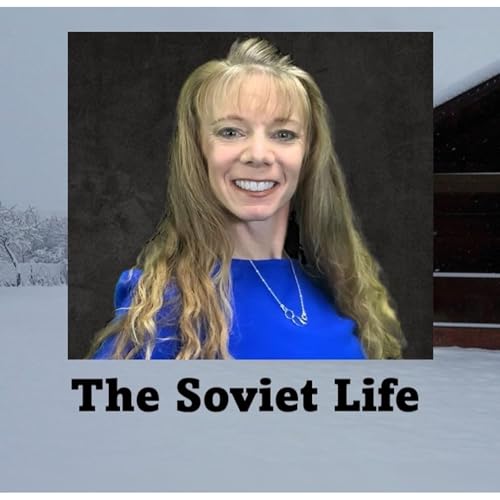
Couverture de The Soviet Life

The Soviet Life

The Soviet Life

De : Kate Saba
Écouter gratuitement

À propos de ce contenu audio

The Soviet Life is a podcast that brings the past to life through personal stories and honest conversations about everyday experiences behind the Iron Curtain. Hosted by Kate, who grew up in 1970s–80s Belarus, the show explores how people lived, loved, worked, and endured during the final decades of the USSR — and what followed after its collapse. Featuring voices from across the former Soviet republics, the West, and beyond, each episode bridges generations and cultures to uncover the human side of history. Whether you're a former citizen, a curious learner, or a student of the Cold War, The Soviet Life offers insight, connection, and a powerful reminder of our shared humanity.Copyright 2026 Kate Saba
Les membres Amazon Prime bénéficient automatiquement de 2 livres audio offerts chez Audible.

Vous êtes membre Amazon Prime ?

Bénéficiez automatiquement de 2 livres audio offerts.
Bonne écoute !
    Épisodes
    • 12: The Heart of Soviet Celebrations - Traditions and Memories
      Jan 20 2026

      In this episode of The Soviet Life, host Kate Saba delves into the unique holiday traditions of the former Soviet Union, contrasting them with Western celebrations. She begins by discussing the Old New Year, celebrated on January 13th, which stems from the Julian calendar and serves as a quieter continuation of New Year festivities. Kate highlights how Soviet holidays were not just about fun but were deeply intertwined with state ideology, education, and family traditions. She shares personal stories and reflections on how these holidays shaped her upbringing and continue to influence her life today.

      The episode further explores significant holidays such as International Women's Day, May Day, Victory Day, and the October Revolution anniversary. Kate emphasizes the emotional weight these holidays carry, particularly Victory Day, which honors the sacrifices made during World War II. She also notes the absence of many Western holidays in the Soviet calendar, such as Valentine's Day and Christmas, and how this has shaped the cultural experiences of those from the former Soviet Union. Through her storytelling, Kate provides listeners with a deeper understanding of the cultural values and traditions that persist in the post-Soviet space.

      Takeaways

      1. Holidays in the USSR were not about fun but served a purpose.
      2. The Old New Year is celebrated on January 13th, stemming from the Julian calendar.
      3. International Women's Day was a significant celebration for women in the Soviet Union.
      4. Victory Day honors the sacrifices of World War II and is deeply emotional for many families.
      5. Many Western holidays like Valentine's Day and Christmas did not exist in the USSR.

      Sound Bites

      1. "Holidays in the USSR were very different."
      2. "Holidays were meant to educate, unite people."
      3. "Victory Day is one of the most emotionally powerful holidays."

      Chapters

      00:00 Introduction to Soviet Holidays

      02:39 The Old New Year and Its Significance

      08:42 Understanding the Purpose of Holidays in the USSR

      10:28 Celebrating International Women's Day

      14:01 May Day: A Celebration of Labor

      16:17 Victory Day: Remembering the Great Patriotic War

      18:35 The October Revolution Anniversary

      20:04 Holidays That Did Not Exist in the USSR

      20:53 Conclusion and Reflection on Soviet Traditions

      Connect with us:

      Please share your thoughts and stories, reach out at kate@thesovietlife.com. Follow us and leave a review to support the podcast!

      Afficher plus Afficher moins
      22 min
    • 11: Winter Holidays in the Soviet Union: Christmas Without Christmas
      Dec 24 2025

      In this episode of The Soviet Life, host Kate Saba shares a deeply personal look at winter holidays in the Soviet Union. She explores what it meant to celebrate during a time when Christmas was not officially allowed, and how New Year quietly became the most important and magical holiday of the year.

      Kate reflects on family gatherings, familiar foods, and the figure many Soviet children grew up believing in—Grandpa Frost, who arrived not on Christmas, but on New Year’s Eve. Through memories and cultural context, she highlights how people found warmth, joy, and connection even within a system filled with restrictions, and how these traditions helped preserve family bonds and cultural identity.

      The episode also looks at how holiday traditions began to evolve after the collapse of the Soviet Union, as Christmas slowly returned to public life. This reflection-filled episode reminds listeners that holidays, no matter the political system, reveal the universal human need for meaning, hope, and togetherness.

      Key Takeaways

      1. The Soviet Union officially discouraged religious celebrations, including Christmas.
      2. New Year became the main winter holiday, taking on many Christmas traditions.
      3. Grandpa Frost served as the Soviet version of Santa Claus and visited on New Year’s Eve.
      4. Families gathered late into the night to celebrate, exchange gifts, and welcome the New Year together.
      5. Traditional foods like caviar and herring under a fur coat played a central role at the holiday table.
      6. Children truly believed in Grandpa Frost and looked forward to his visit.
      7. Despite restrictions, some families continued to celebrate Christmas quietly at home.
      8. After the fall of the Soviet Union, Christmas gradually returned to public and religious life.
      9. Holidays reflect a society’s values and the universal human need for celebration.
      10. Winter holidays in the Soviet Union were both joyful and constrained.

      Sound Bites

      1. “The Soviet Union was officially atheist.”
      2. “Christmas disappeared, but celebration didn’t.”
      3. “Grandpa Frost came on New Year’s Eve.”
      4. “New Year’s Eve was absolutely magical.”

      Chapters

      00:00 – Welcome to The Soviet Life

      01:09 – What winter holidays looked like in the Soviet Union

      02:33 – Why Christmas wasn’t celebrated

      06:15 – How New Year became the main holiday

      07:09 – Grandpa Frost: the Soviet Santa Claus

      10:19 – New Year’s Eve traditions and family memories

      14:15 – Questions Americans often ask

      16:02 – The return of Christmas after the Soviet Union

      17:16 – Reflections on holidays, freedom, and meaning

      Connect with...

      Afficher plus Afficher moins
      23 min
    • 10: My Life in the USSR: In Conversation with Elizabeth Milner
      Nov 30 2025

      In this heartfelt episode of The Soviet Life, host Kate Saba sits down with Elizabeth Milner — an American who has absolutely no personal ties to the Soviet Union — to explore what Soviet life looks like through fresh, unfiltered eyes.

      What happens when someone raised in a completely different culture hears about childhood, family life, holidays, and day-to-day realities behind the Iron Curtain?

      The result is a deeply honest and often surprising conversation that reveals how much of our worldview is shaped by the stories we’ve been told… and how much we miss when we don’t look deeper.

      Kate walks Elizabeth through the realities of Soviet job security, the structure of education, the rhythm of family life, and the cultural norms that shaped an entire generation. With curiosity and compassion, Elizabeth reflects on everything — from scarcity and communal values to sauna traditions and why New Year celebration replaced Christmas.

      Together, they explore what it truly felt like to grow up in a system that promised stability but offered little room for personal expression. They uncover the humor, the hardships, the nostalgia, and the resilience that defined everyday Soviet life.

      This episode isn’t just about history — it’s about identity, perception, and the stories that shape how we understand one another. Whether you have memories of the USSR or you're hearing these experiences for the first time, this conversation is a reminder of how important it is to listen, to question, and to bridge cultures with empathy.

      You'll hear about:

      1. The Soviet Union offered job stability — but often at the cost of personal choice.
      2. Education was rigid, structured, and deeply tied to national purpose.
      3. Sports in the USSR weren’t just activities — they were a system of early specialization.
      4. American perceptions of the USSR focus heavily on control, scarcity, and fear.
      5. Soviet cultural values emphasized community, togetherness, and collective responsibility.
      6. Money was not celebrated — and sometimes viewed with suspicion.
      7. Holidays were reshaped to reflect socialist ideology, making New Year’s the biggest celebration.
      8. Family life was shaped by economic limits and shared social expectations.
      9. Sauna culture wasn’t just relaxation — it was tradition, community, and health.
      10. Understanding history requires listening to perspectives from both inside and outside the experience.

      Sound Bites:

      1. “There was no understanding of money.”
      2. “There were not a lot of choices.”
      3. “It was a privilege to get soap.”

      Chapters:

      00:00 – Introduction to Soviet Life and Perspectives

      02:38 – Job Stability in the Soviet Union vs. Today

      05:34 – Education Systems: A Comparative Analysis

      10:45 – Sports and Extracurricular Activities in the USSR

      13:35 – Cultural Perceptions of the Soviet Union

      19:58 – Scarcity...

      Afficher plus Afficher moins
      59 min
    Aucun commentaire pour le moment