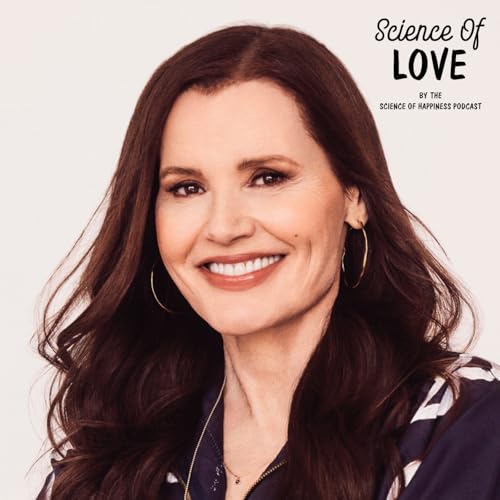
Couverture de The Science of Happiness

The Science of Happiness

The Science of Happiness

De : PRX and Greater Good Science Center
Écouter gratuitement

À propos de ce contenu audio

Learn research-tested strategies for a happier, more meaningful life, drawing on the science of compassion, gratitude, mindfulness, and awe. Hosted by award-winning psychologist Dacher Keltner. Co-produced by PRX and UC Berkeley's Greater Good Science Center. Follow us on Instagram @HappinessPod.

© Greater Good Science Center

Science Sciences sociales
Les membres Amazon Prime bénéficient automatiquement de 2 livres audio offerts chez Audible.

Vous êtes membre Amazon Prime ?

Bénéficiez automatiquement de 2 livres audio offerts.
Bonne écoute !
    Épisodes
    • Happiness Break: How to Feel More Connected to Others
      Feb 19 2026

      Research shows that reflecting on our shared humanity can increase self-compassion and life satisfaction while reducing feelings of isolation. In this practice, Dacher Keltner guides us to look beneath our differences and connect with the qualities that make us human together.

      This guided exercise draws on a meditation by Sean Fargo, a mindfulness teacher and former Buddhist monk.

      How To Do This Practice:

      1. Settle your body: Sit comfortably and take a few slow, steady breaths. Let your shoulders drop, soften your jaw, and allow your body to feel supported by the ground or chair beneath you.
      2. Notice what’s here: Briefly scan your body and emotions. Whatever you’re feeling—calm, tense, distracted, open—simply acknowledge it without trying to change it.
      3. Bring someone to mind: Think of someone you don’t know well, feel distant from, or have mild tension with. Picture them as if they were in front of you.
      4. Reflect on your similarities: Silently repeat phrases like: This person has a body and mind, just like me; this person has felt sadness, joy, and pain, just like me; this person wants to be safe, loved, and understood, just like me.
      5. Gently extend kind intentions toward them: May you be well. May you be happy. May you be healthy. May you live with ease.
      6. Return and reflect: Bring your attention back to your breath and body. Notice if anything has shifted—perhaps a softening, a little more space, or a sense of connection—and carry that awareness into your day.

      This episode was supported by a grant from The John Templeton Foundation on Spreading Love Through the Media.

      Related Happiness Break episodes:

      A Meditation for When You Feel Uneasy: https://tinyurl.com/4x27ut3p

      A Meditation to Connect With Your Roots: https://tinyurl.com/ycy9xazc

      A Mindful Breath Meditation, With Dacher Keltner: https://tinyurl.com/mr9d22kr

      Related The Science of Happiness episodes:

      Why Compassion Requires Vulnerability: https://tinyurl.com/yxw4uhpf

      How to Feel More Hopeful: https://tinyurl.com/4tfwhbpb

      How Holding Yourself Can Reduce Stress: https://tinyurl.com/2hvhkwe6

      Follow us on Instagram: @ScienceOfHappinessPod

      We’d love to hear about your experience with this practice! Share your thoughts at happinesspod@berkeley.edu or use the hashtag #happinesspod.

      Find us on Apple Podcasts: https://tinyurl.com/2p9h5aap

      Help us share Happiness Break! Leave a 5-star review and share this link: https://tinyurl.com/2p9h5aap

      Transcription: https://tinyurl.com/4ju7rmtd

      Afficher plus Afficher moins
      6 min
    • The Science of Love (Episode 3)
      Feb 13 2026

      Guest host Geena Davis guides us through the research on love that stretches beyond romance and friendship, showing up in our bonds with objects, nature, grief, and the collective moments that connect us to something larger than ourselves.

      Summary: In this final episode of our 3-part series on The Science of Love, researchers reveal how love expands our sense of self and strengthens our bond to humanity. We also explore why objects can feel meaningful, how love of nature can motivate care for the planet, he ways grief reshapes our capacity for connection, and our love of humanity.

      Related The Science of Happiness episodes:

      The Science of Love Series: https://bit.ly/TheScienceofLove

      The Science of Love, with Geena Davis (Episode 1): https://tinyurl.com/bfave5wd

      How 7 Days Can Transform Your Relationship: https://tinyurl.com/bdh2ezhr

      Related Happiness Breaks:

      Visualizing Your Best Self in Relationships: https://tinyurl.com/4797z2vf

      A Guided Meditation on Embodied Love: https://tinyurl.com/3dmpfam6

      A Meditation on Love and Interconnectedness: https://tinyurl.com/ye6baxv3

      Today’s Guests:

      AARON AHUVIA is the most widely published and cited academic expert on non-interpersonal love.

      Learn more about Aaron Ahuvia here: https://thethingswelove.com/about-aaron/

      JESSICA EISE is a social and environmental scientist and is an assistant professor in the Department of Environmental and Occupational Health with Indiana University School of Public Health-Bloomington.

      Learn more about Jessica Eise here: https://jessicaeise.com/

      ​​YURIA CELIDWEN is an indigenous scholar of contemplative studies, and author of the new book, Flourishing Kin: Indigenous Foundations For Collective Well-Being.

      Learn more about Yuria Celidwen here: https://www.yuriacelidwen.com/

      MARY-FRANCES O'CONNOR is a psychologist and professor at the University of Arizona, where she directs the Grief, Loss, and Social Stress Lab.

      Learn more about Mary-Frances O’connor here: https://maryfrancesoconnor.org/

      SHIRA GABRIEL is a Professor of Psychology at SUNY, University at Buffalo.

      Learn more about Shira Gabriel here: https://tinyurl.com/2vvav8xj

      Message us or leave a comment on Instagram @scienceofhappinesspod. E-mail us at happinesspod@berkeley.edu or use the hashtag #happinesspod.

      Help us share The Science of Happiness! Leave us a 5-star review on Apple Podcasts or share this link with someone who might like the show: https://tinyurl.com/2p9h5aap

      Funding for this special was provided by the John Templeton Foundation, as part of the Greater Good Science Center's Spreading Love Through the Media initiative.

      Transcription: https://tinyurl.com/22d5nuyr

      Afficher plus Afficher moins
      25 min
    • The Science of Love (Episode 2)
      Feb 12 2026

      Guest host Geena Davis helps us explore how the love we feel —for our partners, friends, family, even our four legged companions—shapes our brains, bodies, and lives.

      Summary: On this episode of The Science of Love with Geena Davis, we delve into the many forms of love, and experts share research on how small daily actions, physical touch, and emotional attentiveness strengthen relationships, while evolutionary and neuroscience studies reveal why these bonds matter. We also explore practical strategies for cultivating deeper connections and understanding the biological and psychological roots of love.

      Scroll down for a transcription of this episode.

      Related The Science of Happiness episodes:

      The Science of Love Series: https://bit.ly/TheScienceofLove

      The Science of Love, with Geena Davis (Episode 1): https://tinyurl.com/bfave5wd

      How 7 Days Can Transform Your Relationship: https://tinyurl.com/bdh2ezhr

      Today’s Guests:

      DANIEL LEVITIN is a neuroscientist, musician, and bestselling author of the books, Music as Medicine: How We Can Harness Its Therapeutic Power and I Heard There Was a Secret Chord: Music As Medicine.

      Follow Daniel Levitin on IG: https://www.instagram.com/daniellevitinofficial

      JOHN GOTTMAN is a psychologist and the co-founder of The Gottman Institute.

      JULIE GOTTMAN is a clinical psychologist and co-founder of The Gottman Institute and President of The Gottman Institute and co-founder of Affective Software, Inc.

      Learn more about John and Julie Gottman here: https://www.gottman.com/

      JUSTIN GARCIA is an evolutionary biologist and international authority on the science of sex and relationships.

      Learn more about Justin Garcia here: https://tinyurl.com/2c39cs6r

      ANNA MACHIN is a British evolutionary anthropologist at the Department of Experimental Psychology at Oxford University, England and author of the book Why We Love: The Definitive Guide to Our Most Fundamental Need.

      Learn more about Anna Machin here: https://annamachin.com/

      MARISA G. FRANCO is a psychologist and professor at The University of Maryland and author of the book “Platonic: How The Science of Attachment Can Help You Make – and Keep – Friends.”

      Learn more about Marisa G. Franco here: https://drmarisagfranco.com/

      Message us or leave a comment on Instagram @scienceofhappinesspod. E-mail us at happinesspod@berkeley.edu or use the hashtag #happinesspod.

      Help us share The Science of Happiness! Leave us a 5-star review on Apple Podcasts or share this link with someone who might like the show: https://tinyurl.com/2p9h5aap

      Funding for this special was provided by the John Templeton Foundation, as part of the Greater Good Science Center's Spreading Love Through the Media initiative.

      Transcription: https://tinyurl.com/4b52azja

      Afficher plus Afficher moins
      28 min
    Aucun commentaire pour le moment