Épisodes

  • The Remote Revolution Episode 147: AI vs Remote Staff: What Businesses Are Actually Choosing
    Nov 2 2026

    Every business owner is hearing the same question right now: should we use AI, or should we hire people? It is usually framed as a contest with one winner, and that framing is one of the reasons so many businesses make expensive, confusing decisions. In this episode of The Remote Revolution, Hashim and Angela look at what growing businesses are actually choosing in practice, which kinds of work lean toward AI, which still need a person, and why the most common answer is neither “all AI” nor “all people.” Along the way, they share a simple way to decide for your own business, the mistakes that cost the most, and the questions worth asking before you spend a dollar on either.

    What you will take away:

    • Why “AI versus people” is the wrong question, and what the better question is
    • The three kinds of work every business has, and which tool fits each one
    • What businesses are really choosing: a mix, with people supervising the tools
    • The hidden costs on both sides that rarely show up in the first quote
    • Four questions to ask before you assign any task to AI, to a person, or to both
    • Why clear processes have to come before either choice

    🎧 Tune in to hear how to stop treating AI and remote staff as rivals and start using each where it works best.

    Ready to build a scalable team without increasing internal overhead?
    Visit https://virtualmojoe.com/get-started/
    to learn more, and subscribe for more episodes on remote staffing, workflows, and operational scale.


    #RemoteStaffing #ScalingTeams #BusinessOperations #HiringStrategy #WorkflowSystems #RemoteWork #Entrepreneurship #BusinessGrowth

    Afficher plus Afficher moins
    20 min
  • The Remote Revolution Episode 146: The Founder Who Stopped Working Weekends
    Nov 2 2026

    Most founders do not decide to give up their weekends. It happens slowly. One Saturday morning email turns into a standing habit, and a standing habit turns into a belief that the business simply cannot run without you on every day of the week. In this case study episode of The Remote Revolution, Hashim and Angela follow a founder who worked seven days a week for almost three years, what she discovered when she finally looked at what her weekends were actually made of, what she changed, and how she got her weekends back without the business slipping. If you have ever opened your laptop on a Sunday night out of habit rather than need, this one is for you.

    What you will take away:

    • Why weekend work is usually a symptom of unclear ownership, not a sign of dedication
    • How one simple log can show what your weekends are really made of
    • The four kinds of weekend work that were hiding in this founder’s calendar
    • How a Friday close, clear approval limits, and a Monday briefing replaced the weekend scramble
    • How remote support was added only after the work was written down, and what that changed
    • What a realistic timeline looks like, and how to protect the change once you make it

    🎧 Tune in to hear how one founder went from checking her inbox at every red light to a business that runs steadily without her on Saturdays, and how you can start doing the same without a big reorganization.

    Ready to build a scalable team without increasing internal overhead?
    Visit https://virtualmojoe.com/get-started/
    to learn more, and subscribe for more episodes on remote staffing, workflows, and operational scale.


    #RemoteStaffing #ScalingTeams #BusinessOperations #HiringStrategy #WorkflowSystems #RemoteWork #Entrepreneurship #BusinessGrowth

    Afficher plus Afficher moins
    25 min
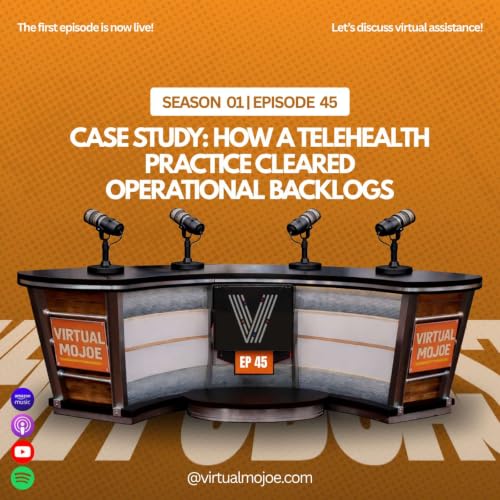
  • The Remote Revolution Episode 145: Case Study: How a Telehealth Practice Cleared Operational Backlogs
    Oct 27 2026

    When a telehealth practice grows, the visits are rarely what falls behind. The care itself keeps running. What quietly piles up is everything around it: intake forms waiting to be reviewed, insurance checks waiting to be done, claims waiting to be followed up, messages waiting to be answered. That pile looks like a staffing problem, and it hides what is really going on underneath. In this case study episode of The Remote Revolution, Hashim and Angela walk through how a growing telehealth practice cleared its operational backlogs, what they found when they looked closely, what they changed, and what any business with a growing pile of unfinished work can take from it.

    What you will take away:

    • Why backlogs in a growing practice are usually a sorting and ownership problem, not a speed problem
    • How a practice can find out where its backlog actually lives, using one simple count
    • The four piles that grew fastest in this case, and why they grew
    • How clear queues, written steps, and daily limits turned a pile into a flow
    • How remote support was added only after the work was clear, and what that changed
    • What a realistic timeline looks like, and what to keep doing after the backlog is gone

    🎧 Tune in to hear how one practice went from a growing pile of unfinished work to a steady, predictable flow, and how you can start doing the same without a big reorganization.

    Ready to build a scalable team without increasing internal overhead?
    Visit https://virtualmojoe.com/get-started/
    to learn more, and subscribe for more episodes on remote staffing, workflows, and operational scale.


    #RemoteStaffing #ScalingTeams #BusinessOperations #HiringStrategy #WorkflowSystems #RemoteWork #Entrepreneurship #BusinessGrowth

    Afficher plus Afficher moins
    27 min
  • The Remote Revolution Episode 144: What a High-Performing Remote Team Actually Looks Like in 2026
    Oct 27 2026

    When business owners picture a strong remote team, they usually picture activity: green status lights, fast replies, full calendars, everyone visibly "online." That picture sounds reasonable, and it hides what really separates the teams that perform from the teams that merely look busy. In this episode of The Remote Revolution, Hashim and Angela walk through what a high-performing remote team actually looks like in 2026, what the best ones do differently, and how to move your own team in that direction without rebuilding anything from scratch.

    What you will take away:

    • Why high performance in a remote team has very little to do with tools or hours online
    • The five traits that show up in almost every strong remote team
    • Why clear ownership and written handoffs matter more than constant meetings
    • How the best teams use asynchronous work without losing connection
    • How to tell the difference between a team that looks busy and a team that delivers
    • A simple one-week check you can run on your own team, and what to fix first

    🎧 Tune in to learn what great remote work really looks like from the inside, and how to build it without adding more meetings, more tools, or more pressure.

    Ready to build a scalable team without increasing internal overhead?
    Visit https://virtualmojoe.com/get-started/
    to learn more, and subscribe for more episodes on remote staffing, workflows, and operational scale.


    #RemoteStaffing #ScalingTeams #BusinessOperations #HiringStrategy #WorkflowSystems #RemoteWork #Entrepreneurship #BusinessGrowth

    Afficher plus Afficher moins
    24 min
  • The Remote Revolution Episode 143: The Holiday Season Bottleneck That Cripples Growing Companies Every Year
    Oct 19 2026

    When business owners think about the holiday rush, they picture volume: more orders, more messages, more deadlines. That picture sounds reasonable, and it hides the real problem, which is not "how do we handle more work," but "how many things have to pass through one person, one inbox, or one approval before anything moves?" In this episode of The Remote Revolution, Hashim and Angela walk through the bottleneck that quietly forms inside growing companies every holiday season, why it hits at the worst possible moment, and how to widen it without rebuilding your business.

    What you will take away:

    • Why the holiday problem in most growing companies is a narrow channel, not too much work
    • How a bottleneck forms without anyone deciding it should
    • The most common places work gets stuck: the owner, one key employee, and the shared inbox
    • Why time off and the holiday rush collide, and how to plan for both
    • How to map where work actually slows down, using one simple exercise
    • What a simple holiday playbook looks like, and why it pays off long after January

    🎧 Tune in to learn why your busiest season doesn't have to run through a single set of hands, and how to open up the flow before the rush arrives.

    Ready to build a scalable team without increasing internal overhead?
    Visit https://virtualmojoe.com/get-started/
    to learn more, and subscribe for more episodes on remote staffing, workflows, and operational scale.


    #RemoteStaffing #ScalingTeams #BusinessOperations #HiringStrategy #WorkflowSystems #RemoteWork #Entrepreneurship #BusinessGrowth

    Afficher plus Afficher moins
    24 min
  • The Remote Revolution Episode 142: Why Businesses Wait Too Long to Hire Before Q4
    Oct 19 2026

    Most business owners know the busy season is coming. The calendar says so, the numbers say so, and last year's scramble is still fresh. That sounds like a recipe for hiring early, and yet the pattern repeats: the team is stretched in September, the decision gets pushed to "after things settle down," and help finally arrives in the middle of the rush, when it's least useful. In this episode of The Remote Revolution, Hashim and Angela walk through why businesses wait too long to hire before Q4, what that delay quietly costs, and how to bring in support early without adding risk or chaos.

    What you will take away:

    • Why the real problem in most Q4 hiring isn't the decision, it's the timing
    • The hidden reasons smart business owners keep putting hiring off
    • Why a new hire is never productive on day one, and what that means for your calendar
    • The true cost of waiting, even when nothing looks "broken" yet
    • How to start small and low-risk when the budget feels tight
    • What to prepare before a new team member starts, so help actually helps

    🎧 Tune in to learn why the best time to hire for Q4 was a few weeks ago, and how to still get ahead of the rush.

    Ready to build a scalable team without increasing internal overhead?
    Visit https://virtualmojoe.com/get-started/
    to learn more, and subscribe for more episodes on remote staffing, workflows, and operational scale.


    #RemoteStaffing #ScalingTeams #BusinessOperations #HiringStrategy #WorkflowSystems #RemoteWork #Entrepreneurship #BusinessGrowth

    Afficher plus Afficher moins
    23 min
  • The Remote Revolution Episode 141: The Security Risk Sitting Inside Your Shared Drive
    Oct 12 2026

    When people think about security risks, they picture hackers, malware, and dramatic breaches. That picture sounds reasonable, and it hides the more common problem, which is not "how do we keep outsiders out," but "who already has access to things they never needed to see?" In this episode of The Remote Revolution, Hashim and Angela walk through the quiet risk that builds up inside almost every shared drive, why it grows without anyone deciding it should, and how to fix it without slowing your team down.

    What you will take away:

    • Why the biggest security risk in most small businesses is access, not attackers
    • How a shared drive becomes over-shared without anyone making a bad decision
    • The most common places sensitive information ends up in the open
    • Why former employees and contractors are the gap most teams miss
    • How to organize access by role instead of by convenience
    • What a simple quarterly access review looks like, and why it matters more with remote teams

    🎧 Tune in to learn why the door to your sensitive files may already be open, and how to close it without locking your team out.

    Ready to build a scalable team without increasing internal overhead?
    Visit https://virtualmojoe.com/get-started/
    to learn more, and subscribe for more episodes on remote staffing, workflows, and operational scale.


    #RemoteStaffing #ScalingTeams #BusinessOperations #HiringStrategy #WorkflowSystems #RemoteWork #Entrepreneurship #BusinessGrowth

    Afficher plus Afficher moins
    22 min
  • The Remote Revolution Episode 140: Planning Headcount Before Budget Season Starts
    Oct 12 2026

    Most businesses treat headcount as a budget line, something to fill in once the spreadsheet is open and the deadline is close. That timing is where the trouble starts. By the time budget season arrives, the decisions that matter have already been made by default, and the numbers on the page are mostly guesses dressed up as plans. In this episode of The Remote Revolution, Hashim and Angela walk through why headcount planning has to happen before the budget conversation begins, what to look at first, and how to build a plan that holds up when the year doesn't go exactly as expected.

    What you will take away:

    • Why headcount planning should come before budget planning, not during it
    • How to start with the work that needs doing instead of the roles you think you need
    • How to tell a real capacity gap from a structure problem
    • Why remote and flexible support belongs in the plan from the start
    • How to plan in ranges and triggers instead of one fixed number
    • What to have ready before the budget conversation, so headcount requests get approved

    🎧 Tune in to learn why the best headcount decisions are made months before anyone opens the budget spreadsheet.

    Ready to build a scalable team without increasing internal overhead?
    Visit https://virtualmojoe.com/get-started/
    to learn more, and subscribe for more episodes on remote staffing, workflows, and operational scale.


    #RemoteStaffing #ScalingTeams #BusinessOperations #HiringStrategy #WorkflowSystems #RemoteWork #Entrepreneurship #BusinessGrowth

    Afficher plus Afficher moins
    20 min