Épisodes

  • PERFORMANCE & SAFETY: BUILT FOR PRESSURE Part 3: Bouncing Back from Failure – Zoran Stojković
    Oct 13 2026

    You've just had the worst flight of your course. Your confidence is shaken, and tomorrow's flight could determine your future. How do you bounce back?

    In the conclusion of our three-part Built for Pressure series, mental performance consultant Zoran Stojković explains how RCAF student pilots can recover from failure, approach difficult debriefs, rebuild confidence, and distinguish honest self-assessment from destructive self-criticism.

    We also explore how Canada's allies are developing mental performance programs, how technology could improve pilot training, and why recovery is essential to sustained high performance.

    Finally, Zoran shares practical habits to develop before arriving in Moose Jaw, advice for the first week of training, and a message for anyone questioning whether they belong after a difficult flight.

    Find Zoran at:

    https://www.instagram.com/kizoperformance
    www.kizo.ca

    CHAPTERS

    (00:00:00) Introduction and Welcome
    (00:02:40) Mental Performance Coaching Among Our Allies
    (00:09:04) What's New in Mental Performance Coaching?
    (00:18:07) The Future of Mental Performance in RCAF Training
    (00:24:41) Preparing for a Debrief When You Think You've Failed
    (00:31:00) Honest Self-Assessment vs. Beating Yourself Up
    (00:38:06) Rebuilding Confidence After Failure
    (00:47:39) Sustaining Performance: Do You Have to Earn Recovery?
    (00:53:24) Knowing When to Push Harder and When to Rest
    (00:57:07) Three Tips Before Arriving in Moose Jaw
    (01:00:42) Habits to Start Building Now
    (01:02:20) Your First Week at Moose Jaw
    (01:04:20) Performance Advice Pilots Should Stop Following
    (01:06:46) Where to Find Zoran's Resources
    (01:08:29) A Message After Your Worst Flight
    (01:11:34) How to Connect with Zoran

    CONTINUE THE FLIGHT

    Catch up on the first two parts of Built for Pressure:

    Part 1: From Elite Sport to RCAF Pilot Training – Zoran Stojković
    Part 2: Practical Mental Performance for RCAF Pilots – Zoran Stojković

    https://podpilotproject.transistor.fm/

    EXPLORE THE LOGBOOK

    More stories from RCAF and mission aviation pilots:

    The Pilot Project Podcast episode archive:
    https://podpilotproject.transistor.fm/

    Afficher plus Afficher moins
    1 h et 16 min
  • PERFORMANCE & SAFETY: BUILT FOR PRESSURE Part 2: Mental Tools for the Cockpit – Zoran Stojković
    Oct 6 2026

    What happens when you know the material cold, but freeze during a flight test?

    Mental performance consultant Zoran Stojković returns for Part 2 of PERFORMANCE & SAFETY: BUILT FOR PRESSURE, where we explore practical tools for RCAF pilot training; from pre-flight routines and chair flying to performance cues, breathing and recovering after a cockpit mistake.

    Drawing on Zoran’s work with student pilots, pro athletes, and Bryan’s flying experience, they discuss recognizing when you’re falling behind the aircraft, practicing resets before you need them, and helping students recover after a difficult flight.

    Chapters

    (00:00:00) Welcome and introduction
    (00:01:08) Why students freeze during a test
    (00:07:00) Preparing an Olympian versus preparing a pilot
    (00:08:36) Can you perform well while feeling nervous?
    (00:15:26) Tomorrow’s checkride: when to stop studying
    (00:18:48) Building a useful pre-flight mental routine
    (00:22:46) Making visualization and chair flying effective
    (00:29:04) Adapting when the schedule or mission changes
    (00:32:43) Performance cues and constructive self-talk
    (00:41:55) Closing the gap between practice and cockpit performance
    (00:44:13) Breathing as a performance tool while flying
    (00:51:50) The OODA loop and helmet fires
    (00:54:33) Recognizing when you’re falling behind the aircraft
    (00:59:49) Resetting after a mistake in the cockpit
    (01:03:14) Helping a student recover after a difficult flight
    (01:06:13) Thanks and a look ahead to Part 3

    Explore the Logbook

    Continue from Part 1: PERFORMANCE & SAFETY: BUILT FOR PRESSURE Part 1: From Elite Sport to RCAF Pilot Training – Zoran Stojković.

    Explore Zoran’s work: His Built for Pressure podcast and Kizo Performance resources are discussed throughout this episode.

    Ask about the visualization resource: Zoran invites listeners to contact him through Kizo Performance on Instagram about resources, including the visualization template discussed in the interview.

    Have a question, a guest suggestion or an idea for a future episode? Contact thepilotprojectpodcast@gmail.com or find us on social media @podpilotproject.

    Help with the big three: like and follow us on social media, share with your friends, and follow and rate us five stars wherever you get your podcasts.

    Keep the blue side up!

    Afficher plus Afficher moins
    1 h et 10 min
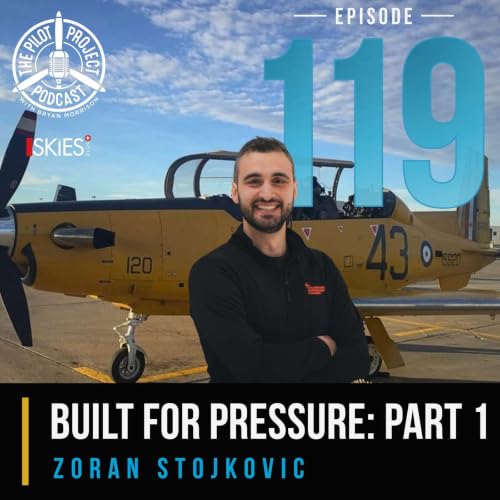
  • PERFORMANCE & SAFETY: BUILT FOR PRESSURE Part 1: From Elite Sport to RCAF Pilot Training – Zoran Stojković
    Sep 29 2026

    What happens when you know how to do something, but pressure makes it difficult to actually do it?

    Certified Mental Performance Consultant Zoran Stojković has spent more than 15 years helping people perform under pressure, from professional athletes and Olympic hopefuls to RCAF pilot trainees.

    In Part 1, Zoran shares the path that took him from competitive tennis and high-performance sport to 2 Canadian Forces Flying Training School in Moose Jaw. He explains what surprised him about the pressures facing student pilots, how he earned credibility as a civilian working inside military aviation, and why relationships became central to his work.

    We also hear how Zoran supported aircrew during Jaw South in Texas, how mental performance coaching became embedded in the flying environment, and what aviation taught him about the difference between high stakes and real stakes.

    CHAPTERS

    (00:00:00) Introduction, welcome and bio
    (00:01:52) What role did sport play growing up?
    (00:04:28) Why can we perform in practice but struggle under pressure?
    (00:09:41) When did mental performance become a career?
    (00:13:03) What did Zoran get wrong when he started coaching?
    (00:15:21) What kind of pressure are Olympians under?
    (00:18:35) Helping a professional tennis player turn things around
    (00:20:22) Going from athletes to pilots
    (00:23:23) Walking into 2CFFTS for the first time
    (00:26:53) What surprised Zoran about the pressure on student pilots?
    (00:30:13) High stakes versus real stakes
    (00:31:37) Earning credibility in aviation as an outsider
    (00:34:17) What happens when pilots don’t buy into mental performance coaching?
    (00:38:44) A pilot success story
    (00:42:36) Deploying with Jaw South
    (00:47:27) What is Jaw South, and where did Zoran fit in?
    (00:51:57) Helping a student in crisis before a flight
    (00:53:49) Making progress in a slow-moving institution
    (00:57:03) Meeting Colonel Jeremy Hansen
    (01:01:30) Advice for a student pilot before a test

    EXPLORE THE LOGBOOK

    More stories from RCAF and mission aviation pilots:

    The Pilot Project Podcast episode archive:
    https://podpilotproject.transistor.fm/episodes

    Afficher plus Afficher moins
    1 h et 6 min
  • Special Ops: The Pioneers Part 4: From Moose Jaw to CANSOFCOM – Todd O’Malley
    Sep 22 2026

    Colonel Todd O’Malley concludes our four-part journey through the evolution of Canadian tactical and special operations aviation. Todd returns to Moose Jaw, where he transitions from helicopters to fixed-wing flying, learns to instruct on the CT-156 Harvard and later becomes Commandant of 2 Canadian Forces Flying Training School.

    He also recounts commanding B Flight at 427 Squadron, developing maritime counterterrorism capabilities and helping transform the unit from tactical helicopter support into a dedicated special operations aviation squadron. After more than a decade in civilian aviation, Todd explains what brought him back into uniform as Director Air and Space at CANSOFCOM. The conversation explores the rapid growth of uncrewed aircraft, counter-UAS and space capabilities, lessons emerging from real-world allied experience, and Todd’s advice for anyone considering special operations aviation. He closes by recognizing the mentors, colleagues and family members who made his remarkable career possible.

    CONTINUE THE FLIGHT

    EXPLORE THE LOGBOOK
    More stories from RCAF and mission aviation pilots
    https://podpilotproject.transistor.fm/episodes

    (00:00:00) Introduction and Welcome
    (00:02:03) Instructing at 2 Canadian Forces Flying Training School
    (00:04:18) Returning to Fixed-Wing Flying
    (00:07:58) Converting from the Tutor to the Harvard
    (00:09:21) Why Flight Instructing Is So Difficult
    (00:11:12) The Most Rewarding Part of Instructing
    (00:12:45) When Students Arrive Unprepared
    (00:14:29) Returning to Fix a Missed Opportunity
    (00:16:46) Returning to Moose Jaw as Commandant
    (00:19:03) Being Both an Instructor and a Principal
    (00:19:47) Influencing the Student Experience as Commandant
    (00:21:03) Mentorship and Perspective
    (00:23:33) The Weight of Ending a Student’s Training
    (00:25:24) How Students React to Being Told They Are Done
    (00:26:59) Why the Good Days Outweigh the Bad
    (00:29:46) Returning to 427 Squadron in 2003
    (00:32:43) Commanding B Flight
    (00:36:48) The Difference Between Elite and Elitist
    (00:38:05) When 427 Squadron Began Drifting Apart
    (00:39:47) Developing Maritime Counterterrorism Capabilities
    (00:44:17) Standing Up CANSOFCOM
    (00:45:47) Transforming Tactical Helicopter Aviation into SOF Aviation
    (00:47:41) Why Todd Retired from the RCAF
    (00:49:56) Lessons from Civilian Aviation
    (00:52:52) Military and Civilian Workplace Cultures
    (00:54:18) Returning to the RCAF
    (00:56:30) The Director Air and Space Mandate
    (00:59:17) How Canadian SOF Aviation Is Evolving
    (01:01:48) Learning from Allies
    (01:03:51) Special Operations in a Changing World
    (01:04:46) Advice for Joining Special Operations Aviation
    (01:07:17) Todd’s Remaining Career Goals
    (01:08:56) Recognizing the People Behind His Career
    (01:11:39) Closing the Series

    Afficher plus Afficher moins
    1 h et 14 min
  • Special Ops: The Pioneers Part 3: Somalia, JTF2, and the Birth of SOF Aviation – Todd O’Malley
    Sep 15 2026

    Colonel Todd O’Malley continues our four-part journey through the history of Canadian tactical and special operations aviation. In Part 3, Todd recounts flying the CH-135 Twin Huey in Somalia, where severe brownouts made every takeoff and landing dangerous, and an unexpected mission gave him his first experience supporting U.S. special operations forces.

    Todd also reflects on the Somalia Affair, its painful aftermath and the difficulty of returning home from a deployment overshadowed by scandal. He then takes us inside the earliest days of JTF2—from flying with the RCMP and becoming the unit’s first Air Liaison Officer to developing new helicopter insertion tactics at Dwyer Hill. The episode explores the people, missions and “refuse to lose” culture that helped transform a fragile domestic counterterrorism capability into the foundation of modern Canadian special operations aviation.

    CONTINUE THE FLIGHT

    EXPLORE THE LOGBOOK
    More stories from RCAF and mission aviation pilots
    https://podpilotproject.transistor.fm/episodes

    CHAPTERS

    (00:00:00) Introduction and Welcome
    (00:01:57) Somalia with 427 Squadron
    (00:05:58) The Danger of Dustballs
    (00:10:51) A Helicopter Crash in a Dustball
    (00:13:21) A First Taste of Special Operations
    (00:16:09) The Somalia Affair
    (00:20:02) The Aftermath of the Somalia Affair
    (00:24:03) Flying with the RCMP: The Road to SOF Aviation
    (00:25:51) Becoming JTF2’s First Air Liaison Officer
    (00:28:33) What Is Dwyer Hill?
    (00:29:49) Witnessing the Beginning of Canadian SOF History
    (00:33:53) How SOF Culture Changed After Somalia
    (00:35:37) Overcoming Personal Challenges
    (00:39:13) Flying Special Operations Missions with the RCMP
    (00:41:49) Developing New Tactics
    (00:43:54) Seeing Those Tactics Still in Use
    (00:45:24) The “Refuse to Lose” Mindset
    (00:48:32) Closing and a Preview of Part 4

    Afficher plus Afficher moins
    50 min
  • Special Ops: The Pioneers Part 2: Bringing Night Vision to Canadian Tactical Aviation – Todd O’Malley
    Sep 8 2026

    Colonel Todd O’Malley continues our four-part look at the history of Canadian tactical and special operations aviation. In Part 2, the current Director Air and Space at CANSOFCOM returns to his first operational years with 427 Squadron, flying the CH-135 Twin Huey on deployments to the Sinai Desert and Honduras.

    Todd describes navigating the Sinai with paper maps, demanding nighttime approaches, a fatal helicopter crash, and the challenges of low-level jungle flying during the final years of the Cold War. He also recalls the culture of Canadian tactical aviation in the 1980s and the experimental introduction of night-vision goggles, when crews developed procedures while learning the technology in real time. From driving a Jeep on NVGs to leading 12-ship formations at night, the episode captures a pivotal transformation in Canadian military helicopter operations.

    CONTINUE THE FLIGHT

    EXPLORE THE LOGBOOK

    More stories from RCAF and mission aviation pilots
    https://podpilotproject.transistor.fm/episodes

    Chapters

    (00:00:00) Introduction and Welcome
    (00:01:53) First Deployment: The Mission in the Sinai Desert
    (00:04:26) Navigating the Desert with Paper Maps
    (00:07:02) Flying Over the Sinai’s Unforgiving Terrain
    (00:09:30) Dangerous Nighttime Approaches in the Desert
    (00:13:08) A Helicopter Crash in the Sinai Desert
    (00:20:15) “What Are You Doing Friday?” Deploying to Honduras
    (00:21:34) The Canadian Helicopter Mission in Honduras
    (00:23:24) Living “On the Economy” in Honduras
    (00:25:47) Which Is Harder: Desert or Jungle Flying?
    (00:27:29) The Challenges of Low-Level Jungle Flying
    (00:28:55) Did Flying in Honduras Feel Like Vietnam?
    (00:29:27) Playing Cat and Mouse with a Three-Letter Organization
    (00:32:09) Tactical Aviation Culture in the 1980s
    (00:35:19) Did Tactical Aviators Feel Stuck?
    (00:37:37) The Early Days of Night-Vision Flying
    (00:40:41) Crew Rest in Tactical Aviation
    (00:42:15) Flying 12-Ship Formations at Night
    (00:45:02) The Physical Cost of Flying with NVGs

    Afficher plus Afficher moins
    49 min
  • Special Ops: The Pioneers Part 1: Becoming a Canadian Tactical Helicopter Pilot – Todd O’Malley
    Sep 1 2026

    Colonel Todd O’Malley begins a four-part journey through the history of Canadian tactical and special operations aviation. Now Director Air and Space at CANSOFCOM, Todd looks back on the unlikely path that took him from Sault College and an early setback in civilian flight training to earning his RCAF wings and joining 427 Squadron as a CH-135 Twin Huey pilot.

    In Part 1, Todd explains how failure reshaped his approach to preparation, recalls the fighter-driven culture of 1980s Moose Jaw, and describes the disappointment of being selected for helicopters. He also takes listeners inside the demanding transition to rotary-wing flying, from hovering and auto-rotations to the hard-earned change in attitude that helped him find his place in tactical aviation. The episode concludes with advice for student pilots whose careers take an unexpected direction.

    CONTINUE THE FLIGHT

    EXPLORE THE LOGBOOK

    More stories from RCAF and mission aviation pilots

    https://podpilotproject.transistor.fm/episodes

    Chapters
    (00:00:00) Introduction and Welcome
    (00:03:02) Meet Colonel Todd O’Malley
    (00:04:37) What Drew Todd to the RCAF?
    (00:07:48) Sault College and a Different Path
    (00:09:29) Being Removed from Flight Training
    (00:12:13) The Lesson That Changed His Career
    (00:15:14) Pilot Training Culture in 1980s Moose Jaw
    (00:20:34) Navigating Phase Two Flight Training
    (00:24:05) Coping with a Helicopter Selection
    (00:27:56) Why Helicopters Are So Difficult to Learn
    (00:30:58) How a Helicopter Autorotation Works
    (00:34:37) Learning from Hard Landings
    (00:38:46) Re-Caging His Attitude Toward Helicopters
    (00:41:35) Finding His Place in Tactical Aviation
    (00:44:30) Arriving at a Grieving 427 Squadron
    (00:45:30) Twin Huey vs. Griffon
    (00:48:43) Making the Most of an Unexpected Aircraft Selection
    (00:51:51) Final Thoughts and What’s Next

    Afficher plus Afficher moins
    54 min
  • Snowbirds: The Boss Part 3: Inside the Snowbirds - Maciej "Match" Hatta
    Aug 18 2026

    What does it take to lead one of the world's premier military aerobatic teams?

    In the final chapter of our three-part series, Major Maciej "Match" Hatta takes us inside life as "The Boss", aka Snowbird 1 and Team Lead of the Canadian Forces Snowbirds. From the demanding selection process and culture of trust that defines the team to the responsibility of leading eight other pilots in close formation, Match shares what it means to lead the team.

    We also explore the remarkable people behind the scenes who make every performance possible, the legacy of the CT-114 Tutor, and why the Snowbirds continue to inspire Canadians more than 50 years after their first season.

    Join us as we conclude the story behind The Boss.

    Chapters

    (00:00:58) Introduction and welcome
    (00:03:34) What led you to the Snowbirds?
    (00:04:50) Deferring Test Pilot School for the Snowbirds
    (00:07:01) Why the Snowbirds were turning away jet pilots
    (00:08:33) Can you become Snowbird 1 as a first-year Snowbird?
    (00:10:07) Going through Snowbird selection
    (00:17:23) Snowbirds formation cues
    (00:23:34) Are you looking at your instruments during formation flying?
    (00:25:58) What was harder than you expected on the Snowbirds?
    (00:28:02) Match's mid-air collision
    (00:37:33) Did they lose trust in you?
    (00:38:54) Lessons from the first tour that still shape Snowbird 1
    (00:40:58) Why return to the Snowbirds?
    (00:44:42) What did it mean to become Snowbird 1?
    (00:46:25) Does it feel different to be the boss?
    (00:51:31) Selecting Snowbird 1
    (00:53:19) The three qualities of a successful Snowbird
    (00:55:14) Why Snowbirds have to be "always on"
    (00:59:28) The people behind the scenes who make it happen
    (01:03:55) What makes this season special?
    (01:05:55) Why preseason flying went so well
    (01:08:11) What can audiences expect this season?
    (01:12:19) The canopy-to-canopy roll
    (01:14:49) The legacy of the CT-114 Tutor
    (01:17:51) What should Canadians take away from this season?
    (01:20:20) Thanks and what's next!

    CONTINUE THE FLIGHT

    EXPLORE THE LOGBOOK
    More stories from RCAF and mission aviation pilots.

    https://podpilotproject.transistor.fm/episodes

    Afficher plus Afficher moins
    1 h et 24 min