

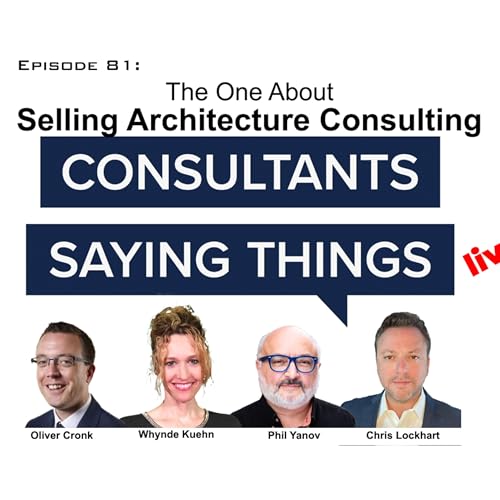
The One About Selling Architecture Consulting
Impossible d'ajouter des articles
Désolé, nous ne sommes pas en mesure d'ajouter l'article car votre panier est déjà plein.
Veuillez réessayer plus tard
Veuillez réessayer plus tard
Échec de l’élimination de la liste d'envies.
Veuillez réessayer plus tard
Impossible de suivre le podcast
Impossible de ne plus suivre le podcast

The One About Selling Architecture Consulting
-
Lu par :
-
De :
À propos de ce contenu audio
It's hard to sell 'architecture' consulting gigs since people frequently don't know what it means or what they're gonna get for their money. Check out this episode for 5 takeaways to help you get better at selling architecture...
This is our first ever LIVE podcast recording at the BCS Enterprise Architecture Annual Conference in 2024.
We Discuss:
- How do you build trust early in EA engagements when you don't have established relationships?
- What's the most important thing to leave behind when a consulting engagement ends - artifacts or wisdom?
- Should architecture be primarily an internal function or can it be effectively outsourced?
- How do you sell abstract EA work through procurement processes that expect concrete deliverables?
- What engagement models work best for EA consulting?
5 Takeaways:
- Enterprise architecture consulting faces unique sales challenges because it delivers intangible, strategic value rather than concrete deliverables, making it difficult to quantify benefits and navigate procurement processes that expect specific technical roles.
- Building trust is fundamental to EA consulting success since you're essentially "selling insurance" for long-term organizational health, requiring consultants to meet clients where they are rather than imposing predetermined frameworks.
- The most effective approach combines a strong internal architecture core team with external consultants who act as "adaptable architects" or "Swiss Army knives," supporting the organization's journey rather than replacing internal capability.
- Successful EA engagements should leave clients empowered with both tangible assets (playbooks, knowledge bases) and intangible wisdom, positioning consultants as trusted advisors who build client capability rather than creating dependency.
- The key to overcoming EA's abstract nature is connecting all work directly to business outcomes and strategy, using assessment and questioning to understand the real problems before proposing solutions.
adbl_web_anon_alc_button_suppression_c
Aucun commentaire pour le moment


