Épisodes

  • New Special Episode of The TFL's Deep Dive: The Islamabad Mosque Massacre — More Than a Terrorist Attack
    Feb 7 2026

    Welcome to this special episode of The Levant Files Deep Dive, available on all major podcast platforms.

    On 6 February 2026, the relative peace of Pakistan’s capital was shattered when a suicide bomber targeted the Khadija Tul Kubra Shia mosque in Tarlai Kalan. During the main Friday prayers, an attacker wearing an explosive vest and carrying a firearm opened fire on volunteer guards at the gate before detonating himself near the back rows of more than 400 worshippers inside. The carnage was devastating: at least 31 people were killed and approximately 170 others injured, many critically.

    This atrocity—the deadliest attack in Islamabad since 2008—was swiftly claimed by the Islamic State–Pakistan Province (ISPP). The group framed the bombing as a sectarian strike against “infidel” Shias. While Pakistani officials have alleged that “India-backed proxies” operating from Afghan soil facilitated the attack, independent analysts argue it aligns closely with ISPP’s documented pattern of anti-Shia sectarian violence.

    The bombing signals a terrifying resurgence of militants’ urban reach, underscoring that even the capital’s outskirts are no longer insulated from the violence ravaging the border provinces. It also highlights the acute vulnerability of Pakistan’s Shia minority, which has long borne a disproportionate share of the country’s internal terrorism. As political instability and economic strain continue to fracture the state, groups like ISPP exploit sectarian fault lines to erode public confidence and destabilize regional security.

    Photo: Gemini AI

    Afficher plus Afficher moins
    29 min
  • Strait of Shadows: Inside Iran's Parallel Wars
    Feb 6 2026

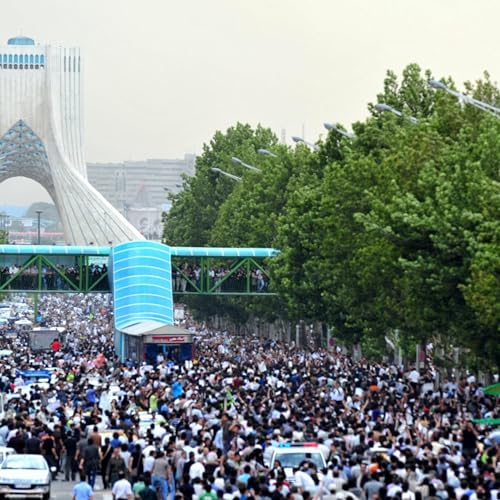
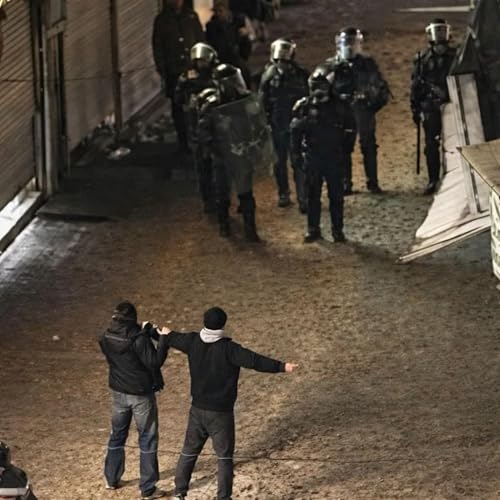
    While diplomats whisper in Omani palaces beneath slow-turning ceiling fans, Iranian security forces open fire on their own streets. The Gulf sits under the guns of a massive U.S. naval armada, yet in Muscat’s shaded corridors, envoys exchange indirect messages about a nuclear program Tehran vows never to dismantle. This is the paradox of modern Iran: a regime fighting for survival against domestic uprising and foreign pressure simultaneously, threatening to sever the global economy’s jugular at Hormuz rather than surrender its ballistic missiles or enrichment centrifuges.The Levant Files launches a new podcast series at the precipice of history. We trace how mass civilian casualties sparked the most dangerous internal crisis since 1979, even as the Trump administration steams toward potential conflict. We dissect the Oman talks—the fragile conduit where Washington and Tehran speak through intermediaries while refusing to budge on existential red lines, even as military strikes loom.From the strait—where a single miscalculation could starve world markets of a fifth of their oil—to the shuttered bazaars of Isfahan where protesters defy live ammunition, we map the interconnected crises threatening to engulf the Levant. Our correspondents separate signal from noise, examining whether these negotiations are genuine off-ramps or elaborate theater masking inevitable confrontation.Join us as we navigate the shadow war between aircraft carriers and uranium hexafluoride, between popular revolution and authoritarian endurance. The stakes have never been higher. The truth has never been more urgent.

    Afficher plus Afficher moins
    31 min
  • Blackout in Syria: The Silent Fall of the City That Defeated ISIS
    Jan 22 2026

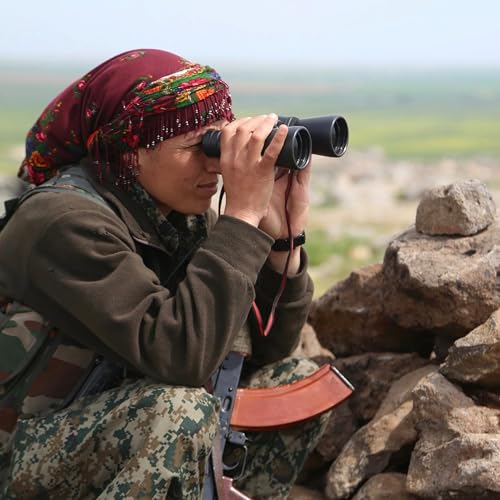
    In 2015, the Syrian city of Kobane stood as a global beacon of resistance, the site where the seemingly unstoppable tide of the ISIS caliphate was finally broken. Today, in January 2026, that same city faces an existential threat that is arguably more terrifying because it is happening in the dark. While the world looks away, a brutal siege by Damascus-backed forces has encircled the city, employing a clinical strategy known as the "Triad of Isolation": the systematic cutting of water, electricity, and—most strategically—the internet.


    This Deep Dive explores a harrowing geopolitical reversal. The Kurdish-led Syrian Democratic Forces (SDF), once the West’s primary boots-on-the-ground allies, are now being strangled by the Syrian regime while international powers remain silent. This is not merely a regional border skirmish; it is a calculated psychological war where digital blackouts are used to cloak potential war crimes and erase the victims from the global consciousness. In a desperate bid for survival, residents are bypassing silent world governments and issuing viral pleas to tech billionaires for satellite internet, hoping to reconnect a dying city to the outside world.


    However, the consequences of this siege extend far beyond Kobane’s borders. As the SDF is forced to pull its troops from guarding detention camps to defend their homes, a massive security vacuum has ripped open. With reports of over 1,500 ISIS militants escaping during the chaos, the very enemy the world thought was defeated is regrouping in the desert. This discussion uncovers how the suffocation of one city may be lighting the fuse for a global resurgence of terror.


    Photo: Flickr

    Afficher plus Afficher moins
    24 min
  • SPECIAL PODCAST EDITION: Betrayal on the Euphrates and the New War for Syria
    Jan 18 2026

    Welcome to a special edition of The Levant Files' Deep Dive, where we strip away the sanitized headlines to reveal the brutal mechanics of the new Syrian conflict. The world believed the post-Assad era signaled the beginning of reconstruction. Our exclusive intelligence proves otherwise. This episode dissects the seismic shift that occurred between December 2025 and January 2026—a transition not to peace, but to an existential war of coercion.


    We begin in the freezing streets of Aleppo, analyzing the siege of Sheikh Maqsoud and the devastating "blockade warfare" that shattered the fragile truce between the Transitional Government and the Kurdish-led SDF. We expose the hollowness of "Decree 13," a political maneuver offering citizenship and language rights that arrived a decade too late to stop the bloodshed.


    The core of this episode investigates the military mystery of the month: "The Goodwill Trap." We breakdown how an SDF strategic withdrawal, intended to de-escalate tensions at the urging of US mediators, was exploited by Damascus to launch a lightning offensive. In less than 48 hours, the strategic map of Syria was rewritten, culminating in the catastrophic loss of the Tabqa Dam—the heartbeat of the region’s water and power supply.


    Finally, we zoom out to the geopolitical chessboard. We explore the paralyzing bind of the United States, caught between two allies, and the aggressive enforcement role played by Turkey. Most chilling of all, we analyze the "So What?" factor: with the SDF routed and trust obliterated, the thousands of ISIS prisoners currently detained in the northeast act as a ticking time bomb for global security.


    Join us as we explore how a victory on the map may have just guaranteed a defeat for the peace. This is The Levant Files.


    Photo: NASA

    Afficher plus Afficher moins
    30 min
  • The Tehran Silence: Unsealing The Levant Files
    Jan 17 2026

    Welcome, everyone. Today, we are peeling back the layers of a geopolitical mystery that the world is watching in real-time. Based on the latest exclusive coverage from The Levant Files, covering the chaotic window of January 14th to 17th, 2026, we are analyzing the eerie silence that has fallen over Tehran.


    Here are the critical takeaways from our latest Deep Dive:


    1. The Economic implosion and the Bazaari Betrayal

    The Levant Files' coverage reveals that the unrest began with an economic heart attack. With the Rial hitting 1.44 million to the dollar, the regime attempted a "re-denomination" trick that fooled no one. Crucially, this triggered the Bazaaris—the merchant class and traditional backbone of the regime—to turn against the government. Their chants of "No Gaza, No Lebanon, My Life for Iran" signal a complete rejection of the Islamic Republic’s foreign policy identity.


    2. The Blackout Apocalypse and the War on Youth

    The regime has enforced a total digital siege, dropping connectivity to near zero to hide industrial-scale repression. The Levant Files contain harrowing data: an estimated 3,000 to 5,000 dead, the majority under age 30. We discuss the horrific practice of charging families "bullet fees" to reclaim bodies, a strategy designed to induce paralyzing terror. The regime is literally killing its own future to survive the present.


    3. The Rotting Center

    Finally, we look at the geopolitical chessboard. While the US and Israel hover on the brink of intervention, and neighbors like Turkey fear regional fragmentation, the Files suggest the regime is a "paper tiger." The silence in Tehran isn't peace; it is a "political gravity" holding a rotting structure together. The social contract is dead, replaced entirely by coercion.


    Join us as we decode why this silence isn't an end to the uprising, but a deep breath before the final scream.


    Photo: Pexels

    Afficher plus Afficher moins
    22 min
  • Tehran’s Terminal Hour: Inside the New Uprising
    Jan 2 2026

    The Islamic Republic stands on the precipice. It is January 2026, and the streets of Iran are burning not with reformist zeal, but with revolutionary fury. In this special Deep Dive episode of The Levant Files, we deconstruct the "perfect storm" that has shattered the regime’s grip on power.


    We begin with the catalyst: a catastrophic economic collapse that saw the Rial plummet to 1.45 million against the dollar. We explain why the powerful Bazaar merchants—historically the regime’s financial backbone—have locked their doors in a strike that signals a total loss of faith in the system. From the aisles of empty grocery stores to the burning government buildings in Lordegan, we trace how economic hopelessness has mutated into a singular political demand: the end of the theocracy.


    Our analysis exposes the regime’s schizophrenic "dual-track" survival strategy: the hollow conciliatory rhetoric of President Pezeshkian pitted against the brutal, live-fire crackdown orchestrated by a newly emboldened IRGC. We also explore the unprecedented calls for a transition government led by Crown Prince Reza Pahlavi and the groundbreaking legal battle in Argentina using universal jurisdiction to hunt down Iranian officials abroad.


    Is this the final chapter for the revolution of 1979? Join us as we strip away the noise and reveal the mechanics of a nation at its breaking point.


    Tune in now to The Levant Files for the essential briefing on the crisis reshaping the Middle East.


    Photo: Iran International

    Afficher plus Afficher moins
    32 min
  • The Somali Paradox. How a Nation of One People Became a State of Many Fragments
    Dec 30 2025

    Somalia presents one of the most haunting paradoxes in modern political history. As explored in this Deep Dive, few nations possess such a theoretically strong foundation for unity: a universal language, a shared religion in Sunni Islam, and a deep-seated pastoral heritage where the camel defines both value and law. Yet, this cultural homogeneity has failed to translate into political stability. Instead, the modern history of Somalia traces a tragic arc from the fervent "Pan-Somali" nationalism of the 1960s to the total disintegration of the state in 1991.


    This episode dissects the roots of this fracture, beginning with the "colonial convenience" that carved the Somali people into British, Italian, and French territories. We examine how the 1960 unification was doomed by administrative incompatibility and the dominance of the Italian-influenced South over the British-influenced North. The narrative moves through the authoritarian era of Siad Barre, whose contradictory attempt to ban the clan system while manipulating it for power—coupled with the disastrous Ogaden War—bankrupted the nation and destroyed its social fabric.


    The analysis culminates in the post-1991 reality, highlighting the stark divergence between regions. While the south descended into a vacuum filled by warlords, Al-Shabaab, and piracy, the breakaway region of Somaliland utilized traditional councils of elders (Guurti) to build a stable, functioning democracy. Ultimately, this summary reveals a story of incredible human resilience—sustained by a massive diaspora economy—while posing a critical question for the 21st century: Can a centralized western-style government ever succeed in a society where the primary unit of trust remains the clan?

    Afficher plus Afficher moins
    41 min
  • The People Who Refused to Vanish: The Enduring Identity of the Talysh
    Nov 14 2025

    Imagine a people, an entire ethnos, with a population of over 77,000 officially disappearing in just 33 years, reduced on paper to a mere 85 individuals. This isn't a dystopian novel; it's the modern history of the Talysh people, an ancient Iranian ethnos whose homeland is split between Azerbaijan and Iran along the southwestern coast of the Caspian Sea. Their story is one of staggering resilience against a backdrop of state-sponsored manipulation and forced assimilation. How does a culture survive when its very existence is denied in official records?In this episode of The Levant Files Deep Dive, we unravel this extraordinary story of endurance. We trace the Talysh identity back to antiquity, exploring their potential links to the legendary Cadusii people mentioned in classical texts, a connection that lives on in their collective memory and language. We’ll uncover how their unique language, rich with ancient echoes, preserves this history in its very sounds and place names, acting as a living archive of their past.Then, we journey into the heart of their culture—the sacred ironwood forests, the spiritual beliefs that blend folk Islam with pre-Islamic figures like the Black Shepherd, and the intricate material culture of their world-renowned carpets. These are the anchors that have helped them weather the storm. But we also confront the darkest chapter: the systematic Soviet policies designed to erase them from the map through language suppression, brutal deportations, and the statistical sleight-of-hand that nearly wiped them from history.Finally, we’ll see how in the 21st century, the Talysh have forged a new sanctuary in the digital world, creating a vibrant online ethnosphere to reclaim their heritage and connect a scattered people. Join us as we explore how a nation can be erased from a census but not from history, and how an identity rooted in mountains and myths found a new way to endure in the modern age.

    Photo: The flag of Talysh-Mughan Autonomous Republic (Talysh: Tolışə pərçəm) was adopted on August 7, 1993 as the state flag of the unrecognized Talysh-Mughan Autonomous Republic.[

    Afficher plus Afficher moins
    12 min