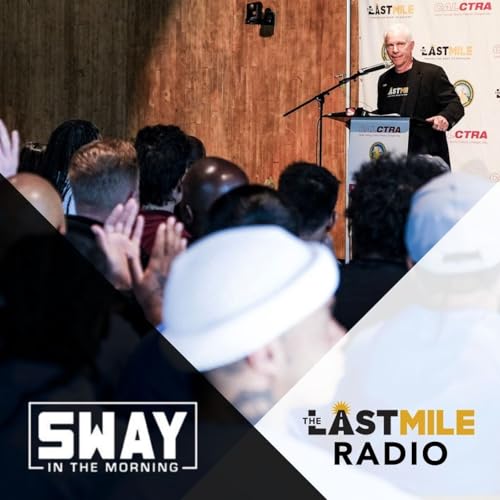
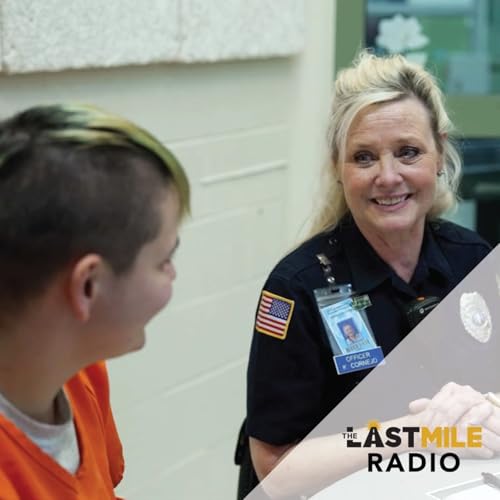
Couverture de The Last Mile Radio

The Last Mile Radio

The Last Mile Radio

De : SiriusXM
Écouter gratuitement

À propos de ce contenu audio

TLM Radio shares inspirational stories from justice-impacted people who have experienced personal transformation. The show also amplifies the voices of influencers and agents of change in the evolution of the U.S. Justice SystemCopyright 2023 SiriusXM Direction Economie Management et direction Politique et gouvernement Sciences sociales
Épisodes
  • Reimagining Prison Through Public Health
    May 9 2026
    Prison environments shape human behavior in profound ways. Years spent in conditions defined by stress, isolation, surveillance, and constant vigilance affect the body, the mind, and the ability to relate to other people. Yet after that experience, society expects people to return home prepared to build relationships, regulate emotions, hold jobs, and reintegrate into their communities. This episode explores how incarceration functions as a public health issue and why the conditions inside correctional facilities play a major role in determining outcomes after release. In collaboration with the Brennan Center for Justice, this is part two of a two-episode series exploring their recent national report on innovative prison reform efforts across the United States focused on dignity, safety, normalization, and rehabilitation. Featuring insights from LB Eisen, Senior Director of the Justice Program at the Brennan Center for Justice, Darrell Norcott, Director of Community Partnerships and Special Projects at AMEND, and Courtney Grubb, Statewide Program Administrator for the Washington Way at the Washington State Department of Corrections, this episode examines prison reform through the lens of public health. Through the AMEND initiative and the Washington Way, we explore how system-wide culture change can reshape correctional environments through staff wellness initiatives, restrictive housing reform, dynamic security, normalization, and relationship-based safety. The episode examines how prolonged isolation impacts both incarcerated people and correctional staff, how communication and mentorship can reduce violence, and how prison systems can evolve into environments that support stability, rehabilitation, and long-term cultural change. Episode Outline: (00:00:00) Prison as a public health issue shaped by stress, trauma, and isolation (00:01:05) Brennan Center report overview and introduction to the AMEND model (00:02:00) Interview with LB Eisen on incarceration and unmet human needs (00:04:03) Restrictive housing, isolation, and rebuilding human interaction (00:07:08) Correctional officers as participants in rehabilitation and reform (00:10:12) Shifting prison culture through everyday human interaction (00:11:18) Introduction to AMEND and the public health framework for incarceration (00:13:14) Individualized care and treating prison as a health environment (00:14:38) The Washington Way and system-wide correctional reform (00:17:10) Staff burnout, PTSD, and the public health crisis affecting corrections officers (00:19:00) Why AMEND begins reform in the most volatile prison environments (00:22:01) Violence, trauma exposure, and transforming prison conditions upstream (00:24:00) Dynamic security and relationship-based safety inside prisons (00:25:50) Communication as a tool for reducing violence and de-escalation (00:29:27) Normalization and redesigning prison environments around dignity (00:30:19) Staff wellness, environmental redesign, and institutional culture change (00:31:18) Contact staff, mentorship, and progression-focused rehabilitation (00:33:16) Defining normalization and aligning prison conditions with reentry goals (00:34:32) Why lasting prison reform depends on culture change (00:35:41) Transforming restrictive housing through engagement and human interaction (00:39:06) A case study of someone leaving restrictive housing after 31 years (00:40:42) Resident-led innovation and proposal-driven prison programming (00:41:55) Gardening programs, peer mentorship, and Norway prison exchange initiatives (00:44:28) Scaling AMEND and adapting reform across entire prison systems (00:47:08) Learning organizations, decarceration, and long-term transformation (00:49:26) Core AMEND principles: public health, normalization, and dynamic security (00:50:22) How prisons can evolve into systems that learn and adapt (00:51:20) Closing reflections and resources for learning more about AMEND Episode Resources: Brennan Center for Justice — Source of the national prison reform report discussed throughout the episodeAMEND at UCSF — Primary initiative featured in the episodeThe Washington Way — WA Statewide implementation of AMEND principlesThe Last Mile — Podcast producer and reform organization The Last Mile Radio is a production of The Last Mile and Sirius XM Radio. The show's executive producers are Chris Redlitz and Beverly Parenti at TLM and Liz Aiello at Sirius XM. The show is produced by Robert Roche at TLM, with technical production by Greg Sahakian, James Bilodeau at Sirius XM. Original music by Maserati-E. For more, visit www.thelastmileradio.org
    Afficher plus Afficher moins
    50 min
  • Inside the Movement to Humanize Prison in America
    Apr 13 2026

    Prison is designed to be a fundamentally abnormal experience—one that removes autonomy, suppresses individuality, and restructures daily life around control and compliance. Yet at the end of that experience, we expect people to return to society as self-directed individuals capable of making decisions, building relationships, holding jobs, and forming identities beyond incarceration.

    This episode explores that central tension: if the daily experience of prison is misaligned with the outcomes we want, then the structure of daily life inside facilities becomes one of the most important variables in criminal justice reform. In collaboration with the Brennan Center for Justice, this is part one of a two-episode series exploring their recent national report examining innovative prison reform efforts across the United States focused on normalization, dignity, safety, and rehabilitation.

    Featuring insights from LB Eisen of the Brennan Center for Justice, Nick Turner of the Vera Institute of Justice, Restoring Promise director Chloe Aquart, and former participant turned researcher Christopher Belcher, this episode focuses on the foundational ideas highlighted in the report. Through the Restoring Promise initiative, we examine redesigned housing units for young adults built around mentorship, responsibility, restorative practices, and meaningful out-of-cell time.

    The conversation explores what it means to humanize correctional environments—creating spaces where people are treated as individuals capable of growth, where staff operate as mentors and stabilizers, and where safety emerges from relationships rather than coercion—suggesting that when incarceration is organized around dignity, prisons can better prepare people for life after release while improving conditions for both residents and staff.

    Episode Resources:

    • Brennan Center for Justice — Source of the national prison reform report discussed throughout the episode
    • Vera Institute of Justice — Developer of the Restoring Promise model
    • Restoring Promise — Primary case study for humanizing prison culture
    • The Last Mile — Referenced as a workforce and education program example
    • Designing for Dignity

    The Last Mile Radio is a production of The Last Mile and Sirius XM Radio. The show's executive producers are Chris Redlitz and Beverly Parenti at TLM and Liz Aiello at Sirius XM. The show is produced by Robert Roche at TLM, with technical production by Greg Sahakian, James Bilodeau at Sirius XM. Original music by Maserati-E. For more, visit www.thelastmileradio.org

    Afficher plus Afficher moins
    45 min
  • Rebuilding Hope After a Wrongful Conviction with Gio Romero
    Nov 13 2025

    Episode Outline:

    (00:00:00) Tara Trask introduces Gio Hernandez Romero and his wrongful conviction case.
    (00:03:17) Growing up in Los Angeles and his family background.
    (00:08:39) How police label young people as gang members.
    (00:14:19) Being tried as an adult and facing a 50-years-to-life sentence.
    (00:16:47) Spending six years in jail before conviction and sentencing.
    (00:18:00) Adjusting to life in prison and the loss of hope.
    (00:19:00) How his sister and family kept him motivated to keep learning.
    (00:23:12) Loyola Law School’s Juvenile Innocence and Fair Sentencing Clinic takes his case.
    (00:25:00) The Conviction Integrity Unit’s role in reopening and exonerating his case.
    (00:29:14) Broader discussion on wrongful convictions and needed criminal justice reform.
    (00:33:00) Joining The Last Mile and learning to code while incarcerated.
    (00:35:30) How coding and education restored his purpose and self-worth.

    (00:37:49) Returning to freedom and facing culture shock after 17 years.
    (00:40:12) Learning to live as an adult for the first time and gaining independence.
    (00:49:10) Sharing a message of hope and perseverance with others inside.
    (00:55:06) The cell phone evidence that proved his innocence.
    (00:57:00) Closing thoughts on gratitude, healing, and the power of reform.

    The Last Mile Radio is a production of The Last Mile and Sirius XM Radio. The show's executive producers are Chris Redlitz and Beverly Parenti at TLM and Liz Aiello at Sirius XM. The show is produced by Robert Roche at TLM, with technical production by Greg Sahakian, James Bilodeau at Sirius XM. Original music by Maserati-E. For more, visit www.thelastmileradio.org

    Afficher plus Afficher moins
    57 min
adbl_web_anon_alc_button_suppression_c
Aucun commentaire pour le moment