Épisodes

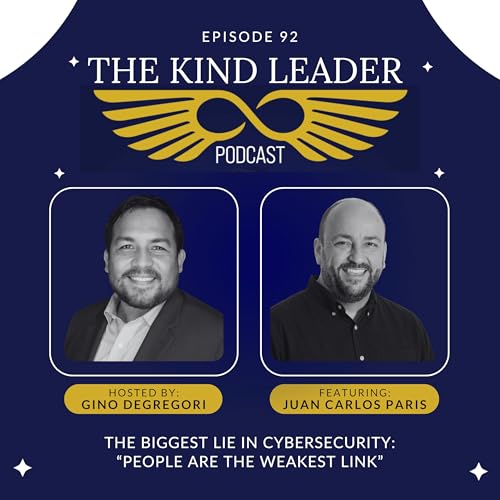
  • The Biggest Lie In Cybersecurity: "People Are The Weakest Link"
    May 13 2026

    What if the biggest risk inside your organization isn't technology… but fear?

    In this powerful episode of The Kind Leader Podcast, Gino Degregori sits down with cybersecurity executive, TEDx speaker, advisor to Duke University's executive cybersecurity program, and director of cybersecurity policy for the Panamanian Banking Association, Juan Carlos Paris.

    For decades, the cybersecurity industry has labeled people as "the weakest link." But Juan Carlos believes that mindset may be one of the greatest strategic mistakes organizations continue to make.

    After decades leading cybersecurity in the banking industry, Juan Carlos explains why fear-based leadership quietly destroys trust, communication, and culture, while cybercriminals continue exploiting human psychology better than most companies do.

    Together, Gino and Juan Carlos explore:

    • Why fear creates silence inside organizations
    • How trust transforms people into defenders
    • Why kindness and accountability can coexist
    • The hidden dangers of fear-based leadership
    • How cybercriminals exploit human behavior and emotion
    • The Three Cs framework: Consciousness, Commitment, and Culture
    • How AI is creating hyper-personalized attacks
    • Why people are not the weakest link

    This conversation goes far beyond cybersecurity.

    It's about the kind of culture leaders create.
    The kind of trust people feel.
    And the kind of impact leadership leaves behind.

    Connect with Juan Carlos Paris:

    • LinkedIn: Juan Carlos Paris Balleza
    • Instagram: @CoachInnovativo
    • Website: www.deusuariosadefensores.com

    Connect with The Kind Leader Podcast:

    • Website: www.konect.to/thekindleaderpodcast
    • YouTube: Kind Leader Podcast
    • Apple Podcasts: The Kind Leader
    • Spotify: The Kind Leader
    Afficher plus Afficher moins
    40 min
  • What If Profit and Purpose Weren't Opposites? Rethinking Leadership, Capital, and Impact with Jenna Nicholas
    May 6 2026
    What if the most profitable businesses were also the most conscious? In this thought-provoking episode of The Kind Leader Podcast, host Gino Degregori sits down with Jenna Nicholas, President of Lightpost Capital, Co-Founder & CEO of Impact Experience, and Forbes 30 Under 30 social entrepreneur, to explore the intersection of spirituality, investing, and leadership. Jenna has helped mobilize over $50 billion in capital away from fossil fuels toward more sustainable and purpose-driven investments. But her work goes far beyond finance. In her book Enlightened Bottom Line, Jenna introduces a framework that challenges how we define success in business: HEAL - Hope, Empathy, Abundance, and Legacy. This conversation explores what it really means to bring these principles into spaces where they're often left unspoken, from boardrooms to investment decisions to high-stakes leadership moments. Through real-world examples, from rethinking how we engage with others to bridging divides between investors and communities, Jenna shows how empathy and connection can unlock better outcomes for everyone involved. In this episode, you'll discover: • Why spirituality belongs in business and investing • The HEAL framework, and how to apply it • How empathy becomes a strategic advantage in high-stakes decisions • Why honest feedback is one of the kindest things a leader can do • How to bridge divides between capital, communities, and perspectives • Why legacy thinking reshapes how leaders build and operate This conversation is a powerful reminder: Leadership isn't just about what you build, it's about what you stand for. 🎧 Listen now to explore how purpose, empathy, and conscious leadership can transform the way you lead, invest, and create impact. 5 Key Takeaways 1. Kind Leadership Is a Discipline, Not a Soft Skill Kindness in leadership isn't about being agreeable, it's about consistently putting people at the center of decisions. It requires intention, presence, and the discipline to lead with both heart and clarity. 2. Profit and Purpose Can, and Should, Coexist The idea that financial success and positive impact are in conflict is outdated. Leaders who align capital with values unlock more sustainable, meaningful, and long-term outcomes. 3. The HEAL Framework Redefines Success Hope, Empathy, Abundance, and Legacy aren't abstract ideals, they are practical lenses for decision-making. When applied consistently, they shape stronger cultures, better investments, and more human organizations. 4. Empathy Creates Better Decisions, Not Just Better Relationships Seeing others as interconnected, not transactional, changes everything. From boardrooms to communities, empathy enables deeper understanding, stronger collaboration, and more effective outcomes. 5. Legacy Thinking Expands Leadership Beyond the Short Term When leaders shift from short-term gains to long-term impact, their decisions change. Thinking about what you leave behind, rather than just what you achieve, transforms how you lead and build. Resources & Additional Information Connect with Jenna NicholasLearn more about Jenna's work at the intersection of conscious leadership, investing, and impact: Website: www.jenna-nicholas.com LinkedIn: Jenna Anita Nicholas Substack: @JennaNicholas2 Instagram: @jennanicholas1 Organizations & Work Lightpost Capital A mission-driven investment and acquisition firm, focused on partnering with visionary companies to support long-term growth while strengthening culture, systems, and positive impact. Impact Experience A community and leadership platform designed to bridge investors, entrepreneurs, and overlooked communities through empathy, dialogue, and shared human connection. Books Enlightened Bottom Line: Exploring the Intersection of Spirituality, Business, and Investing by Jenna Nicholas A thought-provoking exploration of how business and investing can be guided by purpose, integrity, and compassion. Through real stories, practical frameworks, and spiritual insight, Jenna reimagines success as something deeper than profit—showing how leadership, capital, and impact can become vehicles for healing, meaning, and long-term change. Leadership ReflectionBased on Jenna's HEAL Framework: • Which area am I neglecting most right now: Hope, Empathy, Abundance, or Legacy? • How might my leadership change if I intentionally strengthened that area this week? Chapters 00:00 What Enlightened Leadership Really Means 00:35 Bringing Spirituality Into Business and Investing 03:38 Defining Kind Leadership Through Human Dignity 06:36 Practicing Empathy and Loving Kindness in Leadership 09:21 The Uncomfortable Side of Kind Leadership 12:40 The HEAL Framework: Hope, Empathy, Abundance & Legacy 15:23 Legacy Thinking and Long-Term Impact 25:04 Why Hope and Empathy Matter More Than Ever 26:27 Rethinking Legacy and Leadership 27:34 Connecting the HEAL and CARES Frameworks 29:46 Building Bridges Between Capital and Community ...
    Afficher plus Afficher moins
    44 min
  • What Your Body Knows That Your Mind Ignores: Elizabeth Rosenberg on Burnout, Intuition & Leadership
    Apr 29 2026
    What happens when your body forces you to confront a life your mind refuses to question? In this powerful and deeply human episode of The Kind Leader Podcast, host Gino Degregori sits down with Elizabeth Rosenberg, former top-tier communications strategist with over 25 years advising Fortune 500 brands including Apple, Clorox, and Cadillac, and now founder of The Good Advice Company, to explore what it really means to lead with intuition, humanity, and self-awareness. After more than 20 years advising some of the world's most recognized brands, Elizabeth reached a breaking point: a severe health scare that forced her to reevaluate everything. What followed wasn't just a career pivot, it was a transformation. Today, she helps C-suite leaders integrate something most organizations still hesitate to talk about openly: intuition, spirituality, and human connection in leadership. In this conversation, Elizabeth shares how she bridges two worlds that are often seen as incompatible, the corporate and the intuitive, and why the future of leadership depends on bringing them together. Together, Gino and Elizabeth explore what it means to be a kind leader in high-stakes environments, why empathy is often misunderstood, and how leaders can make tough decisions without losing their humanity. They also dive into a topic few leadership conversations address directly: intuition as a skill. Not something mystical or reserved for a few, but something every leader can develop, strengthen, and use to make better decisions in an increasingly complex world. In this episode, you'll discover: • Why burnout can be a turning point, not just a breakdown • The difference between empathy and sympathy in leadership • How intuition can become a practical decision-making tool • Why spirituality (redefined as awareness and connection) belongs in leadership • How to reconnect with yourself in a world overloaded with information • Simple ways to begin developing your intuitive intelligence This conversation challenges a deeply ingrained belief: That leadership must be purely rational, data-driven, and detached. Instead, it offers a more complete picture: The best leaders don't just analyze, they feel, reflect, and connect. 🎧 Listen now to explore how intuition, presence, and humanity can transform the way you lead. 5 Key Takeaways 1. Burnout Can Be a Wake-Up Call, Not a Failure Burnout doesn't always come from hating your work. Sometimes it comes from being deeply misaligned, even in a career you love. When addressed, it can become a turning point for real transformation. 2. Kind Leadership Requires Empathy, Not Just Niceness Kindness isn't about being agreeable. It's about truly understanding others. The difference between empathy and sympathy is what separates leaders who connect… from those who simply manage. 3. Intuition Is a Skill, Not a Gift Every leader has access to intuition. But like any skill, it requires practice. When ignored, it weakens. When developed, it becomes a powerful tool for decision-making, creativity, and clarity. 4. You Can Lead with Both Data and Intuition Leadership isn't either analytical or intuitive, it's both. The most effective leaders use data to inform decisions… and intuition to interpret what data alone cannot explain. 5. Growth Begins When You Step Outside Your Routine New perspectives don't come from repeating the same patterns. Trying something new, no matter how small, can unlock creativity, awareness, and a deeper connection with yourself. Resources & Additional Information Connect with Elizabeth RosenbergLearn more about Elizabeth's work at the intersection of leadership, personal branding, and intuitive intelligence: Website: www.thegoodadvicecompany.com LinkedIn: Elizabeth Rosenberg Substack: Elizabeth Rosenberg Chapters 00:00 Embracing Authenticity: The Journey to Self-Discovery 00:48 The Role of Kindness in Leadership 03:20 Navigating Empathy in Corporate Environments 06:24 The Concept of Chief Spiritual Officer 09:31 Intuition vs. AI: Balancing Technology and Humanity 12:24 Practical Steps to Enhance Intuition in Leadership 25:24 Finding Your Unique Meditative Practice 27:25 Breaking Free from Routine 30:36 Embracing Intuition and Spirituality 33:21 Navigating Burnout and Personal Growth 37:25 The Future of Leadership and Work-Life Balance
    Afficher plus Afficher moins
    42 min
  • Stop Setting Goals: Radhika Dutt on Puzzle Thinking, Innovation & Kind Leadership
    Apr 22 2026
    What if the problem with performance isn't your team… but the way you're asking the question? In this thought-provoking episode of The Kind Leader Podcast, host Gino Degregori sits down with Radhika Dutt, author of Radical Product Thinking, MIT engineer, entrepreneur, and advisor, to explore why traditional goal-setting may be holding organizations back, and what to do instead. Because when leaders ask, "Did you hit your goal?" They trigger defensiveness. But when they ask, "What puzzle are we solving?" They unlock curiosity, ownership, and real innovation. Drawing from her experience building companies and navigating real product failures, Radhika introduces a powerful shift: moving from goal-driven thinking to puzzle-driven thinking, and how that shift transforms both performance and culture. Together, Gino and Radhika explore the difference between artificial, metrics-driven environments and authentic, problem-solving cultures where teams feel safe to share what's really happening. They also break down two practical frameworks leaders can apply immediately: • The 3 O's of Puzzle Setting: Opportunity, Open Questions, Objective • The OHLA Model: Observe, Hypothesize, Learn, Adapt In this episode, you'll discover: • Why goal-setting often creates defensiveness instead of progress • How to reframe work as puzzles to unlock innovation • The difference between artificial vs. authentic cultures • How to build psychological safety through leadership • A practical system to drive growth without losing clarity This episode is a powerful reminder: Leadership isn't about pushing people to hit numbers. It's about helping them solve the right problems. 🎧 Listen now to rethink how you lead, build, and grow. 5 Key Takeaways 1. Replace Goals with Puzzles Traditional goals often trigger defensiveness. Puzzles invite curiosity, ownership, and collaboration. When leaders shift from "Did you hit your target?" to "What are we trying to solve?", teams move from pressure to problem-solving. 2. A Strong Vision Describes a Problem, Not a Destination Vague ambitions don't guide action. Clear problem statements do. When leaders define what problem matters and why, they create alignment, and unlock real autonomy across teams. 3. Measure Progress Through Learning, Not Just Results Asking "Did you hit the goal?" limits transparency. Asking "What did we learn?" expands it. The OHLA framework (Observe, Hypothesize, Learn, Adapt) creates a rhythm where teams can share both wins and failures, without fear. 4. Psychological Safety Enables Real Performance High-performing teams aren't just aligned, they feel safe to tell the truth. When leaders create space for uncertainty, questions, and even mistakes, teams shift from protecting themselves to solving real problems. 5. Kind Leadership Combines Clarity, Autonomy, and Care Kind leadership isn't about being nice. It's about helping people grow. The most effective leaders do three things well: Communicate direction with clarityGive people space to actInvest in their growth That combination creates both performance and trust. Resources & Additional Information Connect with Radhika DuttLearn more about Radhika's work on product thinking, leadership, and organizational transformation: Website: www.radicalproduct.com LinkedIn: Radhika Dutt Books Radical Product Thinking by Radhika DuttA powerful framework for building truly impactful products by shifting from iteration-led to vision-driven thinking. Radhika shows how teams can avoid common "product diseases" and align strategy, execution, and culture around solving meaningful problems, creating products that are focused, scalable, and built to last. Tools & Frameworks Radical Product Toolkit A step-by-step framework to turn vision into clear strategy and priorities. Designed to help teams align, build with purpose, and drive long-term impact. OHLA Toolkit A learning-driven alternative to traditional OKRs. These tools help teams focus on real progress through experimentation, insight, and continuous learning.
    Afficher plus Afficher moins
    48 min
  • What AI Can't Replace: Pete Sacco on Leadership, Consciousness & Human Discernment
    Apr 15 2026
    What if the real question about AI isn't what it can do… but what we bring that it never will? In this powerful and thought-provoking episode of The Kind Leader Podcast, host Gino Degregori sits down with Pete Sacco, Founder & CEO of PTS Data Center Solutions and Gray Wolf Data Centers, with over 27 years of experience building large-scale AI infrastructure. Pete brings a rare perspective at the intersection of technology, leadership, and human consciousness. Having spent decades helping build the very systems shaping our future, he offers a grounded yet expansive view on what AI means, not just for business, but for humanity. This conversation goes far beyond technology. Pete shares his personal journey, from burnout, health struggles, and disconnection, to a complete transformation rooted in responsibility, self-awareness, and inner work. He introduces a powerful framework for change, commit, learn, do, and explores what it really takes to build a life of clarity, purpose, and fulfillment. Together, Gino and Pete dive into one of the most important leadership questions of our time: If machines continue to optimize intelligence… what is the role of human leadership? Pete offers a compelling answer: discernment. While AI continues to accelerate in capability, human beings bring something fundamentally different, the ability to navigate uncertainty, trust intuition, and make decisions beyond pure data. The conversation also explores deeper themes around presence, meditation, consciousness, and the idea that we are not just reacting to life, we are observing it. In this episode, you'll discover: Why the future of leadership is not optimization, but discernmentThe difference between machine intelligence and human consciousnessA practical framework for personal transformation: commit, learn, doHow identifying your "superpowers" can reshape your life and leadershipWhy reducing expectations can dramatically increase happinessThe role of meditation, awareness, and presence in modern leadership This episode challenges the fear-based narrative around AI and replaces it with something more powerful: A vision where technology doesn't replace humanity, but elevates it. We are not behind the technology. We are the technology that matters most. 🎧 Listen now to explore how leadership, consciousness, and innovation come together in one of the most important conversations of our time. 5 Key Takeaways 1. AI Optimizes, Humans DiscernAs AI continues to optimize data, processes, and decisions, the human role becomes clearer: discernment. Leaders are not here to compete with machines, but to decide where and how that intelligence should be applied. 2. Leadership Starts With Radical Self-Responsibility You cannot lead others until you take full ownership of yourself. Everything changes when you realize: you are the architect of both your problems and your solutions. 3. Kind Leadership Requires Truth, Not Comfort Kindness is not about being soft or avoiding hard conversations. It's about delivering the hardest truths with clarity, accountability, and genuine care. 4. Your Superpowers Are the Key to Fulfillment Instead of fixing weaknesses, great leaders identify and design their lives around their strengths. What comes naturally to you is not accidental, it's a signal of where you create the most impact. 5. Awareness Changes Everything You are not your thoughts, your emotions, or your past. When you step back and observe instead of react, you gain clarity, presence, and the ability to lead from a completely different level. Resources & Additional Information Connect with Pete SaccoLearn more about Pete Sacco's work at the intersection of AI infrastructure, leadership, and human consciousness: Website: www.petesacco.com LinkedIn: Pete Sacco Substack: @petesacco Companies & Work PTS Data Center Solutions A leading data center consulting and services firm, delivering strategy, design, and infrastructure solutions across energy, IT, cybersecurity, and data. Since 1998, PTS has helped organizations align technology with business outcomes while driving innovation and sustainability. Gray Wolf Data Centers A next-generation data center platform focused on decentralized, AI-optimized infrastructure. Through high-density, energy-efficient facilities, Gray Wolf is enabling the future of edge computing, private AI, and distributed intelligence. Intuva A data center design and build firm specializing in scalable, high-performance infrastructure for AI and HPC workloads. Intuva helps organizations future-proof their data centers through innovative design, power, and cooling solutions. Books by Pete Sacco Living in Bliss: Achieve a Balanced Existence of Body, Mind, and Spirit A practical and deeply personal guide to transformation, where Pete shares his journey and framework for achieving balance across body, mind, and spirit through intentional change and self-awareness. The Bridge: How Building AI Infrastructure Taught ...
    Afficher plus Afficher moins
    49 min
  • What Nature Teaches Us About Leadership: Ines Garcia on Thriving Teams, Edges & Living Systems
    Apr 8 2026
    What if the answers to better leadership, stronger teams, and more resilient organizations have already been solved… by nature? In this thought-provoking episode of The Kind Leader Podcast, host Gino Degregori sits down with Ines Garcia, organizational coach, Salesforce MVP Hall of Fame inductee, and author, whose work sits at the intersection of Agile, sustainability, and biomimicry. With a unique perspective shaped by years of experience across technology, organizational design, and regenerative thinking, Ines challenges the way we traditionally approach leadership and performance. Instead of focusing only on efficiency, control, and rigid structures, she invites leaders to look at organizations as living systems, dynamic, interconnected, and constantly evolving. Ines introduces a powerful idea: the most innovative and resilient outcomes don't happen at the center of organizations—but at the edges, where different perspectives, teams, and ideas intersect. Throughout the conversation, she explores how leaders can design environments where people truly thrive, why "being kind" goes beyond being nice, and how embracing tension, diversity, and even discomfort can unlock growth and innovation. Together, Gino and Ines dive into what it means to lead in alignment with natural principles, shifting from control to adaptability, from scarcity to abundance, and from rigid structures to more fluid, human-centered systems. In this episode, you'll discover: Why the most valuable growth happens at the "edges" of organizationsHow biomimicry can reshape the way we think about leadership and designWhy diversity, redundancy, and decentralization create resilienceThe role of empathy, slowing down, and creating space in leadershipHow to move from rigid control toward adaptive, thriving systems Whether you're leading a team, building an organization, or rethinking how work gets done, this episode offers a powerful reframe: Leadership isn't about controlling systems, it's about creating the conditions where life, people, and ideas can thrive. 🎧 Listen now to explore how nature-inspired thinking can transform the way we lead, collaborate, and grow. 5 Key Takeaways 1. The Most Powerful Growth Happens at the Edges Innovation, creativity, and resilience don't emerge from rigid structures or silos, they happen where different perspectives, teams, and ideas intersect. Leaders who intentionally create these "edges" unlock new possibilities that wouldn't exist otherwise. 2. Organizations Are Living Systems, Not Machines Treating organizations like predictable, controllable systems limits their potential. When leaders begin to see them as living ecosystems, they shift toward adaptability, connection, and long-term sustainability. 3. Efficiency Alone Is Not Enough Many organizations optimize for speed and efficiency, but overlook other forms of waste, like human energy, creativity, and resources. True effectiveness comes from balancing efficiency with regeneration and long-term value. 4. Diversity, Redundancy, and Decentralization Build Resilience What may look like inefficiency in traditional systems is actually strength in natural systems. Diverse perspectives, overlapping capabilities, and distributed decision-making create organizations that can adapt, survive, and thrive through change. 5. Kind Leadership Is About Designing for Thriving, Not Control Kind leadership isn't about being "nice", it's about creating the conditions where people can grow, contribute, and do meaningful work. This requires empathy, intentional design, and the courage to move away from rigid, outdated structures. Resources & Additional Information Connect with Ines Garcia Learn more about Ines Garcia's work in organizational design, Agile transformation, and biomimicry: Website: inesgarcia.me LinkedIn: Ines Garcia Books by Ines Garcia Nature's Blueprint for Business: Harnessing the Hidden Power of Edges A powerful exploration of how nature's 3.8 billion years of innovation can guide the design of more resilient organizations. This book reveals how "edges", where different systems meet, unlock innovation, adaptability, and growth, with practical strategies leaders can apply immediately. Become More Agile Whilst Delivering Salesforce A practical guide to implementing Agile in real-world environments. Through relatable examples and actionable steps, Ines shows how to drive meaningful change and bring others along the journey while delivering Salesforce solutions. Sustainable Happy Profit A hands-on guide to building organizations that are sustainable, profitable, and human-centered. Instead of just explaining what to do, this book focuses on how to do it, with practical ideas you can apply immediately, no matter your role. Book Recommended Mycelium Running: How Mushrooms Can Help Save the World by Paul Stamets A fascinating exploration of how fungi can restore ecosystems and solve complex environmental challenges. Through practical ...
    Afficher plus Afficher moins
    45 min
  • Your Voice Is Your Power: Sarah Barnes-Humphrey on Visibility, Leadership & Being Heard
    Apr 1 2026
    What does it really take to lead with purpose in a fast-moving, global industry? In this insightful episode of The Kind Leader Podcast, host Gino Degregori sits down with Sarah Barnes-Humphrey, founder of Let's Talk Supply Chain and a leading voice in the global supply chain industry, to explore what modern leadership looks like in complex, high-pressure environments. With years of experience amplifying voices across the industry and building a powerful media platform, Sarah brings a unique perspective on leadership, visibility, and the responsibility leaders carry to create more inclusive and human-centered spaces. Sarah shares her journey from working inside supply chain to becoming a global advocate for connection, storytelling, and industry transformation. Along the way, she reveals why leadership today is less about control and more about creating space for others to be seen, heard, and valued. Together, Gino and Sarah explore what it means to lead with authenticity in a traditionally rigid industry, how storytelling can become a leadership tool, and why representation and inclusion are essential for innovation and long-term success. This conversation challenges the idea that leadership is about having all the answers, and instead reframes it as the ability to listen, elevate others, and build meaningful connections. In this episode, you'll discover: • Why modern leadership is about creating space for others • The role of storytelling in building trust and influence • How visibility can transform careers and industries • Why inclusion drives stronger, more innovative teams • How to lead authentically in high-pressure environments Whether you're leading a team, growing your voice, or navigating your own leadership journey, this episode offers a powerful reminder: Leadership isn't about being the loudest voice in the room, it's about making sure others are heard. 🎧 Listen now to discover how connection, visibility, and authenticity can transform the way we lead. 5 Key Takeaways 1. Leadership Is About Creating Space for Others Great leaders don't just speak, they listen, elevate, and create space for others to contribute. When people feel seen and heard, they show up with more confidence, ownership, and impact. 2. Storytelling Is a Leadership Skill Stories aren't just communication tools, they're connection tools. Leaders who share stories build trust faster, humanize their message, and make their impact more memorable. 3. Visibility Drives Opportunity and Change When people are given visibility, they gain access to new opportunities, ideas, and growth. Leaders play a key role in amplifying voices that might otherwise go unheard. 4. Inclusion Is Not Optional, It's a Competitive Advantage Diverse perspectives lead to better decisions, stronger innovation, and more resilient organizations. Inclusive leadership isn't just the right thing to do, it's essential for long-term success. 5. Authenticity Builds Trust in Complex Environments In fast-moving and high-pressure industries, authenticity becomes a leader's greatest asset. When leaders show up as themselves, they create stronger relationships and more sustainable impact. Resources & Additional Information Connect with Sarah Barnes-Humphrey Learn more about Sarah's work in supply chain, leadership, and industry storytelling: LinkedIn: Sarah Barnes-Humphrey Website: sarahbarneshumphrey.com Podcasts: Let's Talk Supply Chain PodcastBlended Podcast Books: I Buried Her in a French Press: A Memoir About Finding My Voice and the Power of Being Heard by Sarah Barnes-Humphrey A powerful memoir on finding your voice, building self-worth, and turning personal challenges into strength. Sarah shares how embracing your story can become the foundation for confidence, impact, and meaningful leadership.
    Afficher plus Afficher moins
    43 min
  • How You Show Up Is Leadership: John Donnelly on Presence, Responsibility & Inner Discipline
    Mar 25 2026
    Leadership is often measured by results. But the leaders people remember… are defined by how they show up. In this thoughtful and deeply grounded episode of The Kind Leader Podcast, host Gino Degregori sits down with John Donnelly, a leader with over 27 years in the mortgage industry, including 17 years at Service First Mortgage, to explore what it really means to lead with presence, responsibility, and intention. John's perspective isn't just shaped by decades in business. It's also shaped by challenge, including climbing Mount Kilimanjaro, an experience that reflects the discipline, resilience, and mindset he brings into leadership every day. Drawing from this journey, John shares a powerful truth: leadership isn't just about decisions, strategy, or outcomes, it starts with who you are and how you show up in the moments that matter most. Together, Gino and John explore the often overlooked dimensions of leadership: How you show up under pressure How you carry responsibility without losing clarity How your presence shapes trust, culture, and performance This conversation moves beyond traditional leadership frameworks and into something deeper, the awareness, discipline and intentionality required to lead in a way that actually lasts. In this episode, you'll discover: Why leadership starts with how you show up, not just what you doHow presence and awareness shape team culture more than strategyThe hidden weight of responsibility leaders carry, and how to navigate itWhy clarity and intention matter most in high-stakes environmentsHow small moments of leadership create long-term impact Whether you're leading a team, an organization, or simply trying to grow as a leader, this episode offers a powerful reminder: Leadership isn't just about driving outcomes. It's about how you show up in the moments that shape them. 🎧 Listen now to explore a more intentional, human-centered approach to leadership. 5 Key Takeaways 1. Leadership Begins With How You Show UpLeadership isn't just about decisions or outcomes. It starts with your presence. The energy, mindset, and attitude you bring into a room shape how others respond, perform, and trust you. 2. Responsibility Is Internal Before It's ExternalGreat leaders don't just carry responsibility for results. They take ownership of their reactions, their mindset, and how they show up under pressure. That internal discipline is what creates external consistency. 3. Pressure Reveals Your Leadership, It Doesn't Create ItHigh-stakes moments don't define who you are, they expose it. The habits, mindset, and discipline you build daily determine how you lead when things get hard. 4. Discipline Creates Clarity in Uncertain MomentsWhen everything feels complex or overwhelming, disciplined thinking and intentional action bring clarity. Leaders who stay grounded can make better decisions without reacting emotionally. 5. Leadership Is Built in Small, Consistent MomentsIt's not the big speeches or milestones that define leadership. It's the small, everyday moments: how you respond, how you listen, and how you carry yourself consistently over time. Resources & Additional Information Connect with John DonnellyLearn more about John Donnelly's leadership journey, insights, and perspective on intentional, disciplined leadership: Website: johndonnelly.com LinkedIn: John Donnelly Books RecommendedLove Does by Bob Goff A powerful reminder that leadership is not just about beliefs, but about action. This book explores what it means to live with intention, show up for others, and lead through love, courage, and everyday decisions. The 12-Hour Walk by Colin O'Brady An inspiring guide on breaking limiting beliefs and reconnecting with yourself. Through a simple but transformative challenge, it highlights the power of discipline, mindset, and intentional solitude to unlock your full potential.
    Afficher plus Afficher moins
    46 min