Épisodes

  • 10 Ways to Build Wealth, Opportunity, and Legacy in Rural America
    Jul 15 2026

    Takeaways

    • Action beats perfection. You don't need the perfect business plan, website, or logo — you need to start, and you can start in the next 30 days.
    • Diversified income isn't a betrayal of "real" farming or ranching. 80% of farm families already have a spouse working off-farm, and stacking revenue streams (agritourism, direct sales, speaking, content, equipment rentals) is smart, not lesser.
    • The strongest rural businesses are built on story and relationships, not just product. People buy the family, the faith, the failures, and the legacy behind what you sell — then they buy direct, because they crave the connection.

    In this solo episode of The Heart of Rural America, Amanda Radke answers the question she gets asked more than almost any other: how do you build wealth, opportunity, and a lasting legacy for your family and community when you live in the middle of nowhere? Amanda speaks on entrepreneurship all over the country — at ag banking conferences, cattlemen's and cattlewomen's events, Farm Bureau, Farm Credit — and this episode is her chance to lay out the full framework in one sitting.

    She opens by knocking down the excuse she hears constantly: that small towns don't have enough customers, enough opportunity, or enough reason to stay. Living in South Dakota, where cattle outnumber people four to one, Amanda argues rural America doesn't suffer from a lack of opportunity — it suffers from a lack of vision and the confidence to chase it.

    From there she counts down ten practical, specific moves: stop waiting for permission and just start messy (she began as a $30-an-article freelance writer during the 2008 recession); build around problems, not products; use the internet to serve locally but market nationally; stack multiple income streams the way she and her husband Tyler did, renting out ranch buildings before they could even afford cattle; become a better storyteller, because people buy stories before they buy products; turn relationships into real opportunities; sell direct to cut out the middleman and build trust with consumers hungry for transparency; invest in skills — public speaking, sales, writing, leadership — that appreciate forever; build a brand bigger than yourself, using the founding of American Land and Legacy as her own example; and, at number one, bring back the family dinner table as the real engine of rural economic development.

    Amanda closes by rejecting the narrative of rural decline. She sees innovators, young families moving home, ranchers building direct-to-consumer brands, and moms starting businesses from the kitchen table — and she argues the future of rural America will be built one family, one business, one small town at a time.

    Presented by Bid on Beef | CK6 Consulting | CK6 Source | Real Tuff Livestock Equipment | Redmond RealSalt | Dirt Road Radio | All American Angus Beef | Radke Land & Cattle

    • Use code RADKE for $10 off your next All American Angus Beef order at www.BidOnBeef.com
    • Save on Redmond Real Salt with code RADKE at https://shop.redmondagriculture.com/
    • Check out Amanda's agricultural children's books here: https://amandaradke.com/collections/amandas-books
    • Learn more about Bulletproofing Your Direct-To-Consumer Beef Enterprise: https://amandaradke.com/products/bulletproof-your-beef-business
    Afficher plus Afficher moins
    20 min
  • Homesteading for Beginners: How to Raise Food, Teach Kids, and Build a Self-Sufficient Life
    Jul 1 2026

    Takeaways

    • Why learning to grow food and understand agriculture builds stronger families and communities.
    • How homesteading teaches resilience, critical thinking, entrepreneurship, and practical life skills.
    • Simple first steps anyone can take toward becoming more self-sufficient without changing their entire lifestyle.

    Summary of the Episode

    What happens when a food safety expert, homesteader, and educator decides to reinvent the way families learn about agriculture?

    In this inspiring conversation, Amanda sits down with Kody Hanner, founder of Homestead Education, to discuss the growing movement toward self-sufficiency, homeschooling, and reconnecting families with where their food comes from.

    Kody shares the personal story that transformed her family's life after her husband was diagnosed with end-stage liver disease, leading them to embrace a healthier lifestyle centered around raising their own food, homeschooling their six children, and building a thriving homestead in North Idaho.

    Together, Amanda and Kody explore why practical life skills matter now more than ever, how agriculture education can shape future generations, and why entrepreneurship is key to keeping rural America strong. They also discuss the importance of work ethic, raising resilient children, supporting local farmers, and creating new opportunities for family farms through direct-to-consumer agriculture.

    Whether you're raising kids on a ranch, living on a small acreage, or simply looking for ways to become more self-sufficient, this episode is filled with practical advice and encouragement to take the first step.

    Key Topics Covered

    • Kody Hanner's journey into homesteading and homeschooling
    • Lessons learned from building a self-sufficient family lifestyle
    • Why COVID changed the conversation around food security
    • The importance of teaching children where food comes from
    • Agriculture education for homeschool, public school, and families
    • Practical first steps toward homesteading
    • Raising resilient kids through hands-on learning
    • Entrepreneurship and diversifying farm income
    • Direct-to-consumer agriculture and adding value to family farms

    Connect with Kody Hanner

    Visit thehomesteadeducation.com to explore Homestead Education curriculum, survival courses, agriculture science resources, and tools designed to help families, educators, and communities reconnect with food, farming, and self-sufficiency.

    Presented by Bid on Beef | CK6 Consulting | CK6 Source | Real Tuff Livestock Equipment | Redmond RealSalt | Dirt Road Radio | All American Angus Beef | Radke Land & Cattle

    • Use code RADKE for $10 off your next All American Angus Beef order at www.BidOnBeef.com
    • Save on Redmond Real Salt with code RADKE at https://shop.redmondagriculture.com/
    • Check out Amanda's agricultural children's books here: https://amandaradke.com/collections/amandas-books
    • Learn more about Bulletproofing Your Direct-To-Consumer Beef Enterprise: https://amandaradke.com/products/bulletproof-your-beef-business
    Afficher plus Afficher moins
    42 min
  • SD Property Rights Discussion Part 2 Featuring Governor Larry Rhoden | Hosted by American Land & Legacy
    Jun 22 2026

    Takeaways

    • Governor Rhoden signed HB 1052 and gave a direct, unambiguous answer when asked if he would uphold it against any attempt to amend or repeal it in the upcoming legislative session: yes.
    • Rhoden does not support special tax exemptions or deals for data centers, but he did sign the Data Center Bill of Rights for Citizens carried by Senator Carr and Speaker Hansen, which requires data centers to prove they won't negatively impact South Dakota's water supply or electricity rates.
    • Rhoden points to a decades-long record on property rights, including leading the charge after the 2005 Kelo v. New London Supreme Court decision, carrying the Open Fields Doctrine bill, and resolving the non-meandered bodies of water issue after 20 years of legal limbo.

    In Part 2 of American Land and Legacy's exclusive gubernatorial candidate interview series, Amanda Radke sits down with South Dakota Governor Larry Rhoden ahead of the July 28th runoff election.

    With the same questions put to both candidates, this conversation gives landowners a direct side-by-side look at where each man stands on the property rights issues that matter most to South Dakota's farmers, ranchers, and rural communities.

    Rhoden speaks to his record as a lifelong West River rancher and his history of working on property rights legislation going back two decades, including model legislation he carried in the wake of the Kelo v. New London decision, the Open Fields Doctrine bill he got across the finish line as lieutenant governor, and the resolution of the non-meandered bodies of water issue that had been in limbo for 20 years.

    On the most pressing current questions, Rhoden is direct: he signed HB 1052, he wouldn't hesitate to do it again, and he will veto any attempt to weaken or repeal it. He does not support special tax exemptions for data centers, though he's open to using existing incentive structures if facilities comply with the rules laid out in the Data Center Bill of Rights he signed. And on the question of federal pressure to expand eminent domain for energy infrastructure, he expresses confidence in the working relationship his administration has built with the Trump team while maintaining that South Dakota's own statutes already offer stronger protections than any other state in the union.

    The conversation also covers SB 201's complicated legacy, the local control concerns in Section 4 of that bill, the case for and against a constitutional amendment on eminent domain, rural broadband investment, international trade missions, and what Rhoden sees as the key differences between himself and Toby Doeden heading into the runoff.

    Key Topics Covered

    • HB 1052 and the compromise threshold discussion during negotiations: why it didn't get support and what Rhoden did when the bill reached his desk
    • Data centers: his opposition to special tax exemptions, his support for the Data Center Bill of Rights for Citizens, and how he views existing incentive structures
    • President Trump's executive orders on data centers and expanded eminent domain for energy infrastructure, and how Rhoden plans to navigate federal pressure while protecting South Dakota landowners
    • His decades-long property rights record: Kelo v. New London model legislation, the Open Fields Doctrine bill, and the non-meandered bodies of water resolution
    • SB 201 and RL 21: Rhoden's perspective on what the bill actually did, why the referendum process surprised him, and how Summit Carbon's loss of trust with landowners shaped the outcome
    • Section 4 of SB 201 and the local control concerns around PUC authority versus county and township ordinance-making power

    https://www.americanlandandlegacy.org/

    Afficher plus Afficher moins
    23 min
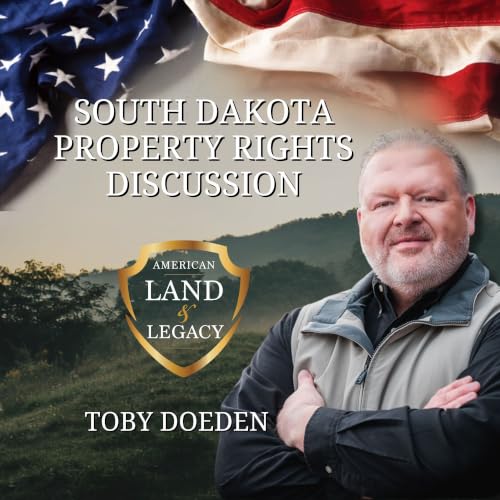
  • SD Property Rights Discussion Part 1 Featuring Toby Doeden | Hosted by American Land & Legacy
    Jun 22 2026

    Takeaways

    • Toby Doeden opposes any attempt to repeal HB 1052 and has promised the fastest veto in South Dakota history if a repeal ever reaches his desk as governor.
    • On the question of a compromise threshold for eminent domain projects, Doeden is firm: when it comes to God-given constitutional rights, there is no wiggle room and no compromise.
    • Doeden believes true economic development in South Dakota doesn't require multi-billion dollar subsidized projects. It comes from supporting local entrepreneurs, small businesses, farmers, and ranchers.

    Coming off a first-place finish in the June 2nd Republican primary with 31% of the vote in a four-way race, Toby Doeden sits down with Amanda Radke for a direct, issue-focused conversation on the property rights topics South Dakota landowners care about most.

    This is Part 1 of American Land and Legacy's two-part exclusive interview series ahead of the July 28th runoff election, where Doeden will face Interim Governor Larry Rhoden. With thousands of landowners reaching out to Amanda asking who to support, she took the question straight to the candidates themselves.

    The conversation covers the full range of property rights issues at stake in this race: the legacy of SB 201 and the overwhelming voter rejection of RL 21, the landmark HB 1052 that eliminated eminent domain for CO2 pipelines, the ongoing debate over data centers and tax exemptions, and how a Doeden administration would respond to federal pressure to expand eminent domain for energy infrastructure.

    Doeden is clear on his foundational position: every decision he makes as governor will be rooted in protecting God-given constitutional rights, and he will mirror the will of the people, not the will of lobbyists and big donors. He points to the 59% voter rejection of RL 21 across 65 of 66 counties as proof of where South Dakotans stand, and argues that the legislature's decision to push SB 201 through anyway was a direct failure to represent the people.

    He also addresses the economy, rural communities, and what he sees as the real differences between himself and his runoff opponent, including a 38% increase in state spending, rising crime, doubled property taxes, and a sales tax increase coming in 2027.

    Key Topics Covered

    • The SB 201 / RL 21 Landowner Bill of Rights: what went wrong and how a Doeden administration would honor the will of South Dakota voters
    • HB 1052 and eminent domain for CO2 pipelines: Doeden's commitment to protecting and defending this nation-leading legislation
    • Whether a compromise threshold for pipeline projects is on the table (short answer: no)
    • The data center debate: the 50-year tax exemption attempt versus the Data Center Bill of Rights for Citizens passed by Senator Carr and Speaker Hansen
    • President Trump's executive orders expanding eminent domain for energy infrastructure and how Doeden would balance federal direction with South Dakota's states' rights
    • What economic development actually looks like for South Dakota, and why it doesn't require big subsidized projects
    • The challenges facing rural communities, small farms, and ranches, and who Doeden would bring to the table to address them
    • How Doeden's primary results reflect a statewide demand for change, and what he sees as the key differences between his vision and Larry Rhoden's record
    • Reuniting the Republican Party after a competitive four-way primary and what that means going into the runoff

    https://www.americanlandandlegacy.org/

    Afficher plus Afficher moins
    19 min
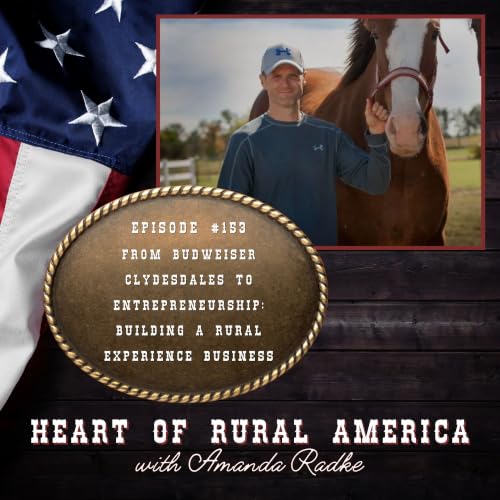
  • From Budweiser Clydesdales to Entrepreneurship: Building a Rural Experience Business
    Jun 17 2026

    Takeaways

    • Why creativity and diversification are essential for keeping families profitable in agriculture
    • How JFP Equine transformed Clydesdales into a unique experiential business model
    • Why opening your farm gates can strengthen connections between consumers and agriculture
    • The marketing strategies helping a small rural business attract visitors from across the country
    • How entrepreneurship creates opportunities on even small acreage operations

    Barclay Poole takes listeners behind the scenes of JFP Equine and explains how his family built an immersive Clydesdale experience business around some of agriculture’s most iconic animals. Listeners will hear stories from the Budweiser Clydesdale operation, learn what makes these horses so special, and discover how one family is using creativity and customer experience to create new revenue streams in rural America. This episode is packed with practical lessons for entrepreneurs, livestock producers, and anyone passionate about preserving rural communities.

    Key Topics Covered:

    • The Poole family’s journey from Canada to the United States
    • Behind-the-scenes insights from managing the Budweiser Clydesdales
    • Building a profitable agricultural business on 10 acres
    • Creating hands-on farm experiences consumers will travel for
    • Marketing strategies for rural businesses and agricultural entrepreneurs
    • The challenges and opportunities facing the Clydesdale industry
    • Why emotional connection and storytelling matter in agriculture
    • The importance of keeping families on the land through innovation and entrepreneurship

    Follow Amanda Radke on social media and subscribe to The Heart of Rural America for more episodes featuring the voices shaping agriculture, rural values, and constitutional freedoms.

    Presented by Bid on Beef | CK6 Consulting | CK6 Source | Real Tuff Livestock Equipment | Redmond RealSalt | Dirt Road Radio | All American Angus Beef | Radke Land & Cattle

    • Use code RADKE for $10 off your next All American Angus Beef order at www.BidOnBeef.com
    • Save on Redmond Real Salt with code RADKE at https://shop.redmondagriculture.com/
    • Check out Amanda's agricultural children's books here: https://amandaradke.com/collections/amandas-books
    • Learn more about Bulletproofing Your Direct-To-Consumer Beef Enterprise: https://amandaradke.com/products/bulletproof-your-beef-business
    Afficher plus Afficher moins
    32 min
  • The Future of Cattle Ranching: Why Independent Producers Are Winning Again
    Jun 3 2026

    Takeaways

    • Independent cattle producers are finally seeing leverage after decades of survival mode
    • Strong genetics and strategic breeding decisions are creating massive opportunities in today’s cattle market
    • Ranchers must embrace entrepreneurship and free market thinking to build long term success

    Amanda Radke sits down with Chris Earl at Meat Stock, surrounded by thousands of beef enthusiasts, to discuss the state of the cattle industry, genetics, beef demand, and why independent producers may finally be entering their strongest market cycle in generations.

    Chris shares why cattle producers deserve more credit for surviving decades of difficult market conditions, how genetics are shaping the future of beef production, and why entrepreneurship may be the biggest opportunity for rural America moving forward.

    Together, Amanda and Chris discuss everything from beef demand and policy shifts to free market capitalism, cow numbers, family ranch survival, and what producers can do today to position themselves for the future.

    Key Topics Covered:

    • Why CK6 Consulting saw record breaking sale seasons
    • Beef genetics and selection pressure in today’s market
    • Why independent producers finally have leverage
    • Entrepreneurship versus commodity thinking
    • The future outlook for beef demand
    • Why producers must advocate for themselves
    • Politics, policy shifts, and family ranch survival
    • Building generational opportunities in agriculture

    Follow Amanda Radke on social media and subscribe to The Heart of Rural America for more episodes featuring the voices shaping agriculture, rural values, and constitutional freedoms.

    Presented by Bid on Beef | CK6 Consulting | CK6 Source | Real Tuff Livestock Equipment | Redmond RealSalt | Dirt Road Radio | All American Angus Beef | Radke Land & Cattle

    • Use code RADKE for $10 off your next All American Angus Beef order at www.BidOnBeef.com
    • Save on Redmond Real Salt with code RADKE at https://shop.redmondagriculture.com/
    • Check out Amanda's agricultural children's books here: https://amandaradke.com/collections/amandas-books
    • Learn more about Bulletproofing Your Direct-To-Consumer Beef Enterprise: https://amandaradke.com/products/bulletproof-your-beef-business
    Afficher plus Afficher moins
    23 min
  • The Truth About AI Data Centers and Rural America with Sara Steever
    May 20 2026

    Takeaways

    • AI data centers require enormous amounts of electricity and water resources
    • Rural communities are increasingly concerned about property rights and local control
    • The economic promises tied to hyperscale data centers may not match reality
    • AI technology presents both opportunities and risks for jobs, privacy, and national security
    • South Dakota lawmakers debated major legislation involving data center tax incentives and citizen protections

    In this episode of The Heart of Rural America, Amanda Radke sits down with longtime friend and technology expert Sara Steever for an in-depth conversation about AI, hyperscale data centers, property rights, and the future of rural America.

    Sara explains the growing concerns surrounding massive data center developments proposed across South Dakota and other rural communities. From energy consumption and water usage to economic development claims and surveillance concerns, this episode breaks down the realities behind the AI boom and what it could mean for agriculture, small towns, and future generations.

    Amanda and Sara also discuss the role of government incentives, local control, free markets, and why first principles like privacy, critical thinking, and faith matter more than ever in an increasingly digital world.

    Key Topics Covered:

    • What hyperscale AI data centers actually are
    • How much electricity large data centers consume
    • The hidden water usage tied to AI infrastructure
    • Economic development promises versus real job creation
    • Property rights and local community concerns
    • South Dakota legislation involving data centers
    • AI’s impact on jobs and workforce development
    • National security concerns related to AI and China
    • Privacy, surveillance, and deepfake technology
    • Why critical thinking and faith matter in the AI era

    Follow Amanda Radke on social media and subscribe to The Heart of Rural America for more episodes featuring the voices shaping agriculture, rural values, and constitutional freedoms.

    Presented by Bid on Beef | CK6 Consulting | CK6 Source | Real Tuff Livestock Equipment | Redmond RealSalt | Dirt Road Radio | All American Angus Beef | Radke Land & Cattle

    • Use code RADKE for $10 off your next All American Angus Beef order at www.BidOnBeef.com
    • Save on Redmond Real Salt with code RADKE at https://shop.redmondagriculture.com/
    • Check out Amanda's agricultural children's books here: https://amandaradke.com/collections/amandas-books
    • Learn more about Bulletproofing Your Direct-To-Consumer Beef Enterprise: https://amandaradke.com/products/bulletproof-your-beef-business
    Afficher plus Afficher moins
    45 min
  • Lawfare in Agriculture: The Hidden Threat to American Ranchers with Heather Maude
    May 6 2026

    Takeaways

    • Lawfare is a growing issue impacting farmers and ranchers across America
    • Government overreach can have devastating personal and financial consequences
    • Civic engagement is essential to protect property rights and rural communities

    In this powerful season premiere, Amanda Radke sits down with rancher Heather Maude to discuss her family’s legal battle with federal agencies over a land dispute that escalated into felony charges. Heather shares how their case became a national example of lawfare in agriculture, the emotional toll it took on her family, and how they ultimately fought back. The episode also explores broader concerns about government accountability, property rights, and the importance of staying engaged in policy decisions that impact rural America.

    Key Topics Covered:

    • Heather Maude’s legal battle with the USDA and US Forest Service
    • The concept and real-world impact of lawfare in agriculture
    • Property rights and federal overreach
    • The role of political leadership and accountability
    • Advocacy efforts to protect rural landowners
    • The importance of civic engagement in shaping policy
    • Rebuilding life and finding normalcy after a public legal battle

    Follow Amanda Radke on social media and subscribe to The Heart of Rural America for more episodes featuring the voices shaping agriculture, rural values, and constitutional freedoms.

    Presented by Bid on Beef | CK6 Consulting | CK6 Source | Real Tuff Livestock Equipment | Redmond RealSalt | Dirt Road Radio | All American Angus Beef | Radke Land & Cattle

    • Use code RADKE for $10 off your next All American Angus Beef order at www.BidOnBeef.com
    • Save on Redmond Real Salt with code RADKE at https://shop.redmondagriculture.com/
    • Check out Amanda's agricultural children's books here: https://amandaradke.com/collections/amandas-books
    • Learn more about Bulletproofing Your Direct-To-Consumer Beef Enterprise: https://amandaradke.com/products/bulletproof-your-beef-business
    Afficher plus Afficher moins
    39 min