Couverture de The Field Guides

The Field Guides

The Field Guides

De : The Field Guides
Écouter gratuitement

À propos de ce contenu audio

Nature nerds rejoice! The Field Guides is a monthly podcast that will bring you out on the trail, focusing on the science of our North American wildlife. Nature et écologie Science
Épisodes
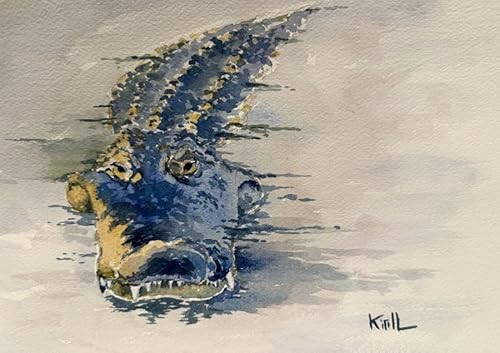
  • Ep. 78 - 3 Guys and A Gator (featuring Chip Campbell)
    Jan 31 2026
    It’s gator time, folks! It seems like we should’ve already covered this topic, but, nope, this is our first ever episode on the American Alligator (Alligator mississippiensis), and we’ve got two ringers to help: Daniel returns (our Field Guide host who moved to Florida last year) and he’s joined by his mentor in all things swamp-related, Chip Campbell. Chip spent twenty years running Okefenokee Adventures, leading interpretive tours in the Okefenokee National Wildlife Refuge, and his knowledge of alligator natural history and ecology runs deep.Thanks to our Patrons, this episode is also an on-the-road joint. The guys are deep in the Florida Everglades on a multi-day paddling trip, and they take a break at camp to talk with Chip about all things alligator — with a special focus on separating gator myths from reality.And, unfortunately for those of you crushing on Steve, this one’s 100% Steve-free.This episode was recorded on Dec. 31, 2025 at Watson’s Place campsite in Everglades National Park.Episode Notes and LinksAlligators, metabolism, and the “dog comparison”During the episode, Chip mentioned a study suggesting that several alligators could be maintained on roughly the same caloric intake as a single dog. We were not able to locate a study that makes that specific numerical comparison. However, the underlying idea is strongly supported by research on alligator physiology: American alligators have extremely low metabolic rates compared to warm-blooded mammals because they are ectothermic and do not spend energy maintaining body temperature. Classic physiological work shows that adult alligators can have daily energy expenditures that are only a small fraction of those of similarly sized mammals, making informal comparisons like this directionally accurate even if the exact ratio is anecdotal rather than experimental. Source: Coulson, R. A. (1989). Biochemistry and physiology of alligator metabolism in vivo. Integrative and Comparative Biology, 29(3), 921–934. https://doi.org/10.1093/icb/29.3.921Freshwater “sipping” — the study behind the observation The behavior Chip describes is documented in a study by Nifong and Lowers, which examined how coastal alligators use estuarine habitats. The authors note that after heavy rainfall, a thin layer of freshwater can temporarily sit on top of saltier water, and alligators will take advantage of this by drinking from the surface. This helps them manage hydration and salt balance in brackish environments, despite lacking the salt-excreting glands found in crocodiles. Source: Nifong, J. C., & Lowers, R. H. (2017). Reciprocal intraguild predation between Alligator mississippiensis and elasmobranchs in the southeastern United States. Southeastern Naturalist, 16(3), 383–396.Alligator growth vs. ageChip addressed the myth that alligators continue to grow throughout their life. Echoing what he reported, research on American alligators shows that although hatchlings and juveniles grow rapidly, their rate of growth slows substantially as they get older, and studies indicate they reach near-maximum body size well before the end of their lives. Long-term data suggest many alligators stop adding significant length by roughly 25–35 years of age, and more recent work has revised the classic idea of indefinite growth toward a pattern of determinate growth with a growth plateau in adulthood. Human harvest of alligators in LouisianaAs Chip said, Louisiana supports the largest wild harvest program for the American alligator in the United States, with more than 2,000 licensed hunters routinely harvesting an estimated 30,000–35,000 wild alligators annually under a regulated tagging system. In contrast, other states such as Florida have had regulated harvest programs with substantially lower annual take.” Sources: Joanen et al. (2021), Evaluation of Effects of Harvest on Alligator Populations in Louisiana, Journal of Wildlife Management; Louisiana Department of Wildlife and Fisheries Alligator Annual Report (2019–2020); Hines (SEAFWA) status report on Florida alligators.Fatal Alligator AttacksIn this episode, Chip discusses the history of fatal alligator-human conflicts, highlighting the 1973 Sharon Holmes incident as the first "fully confirmed" fatal attack in modern records. While the Holmes incident is often cited as the definitive first case, there was an earlier death that some consider to be the first modern fatality. Historical records show why Chip’s reference to the Holmes case being the first “fully confirmed” case is accurate:Sharon Holmes (1973): On August 16, 1973, 16-year-old Sharon Holmes was killed while swimming at Oscar Scherer State Park. This is widely cited as the first fully confirmed fatality because of the absolute nature of the evidence: the attack was witnessed by bystanders, and a subsequent necropsy of the 11-foot 3-inch alligator found conclusive physical remains. This event marked a turning point in ...
    Afficher plus Afficher moins
    1 h et 16 min
  • Ep. 77 - Mite-y Cool: The Amazing, Unseen World of Feather Mites
    Nov 1 2025

    In this episode, Bill and Steve dive into a tiny, bustling world - a world that’s hiding on the feathers of the birds we see every day. Joining them is Dr. Alix Matthews, postdoctoral research associate in the Department of Biological Sciences at the University at Buffalo, and she reveals the strange lives of feather mites — how these barely-visible hitchhikers feed and get around and whether or not they’re helping or hurting their avian hosts.

    This episode was recorded on September 4, 2025 at Walton Woods in Amherst, NY.

    Episode Notes and Links

    Check out Dr. Matthews’s website and research here.

    And watch a presentation on mites she did for Audubon Arkansas in October 2025.

    Sponsors and Ways to Support Us

    Gumleaf Boots, USA (free shipping for patrons)

    Thank you to Always Wandering Art (Website and Etsy Shop) for providing the artwork for many of our episodes.

    Support us on Patreon.

    Check out the Field Guides merch at our Teespring store. It’s really a great deal: you get to pay us to turn your body into a billboard for the podcast!

    Photo Credit

    Dr. Alix Matthews - https://matthewsalix.weebly.com/feather-mites.html

    Afficher plus Afficher moins
    Moins d'une minute
  • Ep. 76 - The Insect Apocalypse! (Part 2)
    Oct 15 2025
    It’s part 2 of our dive into the Insect Apocalypse, with our good friend Dr. Jason Dombroskie from the Cornell University Insect Collection!In this part, Jason fills us in on the drivers of the Insect Apocalypse and - most importantly - what we can do about it.This episode was recorded on August 21, 2025 at Rattlesnake Hill Wildlife Management Area in Dalton, NY.. Episode NotesDuring the episode, we made the claim that 40 million acres of the US is lawn, and that that area is equal to all of the country’s National Parks put together. True? Well, sort of. The claim that the U.S. has about 40 million acres of lawn—roughly equal to all our national parks combined—is only partly true. A NASA-funded study led by Cristina Milesi estimated that turfgrass covers about 128,000 km² (≈31 million acres) of the continental U.S., making it the largest irrigated “crop” in the country (Milesi et al., Environmental Management, 2005; NASA Earth Observatory). Later analyses and popular summaries often round that up to ≈40 million acres (e.g., Scienceline, 2011; LawnStarter, 2023). By comparison, the total land area of all officially designated U.S. National Parks is about 52.4 million acres, while the entire National Park System—which also includes monuments, preserves, and historic sites—covers about 85 million acres (National Park Service, 2024). So while lawns and parks occupy areas of similar magnitude, lawns do not actually equal or exceed the combined area of the national parks. Is it better to mulch leaves on your lawn or leave them be? Here’s what we found: It’s generally best to mulch your leaves with a mower rather than rake or remove them. Research from Michigan State University found that mowing leaves into small pieces allows them to decompose quickly, returning nutrients to the soil and reducing weeds like dandelions and crabgrass (MSU Extension, “Don’t rake leaves — mulch them into your lawn”, 2012). Cornell University studies similarly show that mulched leaves improve soil structure, moisture retention, and microbial activity (Cornell Cooperative Extension, “Leaf Mulching: A Sustainable Alternative”, 2019). However, in garden beds, wooded edges, or under shrubs, it’s often better to leave leaves whole, since they provide winter habitat for butterflies, bees, and other invertebrates that overwinter in leaf litter (National Wildlife Federation, “Leave the Leaves for Wildlife”, 2020). The ideal approach is a mix: mow-mulch leaves on grassy areas for turf health and leave them intact where they naturally fall to support biodiversity and soil ecology. Episode LinksThe Cornell University Insect Collection Also, check out their great Instagram feedAnd their annual October event InsectapaloozaFind out more about the recently discovered species of Swallowtail, Papilio solstitius, commonly known as the Midsummer Tiger Swallowtail- https://www.sci.news/biology/papilio-solstitius-13710.htmlSponsors and Ways to Support UsThank you to Always Wandering Art (Website and Etsy Shop) for providing the artwork for many of our episodes.Support us on Patreon.Works CitedBiesmeijer, J.C., Roberts, S.P., Reemer, M., Ohlemuller, R., Edwards, M., Peeters, T., Schaffers, A.P., Potts, S.G., Kleukers, R.J.M.C., Thomas, C.D. and Settele, J., 2006. Parallel declines in pollinators and insect-pollinated plants in Britain and the Netherlands. Science, 313(5785), pp.351-354. Boyle, M.J., Bonebrake, T.C., Dias da Silva, K., Dongmo, M.A., Machado França, F., Gregory, N., Kitching, R.L., Ledger, M.J., Lewis, O.T., Sharp, A.C. and Stork, N.E., 2025. Causes and consequences of insect decline in tropical forests. Nature Reviews Biodiversity, pp.1-17. Burghardt, K.T., Tallamy, D.W., Philips, C. and Shropshire, K.J., 2010. Non‐native plants reduce abundance, richness, and host specialization in lepidopteran communities. Ecosphere, 1(5), pp.1-22. Colla, S.R. and Packer, L., 2008. Evidence for decline in eastern North American bumblebees (Hymenoptera: Apidae), with special focus on Bombus affinis Cresson. Biodiversity and Conservation, 17(6), pp.1379-1391. Crossley, M.S., Meier, A.R., Baldwin, E.M., Berry, L.L., Crenshaw, L.C., Hartman, G.L., Lagos-Kutz, D., Nichols, D.H., Patel, K., Varriano, S. and Snyder, W.E., 2020. No net insect abundance and diversity declines across US Long Term Ecological Research sites. Nature Ecology & Evolution, 4(10), pp.1368-1376. DeWalt, R.E., Favret, C. and Webb, D.W., 2005. Just how imperiled are aquatic insects? A case study of stoneflies (Plecoptera) in Illinois. Annals of the Entomological Society of America, 98(6), pp.941-950. Edwards, C.B., Zipkin, E.F., Henry, E.H., Haddad, N.M., Forister, M.L., Burls, K.J., Campbell, S.P., Crone, E.E., Diffendorfer, J., Douglas, M.R. and Drum, R.G., 2025. Rapid butterfly declines across the United States during the 21st century. Science, 387(6738), pp.1090-1094. Gaona, F.P., Iñiguez-Armijos, C., Brehm, G., Fiedler, K. and ...
    Afficher plus Afficher moins
    1 h et 1 min
Aucun commentaire pour le moment