Épisodes

  • Surviving Hard Times: The Stockdale Paradox And Everyday Resilience - ft. Terry Waite and Lucy Hone
    Jan 26 2026

    Send us a text

    We trace how realistic hope sustains people through captivity and crisis, from the Stockdale Paradox to Sir Terry Waite’s agency in confinement, and preview Dr. Lucy Hone's reframe of resilience as steering through rather than bouncing back. A brief, grounded message closes for anyone in a hard season, with a request to share and stay connected.

    • what the Stockdale paradox really means
    • why deadline‑based optimism breaks people
    • agency as daily practice under pressure
    • sir Terry Waite’s memory and interior freedom
    • resilience as steering through, not bouncing back
    • pragmatism, optimism, and agency as core tools
    • a preview of the conversation with dr Lucy Hone

    See if you can think of one person who you think might find this helpful, who might need to hear about optimism and pragmatism and finding agency in dark times
    Sign up to the Substack This Examined Life if you haven't done so already, where you can receive the newsletter and upcoming episodes and events, and leave a review on the podcast channel if you get the chance. Wherever you get your podcast, it really helps others to find it.


    Support the show

    Afficher plus Afficher moins
    8 min
  • Victor Strecher - Who am I?
    Jan 2 2026

    Send us a text

    Living With Purpose: Insights from Victor Strecher

    In this episode of The Examined Life Podcast, host Kenny Primrose explores the profound questions of life's purpose and values with Professor Victor Strecher, a leading expert in the field from the University of Michigan. Strecher shares his deeply personal journey following the tragic death of his daughter, which led him to a renewed focus on what matters most in life. The conversation delves into how reflecting on death and one's core values can lead to a more purposeful and fulfilling life. Strecher also discusses the scientific and physiological benefits of having a strong sense of purpose, the distinction between self-transcending and self-aggrandizing purposes, and practical steps for individuals seeking to discover their own purpose. The episode touches on themes of identity, motivation, and the human condition, offering listeners profound insights and practical advice for living a more examined life.

    00:00 Introduction: What Matters Most

    00:34 Welcome to The Examined Life Podcast

    00:44 Exploring Victor Strecher's 'Life On Purpose'

    01:40 A Conversation with Professor Victor Strecher

    03:35 The Big Question: Who Am I?

    05:09 The Root System of Our Lives

    08:09 A Personal Story of Loss and Purpose

    14:15 The Mystical Experience and Its Impact

    21:32 The Role of Death in Understanding Life

    24:59 Exploring the Neuroscience of Purpose

    25:26 The Role of Core Values in Purpose

    26:16 Purpose and the Brain's Fear Center

    26:53 Building the Brain's Purpose Muscle

    28:08 Types of Purpose: Self-Transcending vs. Self-Aggrandizing

    28:57 Historical Perspectives on Purpose

    31:52 The Metaphor of the Camel, Lion, and Child

    35:05 The Crisis of Meaning and Purpose

    41:51 Practical Steps to Discovering Your Purpose

    47:39 Final Thoughts and Reflections


    Links:

    Substack - https://thisexaminedlife.substack.com/?utm_campaign=profile_chips

    Examined Life Website - www.examined-life.com

    Victor Strecher - https://sph.umich.edu/faculty-profiles/strecher-victor.html

    Support the show

    Afficher plus Afficher moins
    49 min
  • Sir Anthony Seldon - What is the purpose of education?
    Dec 15 2025

    Send us a text

    Sir Anthony Seldon is one of the most influential voices in the UK on education. He has led three prominent independent school, and written or edited more than 40 books.

    In this episode we explore how education can honour what truly matters in a time when AI can outscore us on the tests we designed. Sir Anthony Seldon lays out a shift from human capital to human flourishing, urging schools to cultivate agency, character, and love of learning.

    • redefining the purpose of education toward human flourishing
    • harms of exam-driven systems and narrow metrics
    • every child’s unique gifts and “song”
    • AI exposing the limits of cognitive-only assessment
    • OECD’s human flourishing model and core competences
    • coaching pedagogy to build agency and judgment
    • practices for inner life, mindfulness, and body care
    • virtues and pro-social habits for a resilient future
    • choosing subjects you love to sustain motivation
    • balancing measurable outcomes with the immeasurable

    As ever, do please share this episode with others you think might like it or on social media

    Sign up for This Examined Life on Substack, where you can receive updates, bits of writing, and you can support the show

    Any feedback or ideas can be emailed to me at kp@examined-life.com


    Support the show

    Afficher plus Afficher moins
    44 min
  • LM Sacasas on why life should not be delegated
    Dec 8 2025

    Send us a text

    In this brief episode we explore a short soundbite from a previous episode with philosopher of technology LM Sacasas. In it we explore the way that efficiency and ease might give with one hand, while taking with the other.

    - check out the previous episode in full here - https://podcasts.apple.com/gb/podcast/michael-sacasas-what-should-we-be-doing-for-ourselves/id1680728280?i=1000705506079

    - LM Sacasas substack here - https://substack.com/@theconvivialsociety

    - This Examined Life substack here - https://thisexaminedlife.substack.com/?utm_campaign=profile_chips

    Support the show

    Afficher plus Afficher moins
    6 min
  • Leaning into Pain with Anna Lembke
    Dec 1 2025

    Send us a text

    Comfort is easy; appetite is sacred. We trace a surprising path to steadier happiness by leaning, gently but deliberately, into friction. Drawing on psychiatrist Anna Lembke’s insight that our modern environment is addictogenic, we look at how endless convenience and constant dopamine nudges can flatten mood, fog attention, and leave us restless. Then we put the theory to the test with a cold North Sea dip—short, sharp, and strangely joyful on the other side.

    Across the conversation, we unpack why the human nervous system needs stress in measured doses. Think hormesis: brief, voluntary challenges like hard exercise, short fasts from alcohol or sugar, or cold exposure that nudge the brain into balance and rebuild resilience. A greenhouse tree grows fast but topples without wind; without resistance, we also lose inner structure. By choosing small hardships, we earn the afterglow—a calmer baseline, cleaner focus, and a renewed appetite for simple pleasures.

    We also explore practical ways to invite healthy stress without going extreme. Start with one constraint you can keep this week, and notice the shift: food tastes better, sleep deepens, and mornings feel less rushed. The aim isn’t suffering for its own sake; it’s recalibrating reward so that life’s ordinary moments become vivid again. If abundance has dulled your edge, a little voluntary discomfort can turn the volume back down on noise and up on meaning.

    If this resonates, follow along for more short reflections, share the episode with a friend who needs a reset, and join our Substack community for deeper dives. Subscribe, leave a review, and tell us: what small hardship will you choose this week?

    Support the show

    Afficher plus Afficher moins
    8 min
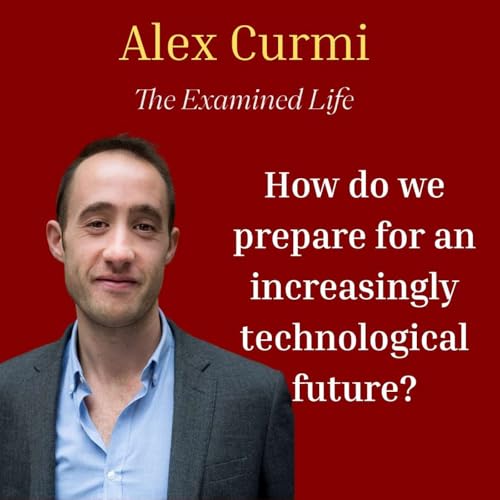
  • Dr Alex Curmi - how should we prepare for a technological future?
    Nov 24 2025

    Send us a text

    Dr Alex Curmi is a psychiatrist and psychotherapist who also hosts The Thinking Mind podcast, and is a gifted communicator on mental health and self-development.

    Alex's clinical work and training has given him acute insights into troubling aspects of modern life, and how we might prepare for an uncertain future. The question which formed the spine of our conversation was ‘ In a world where technology has been quite disruptive psychologically for a lot of people, how do we prepare for an increasingly technological future?

    We examine how modern technology reshapes attention, confidence, morality and meaning, and Alex offers practical tips for staying human as machines grow more capable. Among the topics explored you will find:

    • tech-driven overstimulation dulling joy and focus
    • confidence built through voluntary discomfort
    • psychiatry and psychotherapy as complementary lenses
    • intolerance of uncertainty and stoic control
    • integrity, congruence and moral habits that scale
    • social skills as a proactive practice
    • AI as tool versus thinking crutch
    • career durability through uncommon skill stacks
    • financial resilience over consumerist drift
    • community as the container for lasting change

    If you do enjoy the show, please follow or rate it. It really helps others to find it. For future episodes and news on the show, please sign up to the substack - https://thisexaminedlife.substack.com/?utm_campaign=profile_chips


    Support the show

    Afficher plus Afficher moins
    1 h et 9 min
  • Tom Chatfield - What myths are we telling ourselves about technology?
    Jul 2 2025

    Send us a text

    Technology is taking on a mythic mantle as we look to our creations to supply us with a sense of belonging and purpose, but this is a category error because tech cannot honestly deliver on these promises. In this podcast Tom Chatfield explores some of the issues bound up with the ways we are thinking about technology.

    • Technology is not a bolt-on or optional extra, but has been integral to human existence since before our species evolved
    • The delusion of neutrality allows us to abdicate responsibility for design choices and embedded values in our tools
    • Technology has affordances that push us toward certain behaviors – email "wants" more emails, cars "want" highways
    • The delusion of determinism suggests technology drives history along a predetermined path, diminishing human agency
    • We've confused progress with salvation, imbuing tech with religious qualities like transcendence and apocalyptic narratives
    • Understanding ourselves as "dependent rational animals" helps us appreciate our fundamental interdependence
    • Each new generation must be taught a way into modernity, allowing them to question, change, and remix our culture
    • Being a "good ancestor" means considering how our technological choices will impact future generations

    "Even if you're the richest person in the world, let alone the poorest, you don't have perhaps as much leverage as you might wish to. Nevertheless, that's what you've got, and it does no good whatsoever to say, therefore I have no power, no control, no insight, nothing to give. You do what you can within the limits of what you can know and bring into being."


    Support the show

    Afficher plus Afficher moins
    56 min
  • Rosie Spinks - What Do We Do Now That We're Here?
    Jun 17 2025

    Send us a text

    Rosie Spinks Substack - https://rojospinks.substack.com/about

    Kenny Primrose Substack - https://positivelymaladjusted.substack.com/

    Moby Gratis Music - https://mobygratis.com/

    Writer and journalist Rosie Spinks joins us to explore her powerful question: "What do we do now that we're here?" Drawing from her journey from ambitious journalist to burnout victim to advocate for a different way of living, Rosie offers a surprisingly hopeful perspective on navigating a world where traditional markers of success have lost their shine.

    After achieving what looked like career success—writing for prestigious publications like The Guardian and The New York Times—Rosie found herself profoundly unhappy. The pandemic provided an unexpected reset, challenging her assumptions about what's guaranteed in life and what truly matters. She describes straddling two worlds: "here" (where we've accepted the limitations of growth and progress) and "there" (the conventional world of consumption and productivity we still partially inhabit).

    The conversation takes a particularly powerful turn when Rosie discusses how becoming a mother revealed the transformative power of care. "I had never in my old life, in my twenties, in my ambitious journalist life, thought about anyone but myself. The work of caregiving is repetitive and you're never done, but in that is this extraordinary quality that you unlock within yourself." This insight extends beyond parenting—it's about redirecting our energy toward connection with others and our local communities.

    Rather than dwelling in despair, Rosie offers practical suggestions for building what she calls "the village"—trading childcare with other parents, learning neighbors' names, replacing consumption-based leisure with generative activities. These small shifts can rebuild our sense of belonging while preparing us for a future that may demand more resilience and mutual support.

    Support the show

    Afficher plus Afficher moins
    53 min