Épisodes

  • Truly Exceptional. Cancer Center Director as Conductor. (A Second Look) | Dr. Leon Platanias, Director, Lurie Cancer Center
    Nov 3 2026

    I'm revisiting a conversation from earlier this year with someone I've known for more than a decade, Dr. Leon Platanias, director of the Robert H. Lurie Comprehensive Cancer Center of Northwestern University.

    And there's a reason I'm bringing this episode back now.

    Season 4 of the Team Powdered Donut™ podcast is focused on the leaders of our nation's 74 NCI-designated comprehensive cancer centers, as we prepare to take our Mobile Love Letter across America.

    Our original episode was titled Truly Exceptional. Cancer Center Director as Conductor.

    I love that metaphor even more today than I did when we first recorded it.

    Think about an orchestra. Every musician brings something different. Different instruments, different talents, different parts of the composition. But the conductor helps bring those individual contributions together into something extraordinary.

    That's what Leon has done at Lurie, which received the National Cancer Institute (NCI)'s highest rating of "exceptional" in both 2018 and 2025.

    But this conversation is personal for me, too.

    Northwestern University is my alma mater, and I first met Leon in 2014, when Maureen's metastatic breast cancer was progressing. Leon helped me arrange a second opinion with Dr. William Gradishar at Lurie. It was an act of kindness at a time when those acts meant more than I can possibly express.

    So whether you heard this conversation earlier this year or you're discovering Leon for the first time, I hope you'll listen with a fresh perspective.

    Because sometimes revisiting a story helps us see connections we couldn't see the first time.

    "One Story. One Moment. One Donut at a time." 🍩🩷

    Afficher plus Afficher moins
    1 h et 1 min
  • From Childhood Cancer to Personalized Care. Reimagining the Future of Cancer Treatment. | Dr. Christian Capitini, Director, UW Health Carbone Comprehensive Cancer Center
    Oct 27 2026

    Summary

    In this episode, Christian Capitini, a pediatric oncologist and cancer researcher, shares insights into the future of cancer immunotherapy, the promise of CAR T cell therapy, and the importance of collective research efforts to transform childhood cancer treatment.

    Key Topics

    • The science behind CAR T cell therapy and its impact on leukemia treatment
    • The importance of collaborative research in advancing cancer care
    • The role of immune system understanding in developing new therapies
    • The significance of early research experiences in shaping medical careers
    • The challenges and opportunities in treating solid tumors with immunotherapy
    • The importance of patient and family-centered care in pediatric oncology
    • Future directions in cancer research including genomics and personalized medicine
    • The impact of clinical trials on treatment options and outcomes
    • The psychosocial aspects of cancer care and the importance of holistic treatment approaches

    Sound Bites

    • "We get cancer all the time, but our immune system keeps it in check"
    • "CAR T cells are genetically engineered to recognize and kill cancer"
    • "We are all in this together, fighting cancer as a community"

    Chapters

    • 00:00 Introduction and guest background
    • 01:34 Christian's journey into cancer research
    • 02:23 Balancing family, recreation, and professional dreams
    • 05:01 The origins of cancer immunotherapy and immune surveillance
    • 07:17 High school research experiences and their influence
    • 10:13 Motivation for specializing in pediatric oncology
    • 12:05 The power of research collaboration in childhood cancer
    • 15:21 Demystifying clinical trials and research participation
    • 21:09 Understanding CAR T cell therapy and its breakthroughs
    • 24:35 Overcoming cancer cell resistance and relapse
    • 28:32 Future directions in immunotherapy and personalized medicine
    • 35:45 Core memories and the human side of cancer treatment
    • 42:23 The importance of communication and family-centered care
    • 48:32 The vision for pediatric oncology in the next decade
    • 54:21 The role of research in transforming cancer care

    Keywords

    cancer immunotherapy, CAR T cell therapy, pediatric oncology, cancer research, immunology, childhood cancer, medical innovation, clinical trials, cancer treatment advances

    Afficher plus Afficher moins
    1 h et 1 min
  • One Pack. One Purpose. Discovering Cures, Elevating Every Life. | Dr. Yolanda Sanchez, Director, University of New Mexico Comprehensive Cancer Center
    Oct 20 2026

    Summary

    In this episode, Dr. Yolanda Sanchez, Director and CEO of the University of New Mexico Comprehensive Cancer Center, shares her journey from childhood to leading a major cancer research institution. She discusses the science of DNA damage, the future of cancer treatment, and the importance of community and collaboration in the fight against cancer.

    Powerful Sound Bites

    • "Tumor cells have a lot of damage and inherently they have to lower the threshold of this alert system."
    • "The biggest privilege is seeing something that is going to help people live longer."
    • "Patients look to us for hope, not just data." Chapters 00:00 Introduction to Yoli Sanchez and her journey

    Chapters

    • 02:05 Her role as CEO and director of the cancer center
    • 02:41 Yoli's hobbies and personal passions
    • 03:33 Her dreams for cancer treatment and access 05:00 Her background in science and early career
    • 07:16 The moment that sparked her interest in biomedical research
    • 10:48 The importance of DNA damage in cancer biology
    • 13:34 Preventing cancer through early intervention and vaccines
    • 15:12 Understanding the complexity of cancer as many diseases
    • 21:28 The journey from discovery to patient treatment
    • 24:34 The emotional impact of breakthroughs in cancer research 26:24 Leadership in a large cancer center
    • 30:31 Yoli's significance as the first Hispanic woman leading an NCI center
    • 32:54 Addressing geographic and healthcare disparities in New Mexico
    • 36:29 The 'We Can' campaign and its message of hope
    • 37:08 The human side of cancer care and patient experience
    • 39:53 The role of compassion and community in healing
    • 44:11 The importance of collaboration across cancer centers
    • 48:41 Yoli's one thing: advancing cancer research and care
    • 49:49 Changing perceptions of cancer as a beginning, not an end

    Who Is Yolanda Sanchez, PhD?

    Director and CEO, The University of New Mexico Comprehensive Cancer Center Professor of Molecular Medicine, Department of Internal Medicine, University of New Mexico School of Medicine The Maurice and Marguerite Liberman Distinguished Chair in Cancer Research

    Dr. Yolanda (Yoli) Sanchez is the first Latina/Hispanic woman to lead a National Cancer Institute-designated Comprehensive Cancer Center. Dr. Sanchez is an international expert in DNA damage response pathways. Her research also focused on early drug discovery. Prior to joining The University of New Mexico, Dr. Sanchez served as the Associate Director of Basic Sciences at Dartmouth Cancer Center, another NCI-designated Comprehensive Cancer Center. She was also tenured faculty at the University of Cincinnati College of Medicine, where she was named a PEW Scholar in 2001.

    As Director and CEO of the UNM Comprehensive Cancer Center (UNMCCC), Dr. Sanchez oversees all cancer research and cancer clinical programs at The University of New Mexico, covering all schools, colleges, departments, and facilities including ambulatory and inpatient cancer clinical services. Dr. Sanchez collaborates with leadership at UNM, the UNM Health Sciences Center and UNM Health, as well as the New Mexico state legislature and Governor to bring the latest cancer prevention, diagnostics, and therapeutics to New Mexicans. Dr. Sanchez is committed to broadening the makeup of the leadership at UNMCCC and at other NCI-designated cancer centers in the nation.

    Afficher plus Afficher moins
    54 min
  • Why Ask "Y?" - Curiosity With Purpose and Passion is the Key To Discovery. | Dr. Dan Theodorescu, Director, University of Arizona Comprehensive Cancer Center
    Oct 13 2026
    Summary In this episode, Dr. Dan Theodorescu discusses his groundbreaking research into chromosome loss and its implications for cancer treatment and prevention. We explore the themes of convergence, community, and the human stories behind scientific discovery, highlighting how interdisciplinary efforts can lead to transformative advances in cancer biology. Key Topics • Chromosome loss and its role in cancer aggressiveness • Convergence of disciplines in cancer research • The impact of Dr. Theodorescu's research on immunotherapy • The strategic focus on convergence to health at U of A • The importance of community and human connection in science Takeaways • Chromosome loss can make cancers more aggressive but also opens new treatment avenues • Interdisciplinary convergence accelerates cancer research and innovation • Dr. Theodorescu's research could reshape cancer risk assessment and prevention • Community and human connection are vital in driving scientific progress • Dedication to patient-centered research is at the core of cancer innovation Articles • Beyond sex determination: the Y chromosome in male cancers | Nature | May 21, 2026 (https://www.nature.com/articles/s41568-026-00935-x) • X and Y chromosomes as determinants of aging and disease | Science | October 1, 2026 (https://www.science.org/doi/10.1126/science.aeh0145) Who Is Dr. Dan Theodorescu? Dan Theodorescu MD PhD is the Nancy C. and Craig M. Berge Director of the University of Arizona Comprehensive Cancer Center. A urologic oncologist and physician scientist trained at University of Toronto and Memorial Sloan Kettering Cancer Center, Theodorescu’s pioneering convergence of cell, computational, and translational biology led to the discovery of regulators of tumor growth, metastasis, and therapeutic response. His seminal discovery that loss of the Y chromosome, and specific genes it encodes, by tumors and immune cells drives cancer progression through immune evasion illuminated the underlying functional consequences of this long-standing genetic alteration. This represents a paradigm shifting series of discoveries with far reaching implications for immune checkpoint blockade, CAR-T cell therapies and sex specific cancer biology. His penchant for novel cancer-related discovery is also demonstrated by developing pioneering computational technologies that led to a “first in class” inhibitor to the RalGTPase, a protein involved in cancer metastasis, now in commercial development. His development of the COXEN algorithm and the revolutionary AI-driven Molecular Twin Precision Oncology Platform that creates computational replicas of patients and their tumors using tumor-host multi-omic data, introduced mechanistically grounded, predictive tools that underwent proof-of-concept clinical trials, reshaping concepts of biomarker design, drug selection, and individualized treatment. He has consistently translated his fundamental discoveries into first in class therapeutic candidates, including DDR2 directed immunotherapy sensitizers, and NPEPPS, a new target whose inhibition overcomes platinum resistance. His laboratory has been continuously funded by the NCI soon after his first faculty appointment in 1995. In 2025 he received an R35 Outstanding Investigator Award (OIA) from the National Cancer Institute (NCI). Theodorescu has been a PI of an NCI P01 and a project leader in a SPORE as well as a current MPI and project leader U54 and P01. In 2021 he was awarded the inaugural and only national Director Award for a DOD Convergence Science Virtual Cancer Center (https://csvcc.org/). He has elected to the American Society for Clinical Investigation (ASCI), Association of American Physicians (AAP), the American Association of Genitourinary Surgeons (AAGUS), the American Surgical Association (ASA) and the National Academy of Medicine (NAM). Theodorescu is a Fellow of the American Association for the Advancement of Science (AAAS) and served on the National Cancer Policy Forum (NCPF) of the National Academies of Science, Engineering and Medicine and on the NCI’s Board of Scientific Counselors (BSC). He is the founding co-editor in chief of Bladder Cancer, the first journal focused on this disease. Since 2025 Theodorescu is the Nancy C. and Craig M. Berge Director of the UofA Comprehensive Cancer Center. Previously, Theodorescu was Director, University of Colorado Comprehensive Cancer Center. He led the center through two NCI Cancer Center Support Grant (CCSG P30) renewals. Under his leadership, the center was elected to the National Comprehensive Cancer Network (NCCN) and Oncology Research Information Exchange Network (ORIEN) and awarded a LAPS/NCI grant. Theodorescu worked with State of Colorado legislators to secure yearly center funding. At the federal level, he worked on parts the 21st Century Cures Act passed in 2016. He was appointed a Distinguished University Professor in 2017, one of less than 100 such individuals in the ...
    Afficher plus Afficher moins
    57 min
  • From Rockets to Individual Cells. Investing in Community and Leaders. | Wendy Law, Assoc. Dir. of Admin., Fred Hutch/University of Washington/Seattle Children's Cancer Consortium
    Oct 6 2026

    In this episode, Wendy Law shares her journey from aspiring aerospace engineer to leading cancer research at Fred Hutch, emphasizing the importance of collaboration, mentorship, community, and innovation in advancing cancer care and research.

    Key Topics

    • Wendy Law's personal journey and career development
    • The role of mentorship and community in scientific careers
    • The structure and importance of cancer centers and networks
    • The integration of AI and data science in cancer research
    • Strategies for effective collaboration and leadership in healthcare

    Who Is Wendy Law?

    Wendy trained at the Fred Hutchinson Cancer Center, also known as “the Hutch”, as a graduate student and postdoc before taking on a science policy position with then-Hutch President and Nobel Laureate Dr. Lee Hartwell to help the National Cancer Institute (NCI) develop their Proteomics Initiative. Following a successfully funded Proteomics Initiative, she joined the Rivkin Center for Ovarian Cancer Research as their Director of Scientific Programs & Operations for nearly 8 years. Wendy returned to the Hutch in 2016 to serve in her current role as the Associate Director of Administration for the Fred Hutch/University of Washington/Seattle Children’s Cancer Consortium. The Cancer Consortium has been continuously designated as a comprehensive cancer center by the NCI since 1973.

    Chapters

    00:00 Introduction and Episode Overview

    03:02 Her Role at Fred Hutch and Focus on Cancer Research

    06:16 Early Influences and Mentors in Science

    11:27 Understanding the Cancer Ecosystem Today

    16:00 Mentorship and Near-Peer Programs for Trainees

    19:20 The Role of Cancer Centers and the NCI Network

    23:34 Fred Hutch's Culture and Innovation

    26:49 The Consortium of Seattle Cancer Centers

    34:26 The Power of Philanthropy and Community Support

    39:50 Explaining Complex Science to the Public

    44:02 Pattern Recognition in Science and Leadership

    44:54 Leadership Qualities Beyond Scientific Expertise

    46:29 The Importance of Presence and Curiosity in Leadership

    47:18 The Role of Curiosity and Problem Solving in Leadership

    48:31 Building a Supportive Community of Cancer Center Leaders

    50:45 The Evolution and Future of Cancer Center Networks

    53:28 The Spirit of Sharing and Collaboration Among Centers

    55:24 The Impact of Philanthropy and Community Involvement

    57:47 One Thing to Change for Better Cancer Care

    58:55 Closing Remarks and Gratitude

    Afficher plus Afficher moins
    1 h et 1 min
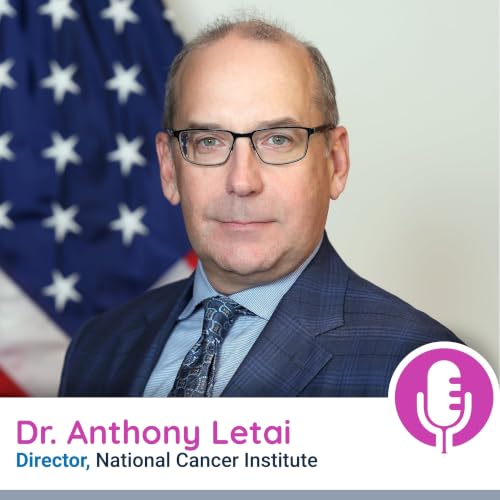
  • One Year at the Helm as Director of the National Cancer Institute | Dr. Anthony Letai, MD, PhD
    Sep 29 2026
    NCI Director Dr. Anthony Letai

    NCI Director Dr. Anthony Letai

    Credit: National Cancer Institute

    Dr. Anthony Letai, M.D., Ph.D., joined NCI as the 18th director on September 29, 2025. He previously served as professor of medicine at Harvard Medical School and medical oncologist at the Dana-Farber Cancer Institute.

    Dr. Letai received his Bachelor of Arts degree in physics from Princeton University. After receiving his M.D. and Ph.D. from the University of Chicago with Elaine Fuchs, Ph.D., Dr. Letai completed his residency in internal medicine at Brigham and Women’s Hospital, and a fellowship in hematology and oncology at the Dana-Farber Cancer Institute. His interest in cancer cell death evolved during his post-doctoral research training at Dana-Farber Cancer Institute in the laboratory of Dr. Stanley Korsmeyer. His career and pioneering work in functional precision oncology helped advance therapies such as BCL-2 inhibitors—drugs that are now standard treatment for many adults with leukemia. In addition, his team developed a technique, called BH3 profiling, that helps predict how cancer cells will respond to chemotherapies. BH3 profiling is now being tested to discover how it can be used in clinical practice to find the right drugs for the right patients.

    An advocate for research that can quickly bring new, effective treatments to patients, Dr. Letai served as co-founder and President of the Society for Functional Precision Medicine , which works to improve patient care and outcomes by supporting the use of functional assays in clinical care. Additionally, he is the recipient of the Sidney Kimmel Foundation Scholar Award, the Leukemia and Lymphoma Society Scholar Award , the European Cell Death Organization Career Award, the Smith Family Prize for Outstanding Scientific Contributions, the University of Chicago Biomedical Sciences Distinguished Alumni Award. and the NCI Outstanding Investigator Award. He also serves as an elected member of the American Society of Clinical Investigation and Association of American Physicians, and is a Fellow if the American Association of Cancer Research Academy. Dr. Letai’s work has helped transform cancer treatment and advance functional precision medicine.

    Afficher plus Afficher moins
    56 min
  • From Piano Keys to Podcast Mics to We the Patients | Matthew Zachary, American Patient Rights Activist, Author, We The Patients
    Sep 22 2026

    Show Notes

    Matthew Zachary shares his remarkable journey from a concert pianist to a cancer advocate and healthcare reformer, highlighting the power of storytelling, advocacy, and systemic change in the fight against cancer.

    Keywords

    Cancer advocacy, healthcare reform, patient stories, Stupid Cancer, We the Patients, medical system, survivorship, policy change, patient voice, healthcare history

    key Topics

    • Matthew Zachary's journey from musician to cancer advocate
    • The origins and evolution of Stupid Cancer and We the Patients
    • The role of storytelling and advocacy in healthcare reform
    • Systemic issues in the American healthcare system and potential solutions
    • The importance of patient voice and community in cancer care

    Sound Bites

    • "I forgive the system for this."
    • "Survivorship is how you choose to get busy living."
    • "I no longer believe morals and community will affect policy."

    Chapters

    00:00Introduction and Guest Background

    01:19Matthew's High School and College Years

    02:27Diagnosis of Brain Cancer and Its Impact

    03:19Family, Recreation, and Personal Interests

    07:10Early Career and Tech Skills Development

    09:22Deciding Against Chemotherapy to Preserve Music Ability

    11:03The Fork in the Road: Choosing Life and Advocacy

    13:11Learning About Cancer Treatments and Side Effects

    15:43The Birth of Stupid Cancer and Its Mission

    20:35Early Public Performances and Community Engagement

    22:53The Evolution of Advocacy and Community Building

    27:22The Role of Policy and Systemic Change

    33:23The Naming and Branding of Stupid Cancer

    40:12Transition to Out of Patience Podcast

    42:42The Future of Healthcare and Patient Advocacy

    46:34Writing We the Patients and Healthcare System Insights

    52:43Key Messages and Call to Action

    58:37Matthew's One Thing and Final Advice

    Who Is Matthew Zachary? (In His Own Words)

    Thirty years ago, a doctor told me to get my affairs in order.

    Brain cancer. Age 21. It was 1996. Dial-up internet. Blockbuster Video. Nobody had a podcast because nobody knew what a podcast was. I had other plans.

    I went on to found Stupid Cancer and help build the young adult cancer movement before most of healthcare knew young adults with cancer were even a distinct population. I also launched The Stupid Cancer Show, which became one of healthcare’s earliest and longest-running independent podcasts and eventually evolved into the award-winning Out of Patients.

    Along the way, I produced The Cancer Mavericks, a documentary series about the rebel patients who changed modern oncology. And after 30 years of surviving, studying, navigating, and occasionally screaming at the American healthcare system, I wrote the book on it.

    Literally.

    We the Patients: Understanding, Navigating, and Surviving America’s Healthcare Nightmare, published by Wiley, is my field guide, history lesson, and indictment of a system that somehow manages to be the most expensive in the world while routinely asking sick people to fax things.

    Today, I co-lead We the Patients, a national movement transforming patient experience into policy, protections, and civic power. I speak to the rooms that need to hear what they may not particularly want to hear.

    My work has been featured in The New York Times, The Washington Post, People, Time, and The Atlantic, and I’ve worked with organizations including Merck, GSK, Pfizer, Novartis, Amgen, and Bristol Myers Squibb.

    I’m also a concert pianist who has performed for audiences of 30,000, because apparently one career was insufficient.

    Thirty years after being told to get my affairs in order, my affairs remain aggressively out of order.

    I am... healthcare’s unfiltered voice of reason.

    Afficher plus Afficher moins
    1 h et 2 min
  • Can Your #OneThing be ZERO? | Courtney Bugler, President & CEO, ZERO Prostate Cancer
    Sep 15 2026

    Who Is Courtney Bugler?

    Currently serving as the CEO and President of ZERO Prostate Cancer, Courtney is committed to advancing the organization's mission and making a tangible impact in the fight against prostate cancer. Under her leadership, ZERO Prostate Cancer continues to achieve remarkable milestones and drive meaningful change.

    Prior to her role at ZERO Prostate Cancer, Courtney served as the Chief Development and Marketing Officer at the Piedmont Park Conservancy. Despite the challenges posed by the global pandemic, she successfully elevated the organization's profile and expanded its philanthropic efforts. Courtney's career highlights also include her tenure as the National Director of the Race for the Cure / MORE THAN PINK Walk Series at Susan G. Komen, where she led a nationwide team to transform a top-ten National Peer-to-Peer Walk Series. Her strategic vision and leadership led to significant organizational growth and fundraising success.

    With a Bachelor's degree in Communications from Northwestern University and certification as a Certified Fundraising Executive®, Courtney combines her academic background with hands-on experience to drive results.

    Passionate about cancer advocacy and survivorship, Courtney has lobbied on Capitol Hill for funding toward cancer research programs and has served as a consumer advocate research grant reviewer. She has also developed successful programs and health communication tools for young women with breast cancer and at-risk populations.

    Afficher plus Afficher moins
    1 h et 2 min