Épisodes

  • #70 Zohar Einy - Build the context before the factory
    Nov 9 2026

    Port went back to seed stage with 200 employees and paying enterprise customers. Zohar Einy explains why.

    Zohar is co-founder and CEO of Port, the platform underneath many companies' AI software factories. He started as a developer and security researcher, built a company, and now runs one that has to reinvent itself every few months.

    What you'll hear:

    • Why platform engineering moves from developer experience to pure standardization once agents do the work

    • Port's research: up to 80% fewer tokens when agents get a unified context graph instead of ten MCP servers

    • How to change direction with 200 people: a small parallel company staffed by the first employees

    • At Port, around 70% of tickets now go to AI, and on-call happens from bed

    • Why the new bottleneck is deciding what to send to the factory

    Zohar Einy on LinkedIn: https://www.linkedin.com/in/zohar-einy Port: https://www.port.io Port research on token costs: https://www.port.io/blog/research-how-we-cut-ai-costs-by-80-percent Only the Paranoid Survive, Andy Grove: https://www.penguinrandomhouse.com/books/72469/only-the-paranoid-survive-by-andrew-s-grove/

    More episodes & all platforms: https://stellarwork.start.page Newsletter: https://substack.com/@stellarwork Host: Ben, founder of Stellar Work


    Afficher plus Afficher moins
    35 min
  • #69 Brian Houck - Treat context like code
    Nov 2 2026

    Most teams spend their AI budget on models and harnesses. Brian Houck thinks the weak link is

    the context we hand the agent.

    Brian is a Distinguished Scientist at DX and spent 20 years researching developer productivity at

    Microsoft. With Margaret-Anne Storey, Max Kanat-Alexander, Eirini Kalliamvakou and Nicole

    Forsgren he wrote CAFE(S), a framework for what makes context good enough for an agent to use.

    What you'll hear:

    - The five CAFE(S) properties: clarity, actionability, fidelity, efficiency, and security

    - Why "order me food" fails as a prompt, and what a 25-year-old ramen post has to do with it

    - Why 88% of engineers in Brian's research regularly lose time to out-of-date documentation, and

    how AI makes that worse

    - The productivity-experience paradox: developers ship more and feel worse about it

    - The easiest productivity win for an engineering manager. It involves the calendar.

    Links:

    CAFE(S) paper (ACM Queue): https://queue.acm.org/doi/10.1145/3847288

    Brian Houck on LinkedIn: https://www.linkedin.com/in/brianhouck/

    DX: https://getdx.com

    More episodes & all platforms: https://stellarwork.start.page

    Newsletter: https://substack.com/@stellarwork

    Host: Ben, founder of Stellar Work

    Afficher plus Afficher moins
    40 min
  • #68 Yevgen Nebesov - The architecture of power
    Oct 19 2026

    Outcome equals intelligence plus agency. AI is making the first part cheap. Yevgen Nebesov has spent five years mapping the second.Yevgen is a systems architect who watched too many good ideas in his projects go nowhere because the power arrangement around them didn't support them. His answer is the power loop, a model of power as a flow through six domains, and a book called The Architecture of Power.What you'll hear:- Why a traffic light has power, and where that power actually sits- The six domains of the power loop: events, narratives, agendas, beliefs, decisions, institutions- Why "technical debt" is a narrative, and how to sell a problem in the language of the dominant institution- How to hollow out a decision meeting by quietly building a parallel one- A bridge in 2050, an AfD case study, and the fawn rescue club that gets farmers, hunters and animal rights people into the same field at 4 a.m.Yevgen on LinkedIn: https://www.linkedin.com/in/yevgen-nebesov/The Architecture of Power (book): https://leanpub.com/thearchitectureofpowerThe framework and the Power Canvas: https://architectureofpower.rocksYevgen's TEDxKarlsruhe talk: https://www.youtube.com/watch?v=ePG1uvM6YKMMore episodes & all platforms: https://stellarwork.start.pageNewsletter: https://substack.com/@stellarworkHost: Ben, founder of Stellar Work

    Afficher plus Afficher moins
    37 min
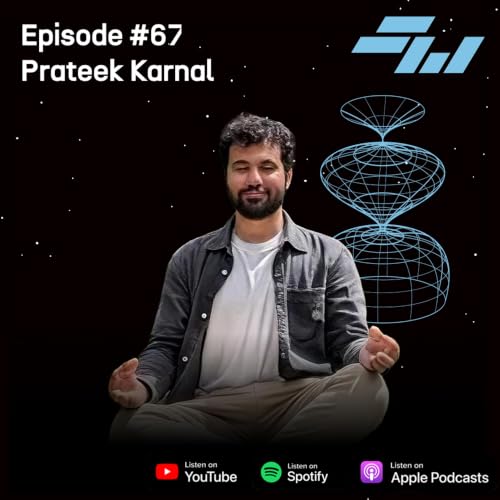
  • #67 Prateek Karnal - Orchestrating the Agent Army
    Oct 5 2026

    Most people lose track at three coding agents. Prateek Karnal runs ten to twenty at once.Prateek built Agent Orchestrator (AO) after working on AI infrastructure at Composio, where the company was already running agents at scale. His personal fix for a crowded laptop went viral at launch, passed 12,000 GitHub stars, and became a company. This conversation is about what running a fleet of agents involves once the screenshots stop.What you'll hear:- Why productivity does not scale with agent count, and Prateek's honest number for himself: two to three times- The mind-numbing parts of agentic coding: tab switching, copy-pasting CI failures, "you're a senior engineer, make no mistakes"- "I only do two tasks a week": why finding work is becoming the bottleneck- How a Kanban board works when agents hold the cards and no human moves them, and what a security founder in Texas does with 500 of them- Ben's tender agent, a credit card with a limit, and the 1,000 euro insurance policy it bought on its ownAgent Orchestrator on GitHub: https://github.com/Untrivial-ai/agent-orchestratorAO website and docs: https://orchestrator.incAO Discord: https://discord.com/invite/UZv7JjxbwGPrateek on LinkedIn: https://www.linkedin.com/in/prateekkarnal/Prateek on X: https://x.com/agent_wrapperMore episodes & all platforms: https://stellarwork.start.pageNewsletter: https://substack.com/@stellarworkHost: Ben, founder of Stellar Work

    Afficher plus Afficher moins
    46 min
  • #66 Petra Wille - How to lead a product org in the age of AI
    Sep 21 2026

    Petra Wille thinks measuring your team's token usage is one of the worst things a leader can do right now. She explains what to measure instead.Petra is a product leadership coach, author of STRONG Product People, and co-organizer of Product at Heart, one of Europe's largest product conferences. She works with the people who line-manage product managers, designers and researchers, which makes her a good read on what AI is actually doing to product organizations instead of what LinkedIn says it is doing.What you'll hear:Why every AI question in the company ends up on the product leader's desk, and why that is not new (mobile and APIs went the same way)The AI maturity curve: experimentation feels like more work before it feels like less, and most teams quit during the "more work" phaseWhat happened when teams tried to replace engineers with vibe coding, or replace product people with Claude-written backlog items (none of it went well)Why the eight-engineers-per-product-manager ratio is broken and three is the number she now sees workingLearning headlines: giving every direct report one three-to-four-month learning focus instead of a training budget nobody usesWhy artificial users and AI-run interviews still lose to talking to actual humansPetra Wille: https://www.petra-wille.comLinkedIn: https://www.linkedin.com/in/petra-wille-b8b1329/STRONG Product People: https://www.strongproductpeople.comProduct at Heart: https://productatheart.comAll Things Product podcast (with Teresa Torres): https://www.producttalk.org/all-things-product/More episodes & all platforms: https://stellarwork.start.pageNewsletter: https://substack.com/@stellarworkHost: Ben, founder of Stellar Work

    Afficher plus Afficher moins
    35 min
  • #65 Matt LeMay - The Low-Impact AI Death Spiral
    Sep 7 2026

    Matt LeMay thought product teams had finally outgrown the feature factory. Then AI handed everyone a faster conveyor belt.Matt is a product consultant and author who has worked with Google, Spotify, and MailChimp. His book Impact-first Product Teams gave a name to what happens when teams optimize for safe, visible output: the Low-Impact Death Spiral. AI, he argues, is accelerating it.What you'll hear:- Why low-impact work compounds: every harmless little feature raises the cost of doing impactful work later- The rhinestone problem: decorate the car long enough and you can't open the hood anymore- Discovery theatre: how AI lets teams simulate discovery without learning anything- Why "trust is a feeling" and can't be automated- An actual impact-first AI story: how MailChimp's team reframed its subject line helper after qualitative researchLinks:Matt's website: https://mattlemay.comMatt on LinkedIn: https://www.linkedin.com/in/mattlemay/Impact-first Product Teams: https://www.amazon.com/Impact-first-Product-Teams-Success-Indispensable/dp/B0DVH4R3QJMore episodes & all platforms: https://stellarwork.start.pageNewsletter: https://substack.com/@stellarworkHost: Ben, founder of Stellar Work

    Afficher plus Afficher moins
    39 min
  • #64 Laura Tacho - You weren't measuring well before AI either
    Aug 24 2026

    AI did not break engineering metrics. It made it obvious that most companies never had any worth trusting.Laura Tacho spent 15 years building developer tools, ran DX as CTO, and now works on developer experience at AWS. She has seen the measurement data from hundreds of engineering organisations, which makes her a hard sell on the 10x productivity story.What you'll hear:The 17x jump in code volume that barely moves the number of shipped releasesWhy token leaderboards work for a while, then start rewarding the wrong thingWhy any engineering metric measured per individual is a red flagHow to start measuring with a survey instead of a data pipelineThe question most CTOs go silent on: what problem is AI actually solving hereLinks:Laura on LinkedIn: https://www.linkedin.com/in/lauratachoLaura's research and writing: https://lauratacho.comFree developer experience survey template: https://getdx.com/guide/devex-survey-template/Writing Code vs. Shipping Code, NBER 35275: https://www.nber.org/papers/w35275More episodes & all platforms: https://stellarwork.start.pageNewsletter: https://substack.com/@stellarworkHost: Ben, founder of Stellar Work

    Afficher plus Afficher moins
    27 min
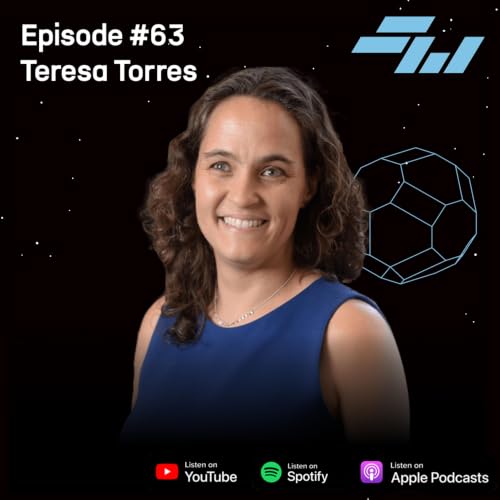
  • #63 Teresa Torres - Taste won't save your product
    Aug 10 2026

    Teresa Torres calls the "all you need is taste" narrative what it is: Silicon Valley elitism dressed up as product wisdom.Five years after Continuous Discovery Habits, Teresa has gone from product discovery coach to building AI products herself. In this conversation she explains why that transition happened, and why most teams get AI-assisted discovery wrong.What you'll hear:- Why a founder's taste doesn't matter, but matching the customer's taste does- The difference between using AI to think better and letting AI think for you- Why interview synthesis is not a prompt: correction loops, hallucination checks, framing checks- What Teresa is building with Vistaly: AI-generated interview snapshots and opportunity solution trees- When to build your own tools and when SaaS still wins- How teaching LLMs and onboarding humans turn out to be the same skillLinks:Teresa on LinkedIn: https://www.linkedin.com/in/teresatorres/Product Talk: https://www.producttalk.orgContinuous Discovery Habits: https://www.producttalk.org/continuous-discovery-habits-book/Story-Based Customer Interviews course: https://learn.producttalk.orgVistaly: https://vistaly.comMore episodes & all platforms: https://stellarwork.start.pageNewsletter: https://substack.com/@stellarworkHost: Ben, founder of Stellar Work

    Afficher plus Afficher moins
    39 min