Couverture de Self-Carriage

Self-Carriage

Self-Carriage

Écouter gratuitement

Voir les détails

À propos de ce contenu audio

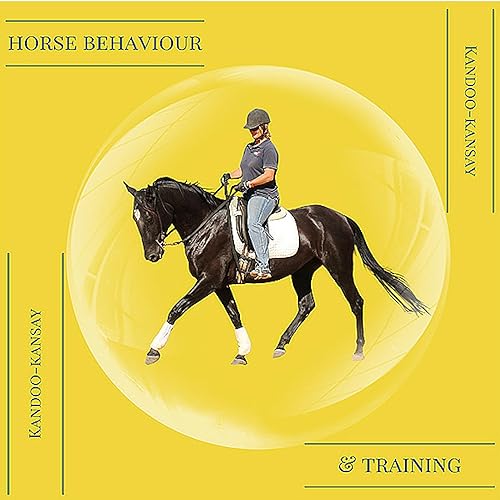
  Self-Carriage What do you picture when you think about 'self-carriage'? Many of us picture a horse, perhaps in a dressage arena, travelling in a certain outline and maintaining gait and direction. But in this article I'm going to discuss why self-carriage has a much wider definition than this and how important it is to all riders and horse handlers, regardless of their level of experience or discipline they choose to enjoy. While our first thought of self-carriage may invoke mental images of dressage horses, sadly, modern dressage is often a display of just the opposite. The term self-carriage literally means the horse is maintaining itself without needing support from the rider, whereas with modern dressage, most horses are subjected to unrelenting pressure on the bit and often the same from the riders' legs. This unrelenting pressure is in direct violation of the International Society for Equitation Science's (ISES) Training Principle #6: The correct use of operant conditioning, which explains that pressure must be released at the onset of the correct response. Self-carriage is the focus of the tenth ISES Training Principle: 10. Regard for Self-carriage Aim for self-carriage in all methods and at all levels of trainingTrain the horse to maintain: gaittempostride lengthdirectionhead and neck carriagebody posture Avoid forcing any postureAvoid nagging with legs, spurs or reins i.e. avoid trying to maintain responses with relentless signalling. "Lack of self-carriage can promote hyper-reactive responses and compromise welfare" This definition is excellent for the ridden horse, of any discipline, but I think we can take the self-carriage concept further than this to improve our training and handling of horses in all aspects of the horse-human relationship. Self-carriage simply means maintaining precisely what the horse has been cued to do until you signal the horse to do something else. Using a ridden example of riding a 20m circle at canter, the horse should maintain the canter, at the same speed, length of stride, in the same direction, with unchanging head and neck carriage and consistent body posture - all without the rider having to 'hold' or 'force' any of these elements. Thus, if you have to consistently correct your horse to keep it on the circle, keep your inside leg on to maintain direction or both legs to maintain speed, if you need that 'good contact' to hold your horse's head and neck in position or to elevate its shoulders, then you are not in self-carriage. Now, this can seem a bit depressing because how many of us have a horse that will maintain a 20m canter circle with all of the above without the need for some intervention? Very few, I would estimate. But remember, this is what we are aiming for, and, with the correct training, exactly what we can achieve. By understanding the concept of self-carriage, it allows us to train with this as our aim and, along the way, we get a huge array of benefits: 1.       We have to be clear in our mind about exactly what we want the horse to do and what we will use as motivation to encourage the horse to do that 2.       Once we have decided on #1, we need to know exactly when we are going to release the pressure and reward the horse 3.       Knowing this means we become very aware of when we have pressure and when we do not 4.       It follows then that our use of combined reinforcement improves as we use the pressure-release-reward sequences repeatedly 5.       In turn, the horse is able to relax as we are setting up easy-to-follow patterns of pressure-release-reward 6.       The horse gains confidence, learns the sequence and begins to anticipate the predictable pattern 7.       The horse is now in self-carriage, responding before pressure needs to be applied and continues until signalled to change something (such as speed or direction) If we think about some of the common expressions we hear such as 'inside-leg-to-outside-rein'or 'a good contact', it begs the question of how these can coexist with self-carriage. Of course, they cannot coexist, and this is a good reminder that we should always be training with the aim of reducing the pressure required to achieve the response. This is done by providing the horse with consistent pressure-release-reward sequences, always beginning with the lightest possible pressure cue. The lightest pressure cue is often a verbal cue. While we don't always think of our voice as a pressure cue, it is exactly that and, when used before a tactile signal, allows the horse the opportunity to respond before the heavier cue is applied. Earlier I mentioned that self-carriage deserves a wider definition and application that is currently common. I think it's important that we apply the principle of self-carriage, continuing to do what has been asked until signalled to do something else, to everything we do with the horse and that we start doing so as early as possible in the ...
Aucun commentaire pour le moment