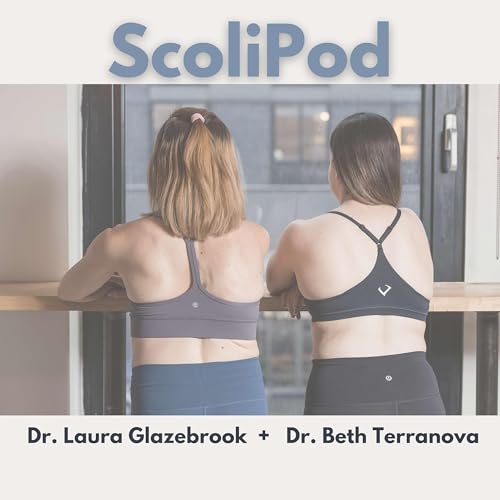
Couverture de ScoliPod

ScoliPod

ScoliPod

De : Beth & Laura
Écouter gratuitement

3 mois pour 0,99 €/mois

Après 3 mois, 9.95 €/mois. Offre soumise à conditions.

À propos de ce contenu audio

Welcome to Scolipod, the show that’s rewriting the rules about living with a curved spine! Hosted by Dr. Laura Glazebrook and Beth Terranova —two physical therapists, scoliosis superheroes, and movement enthusiasts—this podcast brings you research-backed solutions, expert insights, and real-life stories that prove one thing: you are more than your scoliosis diagnosis.

© 2026 ScoliPod

Hygiène et vie saine Politique et gouvernement
Les membres Amazon Prime bénéficient automatiquement de 2 livres audio offerts chez Audible.

Vous êtes membre Amazon Prime ?

Bénéficiez automatiquement de 2 livres audio offerts.
Bonne écoute !
    Épisodes
    • 11. Why You Should See a Scoliosis PT Before Spinal Fusion Surgery
      Jan 28 2026

      If you’re planning to have scoliosis surgery, you might assume physical therapy comes after the operation—but did you know you could also benefit from seeing one before?

      In this episode, Dr. Laura and Dr. Beth explain why seeing a scoliosis-specific physical therapist prior to spinal fusion surgery can level up both the outcome of the surgery as well as your recovery afterward.

      While “prehab” is standard for many orthopedic surgeries like knee or hip replacements, it’s still rare in the scoliosis world. Listen in to learn why that needs to change—and how the right preparation can help patients feel more confident, informed, and prepared going into surgery.

      In this episode, we discuss:

      • What “prehab” is and why it matters before spinal fusion
      • Why scoliosis PT is often overlooked prior to surgery
      • How improving spinal flexibility can optimize surgical correction
      • When mobility and stretching are appropriate for scoliosis
      • The role of strength, endurance, and core training before surgery
      • How breathing training supports rib mobility, lung health, and recovery
      • How it feels when your spine is suddenly corrected—& how to prepare for it
      • Practical pre-op education surgeons often don’t have time to cover
      • Nutrition tips, protein intake, hydration, & digestion prep (yes, even poop)
      • Learning how to move safely: getting in/out of bed, chairs, and daily activities
      • Planning your home setup, stairs, and assistive equipment ahead of time

      Dr. Beth and Dr. Laura also share insights from their own clinical experience working with teens and adults preparing for spinal fusion, along with lessons learned from real post-op recoveries.

      If you’re facing scoliosis surgery—or supporting someone who is—this episode will help you understand how preparing your body and mind ahead of time can lead to a smoother, more confident recovery.

      Need Help Preparing for Surgery?

      Both Dr. Laura and Dr. Beth offer scoliosis-specific care and virtual options for those who don’t have access to a trained scoliosis PT locally.

      Resources & next steps:

      If you’re curious about working virtually with a scoliosis-trained pro, connect with Dr. Laura or Dr. Beth:

      • Dr. Laura's website
      • Dr. Beth’s website


      Join the conversation:

      Have questions about scoliosis-specific PT or want help finding a trained therapist? Reach out to Dr. Laura or Dr. Beth

      And don’t forget to follow, rate, and share ScoliPod to help more people discover evidence-based scoliosis care.


      Finally, don't forget to subscribe to ScoliPod on your favorite pod catcher so you never miss an episode!

      • Listen on Apple Podcasts
      • Listen on Spotify

      Support the show

      Afficher plus Afficher moins
      17 min
    • 10. Managing Pain Flares: How The Experts Manage Their Pain With Scoliosis
      Jan 21 2026

      What does scoliosis management really look like—even for the experts?

      In this episode, Dr. Beth and Dr. Laura get personal. Instead of talking theory or protocols, they share their own lived experiences with scoliosis, pain flare-ups, injuries, and the ongoing process of managing a curved spine in real life.

      Despite years of training, professional expertise, and consistent movement practices, they discuss how pain can still show up—and how they’ve learned to respond to it with awareness, adaptability, and compassion rather than fear.

      In this episode, they cover:

      • Why having scoliosis doesn’t automatically mean constant pain—and why flare-ups can still happen
      • Laura’s experience managing recurring neck pain, headaches, and tension after spinal fusion
      • Beth’s journey with weightlifting, injury, recovery, and learning when to pull back
      • How stress, sleep, hydration, nutrition, and fatigue can influence pain levels
      • The emotional side of pain, including fear, frustration, and sensitivity after injury
      • Why pain doesn’t always mean damage—and how the nervous system plays a role
      • The importance of building a personal toolbox for flare-ups
      • Why X-rays don’t tell the whole story—and how people can feel better even when their curve doesn’t change
      • The role of movement, strength training, and daily activity in long-term spine health

      This episode is a reminder that scoliosis care is primarily about learning how to listen to your body, respond thoughtfully, and keep moving forward, even when progress isn’t linear.

      If you’ve ever wondered, “Am I doing something wrong if I still have pain?”—this conversation is for you.

      Resources & next steps:

      If you’re curious about working virtually with a scoliosis-trained pro, connect with Dr. Laura or Dr. Beth:

      • Dr. Laura's website
      • Dr. Beth’s website


      Join the conversation:

      Have questions about scoliosis-specific PT or want help finding a trained therapist? Reach out to Dr. Laura or Dr. Beth


      And don’t forget to follow, rate, and share ScoliPod to help more people discover evidence-based scoliosis care.


      Finally, don't forget to subscribe to ScoliPod on your favorite pod catcher so you never miss an episode!

      • Listen on Apple Podcasts
      • Listen on Spotify

      Support the show

      Afficher plus Afficher moins
      21 min
    • 9. Highlights From the Columbia Pediatric Scoliosis Symposium
      Jan 14 2026

      In this episode, Dr. Laura and Dr. Beth share key takeaways from the Columbia University Pediatric Scoliosis Symposium, one of the leading interdisciplinary scoliosis conferences in the country.

      They break down the most impactful sessions, emerging research, and evolving approaches to scoliosis care—spanning pediatrics, adults, surgery, bracing, physical therapy, mental health, and community support. This episode offers a behind-the-scenes look at where scoliosis care is headed and what clinicians and patients alike can learn from it.

      Highlights of the episode:

      • Why the Columbia Symposium is a leader in scoliosis education and research
      • The value of an interdisciplinary approach (surgeons, PTs, orthotists, mental health professionals)
      • Updates on pediatric and adolescent scoliosis treatment
      • A growing focus on adult non-operative management
      • Innovations and ongoing questions around adult bracing
      • Current perspectives on spinal fusion vs. tethering
      • Surgical planning advances, including AI and custom rod shaping
      • Insights into spondylolysis and rehab protocols for young athletes
      • New research on muscle activation asymmetry in scoliosis
      • Bone health considerations, including vitamin D and long-term risks
      • The expanding role of mental and emotional health in scoliosis care

      Community & Connection

      • Reflections on the importance of scoliosis community and shared experience
      • Highlights from the inaugural Spine & Wine community meetup
      • Why connection and storytelling matter for long-term well-being

      Key Takeaways

      • Scoliosis care continues to move toward patient-specific, holistic treatment
      • Adult scoliosis research and treatment options are expanding
      • Mental health, education, and community are essential—not optional—parts of care
      • Collaboration across specialties leads to better outcomes

      Resources:

      • Columbia University's Lunch And Learn series
      • Watch the recording of the Scoliosis Symposium here


      Join the Conversation:

      Have questions about scoliosis-specific PT or want help finding a trained therapist?
      Reach out to Dr. Laura or Dr. Beth


      And don’t forget to rate & share ScoliPod to help more people discover evidence-based scoliosis care.


      Finally, don't forget to subscribe to ScoliPod on your favorite pod catcher so you never miss an episode!

      • Listen on Apple Podcasts
      • Listen on Spotify


      Support the show

      Afficher plus Afficher moins
      35 min
    Aucun commentaire pour le moment