Couverture de Pipe Dream | A B2B Marketing Podcast

Pipe Dream | A B2B Marketing Podcast

Pipe Dream | A B2B Marketing Podcast

De : B2B Better
Écouter gratuitement

À propos de ce contenu audio

Pipe Dream profiles the B2B companies that have cracked the code on audience-driven marketing, building podcasts, newsletters, and content channels that don't just generate awareness, but actually drive qualified pipeline.

Host Jason Bradwell, founder of B2B Better, sits down with the marketers and founders who've shifted away from traditional demand gen tactics to build their own audiences. Each episode breaks down the numbers, the conversion systems, and the tactical decisions that turn listeners into buyers.

This isn't a show about marketing theory or best practices. It's about what's actually working right now: how much it costs, what converts, and why owned audience beats rented attention every single time.

If you're tired of vanity metrics and want to understand how to build a content engine that drives real revenue, this is your show.

New episodes... all the time.

Learn more at http://www.b2b-better.com

© 2026 B2B Better

Direction Economie Management Management et direction Marketing et ventes
Les membres Amazon Prime bénéficient automatiquement de 2 livres audio offerts chez Audible.

Vous êtes membre Amazon Prime ?

Bénéficiez automatiquement de 2 livres audio offerts.
Bonne écoute !
    Épisodes
    • What B2B Marketers Get Wrong About Differentiation | Richard Dedor, Senior Client Strategist at Vericast
      Feb 25 2026

      This episode is brought to you by B2B Better. Richard cut CAC by 27% by ditching billboards and investing in owned content — podcasts, videos, and customer interviews that actually moved the needle. That's exactly the kind of content engine we help B2B service businesses build. If you want a podcast that drives pipeline, not just downloads, visit b2bbetter.com.

      If you think B2B buying is purely rational, this episode is your wake-up call. In this episode of Pipe Dream, host Jason Bradwell sits down with Richard Dedor, Senior Client Strategist at Vericast, to unpack what a decade of B2C financial services marketing can teach B2B marketers about differentiation, storytelling, and cutting through a commoditised market.

      Richard's core point is clear: stop overthinking your product and start understanding the emotion behind the buying decision. Every purchase — whether it's a checking account or a six-figure SaaS contract — starts with a pain point. The businesses that win are the ones that lean into that pain and make the buyer the hero.

      The cheeseburger analogy says it all. McDonald's, In-N-Out, Wendy's — they're all selling the same thing but winning different customers by knowing exactly who they're for. B2B is no different. You don't need a revolutionary product. You need a sharper story built around the right ingredients for the right target market.

      The conversation gets tactical on CAC reduction. Richard's team cut acquisition costs by 27% by reallocating budget away from vanity spend — billboards chief among them — and investing in owned content instead. Podcasts, videos, webinar series, and customer interviews that spoke directly to real pain points. A billboard reaches everyone and no one. A customer interview that mirrors exactly what a prospect is feeling reaches the right person at the right moment.

      For B2B marketers dealing with long sales cycles and buying committees, hold the macro message steady and pivot the micro-messaging for each stakeholder in the room. And when compliance is standing between you and a good idea, make them your second-best friend — walk them through the concept one friction point at a time and help them get themselves to yes.

      People buy with emotion. Even in B2B. Especially in B2B. That's what you should be tapping into.

      Chapter Markers

      00:00 - Introduction: Richard Dedor and a decade in B2C financial services

      02:00 - The cheeseburger analogy: differentiation in commoditised markets

      04:00 - Growing brand awareness by 50% and bridging it to conversion

      06:00 - In-market moments and rare switching windows in financial services

      08:00 - What B2B marketers should steal from the consumer playbook

      09:00 - Micro-messaging pivots within a stable macro message

      10:00 - Cutting CAC by 27%: stop spending on billboards

      11:00 - Investing in owned content: podcasts, videos, and customer interviews

      13:00 - Testing, killing, and doubling down on what works

      14:00 - Working in regulated environments: making compliance your ally

      16:00 - How to present ideas to legal and compliance teams

      18:00 - Walking compliance through friction points one step at a time

      20:00 - The one thing B2B companies get wrong about differentiation

      22:00 - People buy with emotion — even in B2B

      Useful Links

      Connect with Jason Bradwell on LinkedIn

      Connect with Richard Dedor on LinkedIn

      Visit Richard Dedor's website

      Read Richard's writing on HubSpot and Medium

      Explore B2B Better and the Pipe Dream Podcast

      Afficher plus Afficher moins
      24 min
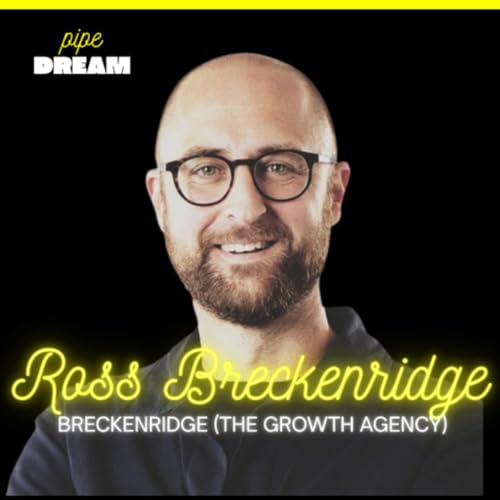
    • Your Thought Leadership Is Working. Now Prove It | Ross Breckenridge | Managing Director, Breckenridge (The Growth Agency) | HubSpot Solutions Partner | Revenue Operations Specialist
      Feb 24 2026

      This episode is brought to you by B2B Better. Ross helps businesses prove that their marketing is driving revenue — and that's exactly the problem we help B2B service businesses solve with video-first podcasts. We build content systems that don't just generate attention, they generate pipeline your sales team can actually point to. Visit b2bbetter.com to see how we do it differently.

      Your thought leadership campaign is running. People are watching, listening, and engaging — but when your CFO asks if it's actually driving revenue, you've got nothing to say. In this episode of Pipe Dream, host Jason Bradwell sits down with Ross Breckenridge, Managing Director of Breckenridge and HubSpot Platinum Partner, to tackle the attribution problem that almost every B2B marketing team has but nobody wants to admit.

      Ross's core point is clear: this isn't a marketing problem. It's a business problem. Until your marketing, sales, and customer success teams are operating from a single unified strategy and a single tech stack, you'll never get the visibility you need.

      The conversation starts where Ross always starts with clients: customer journey mapping. Before you touch an attribution model, you need to understand where each content asset sits in the buying process — lead gen, nurture, sales enablement, or renewals. Most companies skip this step and end up measuring the wrong things entirely.

      From there, Ross unpacks the dark funnel and explains why the HubSpot Campaigns tool is the home of the marketer's attribution reporting. Bundle your content assets into one campaign, track who was created as a new contact and who was simply influenced along the way, and map that all the way through to closed-won revenue — including renewals that happen two years after someone first engaged.

      But none of it works if sales is living in a different system. The connection between content and revenue only becomes visible when marketing, sales, and customer success are using the same tools and held to the same SLAs. One client found that leaving a lead for more than 48 hours dropped their conversation rate from 70% to 20%. That kind of clarity only exists when everyone is looking at the same data.

      If you're tired of defending your content budget with correlation and vibes, this episode gives you the framework to fix it for good.

      Chapter Markers

      00:00 - Introduction: Ross Breckenridge and Breckenridge Agency

      02:00 - HubSpot onboarding, integrations, and the RevOps focus

      04:00 - Is attribution a tools problem, a strategy problem, or the wrong metrics?

      05:00 - Customer journey mapping as the foundation of all attribution

      06:00 - Picking one attribution model and staying consistent

      08:00 - The dark funnel: what it is and how HubSpot brings it to light

      10:00 - Content-sourced vs content-influenced pipeline: the key difference

      11:00 - The HubSpot Campaigns tool as the marketer's attribution home

      13:00 - Connecting content consumption to leads, deals, and closed revenue

      15:00 - Why attribution is a business problem, not a marketing problem

      16:00 - Building the business case to get sales and CS on the same page

      17:00 - SLAs, shared accountability, and the 48-hour lead follow-up rule

      19:00 - Working in silos vs being more than the sum of your parts

      21:00 - AI, buyer research, and why being genuinely helpful never changes

      23:00 - Where to find Ross and learn more about Breckenridge

      Useful Links

      Connect with Jason Bradwell on LinkedIn

      Connect with Ross Breckenridge on LinkedIn

      Visit Breckenridge — HubSpot Platinum Partner and RevOps specialists

      Email Ross directly at ross@breckenridgeagency.com

      Explore the HubSpot Campaigns tool for attribution reporting


      Explore B2B Better website and the Pipe Dream podcast

      Afficher plus Afficher moins
      23 min
    • How One Founder Got 50 Customers in 60 Days Using LinkedIn Organic | Adam Holmgren, CEO and Co-Founder at Fibbler
      Feb 23 2026

      We help B2B brands launch shows that turn their point of view into pipeline. If you're launching a podcast (or have one already) and are not sure how it can hit your bottom line, book a meeting with Jason: https://meetings-eu1.hubspot.com/jason-bradwell/youtube-meeting-link

      --

      Adam Holmgren turned three years of consistent LinkedIn posting into a $700K ARR SaaS business—without cold outbound, without a sales team, and with 80% of growth coming from organic content amplified by thought leader ads.

      In this episode of Pipe Dream, Adam Holmgren, co-founder and CEO of Fibbler, breaks down exactly how he built an attribution platform for SMBs by first building an audience of 25,000 marketers. Before launching Fibbler in May 2024, Adam spent years developing his point of view on demand generation, paid advertising, and attribution whilst at GetAccept—publishing consistently, giving value, and never asking for anything in return. When he finally launched his product, his audience was ready.

      Within two months, he had 50 paying customers purely from his network. But Adam didn't stop there. He shares the pivot that changed everything: shifting from organic-only to investing 50% of revenue into thought leader ads, specifically targeting the US market where LinkedIn ad spend is highest. The result? 400-500 signups per month, with 80% directly attributed to organic content plus paid amplification. Adam also reveals his weekend content system, his four content pillars (paid ads, brand building, founder-led growth, and personal), and why he believes distribution and brand are now the only real moats in a world where AI makes product features commoditised.

      Key Takeaways

      How to validate demand before launching: Build an audience first by giving value for years without asking for anything—then when you finally ask, conversion rates skyrocket.

      Why thought leader ads outperform traditional LinkedIn ads: Organic posts that already resonate are "battle-tested"—amplifying them with paid reach to new audiences dramatically improves ROI compared to brand account ads with CTAs.

      How to structure a sustainable content system: Plan content on weekends around 3-4 clear content pillars, schedule posts for the week, then stay active in comments during weekdays instead of writing on the fly.

      Why founder-led brands win in crowded markets: With 250,000-300,000 martech solutions available, distribution and brand are the only defensible moats—features alone won't differentiate you.

      How to convince sceptical executives to invest in brand: Start small, prove early signals (engagement from ICP, content mentioned in sales calls), then scale once you demonstrate pipeline impact over 3-6 months.

      The perfect LinkedIn post formula: Strong hook that creates curiosity or promises value + tactical insight or lesson learnt + no product pitch (let people discover you organically).

      Relevant Links and Resources

      • Connect with Adam Holmgren on LinkedIn: https://www.linkedin.com/in/adam-holmgren/
      • Learn more about Fibbler: https://fibbler.co

      What's Next

      If you're building a B2B brand and struggling to justify investment in owned media, start by building one person's audience consistently for 90 days—then amplify what works. The compounding effect is real.

      Useful Links

      • Connect with Jason Bradwell on LinkedIn: https://www.linkedin.com/in/jasonbradwell/
      • Listen to Pipe Dream on Podbean: https://www.podbean.com/podcast-detail/pipe-dream
      • Learn more about B2B Better: https://www.b2b-better.com
      Afficher plus Afficher moins
      25 min
    Aucun commentaire pour le moment