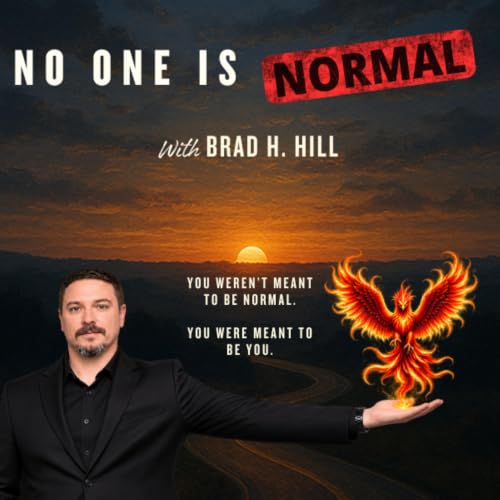
Couverture de No One Is Normal

No One Is Normal

No One Is Normal

De : Brad H. Hill
Écouter gratuitement

À propos de ce contenu audio

No One Is Normal is a raw, honest self-improvement podcast about recovering, healing, and rebuilding life. Brad H. Hill, author of No One Is Normal, shares real stories from the book, meaningful listener experiences, and conversations with professionals to explore addiction, trauma, shame, and self-forgiveness. This show helps you grow, reflect, and take the next step toward becoming who you were meant to be.Brad H. Hill Développement personnel Réussite personnelle
Épisodes
  • 010 - Under The Surface: Relapsed
    Mar 2 2026

    Relapse is one of those words people whisper, like it is a confession. It gets treated like proof you failed, like it cancels every ounce of progress you made. But the truth is, relapse is often not the end of the story. It is information. It is a warning light. It is a moment where something got heavier than the tools you had in your hands.

    In this episode, I tell the truth about my own relapse while writing No One Is Normal. Not as a dramatic breakdown, but as the quiet kind that sneaks in through stress, fear, and isolation. One small decision that looked manageable, until it wasn’t. Because for me, alcohol is not something I can “control.” I don’t have a dimmer switch. I have an on and off switch.

    We talk about how relapse really starts long before the bottle. It starts in the silence. It starts when I stop talking, stop admitting I’m scared, and start carrying everything alone like that is strength. This episode is about what it feels like to fall back into it, how fast the body remembers, how shame tries to take the wheel, and what it took to fight my way back out.

    If relapse is part of your story, I want you to hear this clearly. You are not worthless. You are not hopeless. You are not alone. The story depends on what you do next.


    No One Is Normal Book and Podcast Links:

    🎧 Podcast Episodes: ⁠⁠https://www.bradhhill.com/podcast⁠⁠

    📘 Get the Book (Amazon): ⁠⁠https://a.co/d/ibq85NR⁠

    Afficher plus Afficher moins
    24 min
  • 009 - Stanley Bronson Interview - Beating Yesterday
    Feb 23 2026

    Some changes start with urgency. Others begin with quiet resolve.

    Stanley Bronstein’s story didn’t hinge on one dramatic moment. It unfolded through years of learning what works, what fades, and what it actually takes to build a life that stays healthy long after motivation disappears.

    In this conversation, Stanley opens up about the cycle so many people know too well. You lock in for a while, you lose weight, you feel better, and then life hits. Old habits come back. The structure disappears. The progress slips away. Not because you are weak, but because temporary effort can’t compete with permanent systems.

    We talk about what it means to stop chasing short bursts of discipline and start building routines that can actually be lived inside of. How walking became a foundation. How simplifying food choices created stability. How the mindset shift from “trying to get results” to “beating yesterday” makes real transformation possible.

    This is not a story about perfection. It is about consistency. It is about progress without punishment. And it is about learning how to keep going even when the excitement wears off.

    If you’ve ever felt stuck in the repeat cycle of starting over, this episode is for you.


    How to find more about Stanley Bronstein:
    Website is TheWayOfExcellence.com

    YouTube - https://www.youtube.com/@thewayofexcellence

    LinkedIn - https://www.linkedin.com/in/stanleybronstein/

    Facebook - https://www.facebook.com/groups/wayofexcellence/?sorting_setting=CHRONOLOGICAL


    More about Brad H. Hill and the No One is Normal book and podcast:

    🎧 Podcast Episodes: ⁠https://www.bradhhill.com/podcast⁠

    📘 Get the Book (Amazon): ⁠https://a.co/d/ibq85NR⁠

    Afficher plus Afficher moins
    59 min
  • 008 - Under The Surface: Excuses Are Like A**holes
    Feb 16 2026

    There’s an old saying that excuses are like assholes and everyone has one. I am not here to beat anyone up for having them. I am here to be honest about what it cost me when excuses stopped being occasional and started becoming my default setting.

    For a long time, I did not just make excuses. I collected them. I polished them. I built whole stories around them. They were armor when I felt insecure, and a shield when I was afraid to try. The problem was not that I owed the world an explanation. The problem was that I had a built-in excuse for every failure before I even started.

    I used excuses in the big arenas that shape an actual life. Alcohol. Health. Career. Any time change felt hard or vulnerable, I reached for lines that sounded reasonable, but kept me circling the same drain for years.

    Then I walk through the shift that finally started changing things. Quitting smoking was a turning point because I stopped treating change like a vague wish and started treating it like a project. A real quit date. Triggers. Environment. The unglamorous structure that makes follow-through possible when motivation dies.

    We also zoom out into the psychology of excuses. Self-handicapping. Perfectionism. Procrastination. The way the brain tries to drag you back into what is familiar because “safe” matters more to it than “fulfilled.” And the truth that real change is usually boring up close. Small actions. Reps. Consistency. Not a dramatic overnight reinvention.

    By the end, this is the bottom line. Excuses will always be an option, always within reach, ready to soften discomfort and give you a fast exit. The choice is who gets the final say.


    Content note: addiction and habit change themes.


    No One Is Normal Book and Podcast Links:

    🎧 Podcast Episodes: ⁠⁠https://www.bradhhill.com/podcast⁠⁠

    📘 Get the Book (Amazon): ⁠⁠https://a.co/d/ibq85NR⁠

    Afficher plus Afficher moins
    21 min
Aucun commentaire pour le moment