Couverture de Narcolepsy Navigators Podcast

Narcolepsy Navigators Podcast

Narcolepsy Navigators Podcast

De : Kerly Bwoga
Écouter gratuitement

À propos de ce contenu audio

Narcolepsy Navigators isn't just another podcast; it's a lifeline, a space where every story shared is a step towards changing the narrative around narcolepsy, idiopathic hypersomnia and Klein-Levin syndrome.


Every episode is a peek into the lives of people navigating these conditions every single day. It's raw, it's real, and it’s about sharing stories that are way too important to miss.


Because when we share, we have the power to change narratives – that’s our mantra, "Share a story to change a story."


Everyday life with these conditions is an unseen odyssey, an intricate dance of challenges that most can't fathom. But we're here to bring those stories into the light, to give a voice to the silent struggles and the victories that often go unnoticed.It's about time the world saw beyond the misconceptions and understood the full impact these conditions have on someone's life.

© 2026 Narcolepsy Navigators Podcast
Economie Hygiène et vie saine Management Management et direction Psychologie Psychologie et psychiatrie Sciences sociales
Épisodes
  • S1 E4 Medical Series: Hot Flashes, Anxiety, Insomnia:The Menopause Sleep Crisis with Dr. Caitlin Chasser
    Apr 6 2026

    Leave a review!

    Narcolepsy Navigators launches its Medical Series focused on the medical side of narcolepsy and common comorbidities. Host Fred (currently undiagnosed sleep disorder) and co-host Bernadette (narcolepsy type 1) interview Dr. Caitlin Chasser, a family doctor turned sleep and menopause specialist, who describes her own insomnia linked to premature menopause and the lack of sleep education in medical training. The discussion covers how menopause and perimenopause commonly disrupt sleep (estimated 60–80% experience sleep disturbance), and how sleep affects appetite, hormones, weight, repair, memory, mood, and daily functioning. Dr. Caitlin explains the role of stress and the sympathetic nervous system in blocking sleep, and emphasizes holistic and behavioral approaches including wind-down routines, meditation alternatives (coloring, knitting), breathwork, and body-scan techniques. She outlines practical sleep strategies for menopause-related insomnia: optimizing the sleep environment (darkness, quiet/white noise), regular exercise (with resistance training noted as beneficial with age), reducing alcohol, limiting naps (with a note that narcolepsy may require naps), and going to bed only when truly sleepy to build sleep pressure. Melatonin use is discussed as not a simple solution; it may help for jet lag, shift work, some children with ADHD/autism, and older adults, but should follow sleep basics and professional guidance, with caution about unregulated supplement dosing. Physical sleep disruptors are addressed, including hot flushes/night sweats, restless leg syndrome (often linked to iron deficiency from heavy periods), and obstructive sleep apnea (more common and underdiagnosed after menopause); she advises formal evaluation and targeted treatments, including iron supplementation when low. The episode also addresses libido changes during menopause, vaginal dryness and pain, topical estrogen or lubricants, the impact of poor sleep on desire and mood, and options such as HRT or testosterone therapy when appropriate, alongside emotional connection. Dr. Caitlin highlights cognitive behavioral therapy for insomnia (CBTI) as the gold-standard treatment, describes hyperarousal and normal sleep cycles, and notes significant improvements can be achieved. She introduces The Sleep Project, a group of clinicians formed after COVID to address rising sleep problems, offering online resources, consultations, and CBTI programs at www.thesleepproject.life. The episode closes with Narcolepsy Navigators announcements about Patreon, merch, Discord access, a shout-out to first patron Jane Powell, and information about Naps for Life CIC, ways to donate, and how to share stories via narcolepsynavigators@gmail.com.

    Support the show

    Subscribe for more inspiring episodes, share to raise awareness, and join the conversation by sharing your experiences.

    Follow and support Narcolepsy Navigators:

    www.napsforlife.com

    Instagram: https://www.instagram.com/narcolepsynavigatorspodcast/
    Facebook: https://www.facebook.com/people/Narcolepsy-Navigators/61558638497300/
    LinkedIn: https://www.linkedin.com/company/narcolepsy-navigators-podcast
    TikTok: https://www.tiktok.com/@narcolepsynavigators
    Youtube: https://www.youtube.com/@NarcolepsyNavigatorsPodcast

    ***If you find these symptoms relatable, please seek medical advice.***


    Afficher plus Afficher moins
    52 min
  • Brain Fog and Blurry Words: The Invisible Symptoms Nobody Talks About
    Apr 1 2026

    Leave a review!

    In this powerful episode of Narcolepsy Navigators Season 4, we sit down with Amelia, a 28-year-old from London who discovered she had narcolepsy while playing cards on a skiing holiday. What started as uncontrollable laughter turned into a life-changing realization when her hands and neck kept dropping—classic cataplexy symptoms.
    Amelia shares her raw and honest journey from being dismissed by doctors who told her "you exercise and eat meat, so nothing will show up" to finally receiving her diagnosis on New Year's Eve 2020. Her story takes us through the struggles of sixth form, the relief of university's flexible schedule, and the grueling challenge of completing a PhD while battling extreme fatigue.
    What You'll Learn:
    How narcolepsy symptoms can be dismissed as "normal tiredness" for years
    The relief and validation that comes with a diagnosis
    Why spoon theory and battery theory help loved ones understand your limits
    The hidden symptoms beyond the "big four"—brain fog, concentration issues, and memory problems
    How work environments can make or break narcolepsy management
    The complicated relationship between family skepticism and chronic illness
    Why self-compassion is a work in progress, even after diagnosis
    Standout Moments:
    Amelia's creative napping solutions—from under-desk nests to prison classroom floors
    The unexpected benefit of working in high-energy environments
    How moving from PhD research to prison rehabilitation work improved her symptoms
    The bittersweet reality of avoiding conversations about narcolepsy with family members
    Why she'd press the red button (and why that answer deserves grace)
    Amelia's candid discussion about the mental health impact, the ongoing medication trials, and learning to advocate for herself in work environments makes this episode essential listening for anyone navigating life with narcolepsy or supporting someone who is.

    Episode Highlights:
    00:00 - Welcome and Introductions
    00:55 - Amelia's Weekend and Choir
    06:11 - Early Symptoms and Medical Dismissal
    09:25 - Coping Through School and University
    12:46 - Would Early Diagnosis Have Changed Choices?
    13:55 - Relief and Accommodations After Diagnosis
    17:05 - Naps and Medication Journey
    19:42 - Managing Symptoms Without Strong Medication
    22:04 - Self-Compassion: A Work in Progress
    23:32 - Friends, Family, and Hidden Pressure
    25:15 - Speaking Up and Setting Boundaries
    27:44 - Advocating at Work
    29:32 - Dating and Cataplexy
    31:02 - Family Skepticism and Hurt
    33:08 - Coping with Unsupportive Family
    36:38 - Beyond the Main Symptoms
    39:22 - Mental Health and Low

    Support the show

    Subscribe for more inspiring episodes, share to raise awareness, and join the conversation by sharing your experiences.

    Follow and support Narcolepsy Navigators:

    www.napsforlife.com

    Instagram: https://www.instagram.com/narcolepsynavigatorspodcast/
    Facebook: https://www.facebook.com/people/Narcolepsy-Navigators/61558638497300/
    LinkedIn: https://www.linkedin.com/company/narcolepsy-navigators-podcast
    TikTok: https://www.tiktok.com/@narcolepsynavigators
    Youtube: https://www.youtube.com/@NarcolepsyNavigatorsPodcast

    ***If you find these symptoms relatable, please seek medical advice.***


    Afficher plus Afficher moins
    50 min
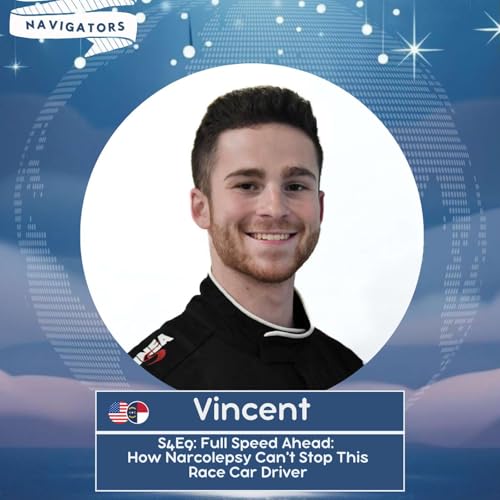
  • Full Speed Ahead: How Narcolepsy Can't Stop This Race Car Driver
    Mar 28 2026

    Leave a review!

    Meet Vincent Arthur - a 21-year-old race car driver from Charlotte, North Carolina, who's proving that narcolepsy type 2 doesn't have to slow you down.

    In this inspiring episode of Narcolepsy Navigators, Vincent shares his powerful journey from struggling with undiagnosed brain fog and excessive daytime sleepiness in 2019 to becoming the first race car driver sponsored by Wake Up Narcolepsy in 2023.

    Discover how Vincent turned his diagnosis into a platform for advocacy, why he feels MORE comfortable behind the wheel than most people, and how he's using motorsports to shatter stereotypes about sleep disorders. From sim racing victories to real-world tracks, Vincent's story will challenge everything you think you know about living with narcolepsy.

    Key Topics Discussed:

    • Vincent's 4-year journey to diagnosis and the relief of finally understanding his symptoms
    • Managing brain fog, excessive daytime sleepiness, and ADHD-like symptoms during college
    • Why driving actually helps some people with narcolepsy stay alert (and the science behind it)
    • Partnering with Wake Up Narcolepsy as the first sponsored race car driver
    • Breaking barriers and proving that narcolepsy isn't a limiting factor
    • Practical advice for anyone who thinks their condition will hold them back

    Guest Bio: Vincent Arthur is a 21-year-old professional race car driver and narcolepsy advocate based in Charlotte, North Carolina. Diagnosed with narcolepsy type 2 in early 2023, Vincent quickly became a voice for the sleep disorder community by partnering with Wake Up Narcolepsy as their first-ever sponsored race car driver. When he's not on the track, Vincent studies mechanical engineering and competes in sim racing, where he's achieved multiple victories. Follow his journey at @VincentA55 on all social platforms.

    Episode Highlights:

    • [00:03:42] - Vincent's diagnosis journey from 2019 to 2023
    • [00:13:00] - Navigating college with undiagnosed narcolepsy
    • [00:23:00] - Why driving helps Vincent stay alert (the alertness factor)
    • [00:25:32] - Partnership with Wake Up Narcolepsy and raising awareness
    • [00:28:41] - Vincent's powerful message: "Narcolepsy is not a limiting factor"

    Connect with Vincent: Instagram/Twitter: @VincentA55

    Resources Mentioned:

    • Wake Up Narcolepsy
    • Charlotte Motor Speedway area

    Support the Show: Support Narcolepsy Navigators on Patreon for bonus content, Discord access, and exclusive merch! Visit www.napsforlife.com

    Support the show

    Subscribe for more inspiring episodes, share to raise awareness, and join the conversation by sharing your experiences.

    Follow and support Narcolepsy Navigators:

    www.napsforlife.com

    Instagram: https://www.instagram.com/narcolepsynavigatorspodcast/
    Facebook: https://www.facebook.com/people/Narcolepsy-Navigators/61558638497300/
    LinkedIn: https://www.linkedin.com/company/narcolepsy-navigators-podcast
    TikTok: https://www.tiktok.com/@narcolepsynavigators
    Youtube: https://www.youtube.com/@NarcolepsyNavigatorsPodcast

    ***If you find these symptoms relatable, please seek medical advice.***


    Afficher plus Afficher moins
    33 min
Aucun commentaire pour le moment