Épisodes

  • Why 12 Million Tons of Glass Goes to Landfills Every Year (And How We're Stopping It)
    Jan 21 2026

    Every year, 12 million tons of architectural glass from skyscrapers and office buildings ends up in landfills. Even though you diligently put your glass bottles in the recycling bin, only 30% of collected glass actually gets recycled back into glass.


    Sydney Mainster, VP of Sustainability at The Durst Organization, is on a mission to change that. After watching hundreds of tons of perfectly recyclable glass from a 40-story building go to waste, she pioneered a partnership to recycle skyscraper windows across New York City.


    In this episode, Sydney and David Entwistle (Director of Major Projects at Saint-Gobain Glass) reveal:

    - Why glass is the ONLY material recyclers lose money on

    - The hidden contamination problem that shuts down $40M furnaces

    - How "sneaky sustainability" is making glass recycling standard practice

    - Why interior office glass is the secret to scaling this solution

    - The roadblocks preventing this from going national


    Sydney and David are completely reimagining how we handle one of our most valuable building materials.


    🔗 Connect with Sydney Mainster: https://www.linkedin.com/in/smainster/🔗 Connect with David Entwistle: https://www.linkedin.com/in/david-entwistle-b51b2531/


    Chapters

    00:00 Circular Economy in Glass Recycling00:37 Roles and Responsibilities in Sustainability00:54 The Glass Recycling Challenge07:37 Understanding Architectural Glass vs. Container Glass16:15 Origin Stories of Glass Recycling Programs27:03 Collaboration and Learning in the Industry31:30 The Journey of Deconstruction and Sustainability33:37 Overcoming the Status Quo in Construction35:12 Convincing Stakeholders for Sustainable Practices38:40 The Role of Case Studies in Advocacy40:19 Scaling Challenges in Sustainability43:46 Looking Forward: The Future of Sustainability

    Afficher plus Afficher moins
    54 min
  • An Architectural Answer to how Cities can Turn Down the Heat
    Dec 18 2025

    What if a powerful climate solution in cities isn’t a new building, but the roof that’s already there? As heat waves intensify across Europe, architect and MIT-trained educator Olivier Faber explains how his firm, Roofscapes is transforming overlooked rooftops into cooling, accessible, green infrastructure. Starting with Paris’s iconic zinc roofs, the conversation unpacks why existing buildings are misaligned with today’s climate, how shading and vegetation can dramatically reduce indoor temperatures without air conditioning, and why renovation and adaptation may matter more than new construction in the decades ahead. Along the way, Olivier reveals the political, technical, and cultural battles behind testing climate solutions in historic cities, and why climate adaptation is about changing how we value the buildings we already have.


    Thumbnail Image courtesy of Roofscapes

    Subscribe to Most Podern on:

    Spotify - https://open.spotify.com/show/3zYvX2lRZOpHcZW41WGVrpApple Podcasts - https://podcasts.apple.com/us/podcast/most-podern-podcast/id1725756164Youtube - https://www.youtube.com/@MostPodernInstagram - https://www.instagram.com/most.podernLinkedIn - https://www.linkedin.com/company/most-podern

    Keywords

    architecture, climate change, renovation, urban design, sustainability, Roofscapes, green roofs, preservation, adaptation, building practices, Paris, urban design, heat island effect

    Chapters

    00:00 Background and Journey into Architecture

    00:51 Exploring Alternative Architecture Practices

    03:52 Introducing Roofscapes and Its Mission

    06:17 Physical Adaptation: Before and After

    07:16 The Challenges of Zinc Roofs in Urban Design

    10:29 Innovative Solutions for Urban Heat Management

    11:34Pitching Green Roof Solutions to Building Owners

    14:08 Navigating the Complexities of Building Regulations

    17:14 Measuring the Impact of Climate Adaptation Projects

    24:09 Future Directions for Climate Adaptation in Architecture

    Links

    Olivier Faber - https://www.linkedin.com/in/olivier-faber

    Roofscapes - https://www.roofscapes.studio/MITx - https://mitxonline.mit.edu/

    Afficher plus Afficher moins
    32 min
  • A New Era for Sprawl
    Dec 10 2025

    The American suburban dream is unsustainable—but we're not giving up on it.


    David Kooris, Executive Director of the Connecticut Municipal Development Authority and lecturer at Yale, explains why sprawl no longer works as an economic engine and how we can retrofit existing suburbs to be more prosperous, walkable, and sustainable.


    In this episode, we explore:✓ Why the suburban development model is fiscally unsustainable✓ How to transform aging strip malls into thriving town centers✓ The art of community engagement that builds consensus (not opposition)✓ Why making car-dependent places walkable has more impact than you think✓ Planning concepts everyone should understand about their built environment


    https://www.wearecmda.com/


    Chapters

    00:00 The Impetus for Urban Planning00:00 Understanding the Role of Municipal Development00:00 Examples of Community Engagement00:00 David Kooris's Background and Insights00:41 The Importance of Long-Term Planning00:41 Retrofitting Suburban Landscapes00:41 Strategies for Community Improvement00:41 Engaging Future Residents in Development Conversations00:41 The Importance of Diverse Stakeholder Engagement00:41 Overcoming Community Resistance to Change00:41 Planning 101: Essential Concepts for Community Engagement00:41 Understanding the Complexities of the Built Environment00:41 Streamlining Community Engagement in Planning00:41 Innovative Approaches to Municipal Development00:41 Reflecting on the Current Era of Urban Planning

    Afficher plus Afficher moins
    42 min
  • Planning Coachella - Reiko Wei
    Dec 3 2025

    What hidden design choices make a 125,000-person festival feel effortless—and what happens when being off by just one foot throws everything into chaos? Why do some festivals become cultural icons while others collapse spectacularly? And how did one architect watching the Fyre Festival documentary suddenly realize, “I could do this a million times better”—and then actually go do it?

    In this episode, Reiko Wei, design production manager at Goldenvoice (the team behind Coachella & Stagecoach), pulls back the curtain on the invisible systems, political negotiations, spatial puzzles, and human-centered decisions that shape the world’s most iconic music festivals. She reveals how a show built on 1200 acres needs precision down to a single foot, why the fire marshal has the ultimate power, how Gen Z is reshaping festival culture, and why physical spaces for real connection matter more than ever in a post-COVID world.

    If you’ve ever wondered how a “giant party” becomes a safe, seamless, deeply human experience—or why these events still matter—this conversation will change how you see every festival you attend.

    https://goldenvoice.com/

    https://www.coachella.com/

    https://www.stagecoachfestival.com/

    Chapters

    00:00 Understanding Coachella: The Festival Experience03:19 The Role of Logistics in Event Planning06:41 Reiko's Transition from Architecture to Event Planning10:10 Collaboration with Authorities and Stakeholders13:35 The Evolution of Coachella: Adapting to Change17:00 Designing for Experience: The Importance of Flow21:15 The Art of Curation in Festivals25:02 Shifting Audience Dynamics Post-COVID27:11 The Importance of In-Person Connections30:43 Navigating Loneliness and Community31:51 Reflections on the Current Era

    Afficher plus Afficher moins
    35 min
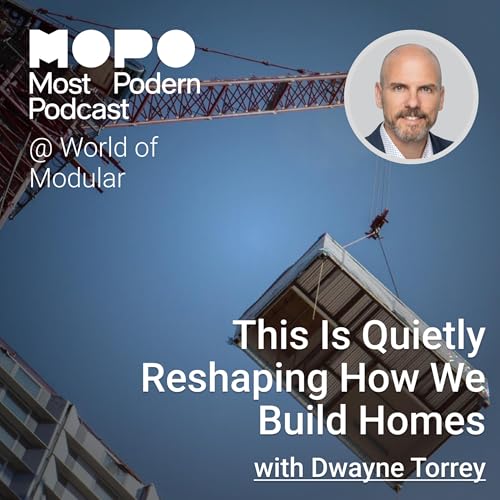
  • America can't Build. Can Modular Construction be the Answer?
    Nov 26 2025

    How do we build faster, smarter, and more affordably in a world running out of patience and running short on skilled labor? Tom Hardiman, Executive Director of the Modular Building Institute, joins Alex Yuen and Libo Li to explain how modular construction can reshape the built environment. From cutting construction timelines in half to reducing waste and expanding access to housing, Tom shows why modular is not a trend but a practical tool for a more sustainable, efficient, and inclusive future. The conversation unpacks the realities behind factory based building, the politics that slow adoption, and how modular can help cities facing affordability and capacity challenges.

    Subscribe to Most Podern on:

    Spotify - https://open.spotify.com/show/3zYvX2lRZOpHcZW41WGVrpApple Podcasts - https://podcasts.apple.com/us/podcast/most-podern-podcast/id1725756164Youtube - https://www.youtube.com/@MostPodernInstagram - https://www.instagram.com/most.podernLinkedIn - https://www.linkedin.com/company/most-podern

    Keywords

    modular construction, prefab housing, offsite construction, Modular Building Institute, MBI, Tom Hardiman, affordable housing solutions, housing crisis, construction technology, manufacturing in construction, sustainable building, prefabricated buildings, industrialized construction, factory-built homes, housing innovation, construction efficiency, future of construction, how to build faster, Most Podern podcast

    Chapters

    00:00 Introduction to Modular Construction

    00:53 Defining Modular Construction

    02:02 Benefits of Modular Construction

    04:59 The Ecosystem of Modular Construction

    06:51 Coordination in Modular Projects

    08:20 Cost Considerations in Modular Construction

    09:53 The Importance of Time in Construction

    11:30 Architects and Modular Construction

    12:53 Successful Modular Projects

    14:38 Addressing Design Concerns in Modular Construction

    17:32 Standardization vs. Customization

    19:45 Regulatory Challenges in Modular Construction

    20:50 Education and Resources for Modular Construction

    21:13 The Role of Education in Modular Construction

    24:27 Attracting Young Talent to Modular Construction

    28:32 Barriers to Adoption of Modular Construction

    30:56 Navigating Politics and Labor Relations

    34:51 Integrating Traditional and Modular Construction

    37:52 The Future of Modular Construction

    40:12 Upcoming Events and Community Engagement

    Links

    Tom Hardimanlinkedin.com/in/tomhardiman

    Modular Building Institute (MBI)

    https://www.modular.org/

    World of Modular Conference

    https://www.modular.org/wom/

    MBI Research and Resources

    https://www.modular.org/resources/

    Afficher plus Afficher moins
    46 min
  • Why Affordable Housing Isn’t Affordable
    Nov 11 2025

    Why does building “affordable” housing cost so much in the built environment? From land prices to loan rates, construction inflation to endless permitting, Alex and Libo break down the true costs of creating homes and why the system often works against the very people it is meant to help. They unpack how financing, regulation, and risk collide, what makes America’s housing model unique, and what simple reforms could unlock more livable and affordable cities for everyone.

    Subscribe to Most Podern on:

    Spotify - https://open.spotify.com/show/3zYvX2lRZOpHcZW41WGVrpApple Podcasts - https://podcasts.apple.com/us/podcast/most-podern-podcast/id1725756164Youtube - https://www.youtube.com/@MostPodernInstagram - https://www.instagram.com/most.podernLinkedIn - https://www.linkedin.com/company/most-podern

    Keywords

    affordable housing crisis, built environment, housing policy, real estate development, construction costs, architecture, urban design, cities, zoning reform, housing finance, interest rates, pro forma explained

    Chapters

    00:00 Understanding Affordable Housing Costs02:29 The Role of Pro Forma in Housing Development05:49 Financing Affordable Housing Projects09:58 Impact of Rising Costs on Housing Development16:18 Government's Role in Affordable Housing20:29 Streamlining the Permitting Process23:13 Changing Perspectives on Housing Development

    Afficher plus Afficher moins
    26 min
  • Design School for The Displaced - With Scott Key
    Nov 4 2025

    What happens when you run an architecture studio inside a refugee settlement — and let refugees lead it?

    Scott Key (founder/CEO of Every Shelter) is back to break down how a 10-week “design school” in Nakivale turned buzzwords like “co-creation” into actual, working solutions — cow-dung bricks that survive soaking, shelter-wide mosquito netting, and quality water that families can afford.

    Why it matters:

    Refugees are displaced for 20+ years — which means they need permanent, local, extremely affordable building solutions. This episode shows how design unlocks what’s already on the ground: clay, ag waste, community trust, and good design.

    LinksDonate to Support Every Shelter’s WorkEvery Shelter

    Our Last Episode with Scott

    Youtube*:* https://youtu.be/60d198yrKcY?feature=shared

    Spotify: https://open.spotify.com/episode/3iVzLi6aF5SV1K7WaVayT4?si=P2-DFU3_QNKP9c_XFxUEFQ

    Apple: https://podcasts.apple.com/us/podcast/designing-dignity-how-scott-key-and-every-shelter-are/id1725756164?i=1000702692254

    Chapters

    00:00 Running an Architecture Studio in a Refugee Camp02:53 Pitching the Idea to Students and Stakeholders02:53 Introduction to the Program and Partnerships05:13 Setting the Stage: The First Day of Design School07:54 Curriculum and Transformation: Learning by Doing10:20 Innovative Projects: Cow Poop and Mud Bricks12:41 Community Engagement: Addressing Local Needs15:30 Water Quality Solutions: BioSand Filters18:18 Empowerment through Entrepreneurship: Offer Letters and Business Models20:39 Feedback and Iteration: Learning from the Community22:51 The Role of Donors and Future Directions25:08 Looking Ahead: Optimism for Human Connection

    Afficher plus Afficher moins
    39 min
  • The Architect Who Healed NYC After 9/11
    Sep 24 2025

    In this conversation, Kevin Kennon, reflects on his experiences surrounding the events of 9/11, particularly his involvement in the Ground Zero viewing platform and the subsequent World Trade Center competition. We discusses the emotional impact of architecture, the importance of community and collaboration in design, and the lessons learned from revitalizing Lower Manhattan. Kennon emphasizes the need for architects to articulate their vision and the role of travel in enhancing one's understanding of the built environment. He concludes with thoughts on the future of architecture and the importance of fostering a sense of hope and connection through design.


    Links:

    https://www.linkedin.com/in/kevinkennonarchitect/

    https://www.kdcaia.com/


    Chapters


    00:00 Ground Zero: A Catalyst for Change

    07:47 The Power of Architecture in Crisis

    15:05 Collaboration and Competition: Redesigning the World Trade Center

    23:55 Revitalization: Lessons from Lower Manhattan

    31:10 The Future of Architecture: Optimism and Collaboration


    Afficher plus Afficher moins
    41 min