Épisodes

  • Legal News for Mon 2/23 - SCOTUS Helms-Burton and Cuba, IEEPA Tariffs, JPMorgan's Closing of Trump's Accounts and Tesla Held to $243m Verdict
    Feb 23 2026
    This Day in Legal History: Order 9066On this day in legal history, enforcement of Executive Order 9066 began in earnest following its signing by Franklin D. Roosevelt earlier in February 1942. The order authorized the military to designate exclusion zones and remove individuals deemed security risks from certain areas of the country. In practice, it led to the forced relocation and incarceration of more than 110,000 Japanese Americans, most of whom were U.S. citizens. Families were removed from their homes, businesses were lost, and entire communities were dismantled. The government justified the policy as a matter of national security during World War II. Critics argued it was rooted in racial prejudice rather than military necessity.The constitutionality of the policy reached the Supreme Court in Korematsu v. United States. Fred Korematsu, a U.S. citizen, had refused to comply with the exclusion order and was convicted. In a 6–3 decision, the Court upheld his conviction, accepting the government’s claim that the exclusion was justified by wartime necessity. The majority deferred heavily to the executive branch, emphasizing the perceived threat on the West Coast. In dissent, several justices warned that the decision validated racial discrimination under the guise of military urgency.Decades later, the ruling came to be widely regarded as a grave error. In 1988, Congress passed the Civil Liberties Act, formally apologizing and providing reparations to surviving internees. In 2018, the Supreme Court explicitly stated that Korematsu was wrongly decided, rejecting its reasoning even though it was not formally overturned in the technical sense. The episode remains a cautionary example of how constitutional protections can erode in times of crisis.The U.S. Supreme Court is set to hear two cases concerning the scope of the Helms-Burton Act, a 1996 law that allows American companies to sue over property confiscated by Cuba after the 1959 revolution. One case involves ExxonMobil’s effort to recover more than $1 billion for oil and gas assets seized by Cuba in 1960. Exxon sued a Cuban state-owned company in 2019, alleging it continues to profit from the confiscated property. A lower court ruled that the Cuban entities could claim foreign sovereign immunity, which generally protects foreign governments from being sued in U.S. courts. Exxon has asked the Supreme Court to reverse that decision.The second case involves four cruise operators—Carnival, Royal Caribbean, Norwegian Cruise Line, and MSC Cruises—accused of unlawfully benefiting from docks in Havana that were originally built and operated by a U.S. company before being seized by Cuba. The docks were used between 2016 and 2019, after travel restrictions were eased under President Obama. A trial judge initially ruled against the cruise lines and awarded more than $100 million in damages, but an appeals court later dismissed the case, finding that the original concession had expired before the cruise lines used the property. The Supreme Court’s decisions could clarify how broadly Congress intended the Helms-Burton Act to apply and whether claimants face significant legal barriers when seeking compensation.US Supreme Court to hear Exxon bid for compensation from Cuba | ReutersU.S. Customs and Border Protection announced that it will stop collecting tariffs imposed under the International Emergency Economic Powers Act (IEEPA) beginning just after midnight on Tuesday. The decision comes several days after the U.S. Supreme Court ruled that those tariffs were unlawful. The agency said it would deactivate the tariff codes tied to President Donald Trump’s IEEPA-related orders but did not explain why collections continued for days after the ruling. It also did not address whether importers who paid the duties would receive refunds.The suspension of the IEEPA tariffs coincides with the implementation of a new 15% global tariff introduced under a different statutory authority. Customs clarified that the halt applies only to the IEEPA-based tariffs and does not affect other trade measures, including those enacted under Section 232 for national security reasons or Section 301 for unfair trade practices. Economists have estimated that the now-invalidated IEEPA tariffs generated more than $175 billion in revenue and were bringing in over $500 million per day. As a result, the ruling potentially exposes the government to significant refund claims from importers.US to stop collecting tariffs deemed illegal by Supreme Court on Tuesday | ReutersJPMorgan Chase informed President Donald Trump and his hospitality company in February 2021 that it was closing their bank accounts, according to newly released documents tied to Trump’s $5 billion lawsuit against the bank and its CEO, Jamie Dimon. The letters were sent about a month after the January 6, 2021, attack on the U.S. Capitol. At the time, several businesses and organizations distanced themselves from Trump, ...
    Afficher plus Afficher moins
    7 min
  • Legal News for Fri 2/20 - Musk Jury Full of Haters, $35m Epstein Settlement, Mercury Returns to Air, Pepsi Blocks Pricing Class Action and RIP Tariffs, for now
    Feb 20 2026
    This Day in Legal History: Jacobson v. MassachusettsOn this day in legal history, the Supreme Court issued its decision in Jacobson v. Massachusetts (1905), a case that defined the balance between individual liberty and public health. The dispute arose during a smallpox outbreak when Massachusetts authorized local governments to require vaccinations. Henning Jacobson refused the vaccine, arguing that the mandate violated his personal liberty under the Constitution. The case presented a fundamental question: how far can the state go in protecting the health of its citizens?In a 7–2 decision, the Court upheld the compulsory vaccination law. The justices reasoned that individual freedoms are not absolute. Writing for the majority, the Court explained that the Constitution permits reasonable regulations to protect public health and safety. This authority stems from the state’s “police power,” a broad power to enact laws for the welfare of the community. The Court emphasized that liberty does not include the right to act in a way that harms others. During an epidemic, the government may impose measures necessary to prevent disease from spreading.The decision established an enduring precedent for public health regulation. It has been cited in later cases involving quarantine laws, vaccine mandates, and emergency health orders. More than a century later, Jacobson remains central to debates about the limits of government authority in times of crisis.A federal judge in California sharply reduced a jury pool in a class action securities trial against Elon Musk after many potential jurors said they could not be impartial. Out of 92 candidates, 38 were dismissed after admitting they could not fairly judge the case, prompting Musk’s attorney to argue that strong personal hostility toward his client was affecting the process. The lawsuit, brought by former Twitter investors, alleges that Musk made misleading statements in 2022 to depress the company’s stock price while negotiating its purchase. Musk denies the allegations.Judge Charles R. Breyer reminded jurors that their verdict must be based only on evidence presented at trial, not personal opinions about Musk. Several prospective jurors expressed strong views, both positive and negative, and some were removed for cause. One man who said he believed Musk should be in prison but could be fair in a civil case was not selected. Others who openly supported Musk or dismissed class actions as frivolous were also excluded. By the end of the day, a nine-member jury was seated.The case centers on claims that Musk’s tweets about the deal being “on hold” and about the percentage of fake accounts misled investors. The judge previously ruled that investors plausibly alleged securities law violations and certified a class of affected shareholders. He also denied early summary judgment motions, allowing the case to proceed to trial. The upcoming trial will determine whether Musk’s public statements violated federal securities laws during the 2022 acquisition process.‘Hate’ For Musk Quickly Narrows Jury Pool In Twitter Deal Trial - Law360Jeffrey Epstein’s estate has agreed to pay up to $35 million to settle a class action lawsuit alleging that two of his longtime advisers helped facilitate his sex trafficking scheme. The proposed agreement was disclosed in a federal court filing in Manhattan and must still be approved by a judge. The lawsuit, filed in 2024, targeted Darren Indyke, Epstein’s former personal lawyer, and Richard Kahn, his longtime accountant, who serve as co-executors of the estate.Attorneys for the victims claimed the two men assisted Epstein by managing a network of corporations and financial accounts that concealed his activities and enabled payments to victims and recruiters. As part of the settlement, neither Indyke nor Kahn admitted wrongdoing. Their attorney stated they were prepared to contest the claims at trial but chose to settle to bring closure and resolve remaining potential claims against the estate.The estate has already distributed substantial sums to victims. A compensation program previously paid out $121 million, and an additional $49 million has been resolved through other settlements. According to defense counsel, the new agreement will offer a confidential path to compensation for individuals who have not yet settled claims.Epstein died in a New York jail in 2019, and his death was ruled a suicide.Epstein estate agrees to $35 million settlement in victim class action | ReutersThe Trump administration announced plans to scale back federal limits on mercury and other hazardous air pollutants emitted by coal-fired power plants. Officials said easing these standards would help utilities manage costs and maintain reliable baseload electricity as power demand rises, particularly from artificial intelligence data centers. The move targets updates made during the Biden administration to the Mercury and Air Toxics Standards ...
    Afficher plus Afficher moins
    20 min
  • Legal News for Thurs 2/19 - Climate Policy Rollback Lawsuit, Zuckerberg in Court, Uber Winning Sanctions
    Feb 19 2026
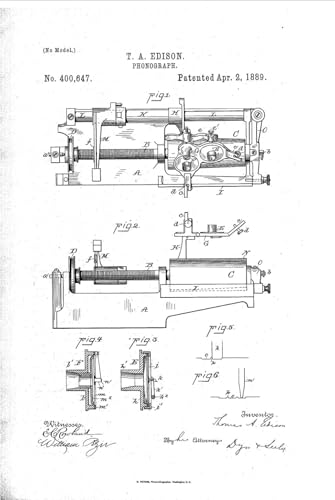
    This Day in Legal History: Edison Receives Patent on PhonographOn February 19, 1878, Thomas Edison received a patent for one of his most transformative inventions: the phonograph. The device could record and reproduce sound, a breakthrough that stunned the public and reshaped the relationship between technology and creativity. Until that point, copyright law primarily protected written works such as books, maps, and sheet music. The phonograph introduced an entirely new category of expression—recorded sound—that did not fit neatly into existing statutes. Lawmakers and courts were soon confronted with a difficult question: who owns a performance once it is captured on a machine?Early copyright frameworks did not clearly account for performers’ rights in recorded works. As the recording industry grew, pressure mounted to recognize both composers and performers as legal stakeholders. Congress responded incrementally, expanding federal copyright protections to cover sound recordings in the twentieth century. These changes reflected a broader shift toward adapting intellectual property law to technological innovation. Courts also played a role by interpreting statutes in ways that acknowledged the economic realities of recorded music. The phonograph’s legacy thus extends far beyond its mechanical design. It forced the legal system to confront how creative labor should be valued in an age of reproduction. In doing so, Edison’s invention helped lay the foundation for modern intellectual property law governing sound recording and broadcasting.A coalition of environmental and public health organizations has filed suit against the Trump administration over its decision to revoke the scientific “endangerment finding” that underpins federal climate regulations. The case was brought in the U.S. Court of Appeals for the District of Columbia Circuit and also challenges the Environmental Protection Agency’s move to repeal vehicle tailpipe emissions limits. The administration recently announced it would eliminate the 17-year-old finding and end greenhouse gas standards for model years 2012 through 2027.The endangerment finding, first adopted in 2009, concluded that greenhouse gases threaten public health and welfare, triggering regulatory authority under the Clean Air Act. Its repeal would remove requirements for measuring and complying with federal vehicle emissions standards, though immediate effects on stationary sources like power plants remain uncertain. The administration characterized the rollback as a major cost-saving measure, estimating $1.3 trillion in taxpayer savings.By contrast, the Biden administration had previously argued the vehicle standards would produce net consumer benefits, including lower fuel and maintenance costs averaging thousands of dollars over a vehicle’s lifetime. The lawsuit marks one of the most significant legal challenges yet to President Trump’s broader effort to scale back climate policy, promote fossil fuel development, withdraw from the Paris Agreement, and dismantle clean energy incentives. Transportation and power generation each account for roughly a quarter of U.S. greenhouse gas emissions, underscoring the stakes of the regulatory reversal.Environmental groups challenge Trump decision to revoke basis of US climate regulations | ReutersMeta CEO Mark Zuckerberg is scheduled to testify in a Los Angeles jury trial examining whether Instagram harms young users’ mental health. The case centers on allegations that Meta designed its platform to keep children engaged despite knowing about potential psychological risks. A California woman who began using Instagram and YouTube as a child claims the platforms contributed to her depression and suicidal thoughts. She is seeking damages, arguing the companies prioritized profit over user well-being.Meta and Google deny the accusations and point to safety features they have implemented. Meta has also cited research suggesting that evidence does not conclusively show social media directly changes children’s mental health. Defense attorneys argue the plaintiff’s struggles stem from personal and family issues rather than her social media use.The lawsuit is part of a broader wave of litigation in the United States, where families, schools, and states have filed thousands of similar claims against major tech companies. Internationally, governments such as Australia have imposed age-based restrictions, and other countries are considering similar measures. The trial could test the tech industry’s longstanding legal protections against liability for user harm. If the plaintiff prevails, the verdict may weaken those defenses and open the door to additional claims. Zuckerberg is expected to face questions about internal company research concerning Instagram’s effects on teens.Meta’s Zuckerberg faces questioning at youth addiction trial | ReutersA federal judge in San Francisco has ordered a lawyer representing ...
    Afficher plus Afficher moins
    6 min
  • Legal News for Wed 2/18 - Roundup $7.25b Settlement Plan, Valve Patent Troll Verdict, New Law School Federal Loan Caps and SCOTUS Conflict-Checking Software
    Feb 18 2026
    This Day in Legal History: Aaron Burr Arrested (But Not For That)On February 18, 1807, former Vice President Aaron Burr was arrested in the Mississippi Territory on charges of treason against the United States. Once one of the most powerful men in the young republic, Burr had fallen from political grace after killing Alexander Hamilton in a duel and drifting to the margins of national life. Federal authorities accused him of plotting to carve out an independent nation in the western territories, possibly including lands belonging to Spain. The allegations sparked fear that the fragile Union could splinter only decades after independence.Later that year, Burr stood trial in Richmond, Virginia, before Chief Justice John Marshall, who was riding circuit. The case quickly became a constitutional showdown between executive power and judicial restraint. President Thomas Jefferson strongly supported the prosecution, but Marshall insisted that the Constitution’s Treason Clause be applied strictly. The Constitution requires proof of an “overt act” of levying war against the United States, not merely evidence of intent or conspiracy.Marshall ruled that prosecutors had failed to present sufficient proof that Burr had committed such an overt act. As a result, the jury acquitted him. The decision established an enduring precedent that treason must be narrowly defined and carefully proven. By demanding clear evidence of action rather than suspicion or political hostility, the court reinforced limits on the government’s power to punish alleged disloyalty. Burr’s trial remains one of the earliest and most significant tests of constitutional safeguards in American legal history.Bayer AG and its Monsanto subsidiary have proposed a $7.25 billion nationwide class settlement to resolve current and future claims that Roundup exposure caused non-Hodgkin lymphoma. Filed in Missouri state court, the agreement would run for up to 21 years and provide capped, declining annual payments. People diagnosed before or within 16 years after final court approval could seek compensation through the program. The settlement must still receive judicial approval.The proposal is part of a broader strategy tied to the U.S. Supreme Court’s pending review of Durnell v. Monsanto, which could determine whether federal pesticide labeling law blocks certain state failure-to-warn claims. Bayer has indicated that a favorable ruling could significantly limit future lawsuits, while the class program is designed to address claims regardless of the Court’s decision. Plaintiffs’ attorneys say the deal would cover both occupational and residential exposure and protect the rights of future claimants, while allowing individuals to opt out and pursue separate suits.Roundup litigation has generated tens of thousands of cases, with more than 40,000 already pending or subject to tolling agreements. Bayer inherited the legal challenges after acquiring Monsanto in 2018, and the ongoing litigation has weighed heavily on the company financially and reputationally. Previous jury verdicts have resulted in multibillion-dollar awards, some later reduced on appeal or by judges. The new proposal would replace an earlier settlement effort that collapsed in 2020 and aims to create a longer-term, more predictable compensation system.Bayer AG Unveils $7.3B Deal For Roundup Users - Law360Bayer proposes $7.25 billion plan to settle Roundup cancer cases | ReutersA Seattle federal jury found inventor Leigh Rothschild, several of his patent-holding companies, and his former attorney liable for violating Washington’s anti-patent trolling law after asserting patent infringement claims against Valve Corp. Jurors concluded the defendants acted in bad faith under the Washington Patent Troll Prevention Act and also violated the state’s consumer protection statute. Valve was awarded $22,092 in statutory damages.The jury also determined that Rothschild and his companies breached a 2016 global settlement and licensing agreement with Valve. Under that agreement, Valve paid $130,000 for rights to certain patents in exchange for a promise not to sue over them. Despite that covenant, Rothschild’s entities later filed a 2022 infringement lawsuit and sent a 2023 letter threatening additional litigation. The jury awarded Valve $130,000 for the first breach and $1 for the second, finding no valid justification for repudiating the agreement.In addition, jurors ruled that one asserted patent claim was invalid because it would have been obvious to a skilled professional at the time of filing. The dispute stemmed from Valve’s 2023 lawsuit accusing Rothschild of repeatedly pursuing claims covered by the prior settlement. The defense argued any mistakes were unintentional and not profit-driven, but the jury sided with Valve after a four-day trial.The case also involved procedural controversies, including sanctions over delayed financial disclosures and allegations that a defense ...
    Afficher plus Afficher moins
    8 min
  • Legal News for Tues 2/17 - NFL Failed Arbitration Attempt, Social Media Addiction Suit, IRS Hostage Tax Relief for ICE Victims and Mass. Software Tax Rule Has Issues
    Feb 17 2026
    This Day in Legal History: Wesberry v. Sanders On February 17, 1964, the U.S. Supreme Court decided Wesberry v. Sanders, one of the most consequential voting rights cases in American history. The dispute arose from Georgia’s congressional districts, where vast population disparities meant that some districts had two or even three times as many residents as others. In practical terms, this imbalance diluted the voting power of citizens in more populated, often urban, districts. James P. Wesberry challenged the system, arguing that it violated Article I, Section 2 of the Constitution, which provides that members of the House of Representatives are chosen “by the People.”In a 6–3 decision, the Court agreed. Writing for the majority, Justice Hugo Black concluded that the Constitution requires congressional districts to be drawn so that “as nearly as practicable one man’s vote in a congressional election is to be worth as much as another’s.” The ruling established the principle of “one person, one vote” for federal elections. It rejected longstanding districting schemes that favored rural regions at the expense of growing urban populations. The decision forced states to redraw congressional maps to ensure substantially equal populations across districts.Wesberry was part of the broader reapportionment revolution of the 1960s, alongside cases addressing state legislative districts. Together, these decisions reshaped American democracy by making representation more closely tied to population equality. By insisting that each vote carry roughly equal weight, the Court strengthened the constitutional promise of representative government. February 17, 1964, marks a turning point in election law and the modern understanding of political equality.A federal judge in New York has ruled that discrimination claims brought by a group of NFL coaches will proceed in court rather than in arbitration. U.S. District Judge Valerie Caproni denied the league’s request to compel arbitration, finding that the NFL’s arbitration system was not fair or neutral. The lawsuit was filed by former Miami Dolphins coach Brian Flores, later joined by Steve Wilks and Ray Horton, who allege racial discrimination and retaliation in hiring practices. The case has been stalled for several years while the parties disputed whether it belonged in federal court or before an arbitrator.Judge Caproni relied heavily on a 2025 decision by the U.S. Court of Appeals for the Second Circuit, which concluded that the NFL’s arbitration structure was fundamentally flawed. The appellate court criticized the system because the NFL commissioner served as the default arbitrator and controlled the procedures, raising concerns about neutrality. It held that such an arrangement did not allow Flores to effectively vindicate his statutory rights. Based on that reasoning, Judge Caproni determined that the arbitration clause could not be enforced for the remaining claims. She also declined to delay the case further while the NFL considers seeking review from the U.S. Supreme Court.The coaches argue that requiring them to arbitrate before the league’s own commissioner would deprive them of a fair forum. Their attorneys praised the ruling, saying it affirms that employees cannot be forced into a process controlled by the opposing party’s chief executive. The NFL has not publicly responded to the latest order. The case will now move forward in the U.S. District Court for the Southern District of New York.NFL Found To Fumble Arbitration Over Bias, Must Go To Court - Law360Ruling says Brian Flores lawsuit vs. NFL, teams can go to court - ESPNA Stanford psychiatry professor testified in a California bellwether trial that research supports the existence of social media addiction and its harmful effects on young people. Dr. Anna Lembke told jurors that peer-reviewed studies show heavy use of platforms such as Instagram and YouTube can contribute to depression, anxiety, insomnia, and suicidal thoughts. She cited a National Institutes of Health study tracking more than 11,000 minors, which found that children who were not initially depressed were more likely to develop depression after significant social media use. According to Lembke, the study undermines the argument that already-depressed teens simply gravitate toward social media.Her testimony contrasts with statements from Instagram’s CEO, who told the jury he does not believe social media addiction is real. The case is the first of several bellwether trials arising from thousands of consolidated lawsuits claiming platforms intentionally designed addictive features. The companies are accused of using tools such as autoplay, notifications, and infinite scrolling to encourage compulsive use. The claims focus on whether these design features are addictive, rather than on third-party content posted by users. Plaintiffs assert negligence, failure to warn, and concealment.During cross-examination, ...
    Afficher plus Afficher moins
    9 min
  • Legal News for Mon 2/16 - Fed Circuit Revives Google Patent Fight, MLB Pitchers Used Code for Pitch-Fixing, and a DE Dog Custody Auction
    Feb 16 2026
    This Day in Legal History: Powell v. AlabamaOn February 16, 1932, the United States Supreme Court heard oral arguments in Powell v. Alabama, a case that would become a cornerstone of modern criminal procedure. The appeal arose from the notorious Scottsboro Boys prosecutions in Alabama, where nine young Black men were accused of raping two white women aboard a train. The trials moved with alarming speed, and the defendants were sentenced to death after proceedings that offered little meaningful access to legal counsel. In some instances, lawyers were appointed on the day of trial, leaving virtually no time to prepare a defense.The case forced the Court to confront whether such rushed representation satisfied the requirements of due process under the Fourteenth Amendment. When the decision was issued later that year, the Court held that in capital cases, state courts must provide defendants with effective assistance of counsel. The justices emphasized that the right to be heard would mean little without the guiding hand of an attorney. The ruling did not yet create a broad right to counsel in all felony cases, but it marked a significant expansion of constitutional protections in state criminal proceedings.Powell signaled that fundamental fairness in state trials was subject to federal constitutional scrutiny. It also laid important groundwork for later decisions that would extend the right to counsel beyond capital cases. The case remains a defining example of how procedural safeguards can shape the legitimacy of the criminal justice system.The U.S. Court of Appeals for the Federal Circuit revived part of Google’s challenge to a Wildseed Mobile LLC patent covering the creation and transmission of “hot links” through text messages. A three-judge panel vacated a decision by the Patent Trial and Appeal Board that had upheld one remaining claim of the patent, while invalidating the others. The appellate court found that the board failed to properly analyze Google’s argument that the claim was invalid in light of prior art.The disputed claim involved generating a hot link using either an SMS message or an instant message. Although Google addressed both aspects in its petition, the board focused only on the SMS portion and did not meaningfully address the instant messaging limitation. The Federal Circuit said the board neither evaluated whether prior art covered the instant messaging element nor explained why it declined to do so. Because of that omission, the panel sent the case back to the board for further review.Wildseed had accused Google of infringing the patent based on how advertisements function on YouTube. The lawsuit was initially filed in Texas in 2022 but later moved to federal court in California, where proceedings were paused pending the outcome of the PTAB review. In 2024, the board had already invalidated claims in two related Wildseed patents involving video ads and smartphone notifications.Google’s Hot Link Patent Claim Challenge Revived At Fed. Circ. - Law360Federal prosecutors have unveiled additional details in a criminal case accusing Cleveland Guardians pitchers Emmanuel Clase and Luis Ortiz of participating in a pitch-fixing scheme tied to sports betting. A superseding indictment filed in New York alleges that Clase exchanged coded text messages with associates and bettors before games to signal when he would throw specific pitches. The messages reportedly used poultry-themed language such as “rooster” and “chicken” to disguise the scheme. In one example, an associate allegedly texted Clase about throwing a “rock at the first rooster,” to which Clase responded affirmatively.Prosecutors claim that bettors used this advance information to place successful proposition bets on pitch speed, winning hundreds of thousands of dollars. According to the indictment, bettors earned at least $400,000 on wagers involving Clase and about $60,000 on wagers involving Ortiz. The players allegedly agreed to accept bribes of at least $12,000 each. Authorities also allege that some coordination occurred in person, including meetings at Clase’s home, and that payments were routed through intermediaries.The updated indictment adds Robinson Vasquez Germosen, who prosecutors say acted as a middleman and later lied to FBI agents about his knowledge of the scheme. He is charged with making false statements. Clase and Ortiz previously pleaded not guilty, and their attorneys maintain that the allegations are unproven and will be challenged at trial.MLB Pitcher Sent ‘Coded’ Texts For Rigged Pitches, Feds Say - Law360 UKA long-running dispute over ownership of a goldendoodle named Tucker has concluded with a private sealed-bid auction ordered by the Delaware Court of Chancery. The case, Callahan v. Nelson, involved former partners Karen Callahan and Joseph Nelson, who had jointly acquired the dog while dating but could not agree on ownership after their 2022 breakup. Because the couple ...
    Afficher plus Afficher moins
    6 min
  • Legal News for Fri 2/13 - Goldman Chief Lawyer Resigns, Judge Rebukes ICE On Access to Counsel, Trump Court Picks and Don Lemon's Plea
    Feb 13 2026
    This Day in Legal History: Bruno Hauptmann ConvictedOn February 13, 1935, a New Jersey jury convicted Bruno Hauptmann of kidnapping and murdering the infant son of famed aviator Charles Lindbergh. The crime had transfixed the nation for nearly three years and was widely labeled the “Crime of the Century.” The child was taken from the Lindbergh home in 1932, and despite a ransom payment, was later found dead. Public outrage was immediate and intense, with newspapers covering nearly every development in the investigation and trial.Hauptmann’s prosecution relied heavily on circumstantial evidence, including ransom notes and expert testimony linking his handwriting to those notes. The government also introduced evidence tying marked ransom bills to Hauptmann’s possession. The trial raised early concerns about the reliability of forensic handwriting analysis and the influence of media attention on jury impartiality. Critics then and now have questioned whether the intense publicity compromised due process protections.The case also reshaped federal criminal law. In response to the kidnapping, Congress enacted the Lindbergh Law, formally known as the Federal Kidnapping Act. The statute made it a federal offense to transport a kidnapping victim across state lines, expanding federal jurisdiction over what had traditionally been a state crime. That shift reflected a broader trend during the early twentieth century toward increased federal involvement in criminal enforcement.Today, the Hauptmann conviction remains a staple in criminal law courses, not only for its tragic facts but also for its lasting procedural and constitutional implications.Goldman Sachs’ chief legal officer, Kathy Ruemmler, resigned after newly released Justice Department documents detailed her past communications with Jeffrey Epstein. CEO David Solomon announced that he accepted her resignation, which will take effect on June 30. Ruemmler said the media attention surrounding her prior legal work had become a distraction. The disclosures showed she exchanged numerous emails with Epstein between 2014 and 2019 and received gifts from him, including luxury items. Some emails revealed that she advised Epstein on how to respond to press inquiries about his treatment by prosecutors.The documents also noted that Epstein attempted to contact her by phone on the night of his 2019 arrest on sex trafficking charges. Ruemmler stated that she knew Epstein only in her capacity as a defense attorney and denied any knowledge of ongoing criminal conduct. Before joining Goldman, she led the white-collar defense practice at Latham & Watkins and previously served as White House counsel during the Obama administration.The broader document release has drawn attention to Epstein’s connections within major financial institutions, including UBS and JPMorgan. Ruemmler’s departure marks one of the most prominent banking exits linked to the renewed scrutiny of Epstein’s network.Top Goldman Sachs lawyer Ruemmler resigns after Epstein disclosures | ReutersA federal judge in Minnesota ruled that U.S. Immigration and Customs Enforcement improperly interfered with detainees’ access to their attorneys during a recent enforcement operation. U.S. District Judge Nancy Brasel found that ICE’s practices during “Operation Metro Surge” effectively denied thousands of people meaningful legal access. The order requires ICE to stop quickly transferring detainees out of Minnesota and to permit attorney visits and confidential phone calls. The ruling will remain in effect for 14 days while the case proceeds.The class action lawsuit was filed on January 27 on behalf of noncitizen detainees. According to the court, many individuals were moved out of state without notice, making it difficult or impossible for lawyers to locate them. In some instances, detainees were transferred so often that ICE itself lost track of their whereabouts. Judge Brasel concluded that while ICE did not formally deny the right to counsel, its actions in practice severely limited that right.The court also cited evidence that detainees were given limited phone access, sometimes sharing a small number of phones among dozens of people, with calls occurring in nonprivate settings. One asylum seeker with a valid work permit was held for 18 days despite a court order requiring his earlier release and was transferred across multiple states without explanation. The judge rejected ICE’s claim that it lacked sufficient resources, noting that the agency had committed substantial personnel and funding to the enforcement effort.ICE blocked detainees’ access to lawyers in Minnesota, judge finds | ReutersPresident Donald Trump announced four new judicial nominations, including a White House attorney selected for a seat on the U.S. Court of International Trade. The nominee, Kara Westercamp, currently serves as associate counsel in the White House and previously worked at the Justice Department. If ...
    Afficher plus Afficher moins
    27 min
  • Legal News for Thurs 2/12 - SCOTUSBlog Goldstein Takes Stand in Tax Trial, Bondi Grilled Over Epstein File Redactions and the LSAT Goes In-person Only
    Feb 12 2026
    This Day in Legal History: NAACP FoundedOn February 12, 1909, the National Association for the Advancement of Colored People (NAACP) was founded in New York City. Sparked by ongoing racial violence, including the 1908 Springfield Race Riot in Illinois, a group of Black and white activists came together to launch an interracial effort to combat racial injustice. The NAACP would become the most influential civil rights organization in the United States, pursuing its goals through strategic litigation, public education, and advocacy.In its early years, the NAACP focused heavily on using the courts to challenge discriminatory laws and practices, particularly in education and voting. It played a pivotal role in Brown v. Board of Education (1954), the landmark Supreme Court case that declared racial segregation in public schools unconstitutional. Through its Legal Defense Fund—established in 1940 and headed for a time by Thurgood Marshall, who would later become the first Black U.S. Supreme Court Justice—the organization spearheaded a range of major civil rights cases.Beyond litigation, the NAACP was instrumental in pushing for anti-lynching laws, though federal anti-lynching legislation would take over a century to pass. The group’s efforts laid the legal and political foundation for the Civil Rights Movement of the 1950s and 1960s. Its influence continues today as it monitors civil rights violations and advocates for racial justice nationwide.Tom Goldstein, a prominent U.S. Supreme Court advocate and co-founder of SCOTUSblog, testified in his own defense during his federal criminal tax trial in Maryland. Goldstein, accused of failing to report millions in poker winnings and misrepresenting debts on mortgage applications, told jurors he never intended to violate the law. He admitted omitting gambling debts to keep them hidden from his wife, and claimed he relied on accountants and firm managers for financial reporting. The trial, overseen by Judge Lydia Griggsby, has drawn attention for its mix of high-stakes legal and poker worlds. Goldstein is alleged to have reported only $27 million of $50 million in poker winnings to the IRS in 2016. He also faces allegations of channeling improper payments through his former law firm and requesting a $500,000 payment from actor Tobey Maguire be sent to a third party to cover personal debts. Maguire, a witness in the trial, is not accused of any misconduct. The defense has called more than a dozen witnesses, including IRS agents, poker players, and law firm executives. Goldstein retired from Supreme Court advocacy in 2023 after arguing over 40 cases. The trial continues with prosecutors set to cross-examine him following his testimony.Supreme Court lawyer Tom Goldstein takes stand at his criminal tax trial | ReutersAttorney General Pam Bondi faced sharp criticism from lawmakers during a House Judiciary Committee hearing over the Justice Department’s handling of files related to Jeffrey Epstein. Representative Thomas Massie accused Bondi of deliberately concealing the names of powerful individuals connected to Epstein, including billionaire Leslie Wexner, whose name was initially redacted in an FBI document. Bondi countered that Wexner’s name had already been made public in other documents and was quickly unredacted once flagged. Lawmakers across the aisle expressed frustration over what they called excessive and unjustified redactions, despite a federal law passed in November mandating broad disclosure of the Epstein files.Bondi defended the department’s efforts, highlighting the work of over 500 lawyers on a tight timeline, and insisted any release of victims’ identities was accidental. She repeatedly praised President Donald Trump during the hearing and criticized Democratic members, accusing them of political theatrics. Her confrontational style sparked further tension, especially when she refused to apologize to Epstein’s victims seated in the gallery, deflecting the request by referencing past administrations. The hearing reflects the ongoing controversy surrounding the Justice Department’s approach to transparency, its alignment with Trump-era politics, and the public’s demand for accountability in the Epstein investigation.US lawmakers accuse Bondi of hiding names of Epstein associates | ReutersThe Law School Admission Council (LSAC) announced that beginning August 2026, the LSAT will no longer be available online, citing rising concerns over cheating. The move comes after a period of hybrid testing, introduced during the COVID-19 pandemic, which allowed examinees to choose between in-person and remote formats. While remote testing will still be permitted in limited cases involving medical or geographic hardships, the default will now be in-person testing at designated centers. LSAC emphasized that the shift is meant to enhance test integrity and deter misconduct, which has become a growing concern—particularly after the organization ...
    Afficher plus Afficher moins
    6 min