Couverture de Minimum Competence

Minimum Competence

Minimum Competence

De : Andrew and Gina Leahey
Écouter gratuitement

À propos de ce contenu audio

Minimum Competence is your daily companion for legal news, designed to bring you up to speed on the day’s major legal stories during your commute home. Each episode is short, clear, and informative—just enough to make you minimally competent on the key developments in law, policy, and regulation. Whether you’re a lawyer, law student, journalist, or just legal-curious, you’ll get a smart summary without the fluff. A full transcript of each episode is available via the companion newsletter at www.minimumcomp.com.

www.minimumcomp.comAndrew Leahey
Politique et gouvernement Sciences politiques
Les membres Amazon Prime bénéficient automatiquement de 2 livres audio offerts chez Audible.

Vous êtes membre Amazon Prime ?

Bénéficiez automatiquement de 2 livres audio offerts.
Bonne écoute !
    Épisodes
    • Legal News for Mon 2/23 - SCOTUS Helms-Burton and Cuba, IEEPA Tariffs, JPMorgan's Closing of Trump's Accounts and Tesla Held to $243m Verdict
      Feb 23 2026
      This Day in Legal History: Order 9066On this day in legal history, enforcement of Executive Order 9066 began in earnest following its signing by Franklin D. Roosevelt earlier in February 1942. The order authorized the military to designate exclusion zones and remove individuals deemed security risks from certain areas of the country. In practice, it led to the forced relocation and incarceration of more than 110,000 Japanese Americans, most of whom were U.S. citizens. Families were removed from their homes, businesses were lost, and entire communities were dismantled. The government justified the policy as a matter of national security during World War II. Critics argued it was rooted in racial prejudice rather than military necessity.The constitutionality of the policy reached the Supreme Court in Korematsu v. United States. Fred Korematsu, a U.S. citizen, had refused to comply with the exclusion order and was convicted. In a 6–3 decision, the Court upheld his conviction, accepting the government’s claim that the exclusion was justified by wartime necessity. The majority deferred heavily to the executive branch, emphasizing the perceived threat on the West Coast. In dissent, several justices warned that the decision validated racial discrimination under the guise of military urgency.Decades later, the ruling came to be widely regarded as a grave error. In 1988, Congress passed the Civil Liberties Act, formally apologizing and providing reparations to surviving internees. In 2018, the Supreme Court explicitly stated that Korematsu was wrongly decided, rejecting its reasoning even though it was not formally overturned in the technical sense. The episode remains a cautionary example of how constitutional protections can erode in times of crisis.The U.S. Supreme Court is set to hear two cases concerning the scope of the Helms-Burton Act, a 1996 law that allows American companies to sue over property confiscated by Cuba after the 1959 revolution. One case involves ExxonMobil’s effort to recover more than $1 billion for oil and gas assets seized by Cuba in 1960. Exxon sued a Cuban state-owned company in 2019, alleging it continues to profit from the confiscated property. A lower court ruled that the Cuban entities could claim foreign sovereign immunity, which generally protects foreign governments from being sued in U.S. courts. Exxon has asked the Supreme Court to reverse that decision.The second case involves four cruise operators—Carnival, Royal Caribbean, Norwegian Cruise Line, and MSC Cruises—accused of unlawfully benefiting from docks in Havana that were originally built and operated by a U.S. company before being seized by Cuba. The docks were used between 2016 and 2019, after travel restrictions were eased under President Obama. A trial judge initially ruled against the cruise lines and awarded more than $100 million in damages, but an appeals court later dismissed the case, finding that the original concession had expired before the cruise lines used the property. The Supreme Court’s decisions could clarify how broadly Congress intended the Helms-Burton Act to apply and whether claimants face significant legal barriers when seeking compensation.US Supreme Court to hear Exxon bid for compensation from Cuba | ReutersU.S. Customs and Border Protection announced that it will stop collecting tariffs imposed under the International Emergency Economic Powers Act (IEEPA) beginning just after midnight on Tuesday. The decision comes several days after the U.S. Supreme Court ruled that those tariffs were unlawful. The agency said it would deactivate the tariff codes tied to President Donald Trump’s IEEPA-related orders but did not explain why collections continued for days after the ruling. It also did not address whether importers who paid the duties would receive refunds.The suspension of the IEEPA tariffs coincides with the implementation of a new 15% global tariff introduced under a different statutory authority. Customs clarified that the halt applies only to the IEEPA-based tariffs and does not affect other trade measures, including those enacted under Section 232 for national security reasons or Section 301 for unfair trade practices. Economists have estimated that the now-invalidated IEEPA tariffs generated more than $175 billion in revenue and were bringing in over $500 million per day. As a result, the ruling potentially exposes the government to significant refund claims from importers.US to stop collecting tariffs deemed illegal by Supreme Court on Tuesday | ReutersJPMorgan Chase informed President Donald Trump and his hospitality company in February 2021 that it was closing their bank accounts, according to newly released documents tied to Trump’s $5 billion lawsuit against the bank and its CEO, Jamie Dimon. The letters were sent about a month after the January 6, 2021, attack on the U.S. Capitol. At the time, several businesses and organizations distanced themselves from Trump, ...
      Afficher plus Afficher moins
      7 min
    • Legal News for Fri 2/20 - Musk Jury Full of Haters, $35m Epstein Settlement, Mercury Returns to Air, Pepsi Blocks Pricing Class Action and RIP Tariffs, for now
      Feb 20 2026
      This Day in Legal History: Jacobson v. MassachusettsOn this day in legal history, the Supreme Court issued its decision in Jacobson v. Massachusetts (1905), a case that defined the balance between individual liberty and public health. The dispute arose during a smallpox outbreak when Massachusetts authorized local governments to require vaccinations. Henning Jacobson refused the vaccine, arguing that the mandate violated his personal liberty under the Constitution. The case presented a fundamental question: how far can the state go in protecting the health of its citizens?In a 7–2 decision, the Court upheld the compulsory vaccination law. The justices reasoned that individual freedoms are not absolute. Writing for the majority, the Court explained that the Constitution permits reasonable regulations to protect public health and safety. This authority stems from the state’s “police power,” a broad power to enact laws for the welfare of the community. The Court emphasized that liberty does not include the right to act in a way that harms others. During an epidemic, the government may impose measures necessary to prevent disease from spreading.The decision established an enduring precedent for public health regulation. It has been cited in later cases involving quarantine laws, vaccine mandates, and emergency health orders. More than a century later, Jacobson remains central to debates about the limits of government authority in times of crisis.A federal judge in California sharply reduced a jury pool in a class action securities trial against Elon Musk after many potential jurors said they could not be impartial. Out of 92 candidates, 38 were dismissed after admitting they could not fairly judge the case, prompting Musk’s attorney to argue that strong personal hostility toward his client was affecting the process. The lawsuit, brought by former Twitter investors, alleges that Musk made misleading statements in 2022 to depress the company’s stock price while negotiating its purchase. Musk denies the allegations.Judge Charles R. Breyer reminded jurors that their verdict must be based only on evidence presented at trial, not personal opinions about Musk. Several prospective jurors expressed strong views, both positive and negative, and some were removed for cause. One man who said he believed Musk should be in prison but could be fair in a civil case was not selected. Others who openly supported Musk or dismissed class actions as frivolous were also excluded. By the end of the day, a nine-member jury was seated.The case centers on claims that Musk’s tweets about the deal being “on hold” and about the percentage of fake accounts misled investors. The judge previously ruled that investors plausibly alleged securities law violations and certified a class of affected shareholders. He also denied early summary judgment motions, allowing the case to proceed to trial. The upcoming trial will determine whether Musk’s public statements violated federal securities laws during the 2022 acquisition process.‘Hate’ For Musk Quickly Narrows Jury Pool In Twitter Deal Trial - Law360Jeffrey Epstein’s estate has agreed to pay up to $35 million to settle a class action lawsuit alleging that two of his longtime advisers helped facilitate his sex trafficking scheme. The proposed agreement was disclosed in a federal court filing in Manhattan and must still be approved by a judge. The lawsuit, filed in 2024, targeted Darren Indyke, Epstein’s former personal lawyer, and Richard Kahn, his longtime accountant, who serve as co-executors of the estate.Attorneys for the victims claimed the two men assisted Epstein by managing a network of corporations and financial accounts that concealed his activities and enabled payments to victims and recruiters. As part of the settlement, neither Indyke nor Kahn admitted wrongdoing. Their attorney stated they were prepared to contest the claims at trial but chose to settle to bring closure and resolve remaining potential claims against the estate.The estate has already distributed substantial sums to victims. A compensation program previously paid out $121 million, and an additional $49 million has been resolved through other settlements. According to defense counsel, the new agreement will offer a confidential path to compensation for individuals who have not yet settled claims.Epstein died in a New York jail in 2019, and his death was ruled a suicide.Epstein estate agrees to $35 million settlement in victim class action | ReutersThe Trump administration announced plans to scale back federal limits on mercury and other hazardous air pollutants emitted by coal-fired power plants. Officials said easing these standards would help utilities manage costs and maintain reliable baseload electricity as power demand rises, particularly from artificial intelligence data centers. The move targets updates made during the Biden administration to the Mercury and Air Toxics Standards ...
      Afficher plus Afficher moins
      20 min
    • Legal News for Thurs 2/19 - Climate Policy Rollback Lawsuit, Zuckerberg in Court, Uber Winning Sanctions
      Feb 19 2026
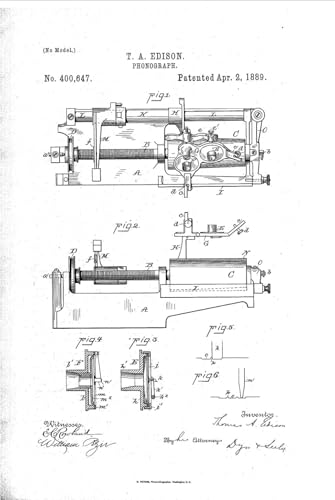
      This Day in Legal History: Edison Receives Patent on PhonographOn February 19, 1878, Thomas Edison received a patent for one of his most transformative inventions: the phonograph. The device could record and reproduce sound, a breakthrough that stunned the public and reshaped the relationship between technology and creativity. Until that point, copyright law primarily protected written works such as books, maps, and sheet music. The phonograph introduced an entirely new category of expression—recorded sound—that did not fit neatly into existing statutes. Lawmakers and courts were soon confronted with a difficult question: who owns a performance once it is captured on a machine?Early copyright frameworks did not clearly account for performers’ rights in recorded works. As the recording industry grew, pressure mounted to recognize both composers and performers as legal stakeholders. Congress responded incrementally, expanding federal copyright protections to cover sound recordings in the twentieth century. These changes reflected a broader shift toward adapting intellectual property law to technological innovation. Courts also played a role by interpreting statutes in ways that acknowledged the economic realities of recorded music. The phonograph’s legacy thus extends far beyond its mechanical design. It forced the legal system to confront how creative labor should be valued in an age of reproduction. In doing so, Edison’s invention helped lay the foundation for modern intellectual property law governing sound recording and broadcasting.A coalition of environmental and public health organizations has filed suit against the Trump administration over its decision to revoke the scientific “endangerment finding” that underpins federal climate regulations. The case was brought in the U.S. Court of Appeals for the District of Columbia Circuit and also challenges the Environmental Protection Agency’s move to repeal vehicle tailpipe emissions limits. The administration recently announced it would eliminate the 17-year-old finding and end greenhouse gas standards for model years 2012 through 2027.The endangerment finding, first adopted in 2009, concluded that greenhouse gases threaten public health and welfare, triggering regulatory authority under the Clean Air Act. Its repeal would remove requirements for measuring and complying with federal vehicle emissions standards, though immediate effects on stationary sources like power plants remain uncertain. The administration characterized the rollback as a major cost-saving measure, estimating $1.3 trillion in taxpayer savings.By contrast, the Biden administration had previously argued the vehicle standards would produce net consumer benefits, including lower fuel and maintenance costs averaging thousands of dollars over a vehicle’s lifetime. The lawsuit marks one of the most significant legal challenges yet to President Trump’s broader effort to scale back climate policy, promote fossil fuel development, withdraw from the Paris Agreement, and dismantle clean energy incentives. Transportation and power generation each account for roughly a quarter of U.S. greenhouse gas emissions, underscoring the stakes of the regulatory reversal.Environmental groups challenge Trump decision to revoke basis of US climate regulations | ReutersMeta CEO Mark Zuckerberg is scheduled to testify in a Los Angeles jury trial examining whether Instagram harms young users’ mental health. The case centers on allegations that Meta designed its platform to keep children engaged despite knowing about potential psychological risks. A California woman who began using Instagram and YouTube as a child claims the platforms contributed to her depression and suicidal thoughts. She is seeking damages, arguing the companies prioritized profit over user well-being.Meta and Google deny the accusations and point to safety features they have implemented. Meta has also cited research suggesting that evidence does not conclusively show social media directly changes children’s mental health. Defense attorneys argue the plaintiff’s struggles stem from personal and family issues rather than her social media use.The lawsuit is part of a broader wave of litigation in the United States, where families, schools, and states have filed thousands of similar claims against major tech companies. Internationally, governments such as Australia have imposed age-based restrictions, and other countries are considering similar measures. The trial could test the tech industry’s longstanding legal protections against liability for user harm. If the plaintiff prevails, the verdict may weaken those defenses and open the door to additional claims. Zuckerberg is expected to face questions about internal company research concerning Instagram’s effects on teens.Meta’s Zuckerberg faces questioning at youth addiction trial | ReutersA federal judge in San Francisco has ordered a lawyer representing ...
      Afficher plus Afficher moins
      6 min
    Aucun commentaire pour le moment