

Kidney Diets: Less Fear, More Food
Impossible d'ajouter des articles
Échec de l’élimination de la liste d'envies.
Impossible de suivre le podcast
Impossible de ne plus suivre le podcast

Kidney Diets: Less Fear, More Food
-
Lu par :
-
De :
À propos de ce contenu audio
Send us Fan Mail
The For Kidneys Sake podcast series is brought to you by Imperial College Healthcare NHS Trust and North West London Integrated Care Board (NWL NHS)
What should you actually eat if you’ve just been told you have chronic kidney disease?
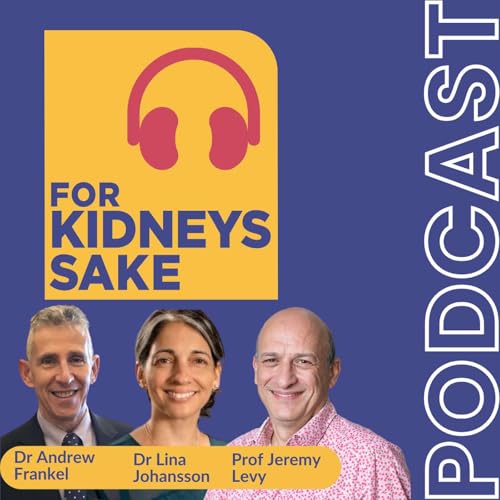
It’s one of the first questions patients ask and unfortunately, the internet often makes the answer far more confusing than it needs to be. In this episode of For Kidneys Sake, Dr Andrew Frankel and Prof Jeremy Levy are joined by renal dietitian Lina Johansson to cut through the noise and explain what people with early CKD (stages 2–3) really need to know about diet.
Rather than restrictive lists of forbidden foods, Lina explains why the focus should be on a cardio-renal-metabolic friendly diet: more fruits, vegetables, and whole grains, fewer ultra-processed foods, and sensible salt reduction. The conversation tackles common myths from unnecessary potassium restrictions to the modern obsession with high-protein diets and offers practical advice clinicians can confidently share with patients.
Top 5 Takeaways
1. Most online “renal diet” advice is for advanced CKD — Much of the information patients find online is designed for people with late-stage kidney disease or dialysis, not those with early CKD.
2. Early CKD diets should focus on heart-healthy eating — A cardio-renal-metabolic friendly diet emphasises fruits, vegetables, whole grains, and healthier protein choices.
3. Potassium restriction is usually unnecessary — Patients with CKD stages 2–3 typically do not need to restrict potassium unless blood levels rise or certain medications require monitoring.
4. Ultra-processed foods are the real dietary villain — Reducing foods with additives, preservatives, and high salt content can improve blood pressure, metabolic health, and kidney outcomes.
5. Avoid high-protein trends — Extra protein shakes, bars, and supplements may accelerate kidney decline; moderation and more plant-based protein sources are preferable.
Resources Mentioned in This Episode:
KidneyWise
https://kidneywise.co.uk
Kidney Care UK – Kidney Kitchen
https://www.kidneycareuk.org/kidney-kitchen/
Kidney Research UK
https://www.kidneyresearchuk.org
NHS Website
https://www.nhs.uk
Resource Links:
NICE GUIDELINES [NG203] chronic kidney disease: assessment and management Overview | Chronic kidney disease: assessment and management | Guidance | NICE
Northwest London CKD guidelines for primary care Chronic kidney disease (nwlondonicb.nhs.uk)
The purpose of this podcast is to inform and educate health care professionals working in the primary care and community setting. The content is evidence based and consistent with NICE guidelines and North West Guidelines available at the time of publication.
The content of this podcast does not constitute medical advice and it is not intended to function as a substitute for a healthcare practitioner’s judgement.
You can also join the community by signing up to our newsletter here
Produced by award-winning media and marketing specialist Heather Pownall of Heather's Media Hub


