Épisodes

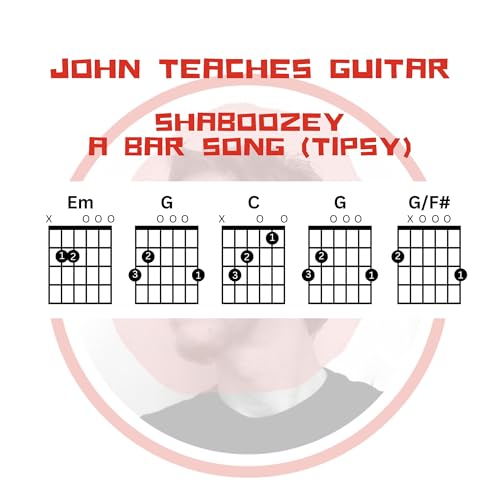
  • Learn how to play "A Bar Song (Tipsy)" by Shaboozy on Guitar!
    Jul 12 2024

    ###

    My website: www.JohnTeachesGuitar.com
    Youtube - https://www.youtube.com/c/johnmcnicholas
    Facebook - https://www.facebook.com/JohnTeachesGuitar/
    Instagram - https://www.instagram.com/johnteachesguitar/
    Threads - https://www.threads.net/@johnteachesguitar
    Mastodon - https://mastodon.world/@johnmcnicholas
    TikTok - https://www.tiktok.com/@johnmcnicholasmusic

    John Teaches Guitar Podcast
    Spotify: https://bit.ly/3KxuMgf
    Apple Podcasts: https://bit.ly/3RiySfY
    RSS: https://feeds.libsyn.com/529802/rss

    Afficher plus Afficher moins
    2 min
  • Learn how to play "Ever Seen" by beabadoobee
    Jul 8 2024


    ###

    My website: www.JohnTeachesGuitar.com
    Youtube - https://www.youtube.com/c/johnmcnicholas
    Facebook - https://www.facebook.com/JohnTeachesGuitar/
    Instagram - https://www.instagram.com/johnteachesguitar/
    Threads - https://www.threads.net/@johnteachesguitar
    Mastodon - https://mastodon.world/@johnmcnicholas
    TikTok - https://www.tiktok.com/@johnmcnicholasmusic

    John Teaches Guitar Podcast
    Spotify: https://bit.ly/3KxuMgf
    Apple Podcasts: https://bit.ly/3RiySfY
    RSS: https://feeds.libsyn.com/529802/rss

    Afficher plus Afficher moins
    2 min
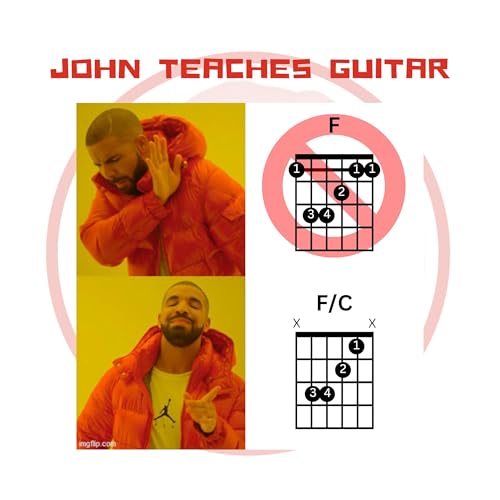
  • Hate playing the F Major Barre Chord? Try This Trick!
    Jun 24 2024

    ###

    My website: http://www.JohnTeachesGuitar.com
    Youtube - https://www.youtube.com/c/johnmcnicholas
    Facebook - https://www.facebook.com/JohnTeachesGuitar/
    Instagram - https://www.instagram.com/johnteachesguitar/
    Threads - https://www.threads.net/@johnteachesguitar
    Mastodon - https://mastodon.world/@johnmcnicholas
    TikTok - https://www.tiktok.com/@johnmcnicholasmusic

    John Teaches Guitar Podcast
    Spotify: https://bit.ly/3KxuMgf
    Apple Podcasts: https://bit.ly/3RiySfY
    RSS: https://feeds.libsyn.com/529802/rss
    Afficher plus Afficher moins
    2 min
  • A Two Chord Song - "When I Go Deaf" by the band, Low
    Jun 21 2024

    Low - When I Go Deaf - Guitar Lesson & Tutorial

    Watch the Lesson - https://youtu.be/t4p5jvNFm1Y

    ###

    My website: www.JohnTeachesGuitar.com
    Youtube - https://www.youtube.com/c/johnmcnicholas
    Facebook - https://www.facebook.com/JohnTeachesGuitar/
    Instagram - https://www.instagram.com/johnteachesguitar/
    Threads - https://www.threads.net/@johnteachesguitar
    Mastodon - https://mastodon.world/@johnmcnicholas
    TikTok - https://www.tiktok.com/@johnmcnicholasmusic

    John Teaches Guitar Podcast
    Spotify: https://bit.ly/3KxuMgf
    Apple Podcasts: https://bit.ly/3RiySfY
    RSS: https://feeds.libsyn.com/529802/rss

    Afficher plus Afficher moins
    2 min
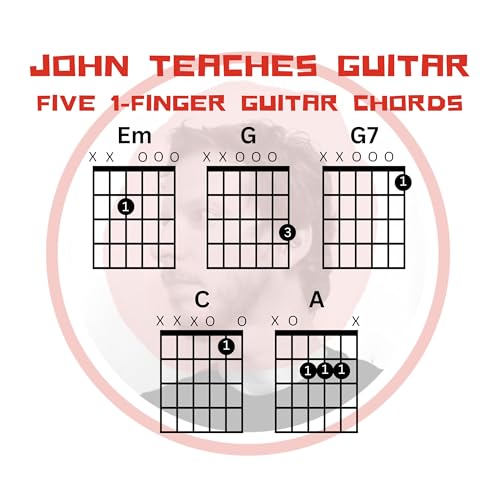
  • Five 1-Finger Chords
    Jun 17 2024

    There are quire a few guitar chords that can be played using just one finger. Here are a few examples:

    1. E Minor (Em):
      • Place your index finger on the second fret of the D (4th) string.
      • Strum all the strings.
    1. G Major:
      • Place your ring finger on the third fret of the E (4st) string.
      • Strum from the D (4th) string down
    1. G7:
      • Place your index finger on the first fret of the E (1st) string.
      • Strum from the D (4th) string down
    1. C Major (easy variation):
      • Place your index finger on the first fret of the B (2nd) string.
      • Strum from the G (3rd) string down, avoiding the low E (6th), A (5th), and D (4th) strings.
    1. A Major:
      • Place your index finger across the second fret of the D (4th), G (3rd), and B (2nd) strings.
      • Strum from the A (5th) string down, avoiding the low E (6th) string.

    These chords are often used by beginners because they require minimal finger movement and can help build confidence and familiarity with the fretboard.

    Let's look at two songs that you can play with 1 finger chords

    You can play Eleanore Rigby by the Beatles

    Em C

    Eleanor Rigby picks up the rice in the church where a wedding has been

    C Em

    Lives in a dream

    Em C

    Waits at the window, wearing the face that she keeps in a jar by the door

    Em

    Who is it for?

    All I Want is You by U2

    [Chorus 1]

    Em Cadd9

    But all the promises we make

    Em Cadd9

    From the cradle to the grave

    G Cadd9 G Cadd9 G Cadd9

    When all I want is you

    ###

    My website: www.JohnTeachesGuitar.com
    Youtube - https://www.youtube.com/c/johnmcnicholas
    Facebook - https://www.facebook.com/JohnTeachesGuitar/
    Instagram - https://www.instagram.com/johnteachesguitar/
    Threads - https://www.threads.net/@johnteachesguitar
    Mastodon - https://mastodon.world/@johnmcnicholas
    TikTok - https://www.tiktok.com/@johnmcnicholasmusic

    John Teaches Guitar Podcast
    Spotify: https://bit.ly/3KxuMgf
    Apple Podcasts: https://bit.ly/3RiySfY
    RSS: https://feeds.libsyn.com/529802/rss

    Afficher plus Afficher moins
    4 min
  • How to Construct a Major Scale: Waffle, Waffle, House, Waffle, Waffle, Waffle House.
    Jun 13 2024

    Patreon - https://www.patreon.com/johnmcnicholas
    Website - http://www.johnteachesmusic.com ​​
    Facebook - http://www.facebook.com/johnmcnicholasmusic
    YouTube - https://www.youtube.com/johnmcnicholas

    On a guitar a WHOLE STEP is 2 frets and a HALF STEP is 1 fret.

    Here's a step-by-step guide to constructing a major scale:

    Step-by-Step Guide

    1. Choose Your Starting Note (Root):
    - This will be the first note of your scale. For example, let's use C as the starting note to construct a C major scale.

    2. Apply the Major Scale Pattern:
    - The pattern for a major scale is: W, W, H, W, W, W, H.
    - This means you start at your root note, then follow this sequence of whole steps and half steps to determine the subsequent notes.

    Example: C Major Scale

    1. Start with the root note:
    - C

    2. Follow the whole and half step pattern:
    - From C, a whole step (W) takes you to D.
    - From D, another whole step (W) takes you to E.
    - From E, a half step (H) takes you to F.
    - From F, a whole step (W) takes you to G.
    - From G, another whole step (W) takes you to A.
    - From A, another whole step (W) takes you to B.
    - From B, a half step (H) takes you back to C (an octave higher).

    Thus, the C major scale is:
    - C - D - E - F - G - A - B - C

    Tips for Remembering

    - Whole step (W): Skip one key on the piano, whether black or white. For example, from C to D skips C#.
    - Half step (H): Move to the very next key, whether black or white. For example, from E to F is a half step because there are no keys between them.

    By applying this whole and half step pattern starting from any note, you can construct major scales in any key.

    ### My website: www.JohnTeachesGuitar.com Youtube - https://www.youtube.com/c/johnmcnicholas Facebook - https://www.facebook.com/JohnTeachesGuitar/ Instagram - https://www.instagram.com/johnteachesguitar/ Threads - https://www.threads.net/@johnteachesguitar Mastodon - https://mastodon.world/@johnmcnicholas TikTok - https://www.tiktok.com/@johnmcnicholasmusic John Teaches Guitar Podcast Spotify: https://bit.ly/3KxuMgf Apple Podcasts: https://bit.ly/3RiySfY RSS: https://feeds.libsyn.com/529802/rss
    Afficher plus Afficher moins
    3 min
  • 12 Tips For Buying Your First Guitar
    Jun 5 2024
    VIDEO - 12 Tips for Buying Your First Guitar 12 Tips for Buying Your First Guitar Choosing your first guitar can be an exciting journey but scary journey. There are several factors to consider to ensure you pick the right instrument for you. Here's a guide on what to look for in your first guitar: 1. Type of Guitar: - Acoustic or Electric: Decide whether you want an acoustic or electric guitar. Acoustic guitars are great for beginners because they don't require an amplifier. Electric guitars, on the other hand, might be more versatile for various genres but require additional equipment (amp and cables). Typically, electric guitar are easier to play. They have thinner strings that are easier to push down, or "fret." Do you have a specific sound in your head? Is there an artist or song that's inspiring you to pick up the guitar? Do some research and see what that player might be using to get their sound! 2. Budget: - Set a realistic budget. There are good options available for beginners in various price ranges. It's important to find a balance between affordability and quality. Don't spend too little on your first instrument or you may end up with an instrument that will frustrate you, stifle your passion or cause you to give up the instrument all together. These days there are TONS of affordable instruments available at prices under $200 that are miles above my first beginner electric guitar. Another fantastic way to get a good deal on an instrument is to consider getting something that's been used already. Sometimes you can get a much nicer guitar for the same price as your new beginners guitar. This is where I'd definitely enlist of an experienced guitarist to help you. They can take a look at the instrument and identify an issues that may need to be addressed. A great local Mom-and-Pop store should be very helpful with this as well. 3. Playability: - Look for a guitar with a comfortable neck and action (the height of the strings above the fretboard). A guitar that is easy to play will encourage practice and learning. When you're buying an instrument online make sure there's a good return policy in place and when possible have someone with more experience check out your instrument when you first get it. Even better, get a guitar locally where you can try the instrument out in person. 4. Body Style: - Acoustic guitars come in different body styles (dreadnought, concert, etc.), each with its own sound characteristics. For electric guitars, consider styles like Stratocaster, Telecaster, SG, Les Paul or an off-set guitar like a Jaguar or Jazzmaster. Most brands make variations of the guitars listed above so shop around and see what might be available in your price range. 5. Size: - Consider the size of the guitar, especially if you're a beginner or a younger player. Smaller body sizes are generally more comfortable for beginners. I'm a taller guy so I love the look of a Fender Jaguar or Gibson ES-335 on my frame. People smaller in stature might look for something that's a better fit for their body type. A Gibson SG is very slim and easy to play. Same with the Music Man St. Vincent model. 6. Tonewoods: - While tonewoods might not be as critical for beginners, it's still good to have a basic understanding. Common acoustic tonewoods include spruce and mahogany, while electric guitars often have bodies made of alder or mahogany. In regards to acoustic guitar, the tonewood is critical. If possible look at online reviews or talk to a local shop to see what they'd recommend based on your desired sound. Don't know what that sound is yet? Don't stress! There's is typically no "bad wood." In regards to electric guitars the primary driver of sound will be the pickups which will translate the vibrating strings into the sound of the guitar that travels to the amplifier. The most common types of electric pickups will be Humbuckers which have a baser, darker (Very popular in Metal, Rock and Jazz) And single-coil pickups which typically have a thinner sound with more clarity (Very popular with Country, pPop and Alternative music) There's a ton of variations so try a few and see what you like best! There is no wrong type for getting started on the instrument. 7. Brand Reputation: - When possible, stick with reputable brands known for producing quality entry-level instruments. Brands like Fender, Squire, Gibson, Epiphone, Yamaha, Gretsch, and Guild have solid options for beginners. Sticking with the more popular brands will also make it easier to sell if you should decide to sell your instrument or trade it for something new! What does you favorite band play? Do some research and maybe that will get you closer to your perfect sound! 8. Action: - The action refers to the height of the strings above the fretboard. Lower action is generally easier for beginners, but it shouldn't be too low to avoid buzzing. Again when buying online make ...
    Afficher plus Afficher moins
    12 min
  • How do you tune a guitar? Eddie, Ate, Dynamite, Good, Bye, Eddie!
    Jun 3 2024

    How do you tune a guitar? Eddie, Ate, Dynamite, Good, Bye, Eddie

    Tuning a guitar involves adjusting the tension of its strings so that they produce the correct notes when played open (without pressing down on the fretboard). Here's a step-by-step guide to tuning a standard six-string guitar to EADGBE tuning, which is the most common tuning:

    Eddie, Ate, Dynamite, Good, Bye, Eddie

    Elephants, And, Dogs, Grow, Big, Ears

    1. Know the Standard Tuning

    6th string (thickest): E (Low E)

    5th string: A

    4th string: D

    3rd string: G

    2nd string: B

    1st string (thinnest): E (High E)

    2. Use a Tuner

    The most accurate way to tune your guitar is by using an electronic tuner. There are several types: clip-on tuners, pedal tuners, and smartphone apps.

    I use 3 tuners, I'll post a link in show notes to each one.

    1. Gigs - Boss TU-3 - https://amzn.to/3yM0lQW
    2. Daily - TC Electronic UNITUNE CLIP - https://amzn.to/3KtHI72
    3. Out and about - Fender Tune app

    Here's how to use one:

    Turn on the tuner and set it to "guitar" mode if it has multiple modes.

    Play the 6th string (low E) and adjust the tuning peg until the tuner indicates that the string is in tune.

    Repeat for each string: A (5th), D (4th), G (3rd), B (2nd), and E (1st).

    3. Tuning by Ear (Using a Reference Pitch)

    If you don't have a tuner, you can tune by ear using a reference pitch (like another tuned instrument or a pitch pipe):

    Rush - Tom Sawyer - Low E

    Tune the 6th string (low E) to the reference pitch if you can,

    Tune the 5th string (A): Press down on the 5th fret of the 6th string (which is an A note) and adjust the 5th string until it matches this pitch.

    Tune the 4th string (D): Press down on the 5th fret of the 5th string (which is a D note) and adjust the 4th string until it matches this pitch.

    Tune the 3rd string (G): Press down on the 5th fret of the 4th string (which is a G note) and adjust the 3rd string until it matches this pitch.

    Tune the 2nd string (B): Press down on the 4th fret of the 3rd string (which is a B note) and adjust the 2nd string until it matches this pitch.

    Tune the 1st string (high E): Press down on the 5th fret of the 2nd string (which is an E note) and adjust the 1st string until it matches this pitch.

    4. Fine-Tuning

    After tuning all strings, play some chords to ensure they sound in tune. I typically tune up 2 or 3 times. If any strings sound off, make minor adjustments as needed.

    5. Regular Maintenance

    Regularly check and adjust the tuning, especially before playing. Strings can go out of tune due to temperature changes, humidity, and stretching.

    Tips:

    Stretch new strings: Gently pull on new strings to help them settle and stay in tune.

    Tune up, not down: When tuning a string, tune below the desired pitch and then tighten up to the correct pitch to help maintain tension.

    Keep a tuner handy: It's always useful to have a tuner available for quick adjustments.

    With practice, you'll become more comfortable and faster at tuning your guitar.

    ###

    My website: www.JohnTeachesGuitar.com
    Youtube - https://www.youtube.com/c/johnmcnicholas
    Facebook - https://www.facebook.com/JohnTeachesGuitar/
    Instagram - https://www.instagram.com/johnteachesguitar/
    Threads - https://www.threads.net/@johnteachesguitar
    Mastodon - https://mastodon.world/@johnmcnicholas
    TikTok - https://www.tiktok.com/@johnmcnicholasmusic

    John Teaches Guitar Podcast
    Spotify: https://bit.ly/3KxuMgf
    Apple Podcasts: https://bit.ly/3RiySfY
    RSS: https://feeds.libsyn.com/529802/rss

    Afficher plus Afficher moins
    7 min